Walkway and Poolside Stone Plan for Residential Complexes with Pools
In short: The common areas of many residential complexes in Alanya consist of pool coping stones, sunbed areas around the pool, garden walkways, and paving that leads to building entrances.
These areas are the common areas that wear out fastest due to sun, water, chlorine, sand, and heavy use. In this article, we propose an annual maintenance plan for complex management.
Defining the Areas
The stone areas of a complex do not wear out in the same way; since each zone bears a different load, the maintenance plan begins by separating the areas.
- Pool coping: The stones at the pool edge are the surfaces in most intense contact with water, chlorine, and bare feet; slip resistance and chemical resistance are tested most here.
- Sunbed area around the pool: Sunscreen, spilled drinks, water, and dragged furniture leave stains, oily films, and scratches in this zone.
- Shower and foot-washing points: At these constantly wet points, limescale builds up from hard water, and in shaded parts algae take hold and make the surface slippery.
- Walkways: Garden soil, fallen leaves, and irrigation water cause stains, algae, and dirt buildup on walkways.
- Building entrance paths: Sand carried in on shoes, heavy traffic, and rainwater cause wear, dulling, and a risk of slipping when wet at entrances.

Priority: Slip Resistance
Around the pool, the most important issue is safety:
- Treat polished stones: Stones that are polished or have become shiny over time are slippery when wet, so they should be brushed or honed to give them a grippier texture.
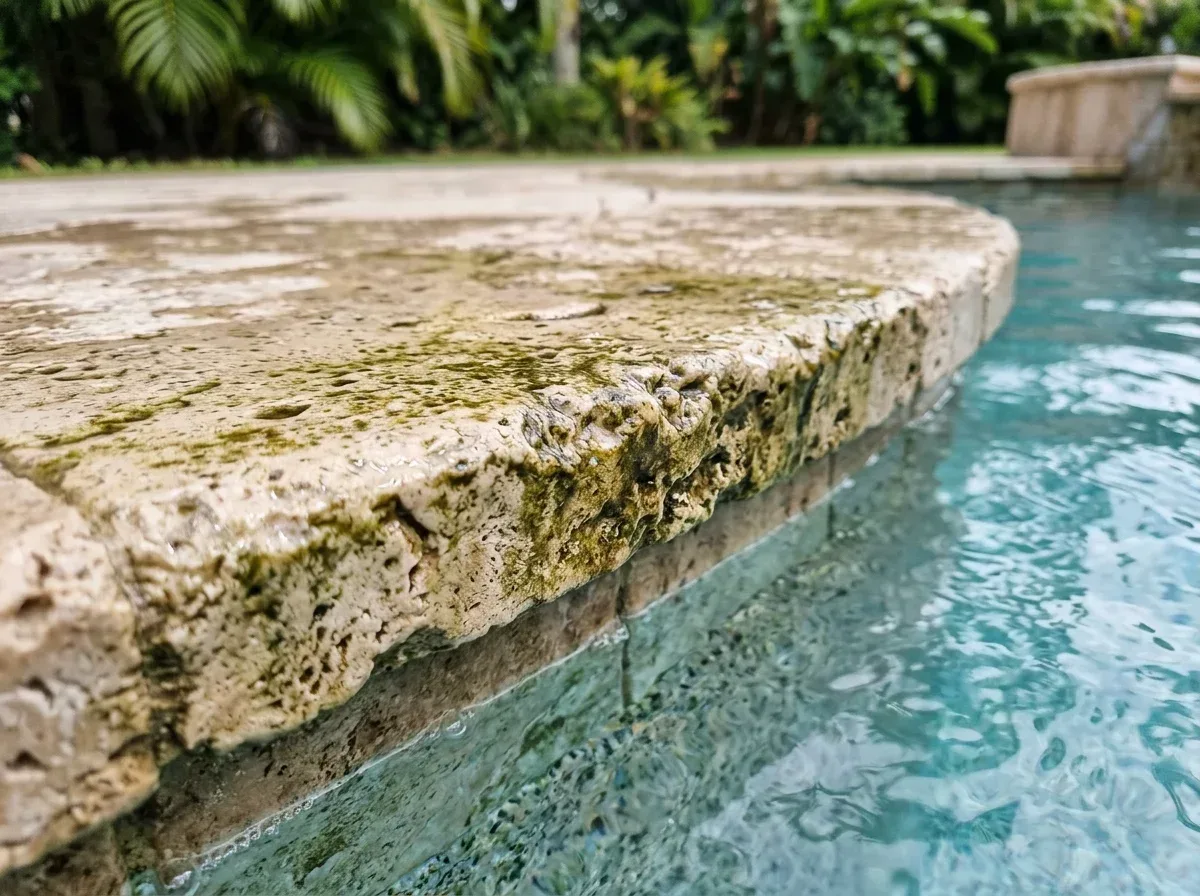
- Clean off algae and biofilm: Algae and biofilm that form on stones that stay shaded and constantly wet create a thin slippery layer; with regular cleaning, this layer does not thicken.
- Prevent standing water: Water that pools in areas with clogged drains or a disrupted slope sets the stage for slipping as well as for algae and limescale buildup.
- Repair broken and loose slabs: Broken, loose, and raised slabs pose a tripping and injury risk for people walking barefoot, so they must be repaired immediately.
Annual Maintenance Plan
Pre-Season (Spring)
Spring maintenance prepares the stone areas for heavy summer use by removing dirt and damage accumulated over winter before the pool opens.
- Cleaning winter dirt: Algae, dirt, and salt marks that formed over the winter are cleaned off, so the true condition of the stone and any damaged areas are clearly visible.
- Removing the limescale band: The limescale band that forms at the water level on pool coping stones is removed with methods that do not harm the stone, restoring the edge to its original color.
- Renewing emptied joints: Because emptied joints let water get under the stone and loosen the slabs, they are refilled before summer arrives.
- Securing loose slabs: Slabs that shift under pressure are lifted and re-bonded; otherwise their edges will break and they will pose a hazard for people walking barefoot.
- Slip resistance check: Grip is tested on wet surfaces; if necessary, polished areas are re-textured by brushing or honing.
- Sealer renewal: If water dripped onto the stone is absorbed quickly, the protection has weakened; based on the drop test, the sealer is renewed to reduce staining and water absorption.
In-Season (Summer)
Summer maintenance consists of short but frequent tasks; the goal is to prevent chlorine, dirt, and limescale from settling into the stone in the first place.
- Daily: The pool surroundings are rinsed with fresh water and debris is removed; this way, chlorine, salt, and drink residues do not dry on the stone.
- Weekly: Brush cleaning is carried out, shower points are checked for early signs of limescale, and drains are cleaned to prevent water from pooling.
- Monthly: Slip resistance and breakage are checked; small damages noticed mid-season are marked and repaired before they grow.
Post-Season (Autumn)
Autumn maintenance records the damage accumulated over the summer and prepares the stones for winter rain and cold.
- Leaf and soil cleaning: Leaves and soil left on the stone leave stains as they get wet and set the stage for algae; therefore, they are cleared regularly.
- Opening drains: Drains clogged with leaves cause water to pool on the stone during winter rains; at the end of the season, all of them are opened and checked.
- Listing damage: Breakage, stains, and wear that occurred during the season are noted; this list forms the basis of the repairs to be done in the winter months and of next year's budget.
- Pre-winter joint check: Rainwater entering through open joints hollows out the area beneath the slabs; joints checked before winter arrives prevent this damage.
Notes by Stone Type
The weak point of each stone used around a pool is different; the maintenance method is also chosen according to the type of stone.
- Travertine: It is the most common stone around pools; because of its porous structure, its sealing and any open pores should be checked regularly.
- Granite (flamed or brushed): It is a durable stone; since its textured surface provides slip resistance, dirt and limescale cleaning is often enough for maintenance.
- Limestones: Because they are sensitive to acid and salt, acidic products are avoided when cleaning, and work is done carefully with neutral cleaners suitable for the stone.
- Concrete and stamped concrete: Dusting and color loss appear over time; applying suitable protectors to the surface reduces both dust and fading.
Pool Chemicals and Stone
Keeping the pH of the pool water balanced directly affects the lifespan of the stones on the pool deck. Low pH erodes the surface of marble and travertine, while high calcium hardness accelerates the formation of a limescale band at the waterline. Chlorine and pH-lowering chemicals should not be prepared at the pool edge, should not be spilled on the stone, and should not be used to clean the coping stones. Making sure that the pool maintenance company and the company responsible for stone maintenance are informed about the same matters prevents the two sides from undermining each other's work.
Budget Planning
When a regular share is set aside every year for the maintenance of stone areas, they can be managed without turning into large and unexpected expenses.
- Annual maintenance budget: If a budget is set aside every year for comprehensive pre-season maintenance, cleaning, grout and sealing work is carried out without being postponed.
- Spread large jobs over the years: Large jobs such as renovating the entire pool deck can be divided into sections and spread over several years; this way, the burden on site dues does not fall all at once.
- Emergency repair reserve: A broken or loose coping stone cannot wait; a small reserve ensures that such safety repairs are carried out immediately.
Priority Table by Area
| Area | Main risk | Priority maintenance |
|---|---|---|
| Pool deck | Slipperiness, limescale band, chlorine | Brushing, limescale removal, sealing |
| Sunbed area | Sunscreen, drink stains | Regular washing, stain treatment |
| Shower areas | Limescale, algae | Weekly brush cleaning |
| Walkways | Soil, algae, weeds | Grout maintenance, cleaning |
| Building entrances | Sand, wear | Doormat, refreshing |
Rules to Announce to Residents
A significant portion of the damage to stone stems from usage habits; a few simple rules for residents to follow reduce the maintenance burden.
- No glass bottles or glasses: Glass that breaks on stone causes injuries around the pool where people walk barefoot, and it is difficult to remove completely from between the grout joints.
- Do not drag sunbeds: The legs of sunbeds dragged across the stone leave scratches on the surface and over time cause cracks at the edges of the slabs.
- Do not place planters directly on the stone: Water, soil and rust that accumulate under planters and decorative items leave permanent ring stains on the stone; a base or feet should be used.
- Report damage to the management: Early reporting of broken or loose stones ensures the problem is repaired before it grows and before anyone gets hurt.
Pool Complexes in Alanya
In the vast majority of residential complexes with pools in Alanya, the pool deck and walkways are made of travertine or flamed granite. Intense sun, sea air and limescale-rich water accelerate the wear of these areas. Before the season, we plan limescale and algae cleaning, grout renewal, slip-resistance treatment and sealing work with the site management; during the season, we remain available for urgent safety repairs.
Communication with Residents

- Maintenance dates should be announced in advance,
- The hours when the pool area will be closed should be specified,
- There should be an easy way (such as a management WhatsApp line) to report slippery surfaces and breakages.
Our Crystallization Polishing Service in Alanya

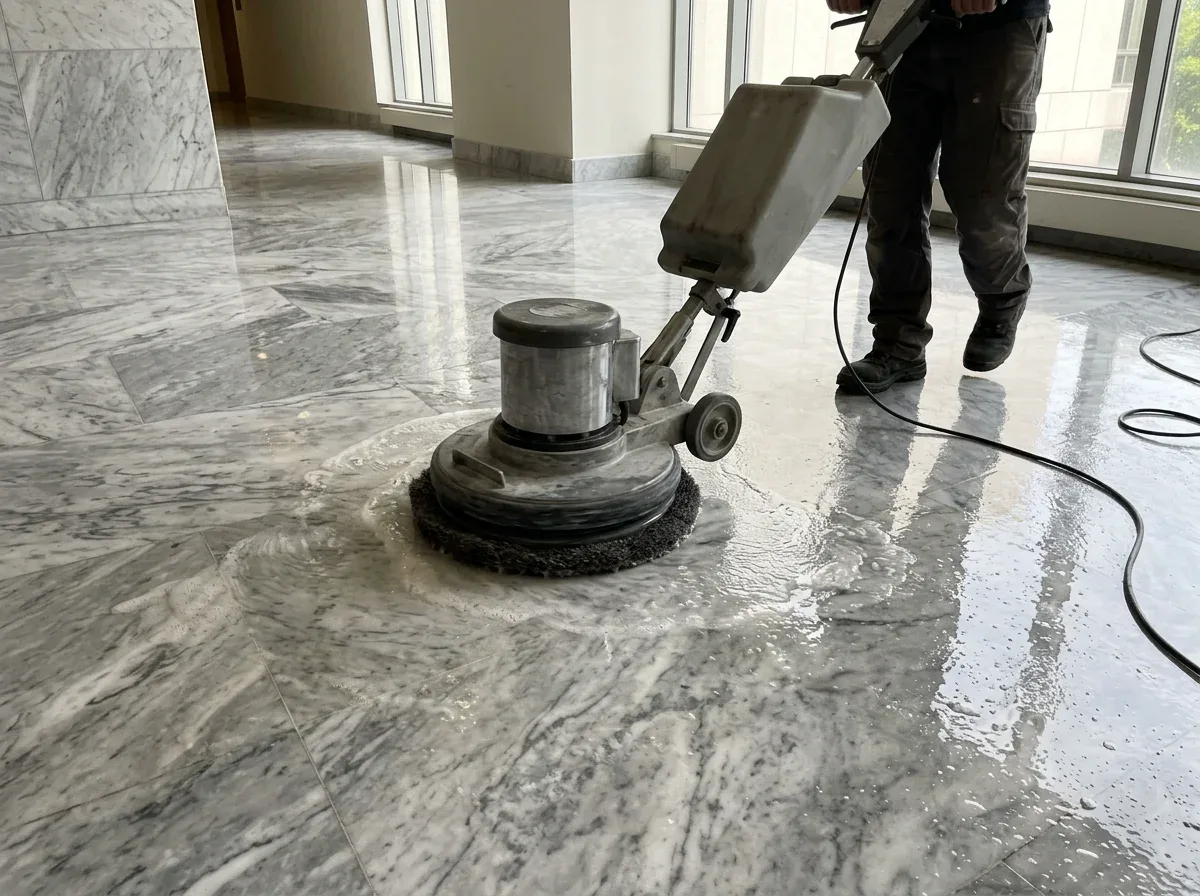
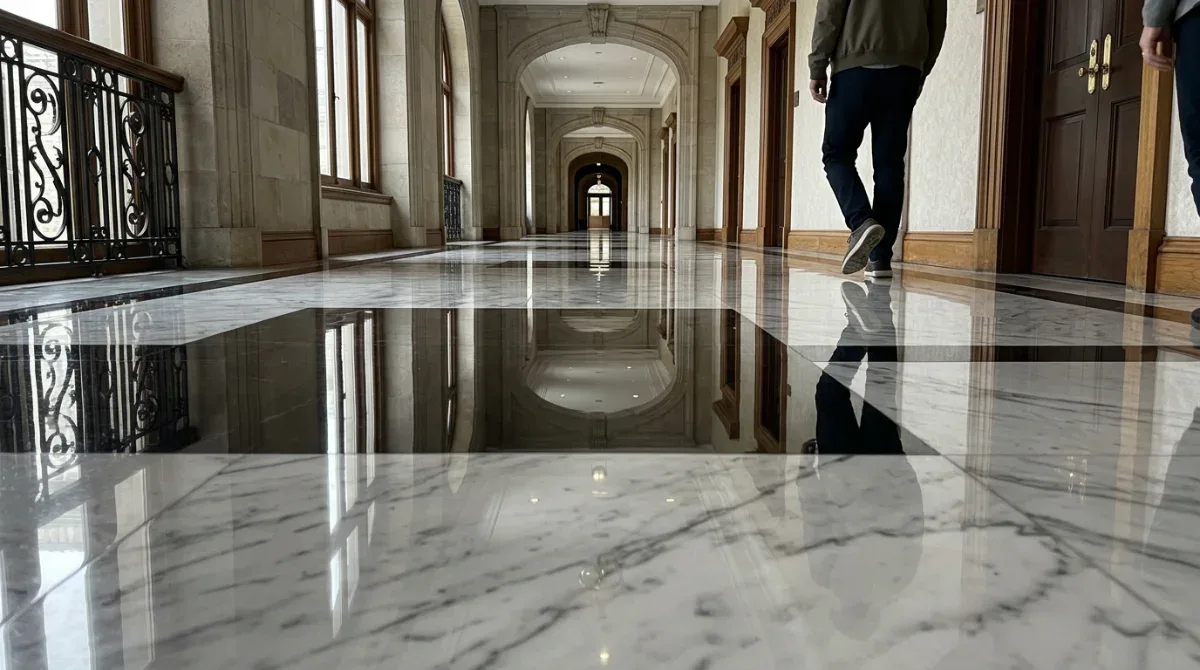
After honing, or on marble floors that have lost their shine but have no deep damage, we use crystallization polishing to improve the surface's gloss and durability. It is a method that extends the maintenance interval in heavily used areas such as hotel lobbies, shops and apartment entrances.
We show you on site whether crystallization polishing or honing is the right choice for your floor. Explore our Crystallization Polishing service.
The stone type should be shared with the pool maintenance company; pH reducer and chlorine products must not be prepared on the stone or spilled onto the edges. — Expert Note
Frequently Asked Questions
01How often should pool deck stones be impregnated?
02What is the white band along the pool edge?
03Can polished stone be used around the pool?
04What if weeds are growing on the walkways?
05Why do pool deck stones become slippery?
06How can weeds growing in walkway joints be prevented?
Related Articles
- The Effect of Pool Water and Chlorine on Natural Stone
- Renovating Travertine Pool Surrounds and Slip Resistance
- Floor Maintenance for Shared Areas in Housing Complexes and Apartment Buildings
- Granite Outdoor Flooring and Garden Path Renovation
- Natural Stone Maintenance in Hotels: Lobby, Corridors and Pool Surroundings