Oil and Acid Stains on Restaurant and Café Floors
In short: Restaurants and cafés are places where floors encounter both oil and acid at the same time.
Oil carried over from the kitchen, wine and citrus spilled from tables, salad dressings and desserts can leave permanent marks on marble and travertine floors in a short time. In this article, we explain prevention and cleaning tips for businesses.
Risk Areas
In a restaurant, stains are not evenly distributed across the floor; they gather in certain areas where food, drinks and foot traffic are concentrated.
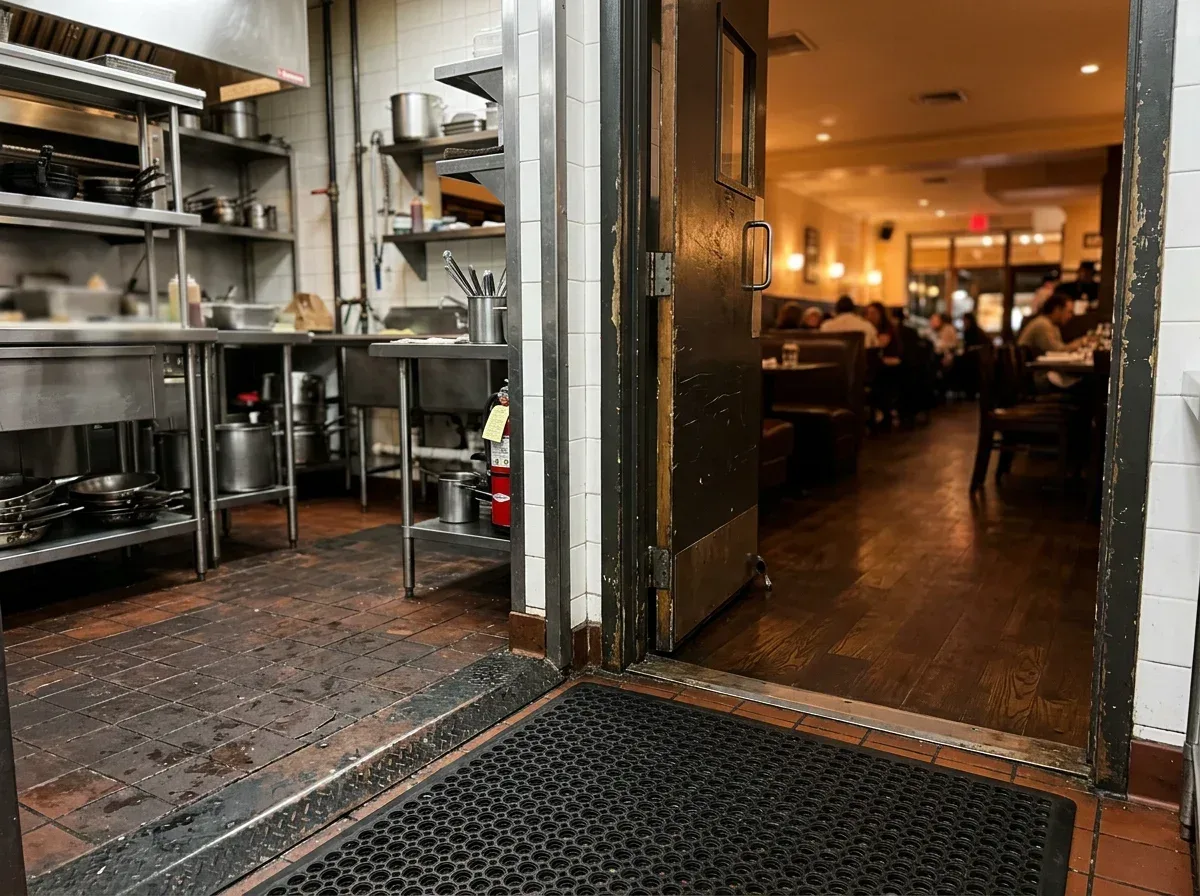
- Kitchen exit: Oil carried on shoes soaks into the stone in the first few meters between the kitchen and the dining room; this area is both the most stained and the slipperiest.
- Service routes: On the lines where waiters pass constantly, dripping sauces and drinks are spread by foot traffic; wear and dulling appear earlier here.
- Bar and beverage area: When citrus, cocktails and wine fall on marble and travertine, the acid etches the surface; drops that are not wiped up quickly leave dull rings.
- Buffet: Spills of sauce, oil and fruit juice often fall on the floor while plates are being carried; both an oil stain and an acid mark can form in the same spot.
- Under the tables: Spilled drinks and chair legs come together under the tables; liquid remains unnoticed, and the chairs also scratch the surface.

The Difference Between Oil and Acid
Oil and acid leave different kinds of marks on stone; for the right intervention, you first need to tell which one the stain is.
- Oil: It is absorbed into the stone and leaves a dark stain. It is drawn out with a poultice; the poultice slowly pulls the oil out of the pores and does not damage the surface.
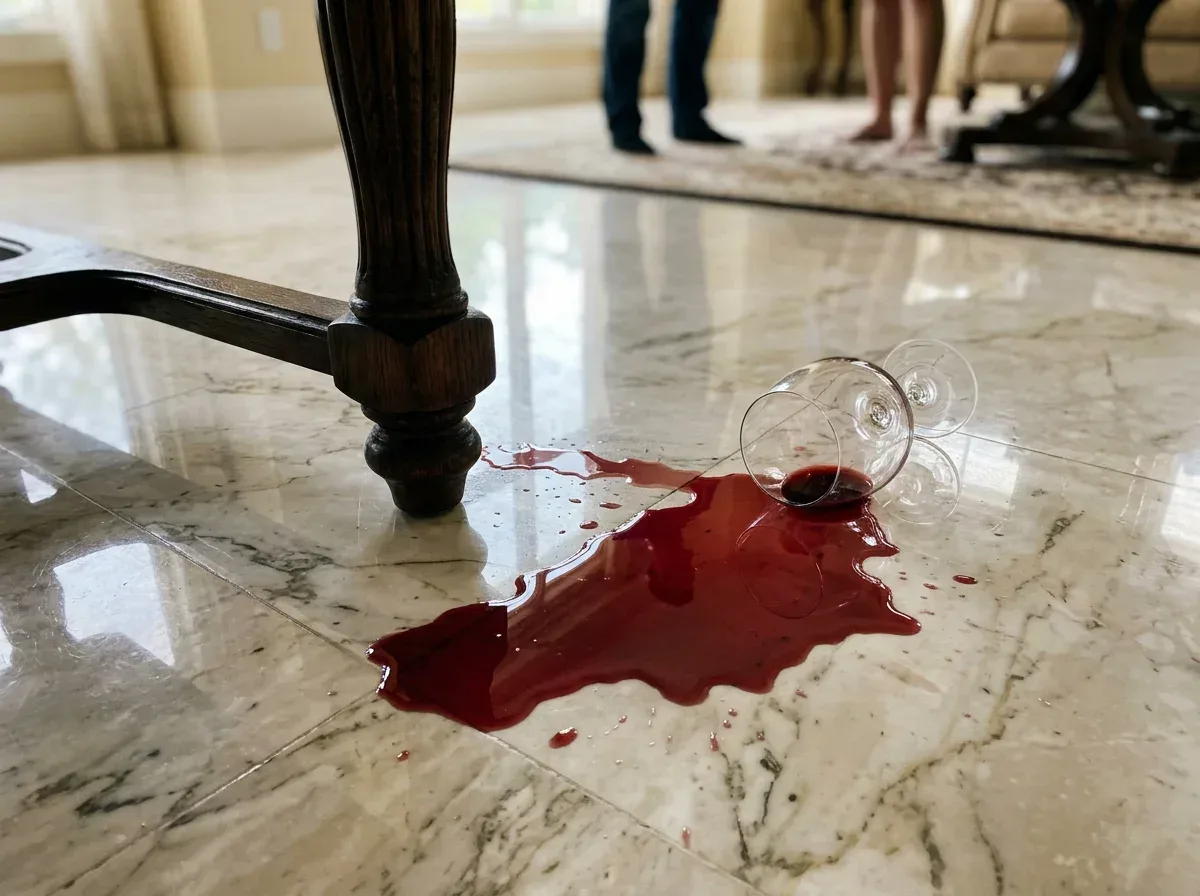
- Acid: Wine, lemon, vinegar, tomato and cola etch the surface of marble and travertine and leave a dull mark. It is removed by polishing or honing.
Many spills do both: for example, salad dressing contains both oil and vinegar.
Prevention
The Right Stone and Surface
A significant share of stains can be reduced from the outset by choosing the right stone and surface in risky areas.
- Granite or honed surface: In kitchen passages and service routes, a granite or honed surface causes fewer problems than polished marble; acid marks and slipperiness are less noticeable.
- Suitable mats: At the transition from the kitchen to the dining room, mats suitable in terms of slip resistance and oil retention should be used; this way, the oil on shoes is trapped before it is carried into the dining room.
Impregnation
On restaurant floors, a water- and oil-repellent (oleophobic) impregnation slows the penetration of oil and colored liquids into the stone, giving staff time to respond. Impregnation does not prevent acid marks; the dullness that wine or lemon leaves on marble can still occur. Therefore, impregnation should be considered together with quick response and proper cleaning. In heavily used restaurants, impregnation needs to be checked more often with the drop test.
Quick Response Rule
Staff should take up everything that is spilled immediately and by blotting it. After acidic spills, the area should be wiped with clean water and dried.
Daily Cleaning
Daily cleaning relies on small interventions during service combined with machine cleaning at closing time.
- Intervention during service: A dry mop and an immediate response to spills keep the floor clean without giving liquids a chance to be absorbed into the stone or acids a chance to etch the surface.
- Machine cleaning at closing: Machine cleaning with degreasing yet stone-safe products removes the oil film that builds up throughout the day without dulling the surface.
- Extra care at kitchen passages: If this area, where the most oil is carried, is not wiped more often and more carefully, stains and slipperiness quickly spread toward the dining room.
- Rinsing and drying: Rinse with plenty of water and dry; no detergent film should remain, as leftover film traps dirt and makes the floor slippery.
Things to avoid: Acidic descalers, continuous use of harsh alkaline degreasers, and oily and waxy polishes.
Slipperiness
An oily floor is the biggest slip risk. A few basic rules should be applied to reduce the risk in kitchen passages.
- Do not allow an oil film: Oil must not be allowed to leave a film on the surface; even a thin layer of oil creates a serious slip risk when combined with wet shoes.
- Use non-slip mats: Suitable non-slip mats trap the oil on shoe soles at the kitchen exit and improve grip at the point where staff run the most.
- Hone if necessary: If a polished surface causes slipperiness problems, it can be honed; a matte surface grips shoe soles better and also shows acid marks less.
Periodic Maintenance
Stains that daily cleaning cannot remove, as well as dulling and loss of protection, are addressed with maintenance work carried out at regular intervals.
- Poultice applications: Oil stains that have penetrated the stone are drawn out of the pores with a poultice that is applied and left to sit.
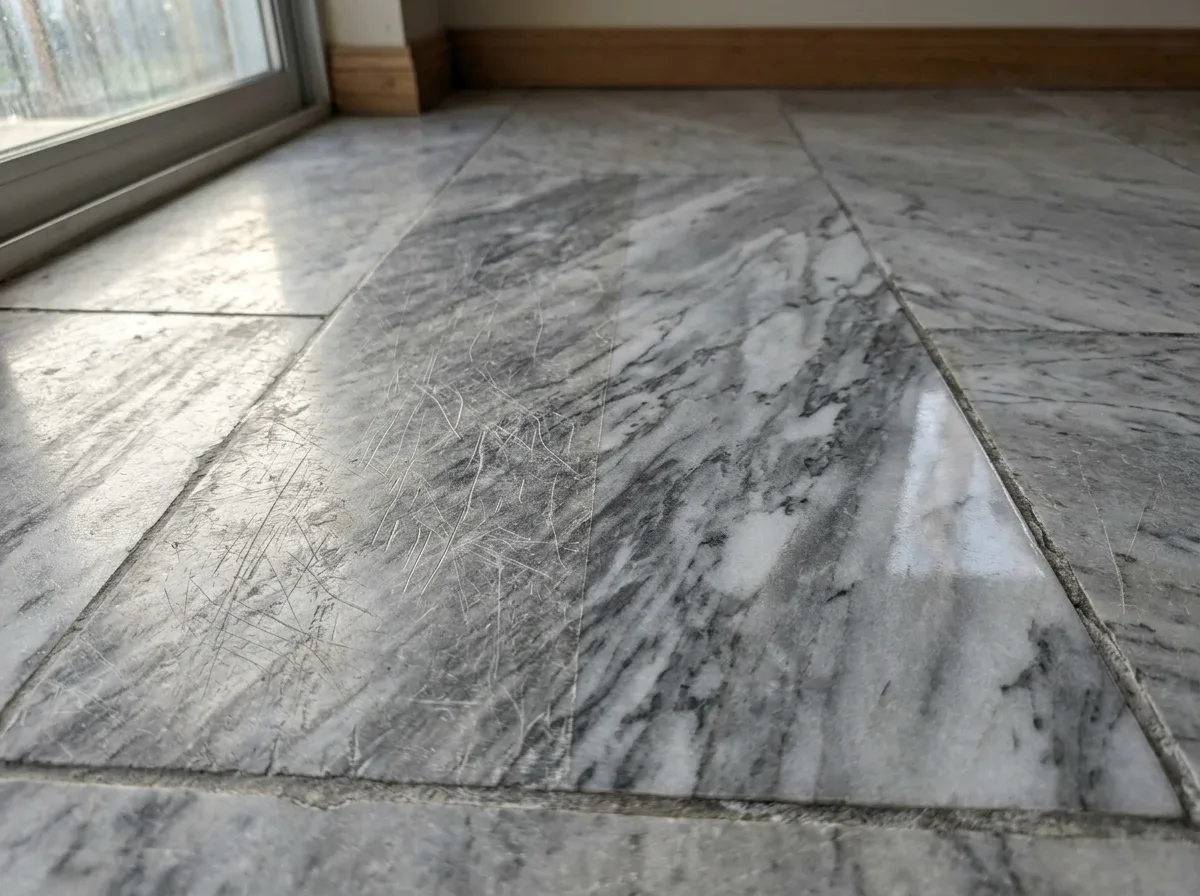
- Polishing or grinding: For acid marks and dulling, polishing or grinding is carried out; once the worn surface layer is removed, the dull rings disappear and the floor looks uniform.
- Impregnation renewal: Heavy cleaning and foot traffic weaken the impregnation over time; once it is renewed, the penetration of oil and colored liquids into the stone slows down again.
- Grout cleaning or renewal: Grout lines absorb oil and dirt and darken; if cleaning is not enough, they are scraped out and renewed, which also restores the overall look of the floor.
This work is usually done on the day or at night when the restaurant is closed.
Quick Response by Type of Spill
| Spill | Effect | First response |
|---|---|---|
| Red wine | Acid mark and color stain | Blot, wipe with water, dry |
| Lemon, citrus | Acid mark | Wipe immediately, rinse |
| Olive oil, sauce | Oil stain | Absorbent paper, neutral detergent |
| Coffee, tea | Color stain | Blot, wipe with water |
| Cola | Acid and sugar | Wipe, rinse, leave no stickiness |
Staff Training
In restaurant floors, most stains become permanent because of the wrong response at the moment of the spill. Common mistakes include waiters spreading the spilled liquid by wiping it, the kitchen team working oil into the floor with a hard brush, or the cleaning team wiping the marble with a limescale remover. A short briefing before service starts and an absorbent cloth at every station prevent most of these mistakes.
Restaurants in Alanya
In Alanya, in restaurants along the seafront, hotel buffet areas and cafés, the marks we encounter most often on marble and travertine floors are caused by wine, citrus and oil. For these businesses we schedule the work after closing or on closed days; we draw out oil stains with a poultice, polish away acid marks, and apply a water- and oil-repellent impregnation. For kitchen passages, we recommend a honed surface and a non-slip mat.
Kitchen Flooring

Concrete or industrial coatings are often used in restaurant kitchens. On concrete kitchen floors, polishing and hardeners offer advantages in terms of cleaning and hygiene; however, slip resistance and chemical resistance must also be assessed separately in areas that are constantly wet and greasy.
Our Scratch and Stain Removal Service in Alanya

We remove scratches, acid marks and stains that have penetrated the stone on marble, granite and travertine surfaces using honing, poultice or spot repair, depending on the type of damage. We never start work without identifying the source of the stain.
We tell you honestly, on site, which stains can be removed and which are permanent. Explore our Scratch Removal service.
Water- and oil-repellent impregnation slows the penetration of spilled liquids into the stone and buys you time to wipe them up. In restaurants, the impregnation should be checked more frequently. — Expert Note