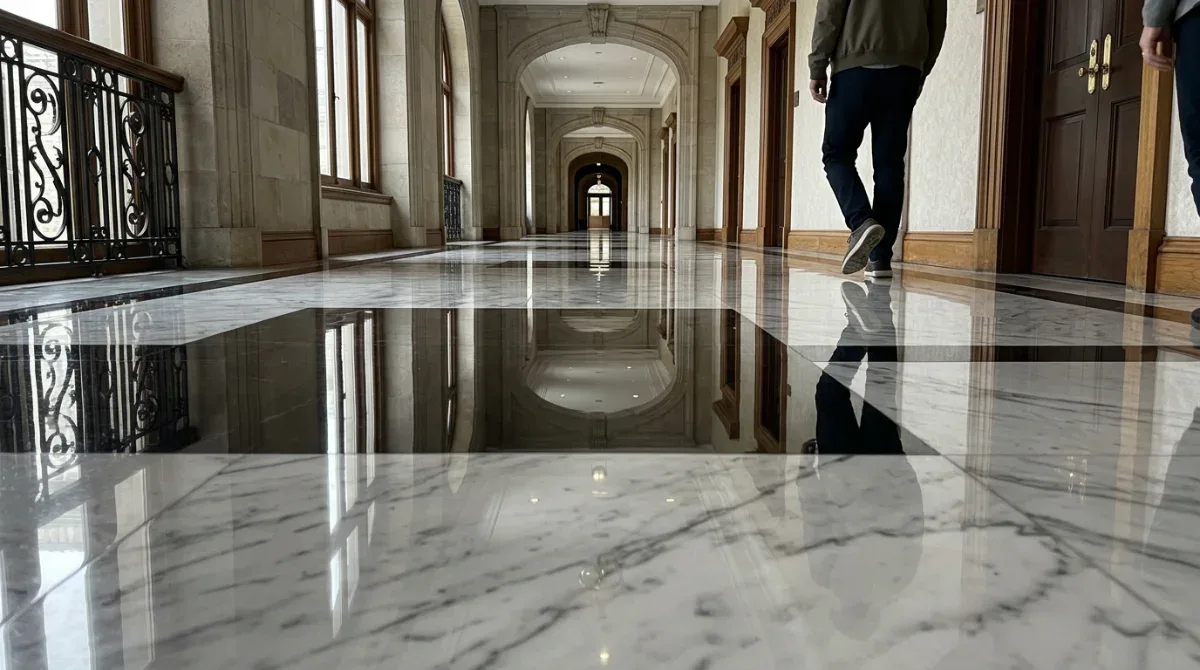
Hygiene and Durability in School and Hospital Floors
In short: Schools, nurseries, clinics and hospitals are places where heavy traffic, frequent cleaning and safety requirements all come together.
These buildings often have marble, granite, terrazzo or concrete floors. In this article, we cover the key points of floor renovation and maintenance in such buildings.
Priorities
Hygiene
In schools and hospitals, hygiene depends not only on how often the floor is cleaned, but also on whether the surface is in a condition that does not hold dirt.
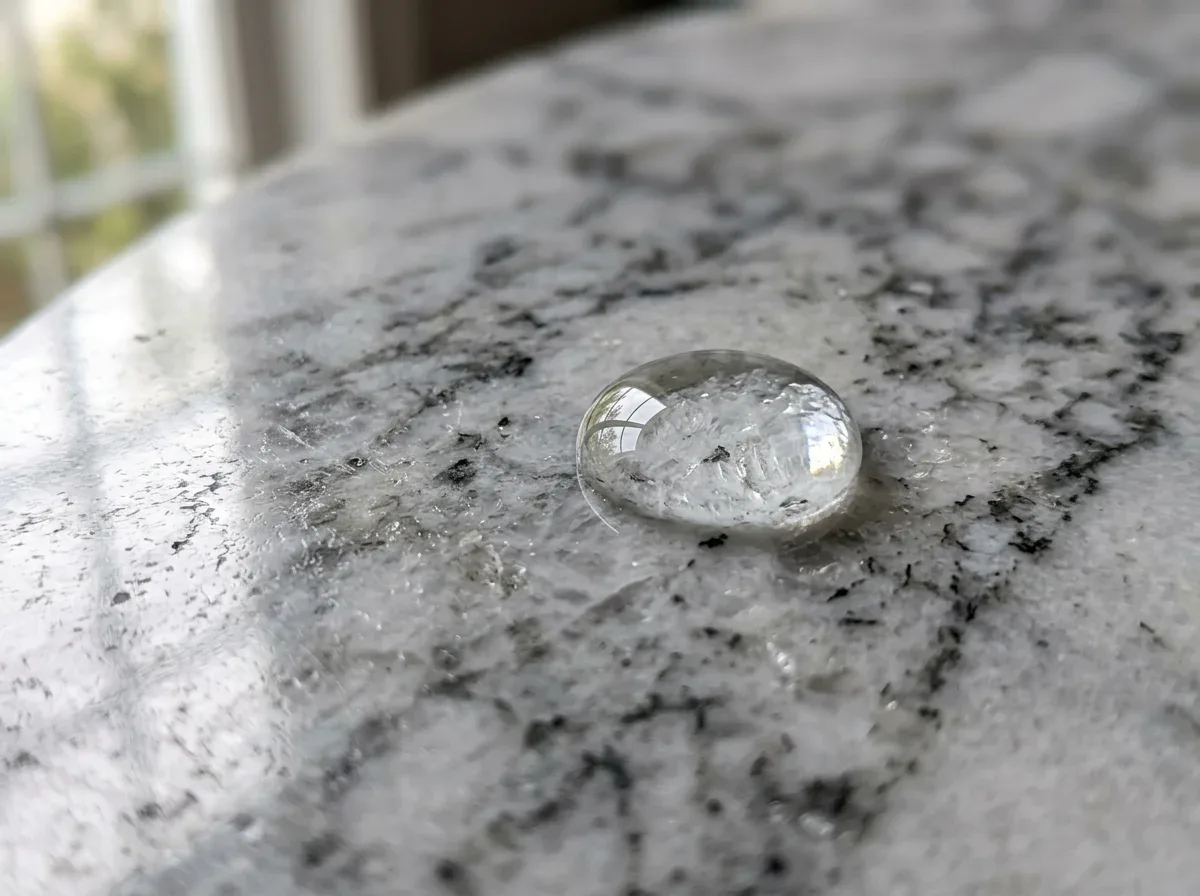
- Smooth, closed-pore surface: On a smooth surface with closed pores, there is little room for dirt and germs to cling to; the water and products used for cleaning also work more effectively.
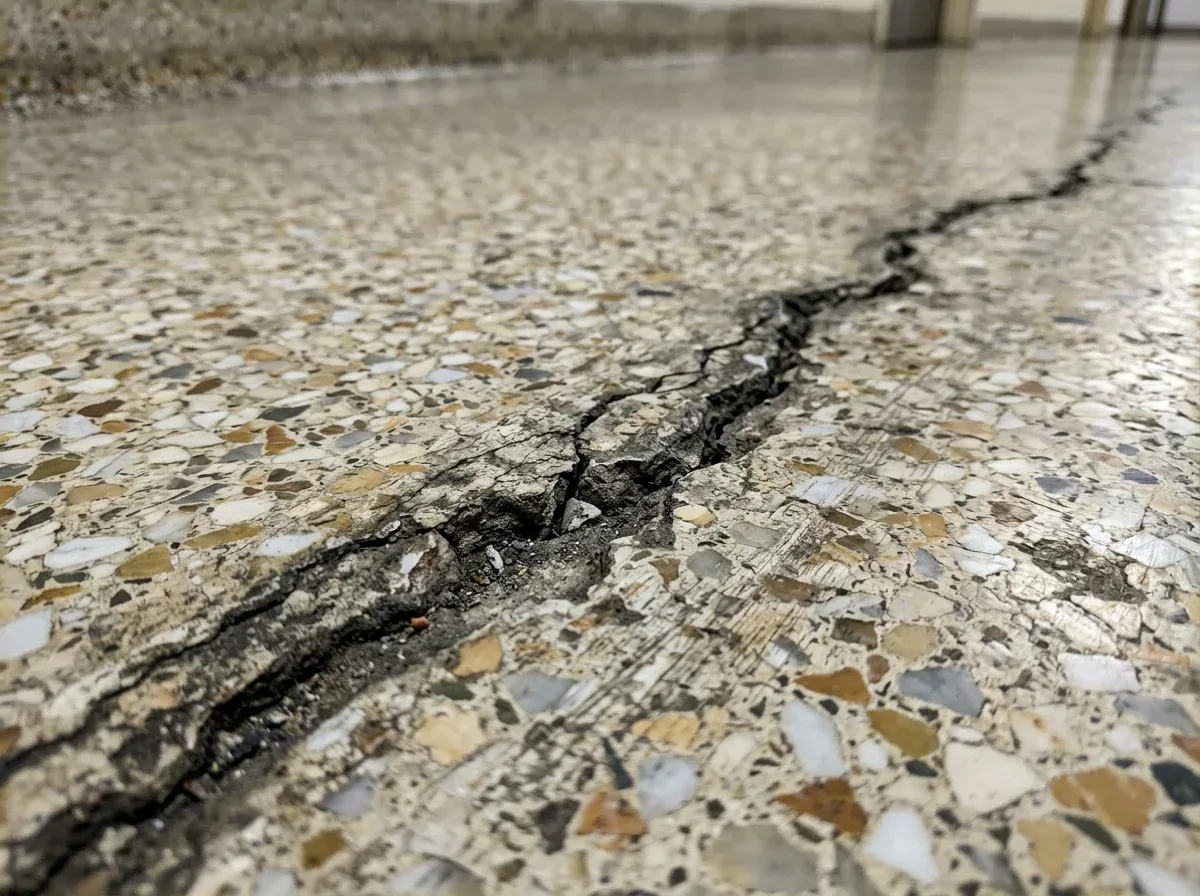
- Dirt accumulation points: Open pores, cracks and damaged joints create small gaps that the mop cannot reach, and dirt gradually builds up in these spots.
- Grinding, filling and joint renewal: Grinding levels the surface, filling closes open pores, and joint renewal repairs damaged gaps; as a result, the floor becomes easier to clean.
Slip resistance
In buildings used by students, patients and elderly visitors, the risk of slipping is a top consideration when choosing flooring.
- Priority areas: Slip resistance is a priority in corridors, entrances, stairs and wet areas, since both traffic and contact with water are heavy there.
- Honed or semi-matte finish: A very glossy surface becomes slippery when wet; therefore, honed or semi-matte options offer a balance that is both safe and easy to maintain.
Durability
In these buildings, the floor must bear not only foot traffic but also wheeled loads throughout the day.
- Continuous and wheeled traffic: Constant foot traffic along with stretchers, wheelchairs and carts wears down the floor along the same lines and quickly dulls walking paths.
- Hardener and proper surface treatment: Hardener on concrete, and proper grinding and protective treatment on natural stone, increase the surface's resistance to wear and extend the life of the floor.
Frequent Cleaning and Chemicals
Disinfectants and strong cleaning products are used frequently in these buildings. Some of them can damage natural stone and the slip resistance of the floor.
- Acidic products: Acidic cleaning products dissolve the calcite structure of marble and travertine; the surface dulls, becomes rough and begins to get dirty more easily.
- Film left on the surface: Some products leave a thin film on the surface after drying; when wet, this layer can make the floor slippery and increase the risk of slipping.
Work Planning
In these buildings, floor work must be planned so that it does not affect the safety of users or daily operations.
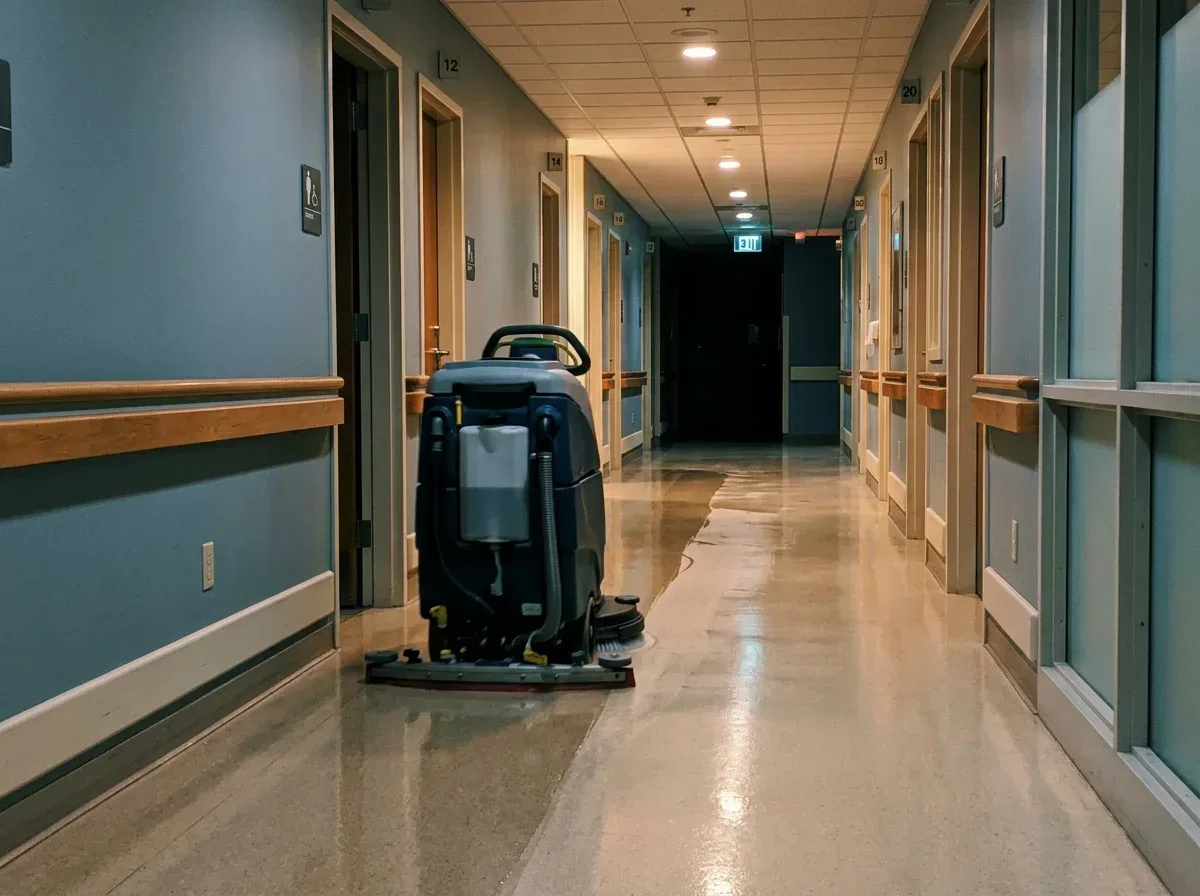
- Schools: In schools, floor work is carried out during summer and mid-term breaks; this way students do not enter the work area and the surface can complete its drying time without disturbance.
- Hospitals and clinics: In hospitals and clinics, work is carried out section by section, at night or at hours when patient traffic is low, so services are not interrupted.
- Dust and noise: Wet methods and dust-extraction machines minimize the dust released into the air during work, as well as the disturbance.

Recommendations by Area
| Area | Priority | Recommended finish |
|---|---|---|
| Main corridors | Durability, easy cleaning | Semi-gloss, crystallized or polished |
| Entrances | Slip resistance | Honed, long mat system |
| Stairs | Slip resistance | Honed, slip resistance on stair nosings |
| Wet areas | Hygiene and slip resistance | Honed, impregnated, sturdy joints |
| Technical and service areas | Durability | Concrete grinding and hardener |
Care When Using Disinfectants
Disinfection is mandatory in hospitals and clinics, so changing the product is not always possible. However, rinsing the floor with clean water after applying disinfectant prevents the product from building up on the stone and forming a film. Chlorine-containing products can weaken the impregnation when used continuously; in that case, the impregnation needs to be checked more often. The healthiest approach is to choose products together with the institution's hygiene team so that stone-appropriate, acid-free disinfectants are preferred.
Maintenance Recommendations
Regular and correct maintenance preserves both the hygiene and the safety of the floor for a long time in heavily used institutional buildings.
- Use grit-trapping and absorbent mats: Grit-trapping and absorbent mats at entrances stop most of the sand and water carried in from outside before it reaches the floor.
- Clean dry first: If sand and dust are not removed dry before wet cleaning, the mop drags these particles across the floor and scratches the surface.
- Use a soft pad: In machine cleaning, a hard pad can wear down the surface and dull it; a soft pad removes dirt while preserving the stone's shine.
- Have grout joints and pores repaired: If damaged grout joints and open pores are repaired without delay, dirt-accumulation points do not form and a major renovation can be postponed.
- Record slippery areas: When areas found to be slippery are recorded and corrected, spots with repeated slipping complaints can be addressed in a planned way.
Commercial and Institutional Buildings in Alanya
In schools, nurseries and healthcare facilities in Alanya, we schedule floor renovation work for periods of lowest use, such as summer holidays, mid-term breaks and night hours. We keep dust to a minimum with wet methods and dust-extraction machines, and we close off and reopen sections in sequence. In wet areas and on stairs, we treat slip resistance as a priority.
By Material

- Terrazzo: Common in older schools and hospitals; restored through grinding, filling, and polishing.
- Marble and granite: Grinding, honing or polishing, and impregnation.
- Concrete: Grinding and hardener; in service and technical areas.
Our Crystallization Polishing Service in Alanya

After honing, or on marble floors that have lost their shine but have no deep damage, we use crystallization polishing to enhance the surface's gloss and durability. It is a method that extends the maintenance interval in heavily used areas such as hotel lobbies, shops and apartment entrances.
We show you on site whether crystallization polishing or honing is the right choice for your floor. Explore our Crystallization Polishing service.
It is important to choose disinfectants and cleaners suitable for natural stone and to give maintenance staff the right information. — Expert Note