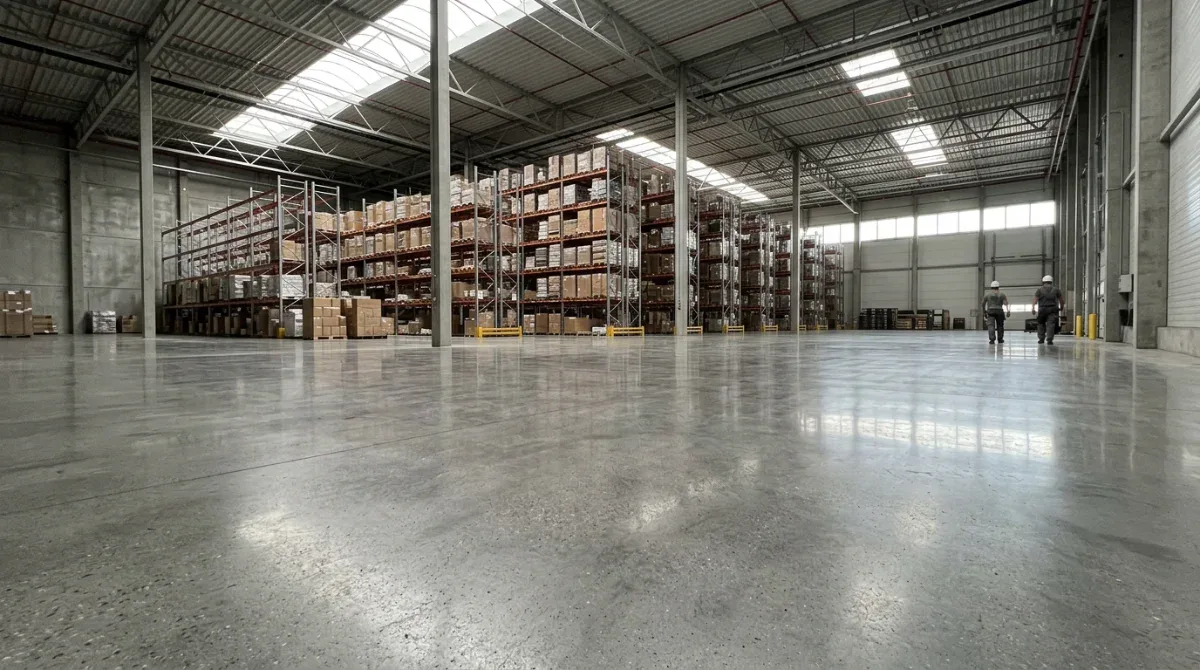
Forklift Traffic and Concrete Floor Wear
In short: In warehouse, logistics and production areas, the biggest load on a concrete floor comes from forklifts and pallet jacks.
Hard wheels, tight turns, braking and load wear down the concrete surface a little more every day. In this article, we explain the signs of forklift-related wear and the solutions.
Signs of Wear
Forklift-related wear first shows up on frequently travelled routes, at turning points and along joint edges.
- Wheel marks and dark streaks: On frequently travelled routes, the wheels polish and soil the surface; dark streaks running along the aisle are the first sign of wear.
- Dusting: The surface crumbles and produces dust; this dust settles on the products on the shelves and on machinery, and it reappears as you sweep.
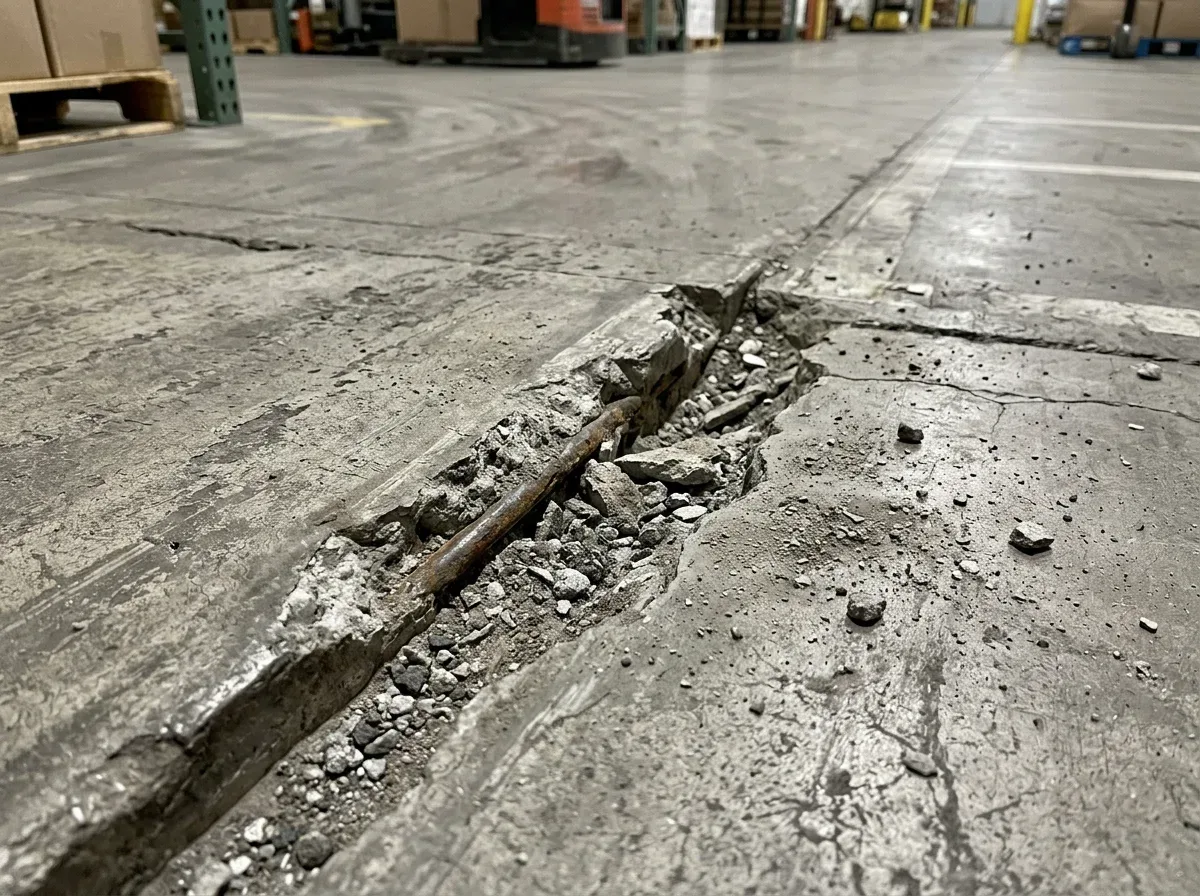
- Joint edge breakage: As the wheels hit the joints when passing over them, the joint edges crumble; as the damage grows, the impact becomes harsher with every pass.
- Spalling and potholes: Especially at turning and braking points, the wheel surface rubs against and strains the concrete, so it breaks away piece by piece and potholes form.
- Tire marks and oil: Hydraulic oil leaks and tire marks penetrate the concrete and leave stains; oily areas also become slippery and dangerous.

Why Does It Accelerate?
The rate of wear depends on the type of wheel, the load being carried and the initial strength of the concrete surface.
- Hard wheels: Hard polyurethane or metal wheels concentrate the load on a small area; because they do not absorb impact, they wear the concrete down faster.
- Heavy loads and tight turns: In tight turns made with a heavy load, the wheel rotates while scraping against the floor; this friction tears up the surface at turning points.
- Weak concrete surface: A weak or dusting concrete surface cannot withstand traffic; the top layer crumbles a little more with every pass and the wear deepens.
- Open joints: In open or emptied joints, the wheel drops into the gap and hits it; this impact breaks the joint edges and accelerates wear.
- Stones and debris on the floor: Small stones and debris left on the floor are crushed under the wheels and act like sandpaper, scratching the surface and creating pits.
Solution
1. Repair
Before grinding and hardener, broken and spalled areas are repaired; otherwise, damaged spots continue to grow even after grinding.
- Joint edge repair: The joint edges are repaired and the joints are filled with a suitable material that can withstand forklift traffic; this reduces the impact of the wheel on the joint.
- Pothole and spalling repair: Potholes and spalled areas are opened up to sound concrete and repaired; if a weak section is left, the repair material may come loose in a short time.
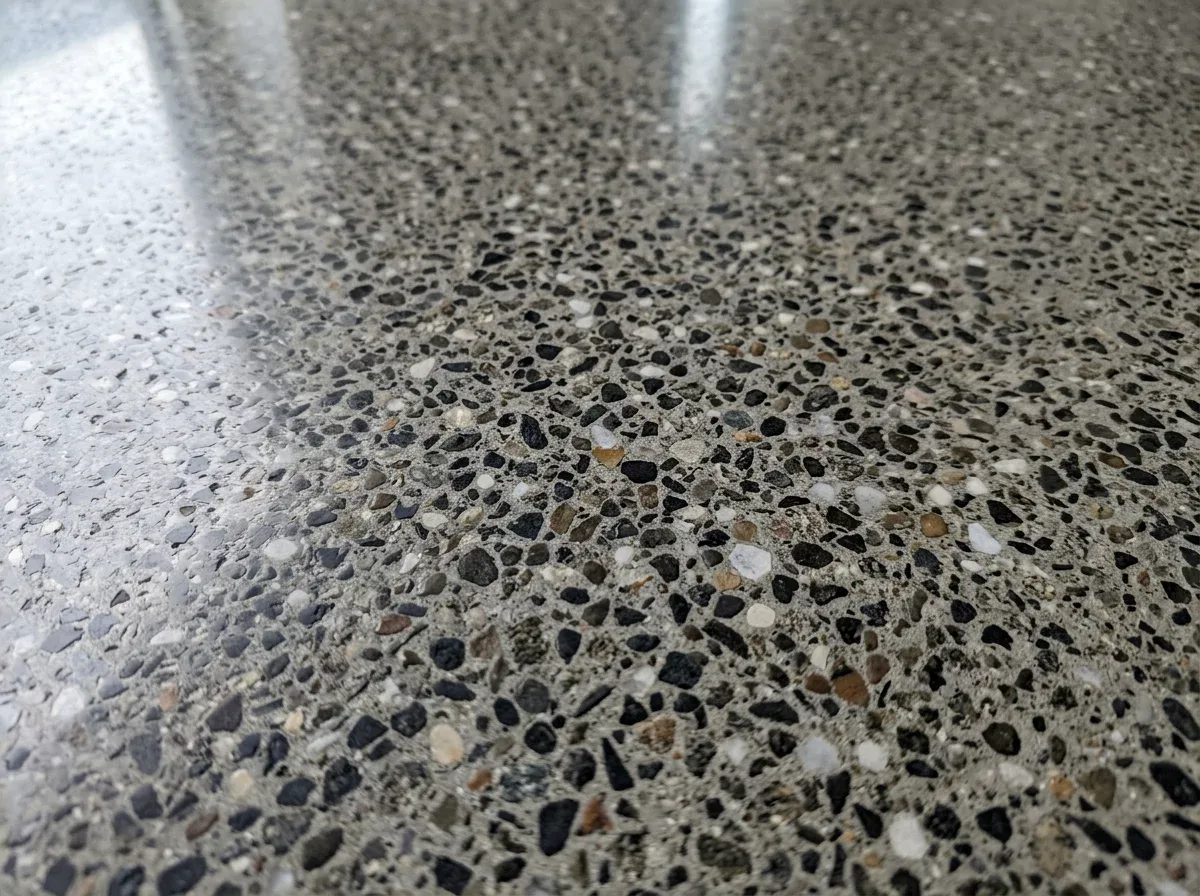
2. Grinding
The surface is leveled with coarse grinding and the weak top layer is removed.
3. Hardener
The hardener applied to the ground concrete reacts with the weak components inside the concrete, densifying and hardening the top layer. This process stops dusting and noticeably increases the surface's wear resistance against forklift wheels. Since the hardener does not form a layer on the surface that could come off, it does not peel or blister. The product is applied in one or two coats depending on the absorbency of the concrete, and any excess is removed rather than left on the surface.
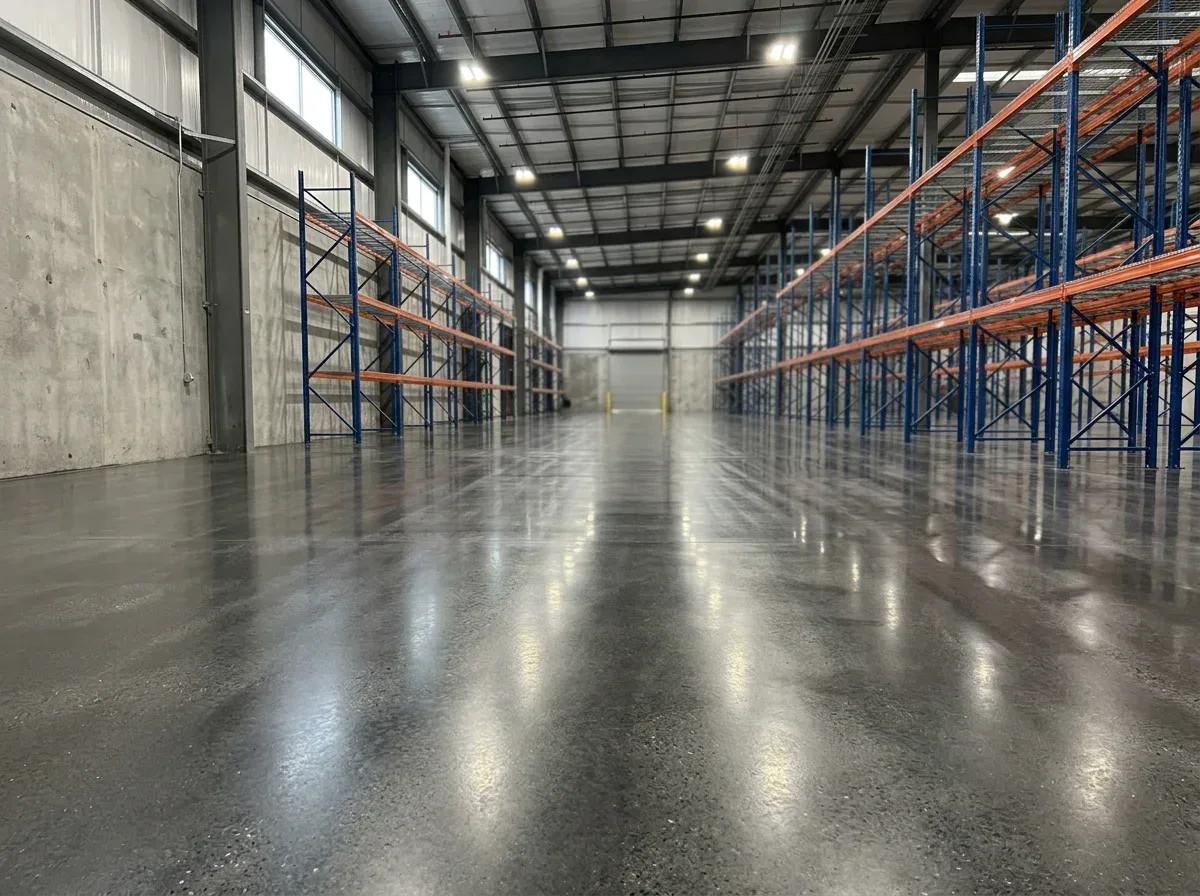
4. Polishing and Protection
If desired, a semi-gloss surface; it makes cleaning easier and contributes to lighting by reflecting light.
Work Plan
In the warehouse, the work is carried out in sequence by dividing the area into sections, without stopping shipping and production flow.
- Section-by-section work: The warehouse is divided into sections; work proceeds in turn between the racks and in the shipping areas, while operations continue in the remaining sections.
- Machines suited to narrow aisles: In the narrow aisles between racks, appropriately sized machines are used; this way the entire floor can be ground without emptying the racks.
- Weekends and between shifts: Work can be scheduled on weekends and between shifts; the job progresses faster during the hours when forklift traffic is at its lowest.
Solution by Type of Wear
| Symptom | Cause | Solution |
|---|---|---|
| Dusting | Weak top surface | Grinding and hardener |
| Joint edge breakage | Wheel impact, empty joint | Edge repair, semi-rigid joint filler |
| Spalling at turning points | Sharp turns, braking | Repair mortar, polishing |
| Dark wheel tracks | Tire and dirt buildup | Machine cleaning, polishing |
| Oil stains | Hydraulic leaks | Pre-cleaning, stain protector |
Wheel Selection and Operating Habits
One of the most effective ways to protect the floor is to choose the right wheels for forklifts and pallet jacks. Polyurethane or rubber wheels damage the floor far less than metal or very hard wheels. Wheel surfaces should be checked regularly, and worn or cracked wheels should be replaced. Operators can also noticeably slow wear by reducing sharp turns and sudden braking, crossing joints slowly, and being careful when setting loads down on the floor.
Regular Maintenance of the Warehouse Floor
After polishing and hardener application, the life of the floor is extended by small maintenance tasks carried out in the warehouse every day.
- Sweep regularly: Sweep the floor regularly; small stones and debris act like sandpaper under the wheels and scratch the floor.
- Weekly machine washing: Machine-wash weekly with a suitable product; dirt and wheel marks that build up on the surface are removed before they soak into the concrete.
- Clean up oil leaks immediately: Clean up hydraulic oil leaks immediately; oil left standing soaks into the pores of the concrete, leaving a permanent stain and a slippery surface.
- Check the joint fillers: Check the joint fillers once a year; if loose filler is not replaced, the joint edges start to break again from wheel impacts.
- Have small spalls repaired: Have small spalls repaired before they grow; because the wheel hits the edge of the damage on every pass, it can quickly turn into a wide pothole.
Warehouse and Logistics Floors in Alanya
In warehouses, hotel supply centers and production facilities in Alanya and the surrounding area, forklift traffic is the greatest load on concrete floors. In our concrete polishing work, we first repair joint-edge cracks and spalls, then strengthen the surface with polishing and hardener, and fill the joints with fillers suited to the traffic. We plan the work according to the warehouse sections and shift schedule.
Maintenance

- Daily sweeping; picking up debris such as stones and screws from the floor,
- Prompt response to oil leaks,
- Regular inspection of joints,
- Monitoring the condition of forklift tires.
Our Concrete Grinding Service in Alanya

We grind concrete floors in warehouses, factories, car parks, stores and homes and strengthen them with a hardener, creating a dust-free surface that is easy to clean. Depending on the look you want, we apply a matte, satin or glossy finish.
We inspect the age and condition of your floor on site and decide on the right method together with you. Explore our Concrete Grinding service.
A hardener strengthens the concrete surface, eliminates dusting and increases abrasion resistance. It is one of the most important steps in areas with forklift traffic. — Expert Note
Frequently Asked Questions
01Does the hardener prevent forklift marks?
02Can the work be done without moving the racks?
03Why do joint chips keep recurring?
04How long does it take?
05When can a floor treated with hardener be opened to forklift traffic?
06Is polishing necessary for a warehouse floor?
Related Posts
- Industrial Warehouse and Factory Floor Renovation
- Repairing Pits and Delamination (Spalling) in Concrete Floors
- Why Does a Concrete Floor Create Dust? What Does a Densifier Do?
- Removing Oil and Paint Stains from Concrete Floors
- What Is Concrete Grinding and How Is It Done? Turning Dusty Concrete into a Glossy Floor