Soap and Dirt Buildup on Turkish Bath Marble
In short: Most hotels in Alanya have a Turkish bath (hamam).
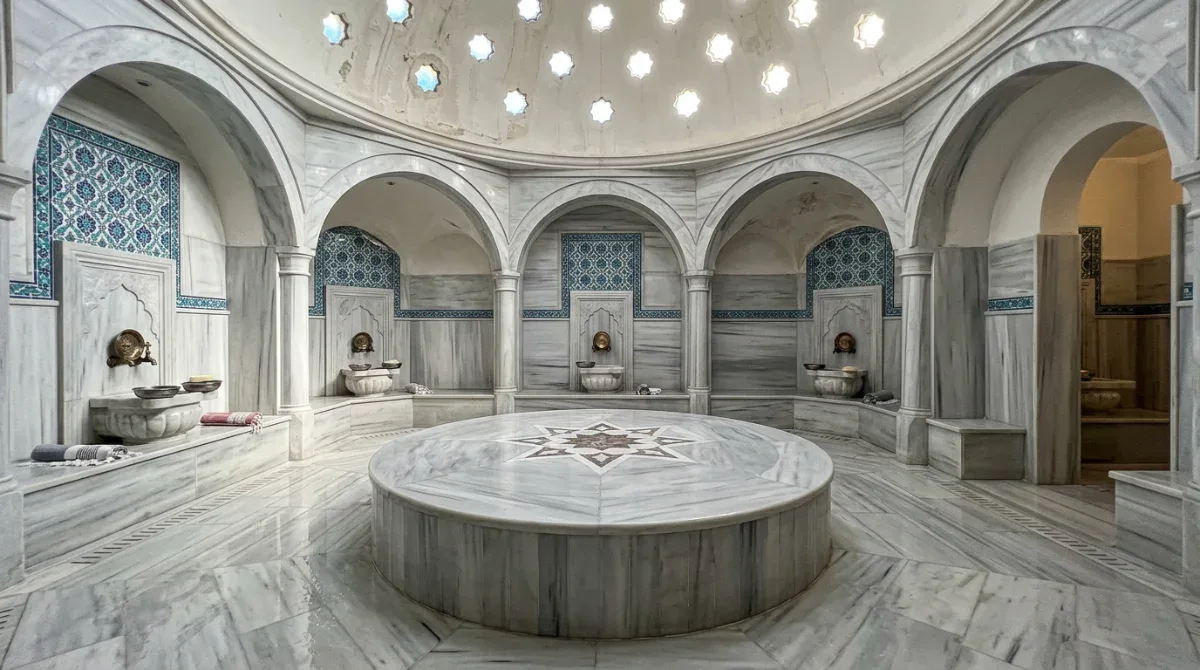
The central heated marble slab (göbek taşı), the basins (kurnas) and the floors come into contact with soap, foam, oil and hot water every day. Over time, the soap film that builds up on the surface dulls the marble, makes it slippery and turns into a hygiene problem. In this article, we explain how to clean and restore hamam marble.
How Does Soap Buildup Form?
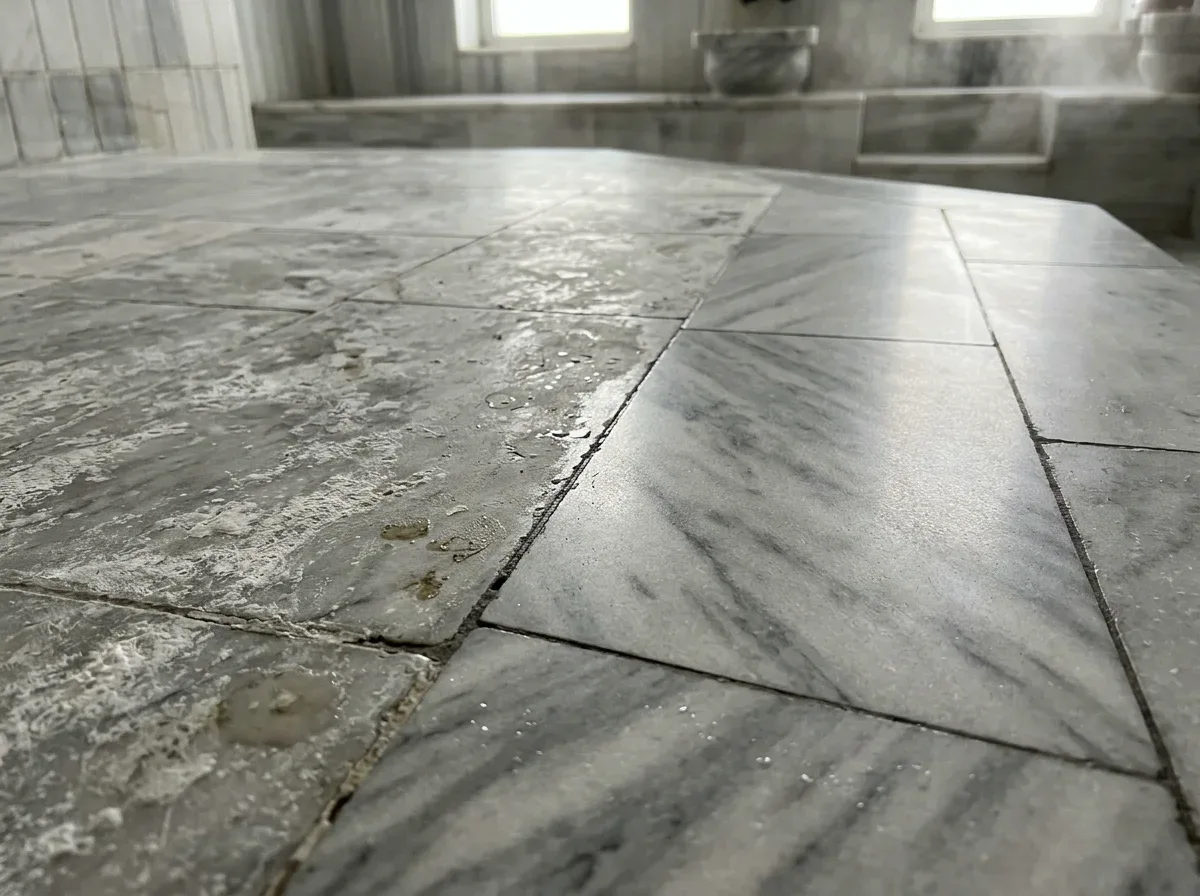
Soap buildup on hamam marble forms layer by layer as soap combines with hard water, oil and hot humidity and sticks to the surface.
- Deposits formed by hard water: When soap and foam combine with the minerals in hard water, they form a deposit that does not dissolve in water; this deposit does not simply wash away with rinsing.
- Mixture of oil and lotion: Massage oils and body lotions mix into this deposit; the oily layer becomes both stickier and harder to clean.
- Hot and humid environment: The hot and humid environment makes it easier for the deposit to stick to the surface; the layer dries, hardens and gets a little thicker with every use.
- Dulling and graying: The deposit traps dirt; as a result, the marble first loses its shine and turns dull, then looks grayish as dirt accumulates.
Problems
Soap deposit does not just spoil the appearance in a hamam; it also creates problems for safety and hygiene.
- Slipperiness: The soap film makes the surface dangerously slippery; the risk of falling increases when walking barefoot on a wet, soapy floor.
- Appearance: Marble that has trapped deposit looks dull, stained and neglected; even after the central slab and basins are cleaned, it still gives an impression of dirtiness.
- Hygiene: Deposit and dirt create a suitable living environment for microorganisms in a hot and humid setting; this turns into a hygiene problem.
- Odor: Soap and oil deposit that builds up in the pores can spoil over time and cause odor; even if the surface is wiped, the smell keeps coming from within.

Cleaning
To prevent deposit from building up on hamam marble, cleaning is carried out in a routine that ranges from daily rinsing to weekly brushing.
- Daily: After each use, the surface is rinsed with plenty of water and a cleaner suitable for the stone is used; soap and foam are removed before they dry on the surface and turn into deposit.
- Weekly: A deep cleaning with a brush is done once a week; products that dissolve soap deposit without harming the marble remove what daily cleaning leaves behind.
- Basins and corners: A soft brush is used on basins and corners; wire or abrasive sponges scratch the marble, and more deposit clings to the scratches.
Acidic products dissolve soap and limescale, but they also dissolve marble; if used frequently in a hamam, the surface deteriorates quickly.
Permanent Buildup and Restoration
Deposit and wear that have accumulated over the years cannot be removed completely by cleaning. In this case, restoration is needed, and the work is carried out in the following steps.
- Grinding (silim): Grinding removes the dirty, worn top layer that the deposit has penetrated; buildup that cleaning cannot remove can be eliminated completely only this way.
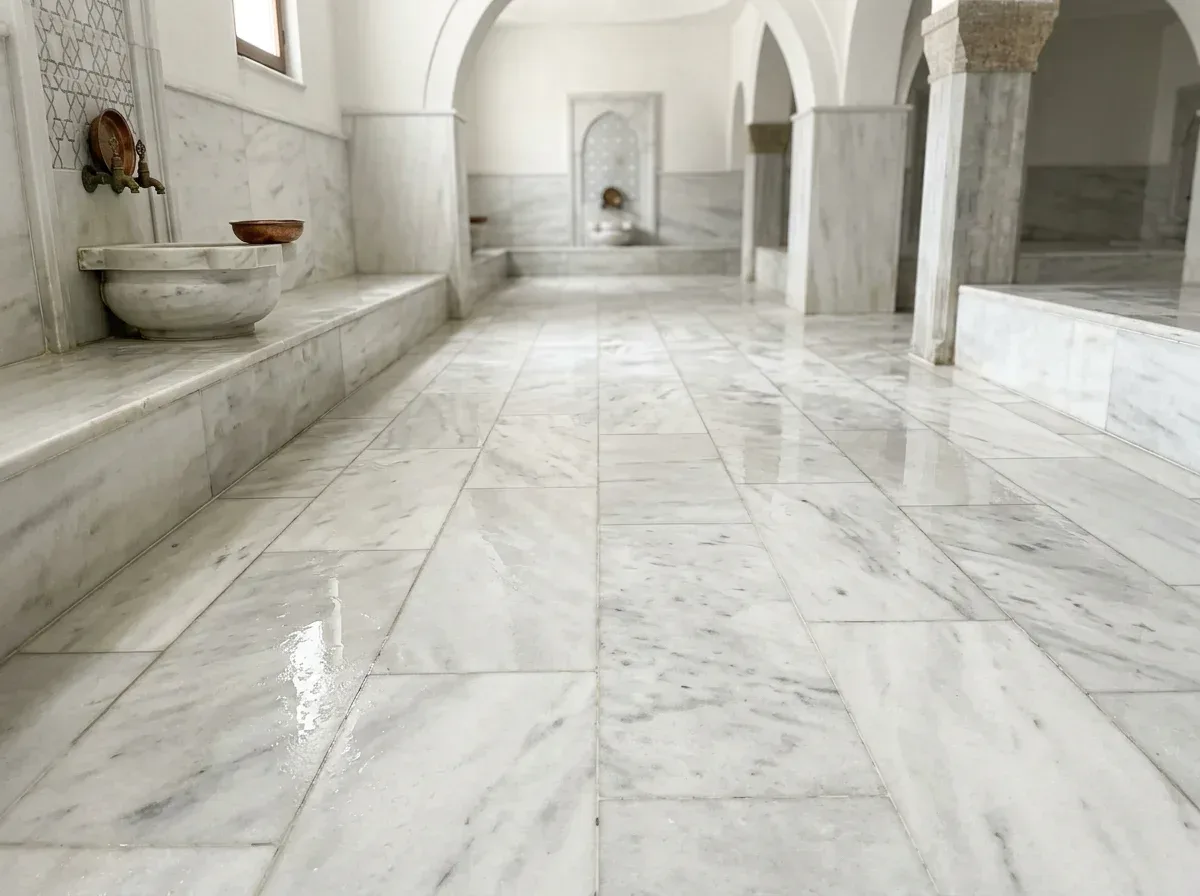
- Honing: For slip resistance, a matte, honed finish is preferred on hamam floors; it provides safer footing than a glossy surface on a wet, soapy floor.
- Central heated slab: The central slab is finished honed or semi-polished as desired; since it is a surface people lie on, appearance and grip are considered together.
- Impregnation: Finally, impregnation is applied with a product suitable for hot and wet environments; this slows the penetration of water, soap and oil into the pores.
Problem and Solution Table
| Problem | Cause | Solution |
|---|---|---|
| Slippery floor | Soap film, polished surface | Deposit cleaning, honing |
| Dull, grayish marble | Buildup of deposit and dirt | Deep cleaning, grinding if necessary |
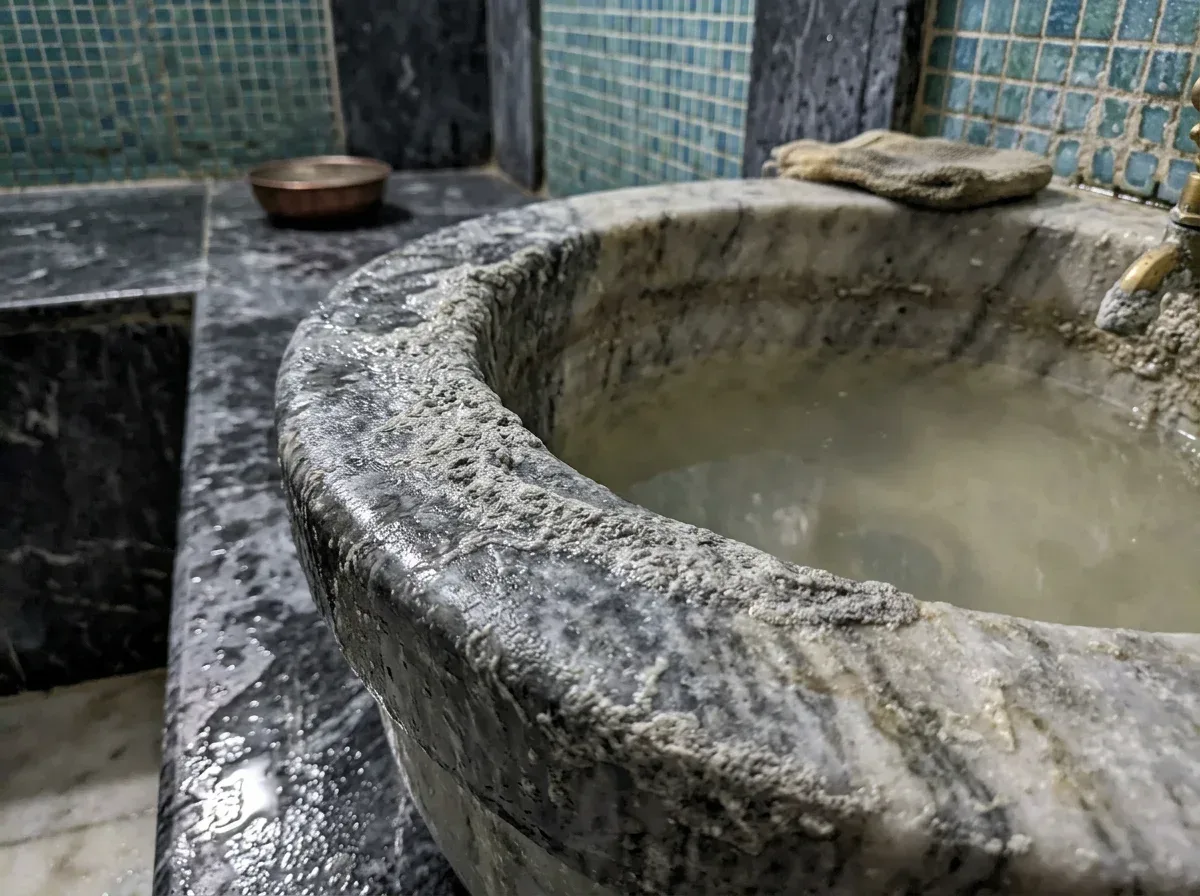
| Crust around the basin | Soap and limescale | Mechanical cleaning, grinding |
| Odor | Deposit built up in the pores | Deep cleaning, impregnation |
| Matte and rough surfaces | Use of acidic products | Honing and reprocessing |
For Hammam Staff
The longevity of hammam marble depends largely on daily cleaning. After each use, the central heated stone (göbek taşı), the basins and the floor should be rinsed with plenty of hot water, and no soap or foam should be left on the surface. Using soaps and oils suitable for stone, as the attendants (natır) do, reduces residue buildup on the marble. Instead of resorting to acidic products to quickly remove limescale or soap residue, a weekly deep cleaning with a brush should become a routine.
Condition of the Hammam During Renovation
During a hammam renovation, a work routine is followed that protects the marble and the plumbing, from heating to waste management.
- Switching off the heating: The heating is switched off and the marble is left to cool; honing and impregnation do not give proper results on hot stone, and the products dry too early.
- Working in sequence: The central heated stone, basins, benches and floor are treated in turn, so that the treated surfaces do not get dirty during the next stage of work.
- Removing honing slurry by vacuum: The honing slurry is not poured down the drain but collected and removed by vacuum; stone slurry that flows into the drain can settle and clog the hammam's plumbing.
- Gradual heating: Once the impregnation has cured, the heating is turned on gradually; sudden heat both disrupts the setting of the protection and can stress the stone.
Turkish Hammams in Alanya
In the Turkish hammams of hotels in Alanya, we frequently encounter slippery and dull marble caused by soap residue and limescale buildup from hard water. We usually carry out hammam renovation work in the off-season, when the spa section is closed for maintenance; we hone and finish the central heated stone, basins and floors with a honed finish, and protect them with an impregnation suited to hot environments. Afterwards, we recommend a simple daily maintenance routine to the hammam staff.
Maintenance Schedule

- Daily rinsing and cleaning,
- Weekly deep cleaning,
- Seasonal inspection and, if necessary, surface restoration.
Our Marble Honing Service for Hammams and Spas in Alanya

We remove the layer of soap scum, limescale and minerals that builds up on the central heated marble slab (göbek taşı), basins (kurna) and hammam floors, and we renew worn marble by honing it. In wet areas, we care less about shine than about slip resistance, and we finish the surface accordingly.
In hotel hammams and spa areas, we plan the work around the facility's schedule. Explore our Hammam Honing service.
In a bathhouse, glossy marble looks beautiful but is not safe. A floor that has been properly cleaned and honed protects guests and also extends the life of the marble.