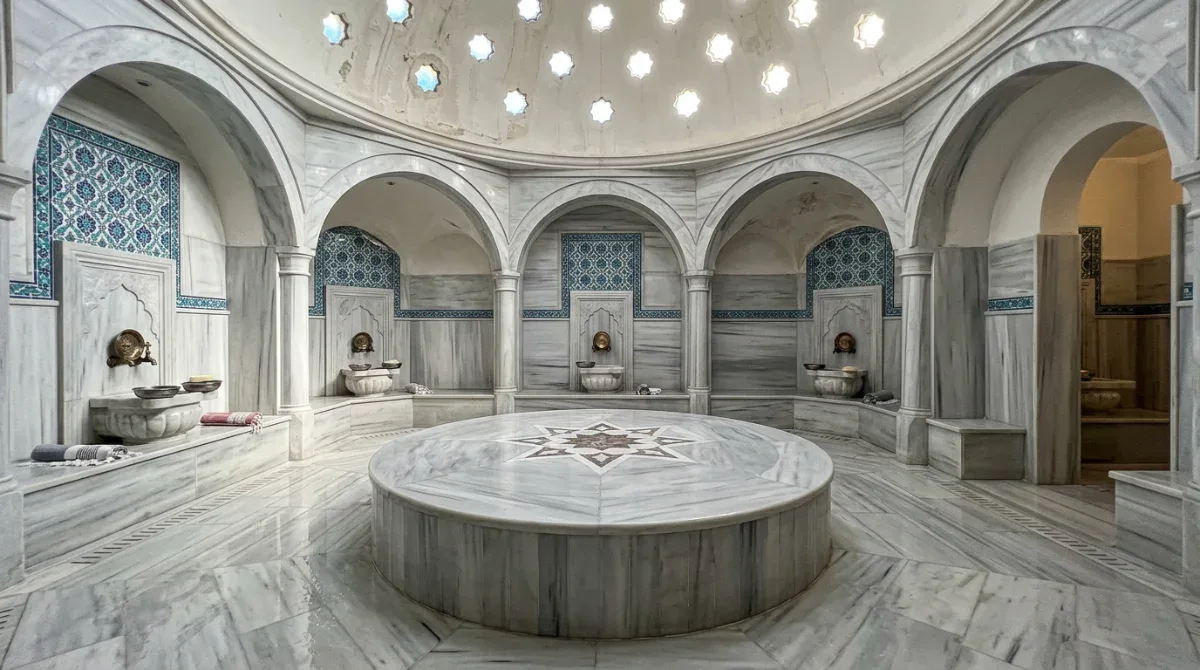
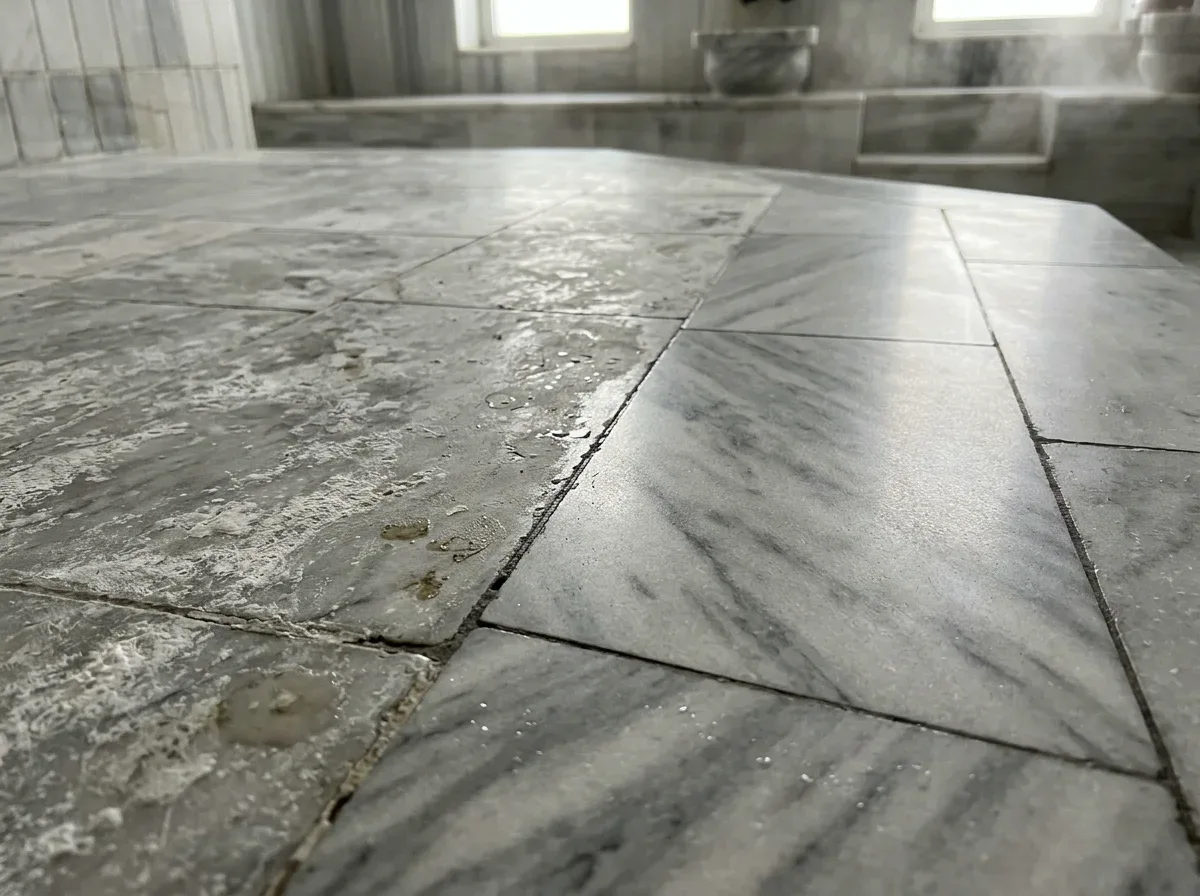
Restoring Hammam Heated Marble Slab (Göbek Taşı)
In short: The heated central marble platform (göbek taşı) is the heart of a Turkish bath.
In the spa areas of many hotels in Alanya, it is the surface that stands out most, both visually and functionally. Because it is constantly exposed to heat, water, soap and foam, over time it yellows, dulls, builds up limescale and may crack. In this article, we explain how a göbek taşı is restored.
What Does a Göbek Taşı Go Through?
Constant Heat
The göbek taşı is heated from underneath and stays warm throughout the day. Heating and cooling cycles can gradually enlarge the micro-cracks inside the stone.
Soap and Foam
Soaps, oils and care products used in scrub and foam massages build up on the stone's surface. When soap combines with the minerals in hard water, a sticky, gray-white layer known as "soap scum" forms.
Limescale
Water that is constantly poured leaves minerals on the surface as it evaporates.
Yellowing
Soap and oil residues, certain care products and the stone's own minerals can cause yellowing over time. This is the most noticeable complaint on göbek taşı made of white marble.
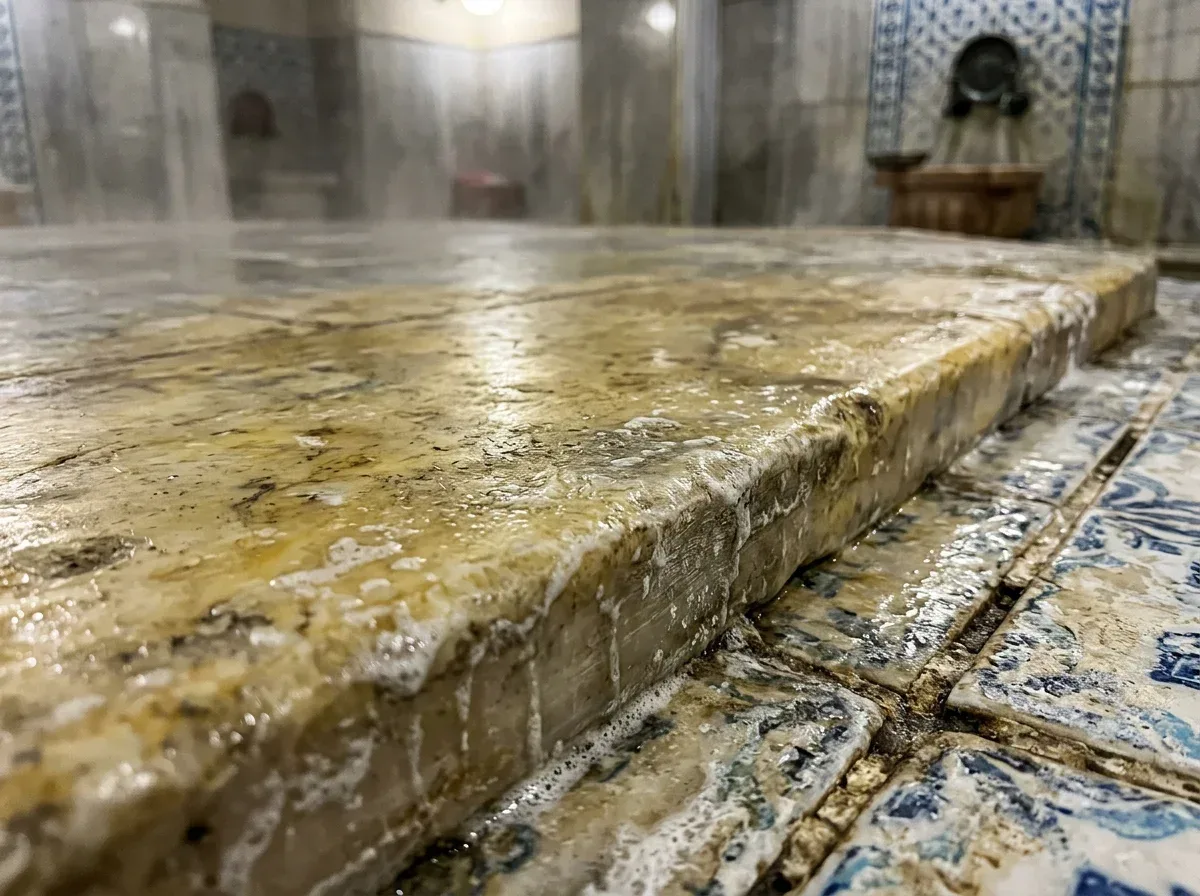
Improper Cleaning
Acidic products used to remove limescale erode the surface of the göbek taşı, leaving a dull, rough surface that gets dirty faster.
Restoration Steps
1. Cooling and Preparation
Before starting work, the heating of the göbek taşı is switched off and the stone is allowed to cool. Honing and applying chemicals on a hot stone will not give proper results.
2. Residue Removal
Soap residues and oil buildup are removed with suitable products that do not harm the stone. This step often reveals the true condition of the stone.
3. Stain Removal
On yellowed areas, poultice treatments can be applied depending on the source of the stain. Yellowing that has penetrated deep into the stone may not always disappear completely.
4. Repair
Chipped edges, cracks and wear around the basins (kurna) are repaired with color-matched filler. Heat-resistant repair materials should be chosen.
5. Honing
The göbek taşı is usually honed by hand and with small machines, together with its edges. The surface:
- Very smooth surface: Since people lie on the göbek taşı and receive scrub and foam massages, the surface is left smooth enough not to irritate the skin.
- Non-slip surface when wet: To prevent it from being slippery when wet, the finish stops at a honed or semi-polished surface rather than a mirror shine; this silky texture improves grip.
The surface is finished according to these two criteria. A mirror polish is generally not preferred on a göbek taşı.
6. Edges and Moldings
The moldings, seating ledges and basins of the göbek taşı are brought to the same finish, creating a cohesive look.
7. Protection
A breathable, heat- and water-resistant impregnating sealer can be applied. Products used in the hamam must be suitable for thermal conditions.
Basins and Walls
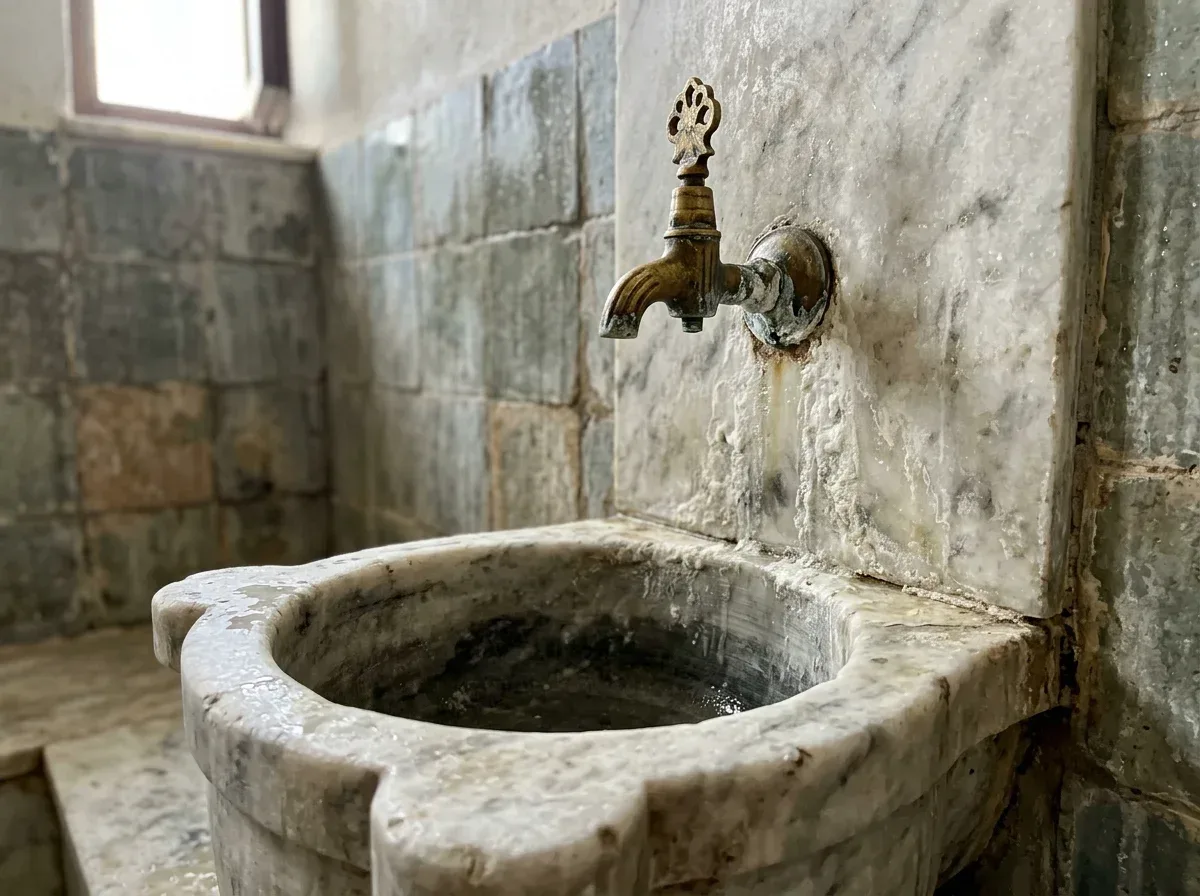
Because basins (kurna) take in water constantly under the tap, they are the spots in the hamam that collect the most limescale. The inner surface and rim of the basin are cleaned with the same approach as the göbek taşı; the limescale crust is removed mechanically with diamond pads rather than acid, and the surface is reworked. On wall marbles, water and steam marks, soap stains and darkening around the grout lines are cleaned; if necessary, the wall surfaces are also refreshed with light honing. Finishing the basin and the göbek taşı in the same tone and with the same surface gives the hamam a unified look.
Problems and Solutions for the Göbek Taşı
| Problem | Cause | Solution |
|---|---|---|
| Gray-white sticky layer | Soap and hard water residue | Stone-safe residue remover, honing |
| Yellowing | Oil, care products, the stone's minerals | Poultice treatment, honing |
| Dullness and roughness | Cleaning with acidic products | Gradual honing, honed finish |
| Chipped edges | Impact, thermal stress | Heat-resistant, color-matched filler |
| Hairline cracks | Heating-cooling cycle | Filling and honing, expert assessment if necessary |
When Is Restoration Needed?
The need for restoration on a göbek taşı shows itself through signs such as discoloration that does not go away with cleaning, roughness, limescale crust and chips.
- Gray or yellow surface after cleaning: If the surface still looks gray or yellow even after cleaning, it means soap residue and yellowing have penetrated the pores of the stone.
- Rough and snagging texture: If you can feel roughness when you run your hand over the surface, it has most likely been etched by acidic products; such a surface gets dirty faster.
- Thick limescale in the basins: Thick limescale that builds up inside and at the bottom of the basins cannot be removed by cleaning; it is removed mechanically with diamond pads and the surface is refinished.
- Chips and breaks along the edges: Chips and breaks along the edges spoil the appearance and also grow as they absorb water; they are repaired with a heat-resistant, color-matched filler.
- Feedback from guests: If guests give feedback that the floor does not look clean, the problem is often not the cleaning but the surface itself.
For most of these signs, there is no need to replace the heated marble slab (göbek taşı); with on-site honing and repair, the stone can stay in use for many more years.
Working Time and Hammam Closure
Renovating the göbek taşı, basins, and seating benches in a standard hotel hammam usually takes two to four days, depending on the condition of the stone and the repair needs. The heating must be switched off and preparations made one day before work starts so that the stone can cool down. After the impregnation has cured, the heating is gradually turned back on and the hammam is put back into use.
Hammam Renovation in Alanya
We carry out göbek taşı renovation in the Turkish baths of hotels in Alanya mostly in the off-season, when the spa area is already closed for maintenance. During our on-site inspection, we determine the type of stone, the source of the yellowing, and the condition of the cracks, and we tell you clearly in advance which result is realistic. In the video below, you can watch a marble surface renovation job carried out by our company.
Daily and Weekly Maintenance

- At the end of the day: Rinse the hamam central heated stone (göbek taşı) and its surroundings with plenty of lukewarm water, and do not leave any soap suds behind.
- Daily: Clean with pH-neutral products suitable for stone.
- Weekly: Deep clean with stone-safe products designed to remove soap residue.
- Do not use acidic products.
Our Marble Honing Service for Hammams and Spas in Alanya

We remove the layer of soap scum, limescale and minerals that builds up on the central heated marble slab (göbek taşı), basins (kurna) and hammam floors, and renew worn marble by honing it. In wet areas we care more about slip resistance than shine, and we finish the surface accordingly.
In hotel hammams and spa areas, we plan the work around the facility's schedule. Explore our Hammam Honing service.
Marble Surface Restoration Project
Basins and marble wall cladding accumulate the same buildup. The inner surface of basins and the areas under faucets are where limescale and soap scum buildup is heaviest; they should be treated together with the central hammam stone (göbek taşı). — Expert Note