Limescale and Mineral Buildup on Thermal Bath and Spa Floors
In short: Hotel spas, thermal pools, hammams and shower areas operate constantly with water and steam.
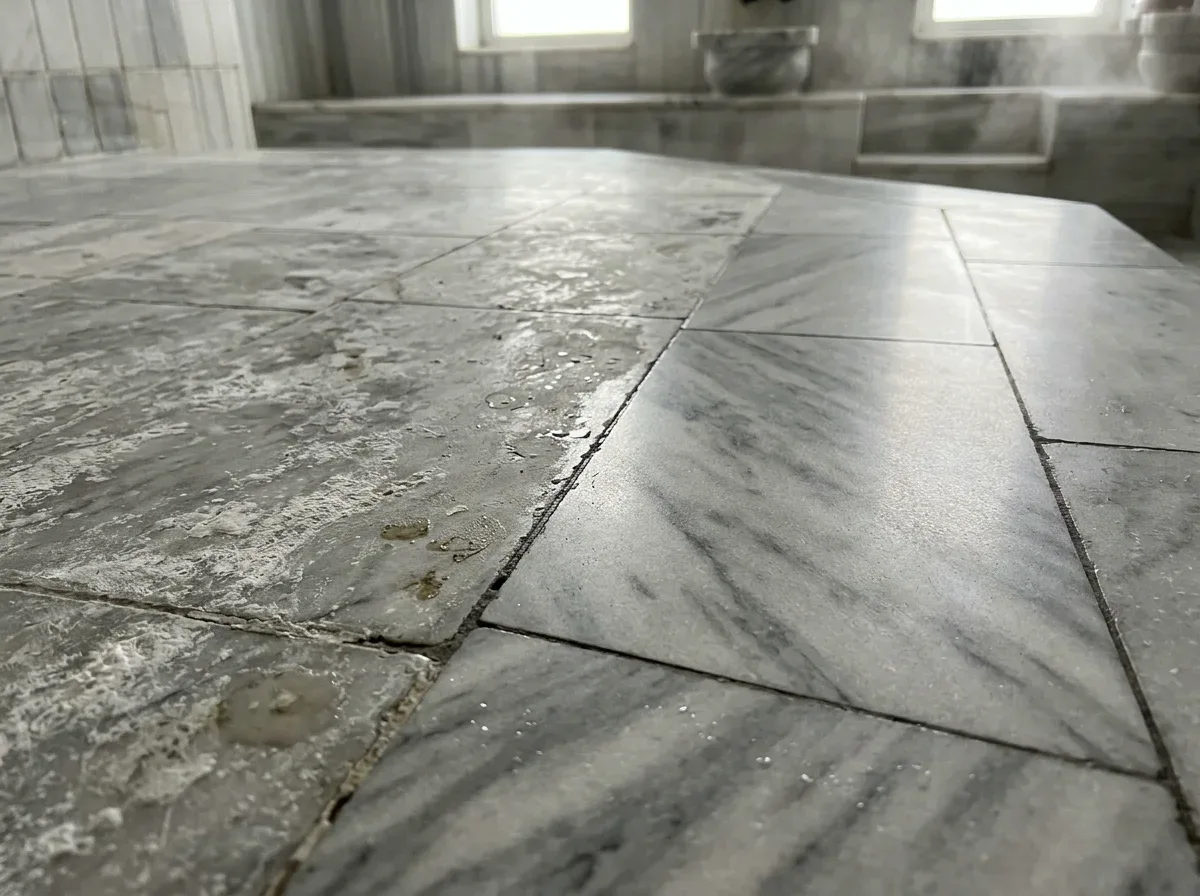
Over time, the minerals in this water form a crust on stone surfaces; the floor turns white, dulls, and its slip behavior changes. In this article we explain why mineral buildup occurs and how to clean it without damaging the stone.
Why Does Buildup Occur?
Mains water, well water and especially thermal waters carry dissolved calcium, magnesium and other minerals. When the water evaporates, these minerals remain on the surface:
- Under shower heads: On shower floors that receive constant water and dry out frequently, minerals leave a new thin layer with every evaporation and form a crust in a short time.
- Pool edge and waterline: A white or gray band of limescale builds up on the edge stones and at the waterline, where the water splashes and dries.
- Walls and floor of the steam room: As steam condenses on surfaces and evaporates again, it leaves minerals behind; because of the heat, buildup progresses faster here.
- Around the heated marble slab (göbek taşı) and the basin: Water overflowing from the basin and water evaporating quickly on the hot stone surface leave a thick layer of limescale around the heated slab.
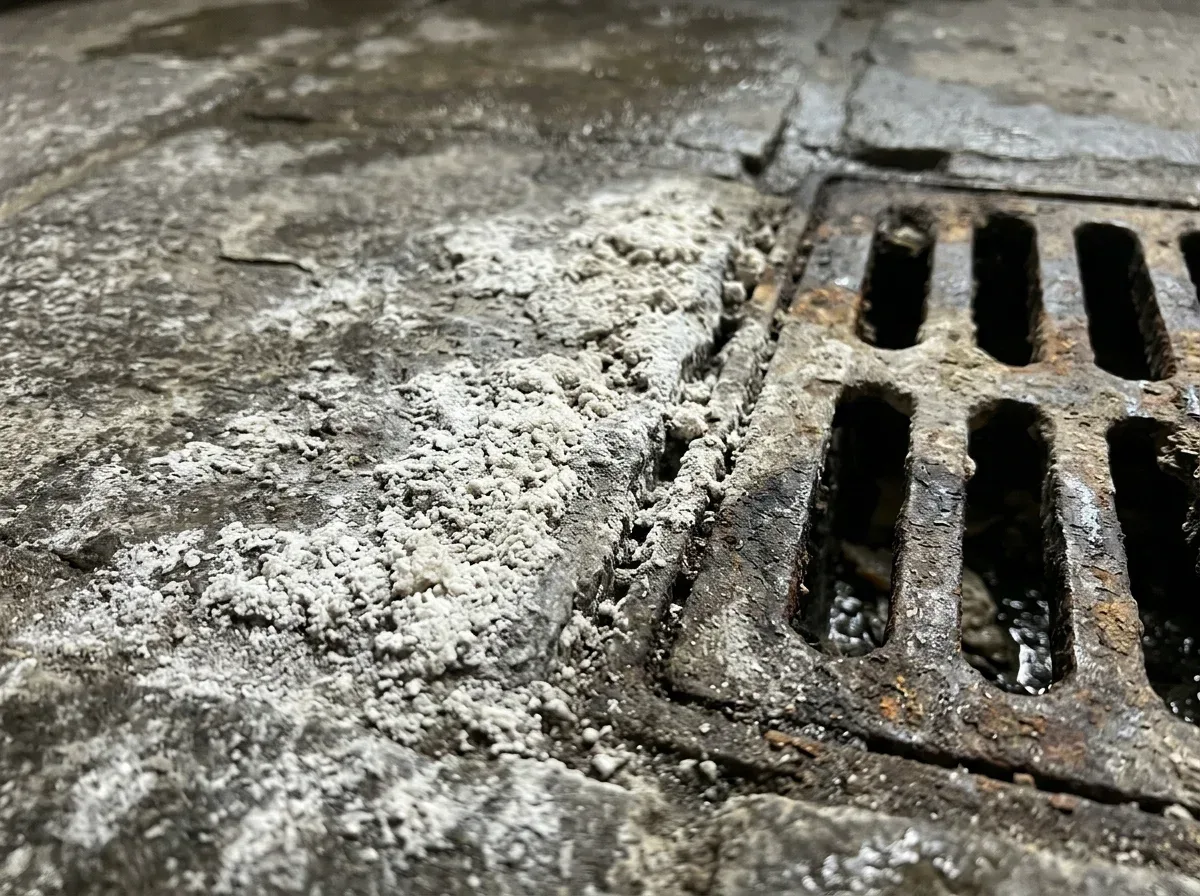
- Edge of drainage channels: Because all the water running off the floor passes over the channel edge, minerals and soap residue accumulate and crust along this line.
Hot water and steam speed up this process. In thermal waters, if the content includes iron or sulfur, yellow-brown stains may also appear.
Why Is It a Problem?
Limescale and mineral buildup affect not only appearance but also hygiene, safety on wet floors, and the stone itself.
- Appearance: White, gray or yellowish crusts make the floor look dirty and neglected even right after it has been cleaned.
- Hygiene: A rough crust gives dirt and microorganisms a surface to cling to; this makes it harder to clean the area fully with normal cleaning.
- Slip resistance: Sometimes the crust stays rough, and sometimes it combines with soap and oil to form a slippery layer that increases the risk of slipping on a wet floor.
- Damage to the stone: If the wrong product is chosen to remove the buildup, the stone suffers permanent damage; in most cases the real damage comes not from the limescale itself but from the cleaning.

The Biggest Mistake: Removing Limescale with Acid
Marble, travertine and limestone are chemically in the same family as limescale. An acid that dissolves limescale also dissolves the stone. When an acidic descaler is used on a spa floor:
- The polish is lost: Along with the limescale, the acid also dissolves the polished surface of the stone; even if the treated area is free of limescale, it stays matte and dull.
- The surface becomes rough: The eroded stone becomes more absorbent and gets dirty faster; minerals cling to these rough spots more easily and buildup accelerates.
- Grout joints deteriorate: Cement-based joints are also affected by acid; water seeps under the stone through eroded and emptied joints and causes new problems.
The situation may differ for ceramics and some granites with high acid resistance; but acid should never be used on calcite-based stones.
The Right Cleaning Approach
1. Knowing the Type of Stone
Marble, travertine, granite or ceramic; each one is cleaned differently.
2. Thin Buildup
Thin buildup that has not yet formed a crust can be removed with stone-safe products and soft tools, without the need for grinding.
- Acid-free mineral cleaners: Acid-free mineral cleaners suited to the stone type loosen limescale but do not dissolve the surface of marble and travertine.
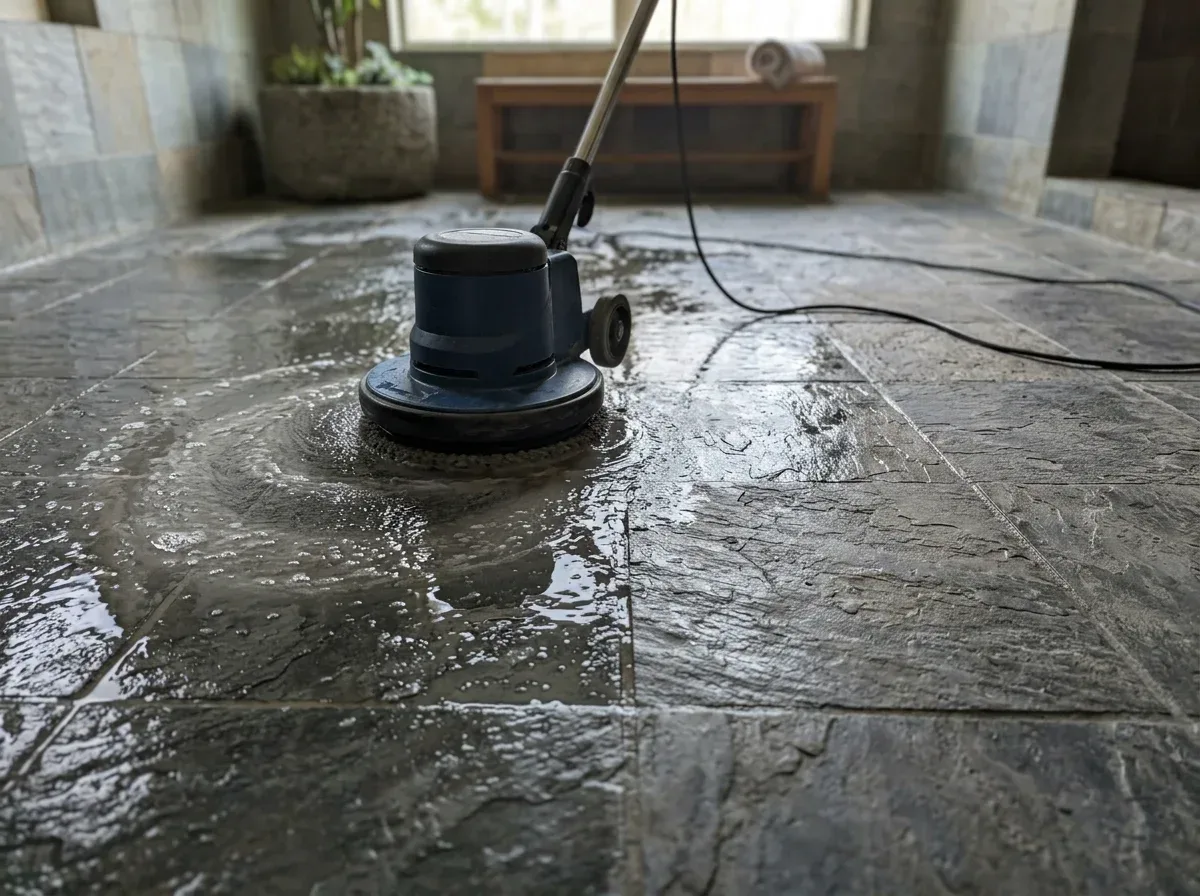
- Machine or brush with soft pads: The loosened buildup is removed with machines or brushes with soft pads; hard pads needlessly scratch the surface at this stage.
- Rinsing with plenty of clean water: The cleaner and the dissolved minerals are removed by rinsing with plenty of clean water; any residue left on the surface becomes the starting point of new buildup.
3. Thick Crusts
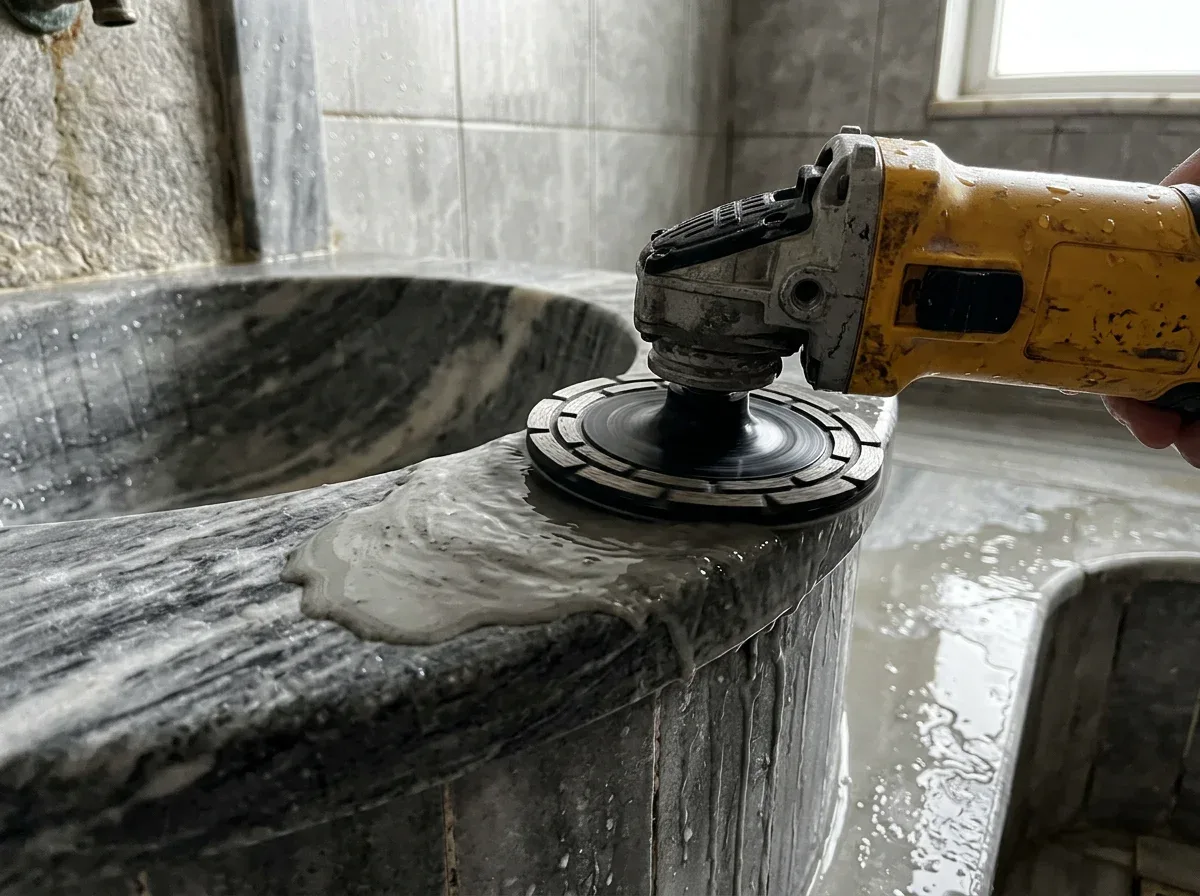
For thick limescale crusts, a mechanical method is preferred over chemicals: controlled grinding with diamond pads. This removes the crust, levels the stone surface and recreates the desired finish (honed or polished).
4. Slip Resistance Check
In wet areas, a glossy polished surface increases the risk of slipping. For this reason, grinding on spa, hammam and shower floors is usually finished with a honed (matte or satin) surface. After the crust is removed, the surface's slip behavior when wet is checked; if necessary, grip is increased with slip-resistance treatments suited to the stone. The balance between appearance and safety is determined together, according to how the area is used.
5. Protection
A breathable impregnating sealer suited to wet areas slows down the penetration of minerals and dirt into the stone.
Preventive Maintenance
Preventing buildup on spa floors is much easier than removing it once it has formed; maintenance is divided into daily, weekly and periodic tasks.
- Daily: Puddles are directed to the drain with a squeegee and the area around the shower is dried; when there is no water left to dry, no minerals are left behind either.
- Weekly: Machine cleaning is done with a pH-neutral stone cleaner; this removes soap and thin mineral layers before they settle into the stone.
- Monthly: Spots prone to buildup, such as under showers and around pool edges, are cleaned separately with acid-free mineral cleaners to prevent crust formation.
- Periodic: Surface refreshing and sealer checks are carried out; areas that have gone dull or whose protection has weakened are renewed before the buildup thickens.
- Water side: Where possible, installing and maintaining water softening systems noticeably reduces buildup, since they lower the mineral content carried by the water.
Limescale Removal by Stone Type
| Surface | Acidic product | Recommended method |
|---|---|---|
| Marble | Not used | Acid-free mineral cleaner; diamond pad honing for thick crust |
| Travertine | Not used | Acid-free product, pore filler check, honed finishing |
| Limestone / Hammam stone | Not used | Mechanical cleaning and honing |
| Granite | With care, depending on the product and the granite | Test on a small area first |
| Porcelain tile | Generally suitable | Choose a product that does not damage the grout joints |
Impact on Operations During the Work
Limescale removal and honing in spa and hammam areas require the area to be taken out of use. Depending on the size of the area and the thickness of the buildup, the work usually takes between one and several days. Steam rooms and hammams are cooled down before work begins and the water on the floor is drained; the wet honing slurry is not flushed down the drain but removed by vacuum collection. At the end of the work, the floor is rinsed, dried and sealed; once the sealer's curing time has elapsed, the area is reopened for use.
Quick Rules for Staff
The longevity of the floor depends largely on the staff who clean it every day following a few simple rules.
- Do not use general limescale removers: General products sold as limescale removers are mostly acidic and, on marble and travertine, dissolve the stone's surface along with the limescale.
- Avoid vinegar, lemon and bathroom cleaners: These products leave dull marks on marble and travertine; household-type quick fixes can cause permanent etching on stone floors.
- Squeegee the water toward the drain: Water left on the floor after closing evaporates overnight and leaves minerals behind; guiding it to the drain with a squeegee stops buildup at the source.
- Report whitening immediately: If whitening is reported as soon as it is first noticed, thin buildup is easily removed; early intervention reduces the need for honing.
- Test any new product first: If a new cleaning product is tested in a hidden corner, a product that damages the stone is spotted before it is applied to the whole floor.
Spas and Hammams in Alanya
Most hotels in Alanya have a spa, a Turkish hammam and a steam room, and the floors of these areas are mostly marble or travertine. The hard mains water in the region speeds up buildup, especially under showers and around the göbek taşı (central heated marble slab). For these heavily used areas during the season, we usually carry out limescale removal and honed finishing work off-season or at night, and then leave a simple maintenance plan that your staff can follow.
Special Note for Thermal Waters

Thermal waters can have a high mineral content. In these areas, maintenance intervals should be kept shorter, and when choosing stone, those with high acid and mineral resistance should be preferred.
Our Marble Honing Service for Hammams and Spas in Alanya

We remove the layer of soap, limescale and mineral buildup from the central heated stone (göbek taşı), basins (kurna) and hammam floors, and renew worn marble by honing it. In wet areas we care more about slip resistance than shine, so we finish the surface accordingly.
In hotel hammams and spa areas, we plan the work around the facility's schedule. Explore our Hammam Honing service.
For spa and hammam floors, a honed or lightly textured finish should be preferred over a glossy surface. Slip resistance after polishing should be checked under actual conditions of use. — Expert Note