Moisture and Mold at Sauna and Spa Entrances
In short: The entrances and exits of saunas, steam rooms, and spa areas are transition points where wet feet, towel water, and steam meet dry areas.
Moisture stains, darkened grout lines, mold, and unpleasant odors are common on the stone floors in these areas. In this article, we explain the causes and lasting solutions.
Why Are Transition Zones Problematic?
In transition zones, moisture comes from several sources at once, and the floor often never gets a chance to dry completely.
- Constant wet foot traffic: Water and soap residue are carried into the dry area; because footprints are renewed all day, the surface of the stone and grout never dries.
- Steam release: Whenever the door is opened, hot, humid air condenses in cooler areas; droplets that collect on the floor and thresholds create a suitable environment for mold.
- Lack of ventilation: Spa sections are often located in basements and windowless areas; since the humid air cannot be vented out, it stays at the floor and the base of the walls.
- Rugs and mats: Wet mats prevent the stone underneath from drying; moisture is trapped under the mat, and stains most often start at these spots.
- Grout lines: Cement-based grout absorbs water and holds organic dirt; a wet, nutrient-rich grout surface is the first place mold settles.

Symptoms
Moisture and mold problems usually show themselves through clear signs starting from the grout lines, corners, and under mats.
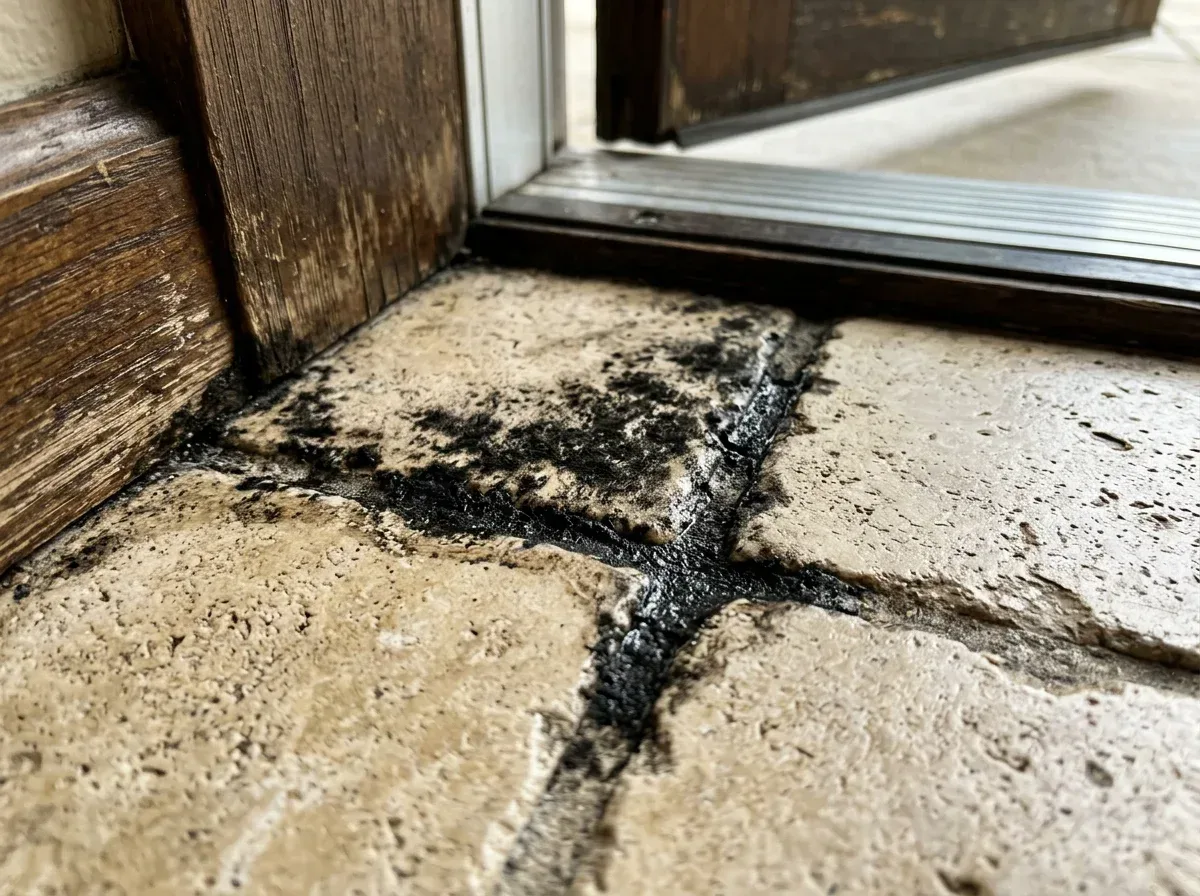
- Darkening in grout lines: Black, gray, or pink discoloration indicates a buildup of mold and bacteria; if it stays on the surface it can be cleaned, but if it goes deeper the grout needs to be renewed.
- Dark, wet-looking edges: Dark areas at the edges of the stone that do not dry show that water is being absorbed from the grout into the stone and remains there for a long time.
- Mold on thresholds and corners: Door thresholds and corners are both where the most condensation occurs and the hardest places to clean; mold spots appear here first.
- Stains under mats: Stains visible underneath when a mat is lifted clearly show that moisture has been trapped for a long time and the stone has been unable to dry.
- Damp or moldy smell: Even if there is no visible stain, a smell indicates that mold and organic dirt have built up in the grout lines or under the mats.
- Slippery surface: Soap residue and a biological layer form a thin film on the stone; the risk of slipping increases when stepping on it with wet feet.
Solution Steps
1. Reducing the Source
The first step of a lasting solution is to reduce the moisture and water reaching the floor so that the stone can dry.
- Review the ventilation: The capacity and operating hours of the ventilation should be reviewed; sauna and steam room doors should not be left open unnecessarily.
- Use suitable mats: Mats that hold water and dry quickly and do not harm the stone should be placed in transition zones; they should be lifted regularly and the area underneath dried.
- Check the slopes: Slopes should direct water toward the drain; on a floor with a reverse slope, water pools in corners and at thresholds, and mold develops most in these places.
2. Deep Cleaning
Deep cleaning removes mold and soap residue from the surface without damaging the stone, preparing the floor for renewal.
- Mold cleaning: Grout lines and the surface are cleaned with mold removers suitable for stone; on marble and travertine, acidic or strong chlorine-based products dull the surface.
- Removing soap residue: Soap residue forms a slippery layer on the stone that holds dirt and mold; if this layer is not removed, the cleaning loses its effect quickly.
- Rinsing and drying: The surface is rinsed with plenty of water and dried; no cleaner residue is left behind, and the floor is not left damp, giving mold no chance to start again.
3. Grout Renewal
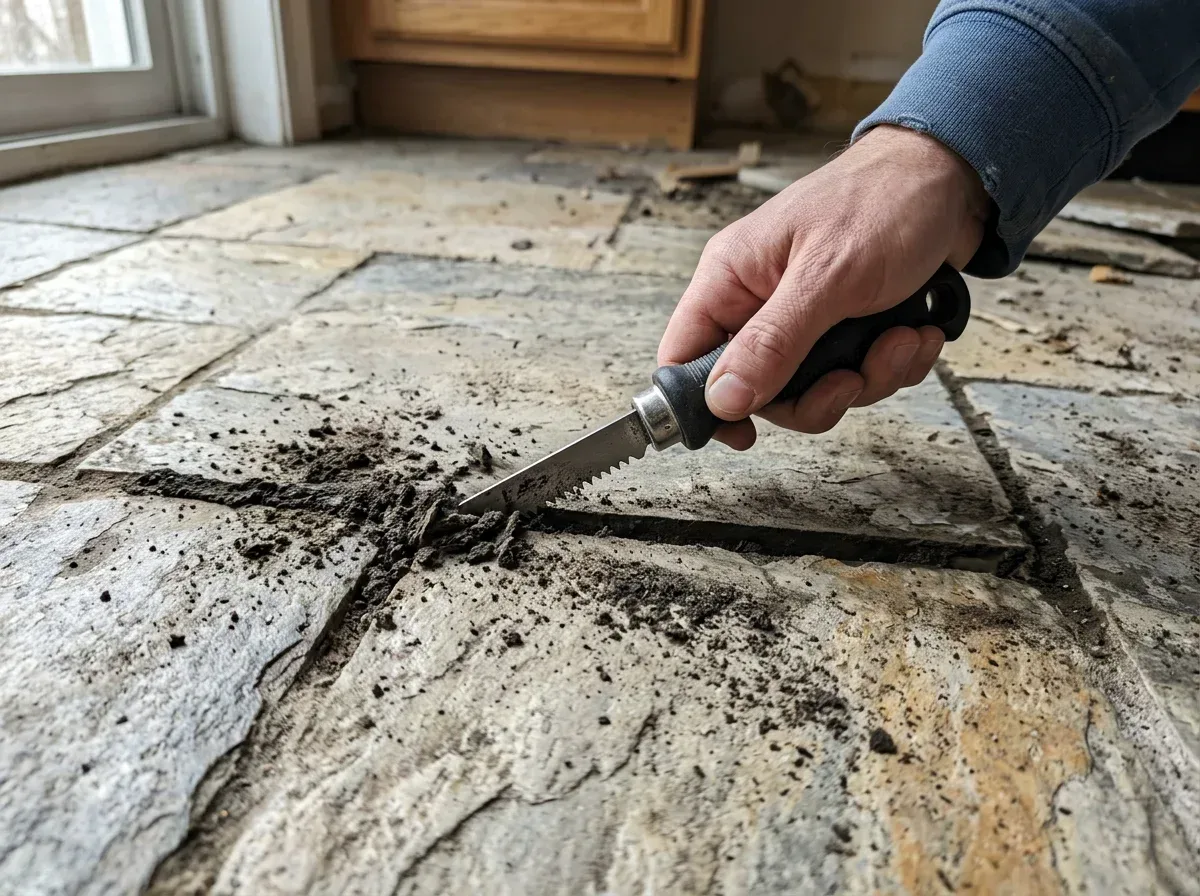
Surface cleaning is not enough for grout that is deeply darkened, cracked, or hollowed out. The old grout is scraped out and:
- Low water absorption: Grout that absorbs little water dries quickly after getting wet; since no moisture remains inside, darkening and odor formation slow down.
- Mold-resistant: Mold-resistant grout material makes it harder for fungi and bacteria to cling to the surface, even in constantly damp environments.
- Suitable for wet areas: Material produced for wet areas withstands hot water, steam, and frequent cleaning without cracking or hollowing out.
The grout lines are renewed with a grout material that has these properties. This is the step that most reduces the recurrence of the problem.
4. Surface and Slip Resistance
In wet transition zones, a honed surface should be preferred over a glossy one. With honing, the surface is both cleaned and adjusted for slip resistance.
5. Impregnation
Impregnation applied to the stone and grout joints reduces the penetration of water and organic dirt. Breathable products should be chosen for wet areas.
Daily Maintenance Recommendations
The aim of daily maintenance is to let the floor dry completely at least once a day and to catch mold before it starts.
- Drying and removing mats: Drying the floor and removing the mats at the end of the day lets the stone and the areas under the mats dry overnight.
- pH-neutral cleaning: pH-neutral products do not etch the surface of marble and travertine, and they remove soap residue and dirt without damaging the impregnation.
- Weekly grout check: Checking the grout joints every week lets you spot mold patches before they spread; early intervention postpones the need for grout renewal for a long time.
- Keeping the ventilation running: If the ventilation keeps running for a while during closed hours, the last humid air of the day is expelled and condensation does not settle on the floor.
Solutions by Source of the Problem
| Observation | Probable source | Solution |
|---|---|---|
| Darkening only in front of the door | Steam condensation, wet feet | Door check, absorbent mat, grout renewal |
| Dark stains under the mats | Moisture that does not dry | Changing the mat arrangement, cleaning, impregnation |
| Blackening in all grout joints | Insufficient ventilation, absorbent grout | Ventilation improvement, grout renewal |
| Wet appearance at the base of the wall | Could be a waterproofing problem | Waterproofing inspection by a specialist |
| Slippery, slimy surface | Soap residue, biofilm | Deep cleaning, honed finishing |
Care by Stone Type
Marble, travertine and granite are commonly used at spa entrances. Products used to remove mold on marble and travertine must not be acidic or strongly chlorinated; otherwise the stone surface becomes dull and stained. On light-colored marble, products containing bleach can also cause yellowing. Granite and porcelain tile offer a wider choice of products, but the grout joints must not be damaged either. In every case, the product should first be tested on a small, hidden area.
Work Plan
At spa entrances, lasting results are achieved with a plan that proceeds step by step, from identifying the moisture source to informing the staff.
- On-site inspection: The condition of the area and the moisture source are inspected on site; work done without seeing the ventilation, slope and mat arrangement is soon repeated.
- Deep cleaning and mold removal: Deep cleaning and mold removal are carried out; soap residue and biological dirt are removed from the surface and grout joints with products suitable for the stone.
- Grout renewal: Deteriorated grout is scraped out and renewed, then left to cure; grout that gets wet before curing cannot gain its strength and darkens again quickly.
- Honed finishing: The stone is wiped down with a honed finish; stains and the worn layer are removed, and a more slip-resistant surface is obtained for the wet transition area.
- Impregnation: A breathable impregnation is applied to the stone and grout joints; the penetration of water and organic dirt is reduced, and moisture inside can still escape.
- Maintenance recommendations for staff: Daily maintenance recommendations are shared with the staff; drying, mat arrangement and the use of suitable products keep the result lasting for a long time.
Spa Areas in Alanya
In hotels in Alanya, spa areas are mostly located in the basement or on the ground floor, in areas with limited natural ventilation. The hot and humid outdoor conditions in summer can also increase condensation indoors. In these areas we complete grout renewal, honed finishing and impregnation outside the season; we also offer the business simple recommendations on mat arrangement and ventilation hours. If there is persistent dampness at the base of the walls, we point out that it may be a waterproofing problem and recommend consulting a waterproofing specialist.
When Is There a Bigger Problem?

If moisture keeps seeping from the edges of the stone, paint is bubbling at the base of the walls, or the odor won't go away, the problem may not be limited to the surface. There could be a leak in the insulation, plumbing, or drain connections. In that case, the underlying infrastructure should be inspected first.
Our Marble Honing Service for Hammams and Spas in Alanya

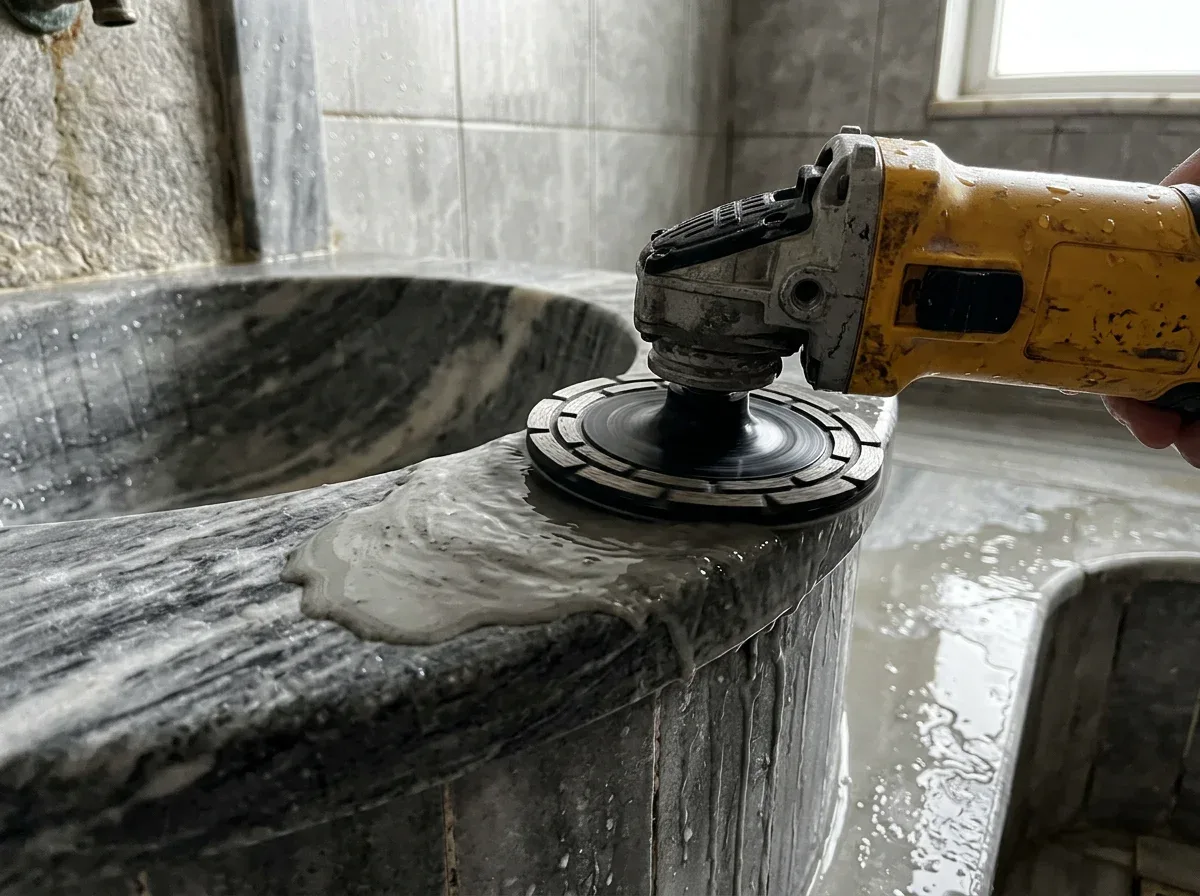
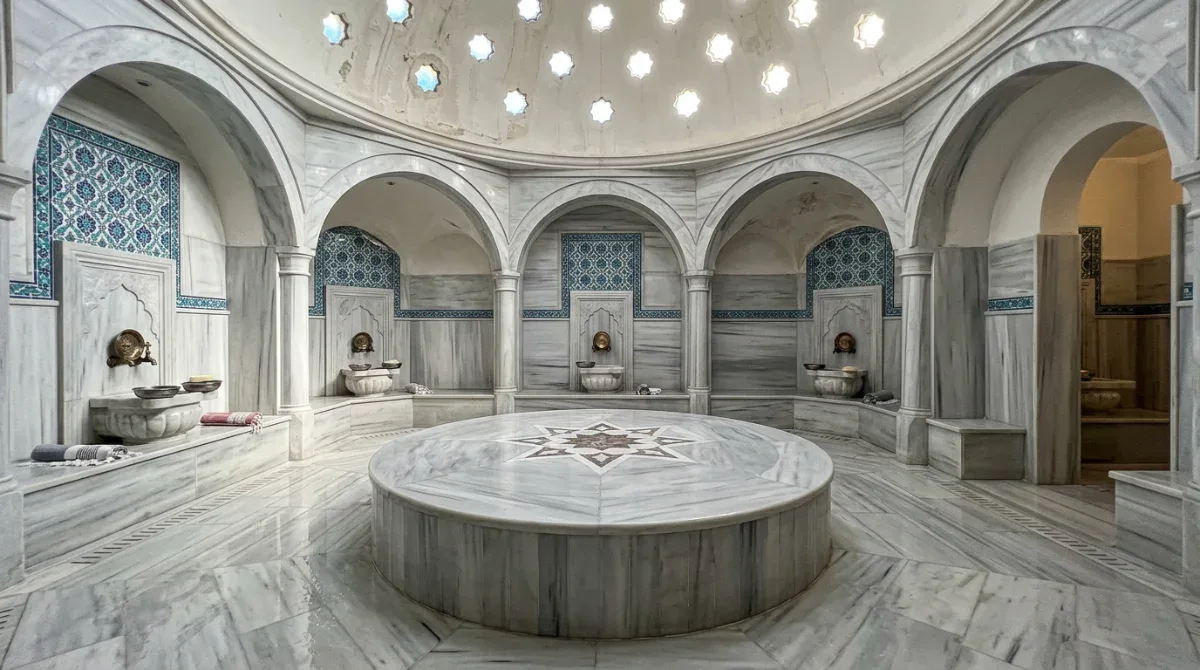
We remove the layer of soap scum, limescale and minerals that builds up on the central heated stone (göbek taşı), basins (kurna) and hammam floors, and we renew worn marble by honing it. In wet areas, we care more about slip resistance than shine, so we finish the surface accordingly.
In hotel hammams and spa areas, we plan our work around the facility's schedule. Explore our Hammam Honing service.
Bleach and high-chlorine products, when used regularly, damage grout joints and may leave marks on some stones; they should be used carefully and diluted. — Expert Note