The Effect of Pool Water and Chlorine on Natural Stone
In short: Most villas, residential complexes and hotels in Alanya have a pool, and the pool surrounds are largely clad in natural stone.
Pool water, chlorine, salt and pH adjusters can wear stone down quickly when combined with sunlight. In this article, we explain how pool chemicals affect stone, the signs of damage and ways to protect it.
What Is in Pool Water?
Pool water is not just water; each of the chemicals and minerals added to it affects the coping stones differently.
- Chlorine and chlorine compounds: Used to disinfect the water; when they dry repeatedly on the stone, they can contribute to discoloration and erosion on the surface.
- pH adjusters: Acid is used to lower the water's pH and alkaline products to raise it; acidic ones can etch the surface of marble and travertine.
- Salt: Salt is added to the water in salt chlorination systems; as the salt that enters the stone's pores dries, it crystallizes and can cause flaking on the surface.
- Calcium and minerals: Calcium from water hardness and some chemicals forms a white limescale band over time on stones at the waterline.
- Algae inhibitors and clarifiers: These products, which keep the water clear, also reach the stone with water splashing onto the edge, and their residues build up on the surface if not rinsed off regularly.
These substances reach the coping stones as pool water splashes, as swimmers get out and during cleaning.

Effects on Stone
Acid and pH Changes
If the water's pH is low, or if a pH-lowering chemical is spilled onto the edge, calcite-based stones such as marble and travertine are etched. Symptom: a dull, rough surface that stains easily.
Salt Crystallization
Salt water enters the stone's pores. When the water evaporates, the salt crystallizes and grows, putting pressure on the pore walls. Over time:
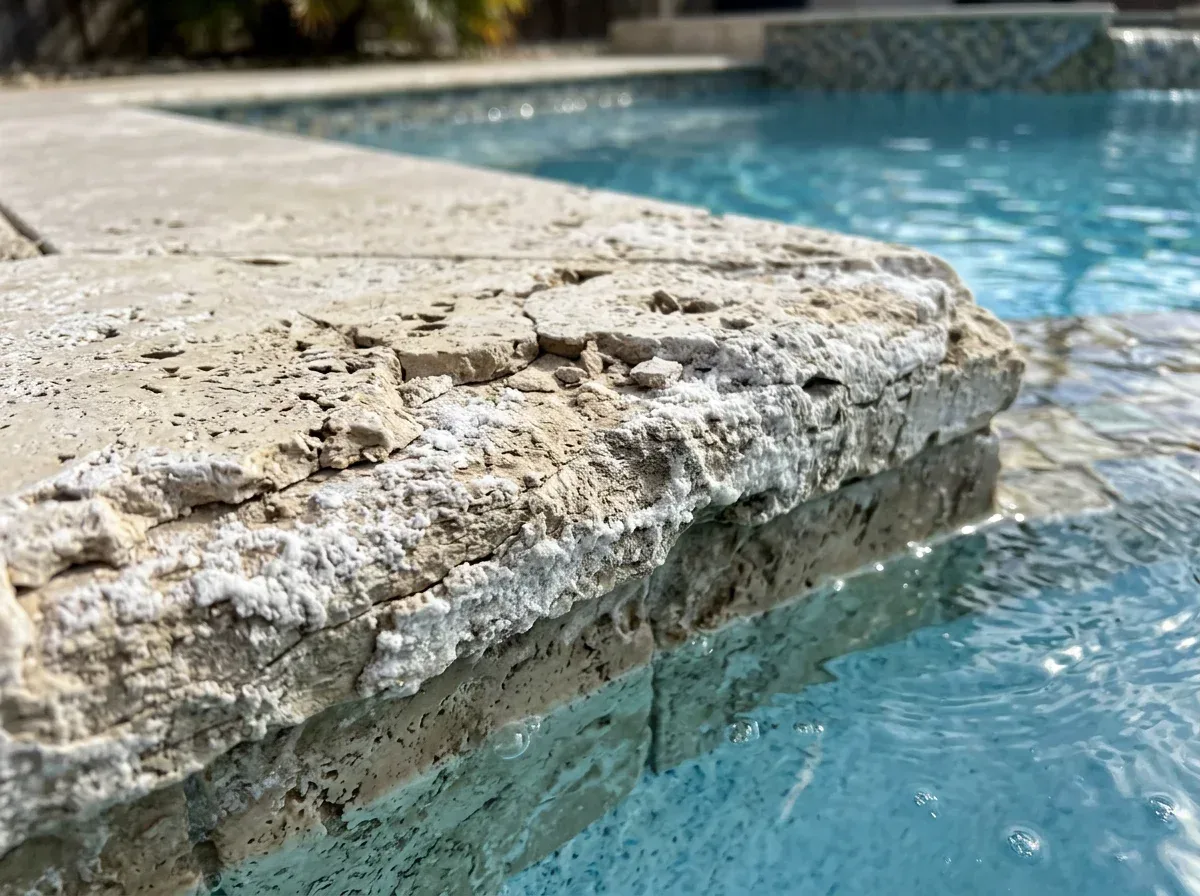
- White salt marks: As water rising from the pores to the surface evaporates, the salt is left behind, forming white marks on the stone that reappear even when wiped away.
- Flaking and dusting: Salt crystals growing in the pores push the stone's top layer outward from within; the surface lifts off in thin flakes or leaves dust when touched.
- Crumbling at the edges: Because slab edges and corners take the most water and impact, salt damage first appears here as crumbling.
Porous travertines are the stones most susceptible to this effect.
Limescale Band
Mineral buildup at the pool's waterline and in the splash zone forms a white band.
Discoloration
Chlorine and some chemicals can lighten the stone's color or leave stains. In water containing iron, yellow-brown stains may form.
Slipperiness
Algae, biofilm and sunscreen residues make coping stones slippery.
How Durable Is Each Stone?
The behavior of the stones used around pools toward chemicals, salt and slipping differs markedly from one to another.
- Travertine: Very common around pools thanks to its appearance; however, because it is porous and calcite-based, it requires maintenance and should be protected with a sealer.
- Marble: Polished marble is slippery as a pool edge; it can be used with a honed or brushed finish, but its sensitivity to chemicals remains.
- Granite: Generally more resistant to acid and salt; when finished with a flamed or brushed surface, it provides slip resistance even when wet.
- Limestones: Durability varies by type; since most are sensitive to acid and salt, they require protection and careful cleaning around the pool.
Protection Methods
Sealing
A sealer applied to pool-edge stone should be:
- Resistant to salt water and chlorine: Since the sealer will be in constant contact with pool water, choose a product that does not degrade quickly under salt and chlorine.
- Breathable: The moisture inside the stone must be able to escape as vapor; products that completely seal the pores trap salt and moisture underneath.
- Non-slip-reducing: Products that leave a glossy film on the surface make wet stone slippery; at the pool edge, a sealer that does not change the surface texture is preferred.
- UV-resistant: Products that degrade under strong sun may yellow or lose their protection; a sealer used outdoors must be UV-resistant.
In salt-chlorinated pools, the sealer needs to be checked more often.
Regular Rinsing
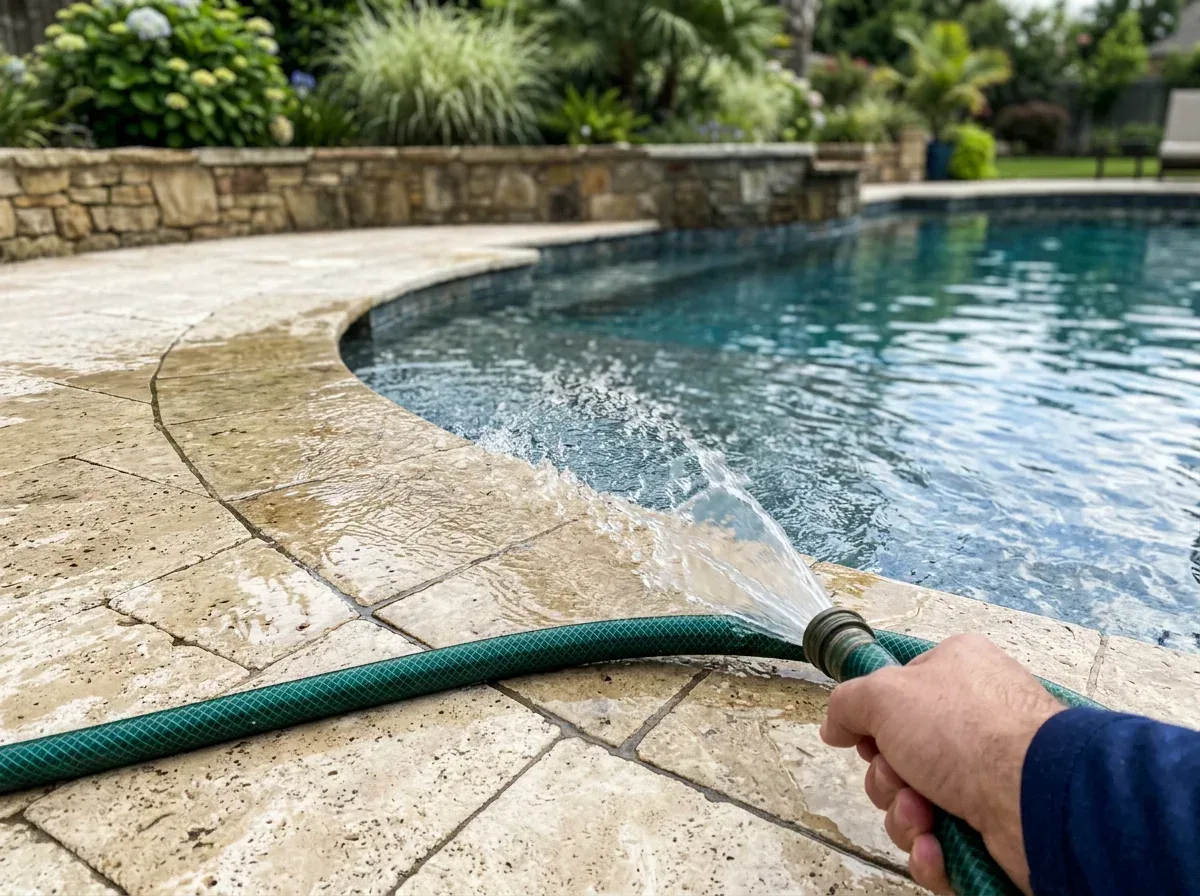
Rinsing pool-edge stones regularly with fresh water, especially on hot days, reduces salt and chemical buildup.
Beware of Chemical Use
Pool chemicals are formulated for water; if they are left standing on the stone or used for cleaning, they damage the surface.
- Do not prepare chemicals on the stone: pH reducer and chlorine products should not be prepared on the stone or spilled along the edge; concentrated chemicals leave permanent etching and stains on stone.
- Do not clean the stone with pool chemicals: Pool chemicals are not made for cleaning stone; when used to remove limescale or algae, they can etch the surface of marble and travertine.
Balancing the Water Chemistry
One of the most effective ways to protect the stone is to keep the pool water chemistry balanced. Keeping the pH within the recommended range makes the water less aggressive for both swimmers and the coping stones. Water with very low calcium hardness may be more prone to dissolving the calcium in the stone, while very high hardness accelerates limescale banding. Letting the company that maintains your pool know about the stone edges and adjusting chemical dosing accordingly makes a big difference in the long run.
Signs and What to Do
| Sign | Possible cause | What to do |
|---|---|---|
| White, powdery marks | Salt crystallization | Rinse with fresh water, check the sealer |
| Flaking, crumbling | Advanced salt damage | Remove the loose layer, hone, fill, seal |
| White band at the water level | Limescale and mineral buildup | Acid-free product or mechanical cleaning |
| Dull, rough surface | Low pH, contact with acidic chemicals | Honing and re-finishing the surface |
| Slippery, greenish surface | Algae, biofilm, sunscreen | Appropriate cleaning, regular maintenance |
| Yellow-brown stains | Iron-rich water, metal parts | Poultice suitable for rust stains |
Start-of-Season and End-of-Season Checks
Maintaining pool edge stone requires different tasks at the beginning, middle and end of the season; regular monitoring postpones major repairs.
- At the start of the season: Dirt and algae that built up over winter are cleaned off, the sealer is checked with a drop test, and renewed if necessary.
- During the season: The edge stones are rinsed with fresh water several times a week and the water chemistry is measured regularly, so that salt and chlorine do not accumulate in the stone.
- At the end of the season: Salt and limescale marks are cleaned, broken and loose stones are noted; repairs and honing are planned for the winter months.
Restoring a Damaged Pool Edge
Flaking, dulled or limescale-coated pool edges can often be restored without being removed. First, the loose upper layer damaged by salt is removed, and travertine pores and edge chips are repaired with filler. The stone is then honed or brushed to a surface that preserves slip resistance. Finally, a breathable sealer that resists salt, chlorine and sun is applied. However, if salt damage has penetrated deep into the stone and weakened it structurally, some pieces may need to be replaced.
Pool Edges in Alanya
Travertine is the most commonly used stone for pool edges in Alanya, and the combination of intense sun, salt in the sea air and pool chemicals can wear these stones down faster than in other regions. Hotel and housing complex pool edges are usually renewed after the season closes, between October and March, which leaves time for the sealer to cure properly. For villa pools, we aim to extend the life of the stone with pre-season maintenance and protection treatments.
Restoring a Worn Pool Surround

- Removal of limescale, algae and residue,
- Removal of flaking and loose surface material,
- Pore and joint filling,
- Suitable surface treatment for slip resistance (honing, brushing),
- Appropriate impregnation.
Severely crumbled stones must be replaced.
Our Marble Grinding Service in Alanya

We restore marble floors that have gone dull, become scratched, or developed height differences between slabs using wet grinding that keeps dust down. From coarse grinding to polishing, we choose each stage according to the type of stone and, if needed, carry out crack and joint repair as part of the same job.
We inspect your floor on site and tell you clearly whether it needs grinding or just polishing. Explore our Marble Grinding service.
Balanced pH and appropriate hardness are important for both pool equipment and stone. The type of stone should be shared with the pool maintenance company. — Expert Note