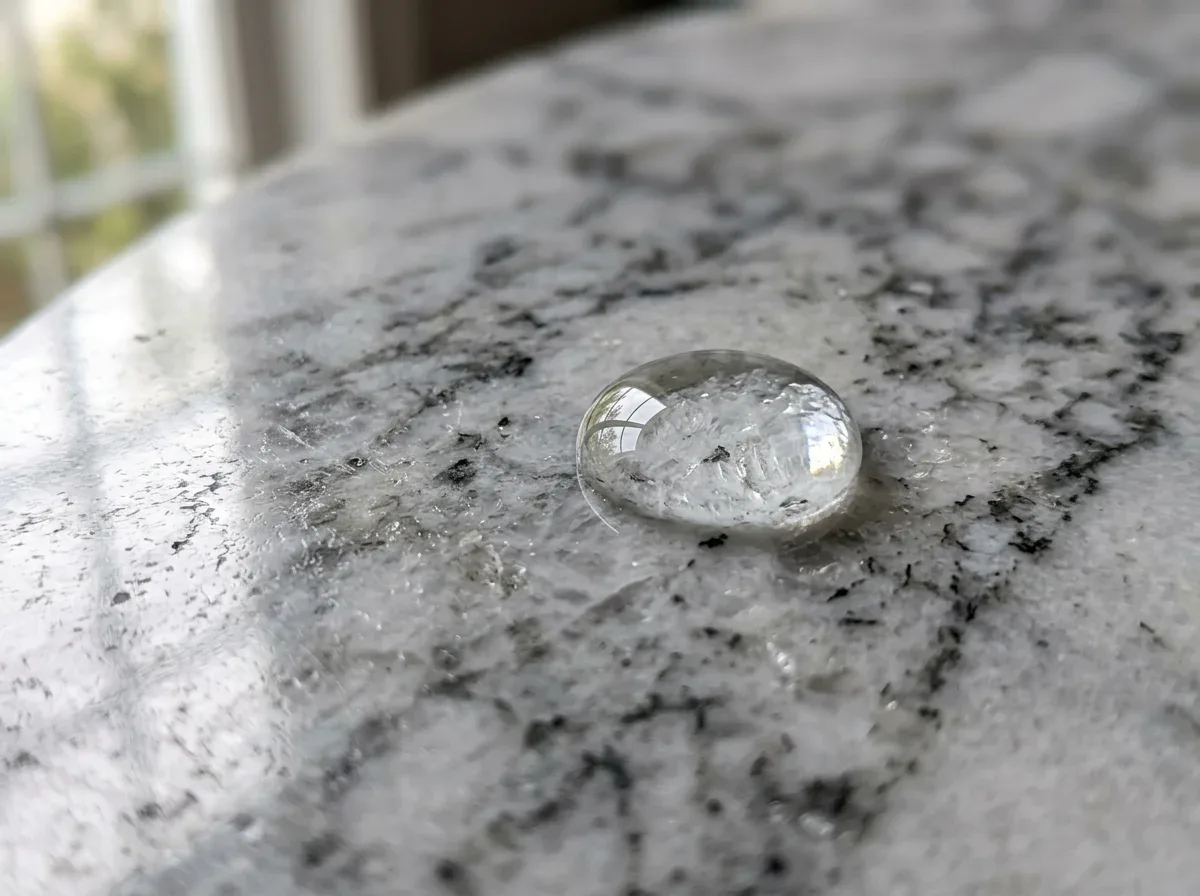
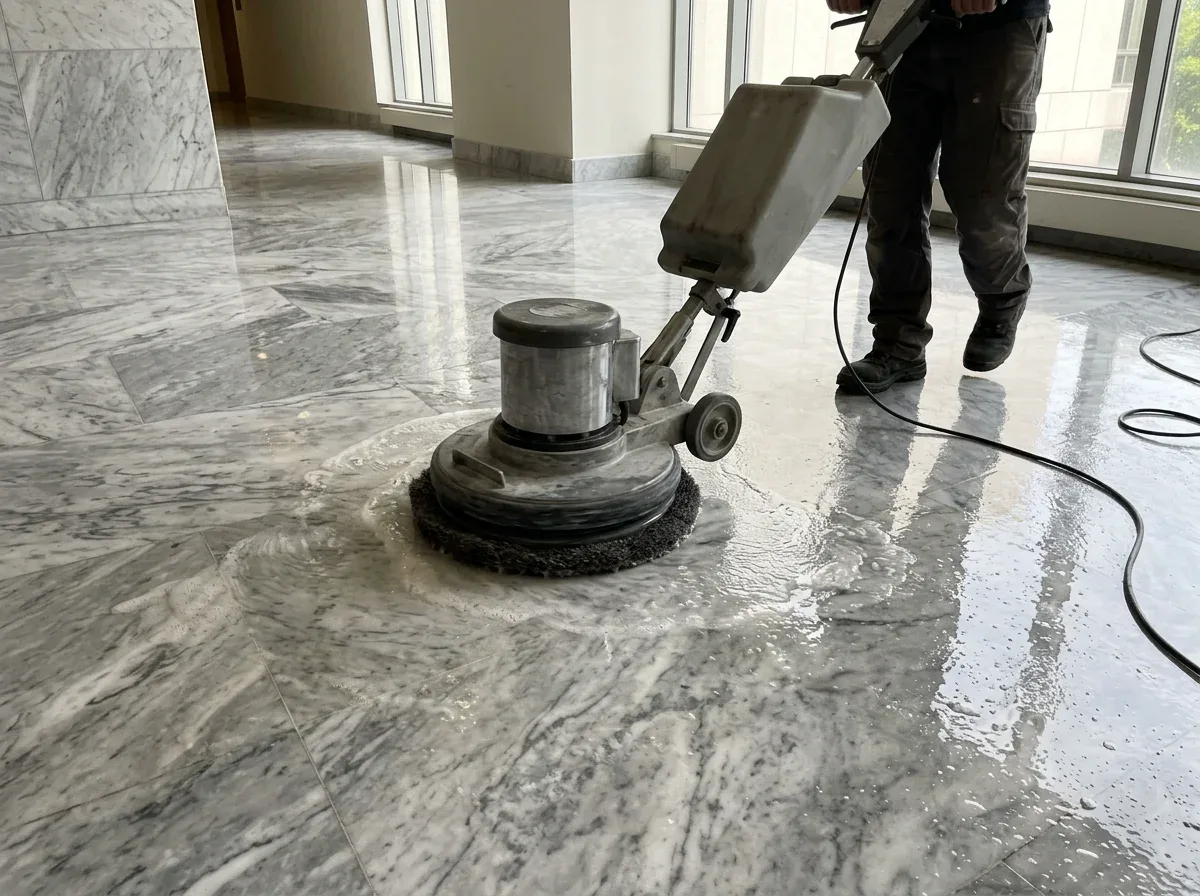
Marble Care in Hotel Room Bathrooms
In short: A marble bathroom is one of the most important elements that make a hotel room look luxurious.
But marble bathrooms used in hundreds of rooms by guests who change every day are the areas that wear out fastest, with limescale, acid marks, cosmetic stains and darkened grout. In this article, we offer a housekeeping-focused care guide for hotel room bathrooms.
Common Problems in Bathrooms
Most marble problems in hotel bathrooms are caused by hard water, the wrong cleaning products and cosmetic marks left by guests.
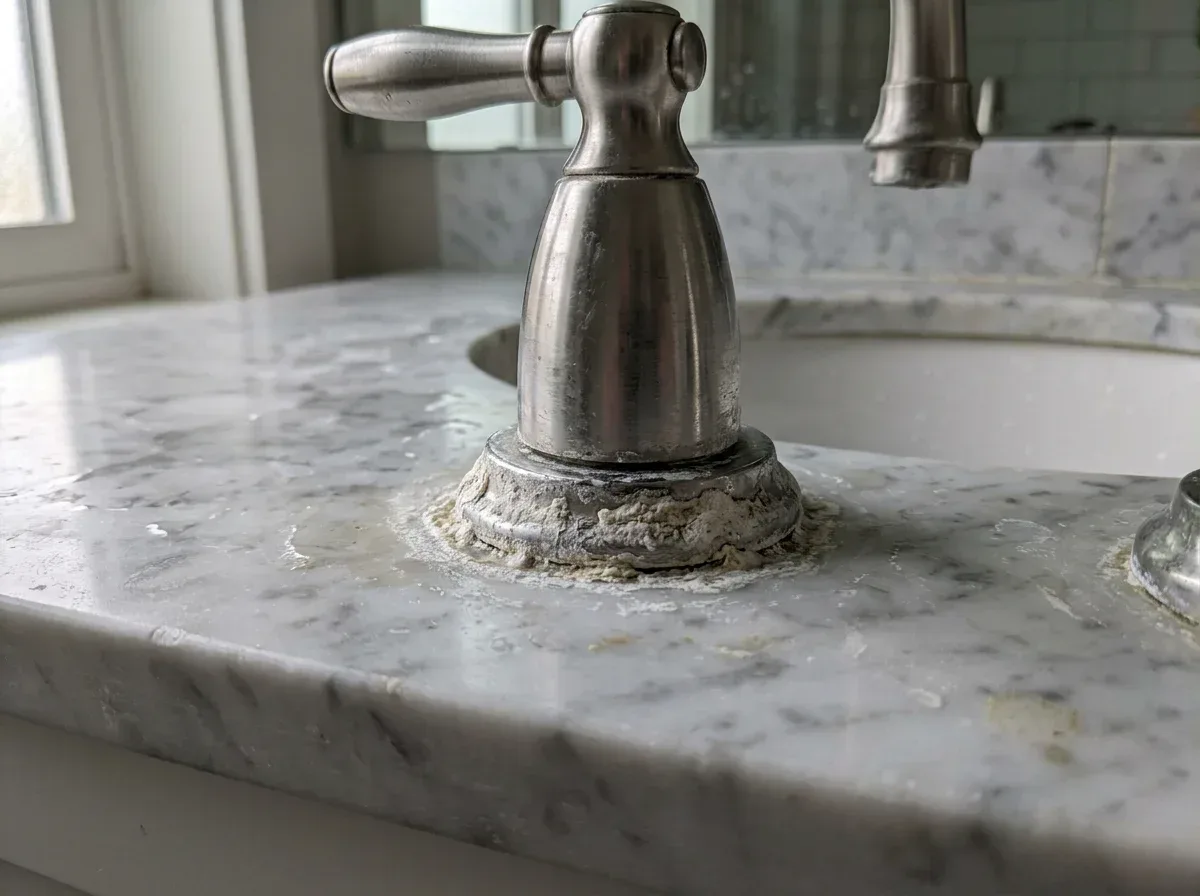
- Limescale and hard water marks: As water evaporates under the shower glass, around the sink and at the base of faucets, white limescale marks build up and harden into a crust over time.
- Acid marks: Cleaning with limescale remover, guests' lemony drinks and some cosmetics dissolve the marble surface and leave dull spots.
- Cosmetic stains: Makeup products, hair dye, nail polish, perfume and self-tanners can leave marks on the countertop, both as color stains and through a solvent effect.
- Rust rings: Metal cans left standing on the countertop rust in the moisture and leave orange rings where their bases touch the stone.
- Darkened grout and mold: Because the inside of the shower and the edges of the bathtub stay constantly damp, the grout there darkens and grows mold, making the bathroom look neglected.
- Soap residue: Soap residue that builds up on the shower floor forms a slippery gray layer; it spoils the appearance and increases the risk of slipping.

The Biggest Mistake: Limescale Remover
Most of the marble damage in hotel bathrooms comes from acidic products used to remove limescale quickly. These products cause:
- Loss of shine: Acidic limescale removers dissolve the calcite structure of marble, and the shine of the polished surface fades a little more with each application.
- Roughened surface: The surface dissolved by acid becomes rough; because limescale, soap and dirt cling to these rough spots more easily, the bathroom gets dirty faster.
- Damaged grout: Acidic products also erode cement-based grout; the grout gets eaten away, darkens and can let water reach beneath the slabs.
Daily Cleaning (Room Cleaning)
A few simple steps performed in the same order at every room cleaning largely prevent limescale and stains from building up on bathroom marble.
- Wipe with a pH-neutral cleaner: First, the shower and sink areas are wiped with a pH-neutral stone cleaner that removes dirt and soap without dissolving the stone.
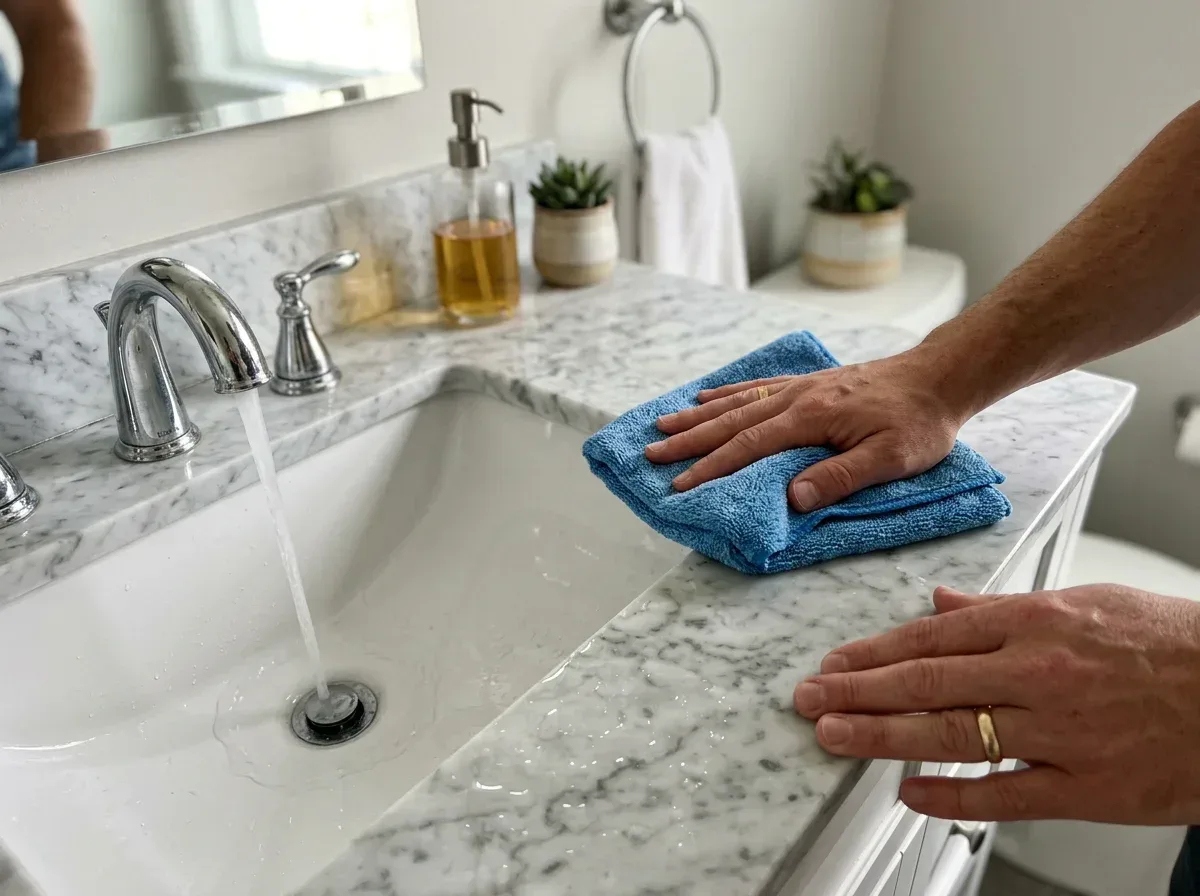
- Dry with a microfiber cloth: Then the surface is dried with a microfiber cloth; since limescale forms as water evaporates, this step does the most to prevent limescale marks.
- Remove cosmetic marks immediately: Cosmetic and product marks on the countertop are removed without delay, so that the color and solvent do not penetrate the stone and turn into permanent stains.
- Damp-mop the floor: Next, the floor is cleaned with a damp mop and not left wet; standing water both leaves limescale marks and creates a slipping risk.
- Clean glass and fixtures carefully: Finally, the shower glass and fixtures are cleaned with a suitable product, in a way that keeps the product from dripping or splashing onto the stone.
Weekly / Deep Cleaning
Weekly deep cleaning targets the soap residue, grout dirt and limescale buildup that daily wiping cannot reach.
- Deep cleaning the shower floor: The gray soap layer on the shower floor is removed with stone-safe products that dissolve soap residue, eliminating the slipperiness of the surface.
- Scrubbing the grout: The grout is cleaned with a soft brush; this removes darkening and mold before they settle in and turn into permanent stains.
- Acid-free products around faucets: Limescale built up around faucets is softened and removed with acid-free products that do not harm marble; limescale remover is not used.
Dealing with Guest-Caused Stains
With quick and correct action during room cleaning, stains left by guests can often be removed before they turn into permanent damage.
- Cosmetics and dye: Blot immediately with an absorbent cloth, do not rub; if the stain looks permanent, report it to the housekeeping manager.
- Acidic drinks: Spilled acidic drinks are wiped up immediately and rinsed with clean water; every minute they sit allows the dull mark on the marble to deepen.
- Rust ring: Since a rust ring does not come off with daily cleaning, it is logged and added to the professional cleaning list to be treated with a suitable product.
If these stains are noticed during the first cleaning of the room, they come out much more easily.
Periodic Maintenance
Periodic maintenance deals with damage that daily cleaning cannot remove, room by room while the rooms are empty.
- Renewing rooms in rotation: Before the season or during low occupancy, rooms are handled in turn; acid marks and dullness are removed by honing, stains are drawn out, grout is renewed, and sealing is applied.
- Checking slip resistance on shower floors: Shower floors are checked for slip resistance; where a surface is found to be slippery when wet, we switch from a polished finish to a honed finish if necessary.
Problem and Solution Summary
| Problem | What does housekeeping do? | Professional solution |
|---|---|---|
| Limescale marks | Wipes dry, uses acid-free products | Light polishing |
| Acid marks | Logs it and stops using the acidic product | Polishing or light grinding |
| Cosmetic stains | Blots immediately with an absorbent cloth | Poultice application |
| Rust ring | Logs it | Rust-removing poultice |
| Darkened grout joints | Weekly brushing | Grout joint renewal |
| Slippery shower floor | Soap residue cleaning | Honing |
Establishing Order Across Hundreds of Rooms
In large hotels, tracking the condition of bathroom marble room by room makes end-of-season maintenance much easier. If the housekeeping team records any permanent stains, acid marks, cracked or darkened grout joints they notice during each cleaning on a simple form or in a system, it becomes clear at the end of the season which rooms are the priority. Thanks to these records, instead of applying the same treatment to every room, grinding, stain removal or grout renewal is carried out only in the rooms that need it; time and budget are used efficiently.
Small Precautions for Guests
A few small arrangements in the room greatly reduce the chance of guests damaging the marble without realizing it.
- Provide a cosmetics tray: A tray placed on the countertop keeps bottles and tubes from touching the stone directly, preventing cosmetic stains and rings.
- Place coasters under metal containers: Small plastic coasters placed under metal containers prevent moisture and rust at the bottom of the container from leaving an orange ring on the countertop.
- Place an absorbent mat in front of the shower: An absorbent mat in front of the shower catches the water carried by wet feet; puddles and limescale marks on the floor are reduced, and the risk of slipping decreases.
- Check the hotel products: Making sure the shampoo, soap and cleaning products placed in the bathroom are suitable for stone ensures that they do not leave marks on the marble if spilled.
Bathroom Care in Alanya Hotels
Alanya's hard water quickly increases limescale marks on marble countertops and shower floors in hotel bathrooms. That is why we explain to housekeeping teams the importance of drying surfaces after use and using acid-free products, and at the end of the season we carry out polishing, stain removal, grout renewal and impregnation in the priority bathrooms based on the room records. For slippery shower floors, we recommend a honed finish.
Recording and Prioritization

If the condition of each room's bathroom is tracked with a simple checklist (stains, dullness, grout, cracks), the periodic maintenance plan can be made more efficiently, starting with the worst rooms.
Our Crystallization Polishing Service in Alanya

After honing, or on marble floors that have lost their shine but have no deep damage, we use crystallization polishing to boost the surface's gloss and durability. It is a method that extends the maintenance interval in heavily used areas such as hotel lobbies, stores, and apartment entrances.
We show you on site whether crystallization polishing or honing is the right choice for your floor. Explore our Crystallization Polishing service.
The most important rule for marble bathrooms is that housekeeping teams should never carry acidic limescale removers on their carts. — Expert Note