The Formation and History of Marble: A Journey from Limestone to Palaces
The white floor in your living room, the veined slabs in a hotel lobby, or the stair treads of an old building in Alanya… All of them arrived where they are today at the end of the same long journey. Knowing how marble forms is not just a curiosity; it also explains why the stone scratches easily, why it can't stand up to lemon and vinegar, and why it can be polished back to a shine by honing. In this article we walk you step by step through the story of marble, which begins on the seabed, where its name comes from, Anatolia's famous quarries, and what all of this means for the floor in your home.
In short: Marble is a metamorphic stone formed when limestone recrystallizes under heat and pressure deep within the earth. Because its main mineral is calcite, it is soft and sensitive to acids; the same property makes it possible to restore it again and again by honing.
It All Begins on a Seabed
The story of marble is really not the story of a stone, but of a sea. The shells of mussels, snails, corals and countless microscopic creatures living in shallow, warm seas are made of calcium carbonate. As these creatures die, their shells sink to the seabed, where they accumulate layer upon layer together with lime precipitated from the water and fine mud. The weight of the stacked layers compresses those beneath, the water is squeezed out, and over time a hard rock emerges: limestone.
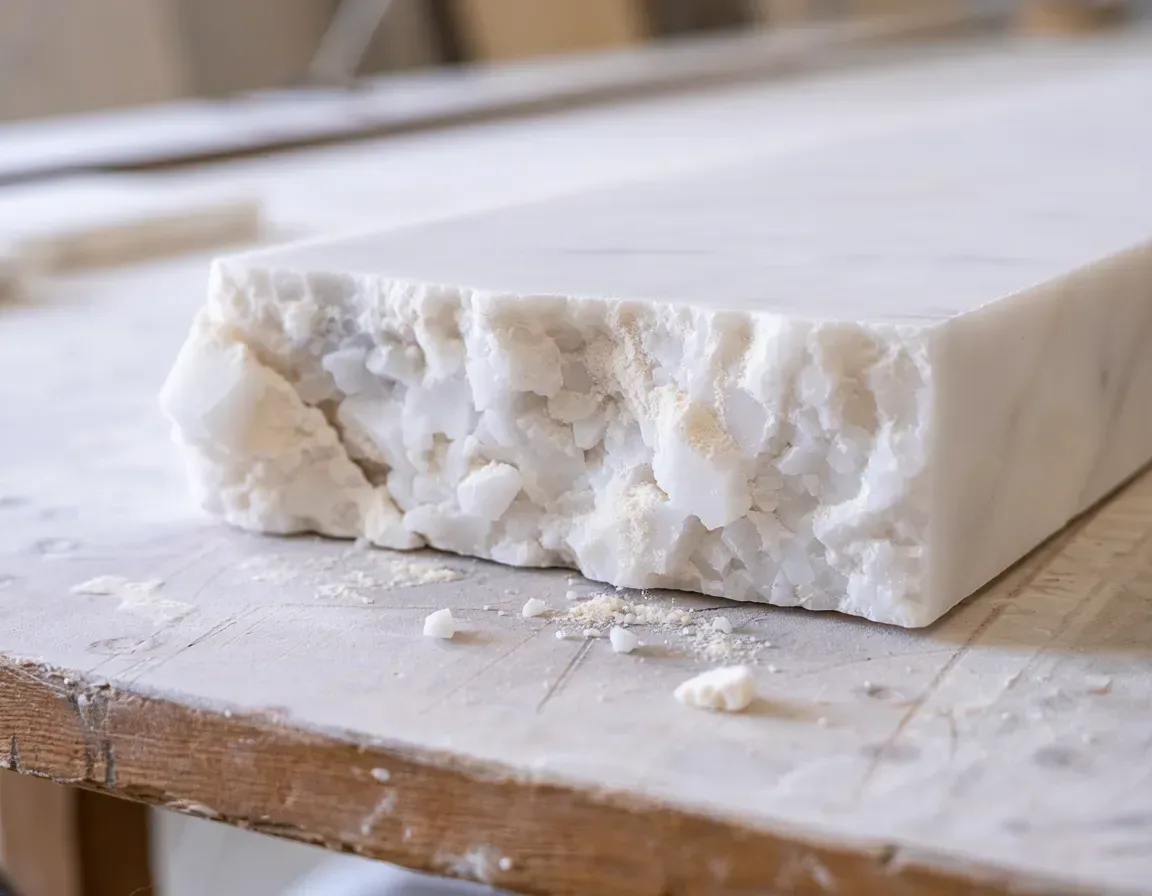
Limestone is a valuable building stone in its own right; many historic buildings along the Mediterranean coast were built with it. But it is not yet marble. It contains fossil traces, pores and an irregular texture; when polished, it does not give off the deep light of marble. What will turn it into marble is a second journey, taking place deep within the earth.
Heat, Pressure and Recrystallization
As tectonic plates move, layers of limestone are pushed deep into the earth or end up near rising masses of hot rock. Here the temperature and pressure are not high enough to melt the stone, but high enough to change its internal structure. Geologists call this change metamorphism ; this is why marble is classified as a metamorphic rock .
In this process, the small, irregular calcite grains in the limestone dissolve and rearrange themselves. Larger, tightly interlocked crystals form; fossils and pores largely disappear. The resulting stone has the familiar marble texture that sparkles like sugar when broken, taking in light and giving it back.

Where do color and veining come from?
This journey also determines marble's color and veining. Minerals that flow and stretch under pressure draw the lines across the slab:
- Pure calcite: Forms white marble. Afyon white and Italy's Carrara marble are well-known examples of this type.
- Iron oxides: Give pink, red and yellow tones.
- Graphite and organic matter: Create gray and black tones.
- Clay, sand and other minerals: Flow and become trapped inside the stone, drawing the characteristic veins.
Every vein on a marble slab is the trace of a material that flowed through the stone millions of years ago. This is also why no two slabs are ever exactly the same. So when a slab on a floor needs to be replaced, "finding the same one" is often impossible; a close tone and pattern is sought instead.
Chemical Identity: Why Is It Both Beautiful and Delicate?
The main mineral of marble is calcite (calcium carbonate). Some marbles also contain dolomite , which includes magnesium. This identity gives marble two important properties and explains why its care differs from that of other stones.
Softness
Calcite has a value of about 3 on the hardness scale. A steel key, the metal under a chair leg, or a grain of sand carried on a shoe can scratch it. This softness allows craftsmen to cut, carve and polish marble easily; but it is also the reason a floor in use gradually becomes dull.
Sensitivity to acids
Calcium carbonate reacts chemically when it comes into contact with acids such as lemon, vinegar, cola, wine or limescale remover. Dull, matte rings form on the surface. This is not a stain but an etching of the stone's surface; therefore it can't be wiped away, and the surface needs to be reworked.
| Property | Marble | Granite | Travertine |
|---|---|---|---|
| Formation | Metamorphism of limestone | Cooling of magma | Precipitation from spring waters |
| Main mineral | Calcite | Quartz and feldspar | Calcite |
| Hardness | Soft (about 3) | Hard (6–7) | Soft (about 3) |
| Acid sensitivity | High | Low | High |
| Porosity | Low–medium | Low | High, with natural voids |
| Restoration by honing | Very suitable | Suitable, takes longer | Suitable, filling may be required |
Where Does the Name Come From?
The word "marble" is derived from the Greek marmaros meaning "shining stone." The most interesting detail for us is this: The Sea of Marmara takes its name from the famous marble of Marmara Island within it. Known in antiquity as Proconnesus, this island was one of the largest marble quarries of the Mediterranean world for centuries. The white marble with gray veining from this island was used in many of Istanbul's historic buildings.
Anatolia's Marble Quarries
Anatolia is one of the richest regions in the world in terms of marble, and this wealth has been used for thousands of years.
- Afyon (Dokimeion): The marbles of the region, known in antiquity as Dokimeion, were transported as far as Rome. Today it is still known for patterns such as Afyon white and tiger skin.
- Marmara Island: It was Istanbul's main source of marble throughout the Byzantine and Ottoman periods.
- Muğla and the Aegean region: With its white and veined marbles, it is widespread in both ancient cities and present-day buildings.
- Denizli and its surroundings: Although better known for travertine, marble is also produced in the region.
The columns, theaters, and baths of ancient cities; the churches of Byzantium; and the mosques, baths, and fountains of the Seljuks and Ottomans were raised with stones from these quarries. The navel stones (göbek taşı) and basins (kurna) in Ottoman baths show how marble was used as a stone that lives alongside water. In the historic buildings of Alanya and its surroundings, too, alongside the local limestone, one encounters marble pieces that were brought in from elsewhere.
From Quarry to Floor: How Is Marble Extracted Today?
Blocks that were once split off with wedges, hammers, and human strength are now separated from the quarry with diamond wire cutting machines At the factory, the blocks are cut into slabs on gang saws or bridge cutting machines. The slabs are finished according to the desired surface:
- Polished (glossy): A mirror-like surface that reflects light. Preferred for living rooms and lobbies.
- Honed (matte): A silky surface with the gloss removed. It makes scratches less noticeable.
- Antiqued and brushed: Textured surfaces with softened edges. Used in gardens and outdoor areas.
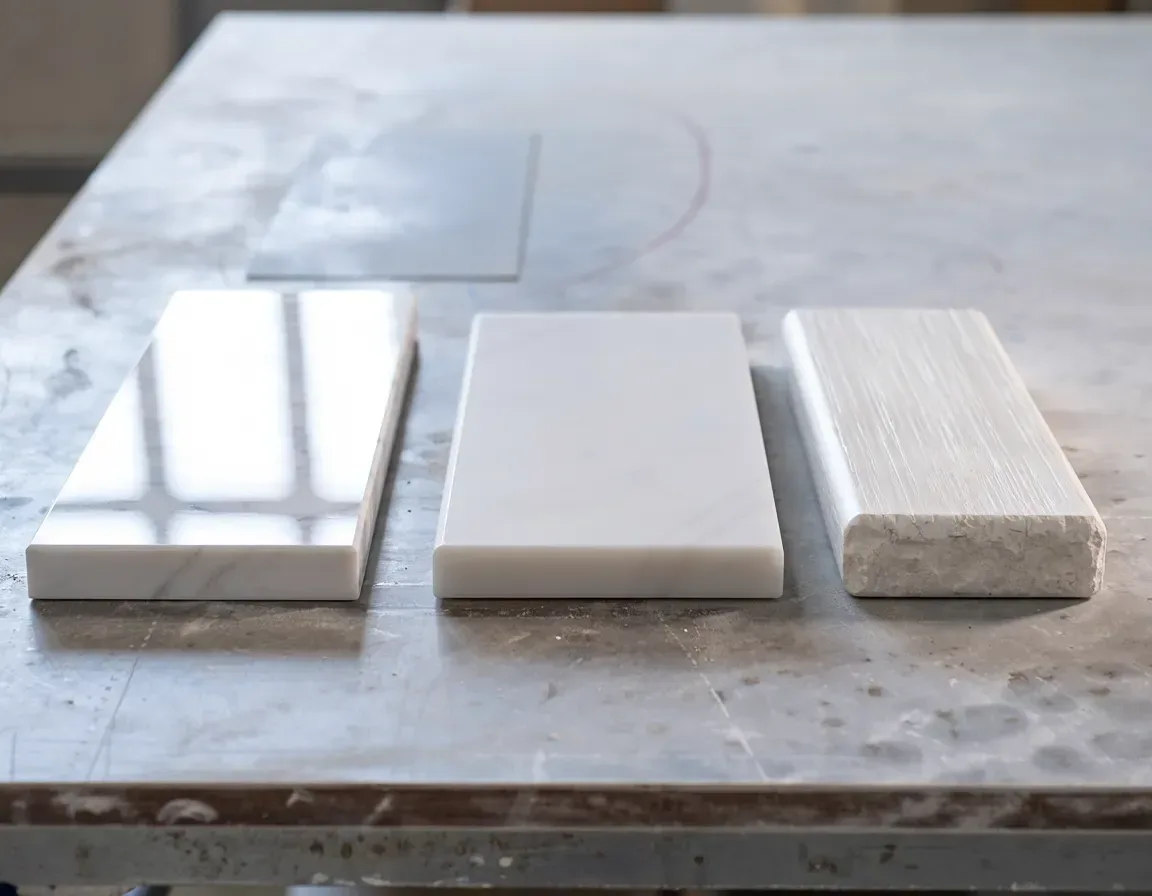
The surface that leaves the factory does not last forever once it is laid in your home. Height differences (lippage) between slabs can occur during installation; during use, the surface gets scratched and dulled. This is where marble's greatest advantage comes in: because the entire stone is made of the same material, a thin layer can be removed from the surface to restore the original factory shine.
What Does This Story Mean for the Marble in Your Home?
Knowing how marble is formed also tells you how to treat it:
- Sand and dust are its greatest enemies. Because calcite is soft, a grain of sand carried in on shoes works like sandpaper. An entrance mat and regular sweeping preserve the shine.
- Stay away from acidic products. Lemon, vinegar, limescale removers, and acidic bathroom cleaners etch the surface. Stone cleaners with a neutral pH should be used.
- Do not let spills sit. Coffee, wine, fruit juice, and cola both stain and dull the surface; they should be wiped up immediately.
- Dullness is not the end. Marble with a worn surface can be restored through grinding and polishing. The stone has a much longer life than the day it was laid.
In Alanya, sea sand, sun, and heavy summer use wear down the surface of marble faster than in other cities. But the stone itself has a durability of thousands of years; with proper care and timely grinding, it can be used for the lifetime of a home.
Why Is Marble's Softness an Advantage?

Because marble scratches easily, it is often known as a "delicate stone." Yet this softness also makes it easier to restore. A process that takes hours on hard stones like granite is done in much less time and with fewer abrasives on marble.
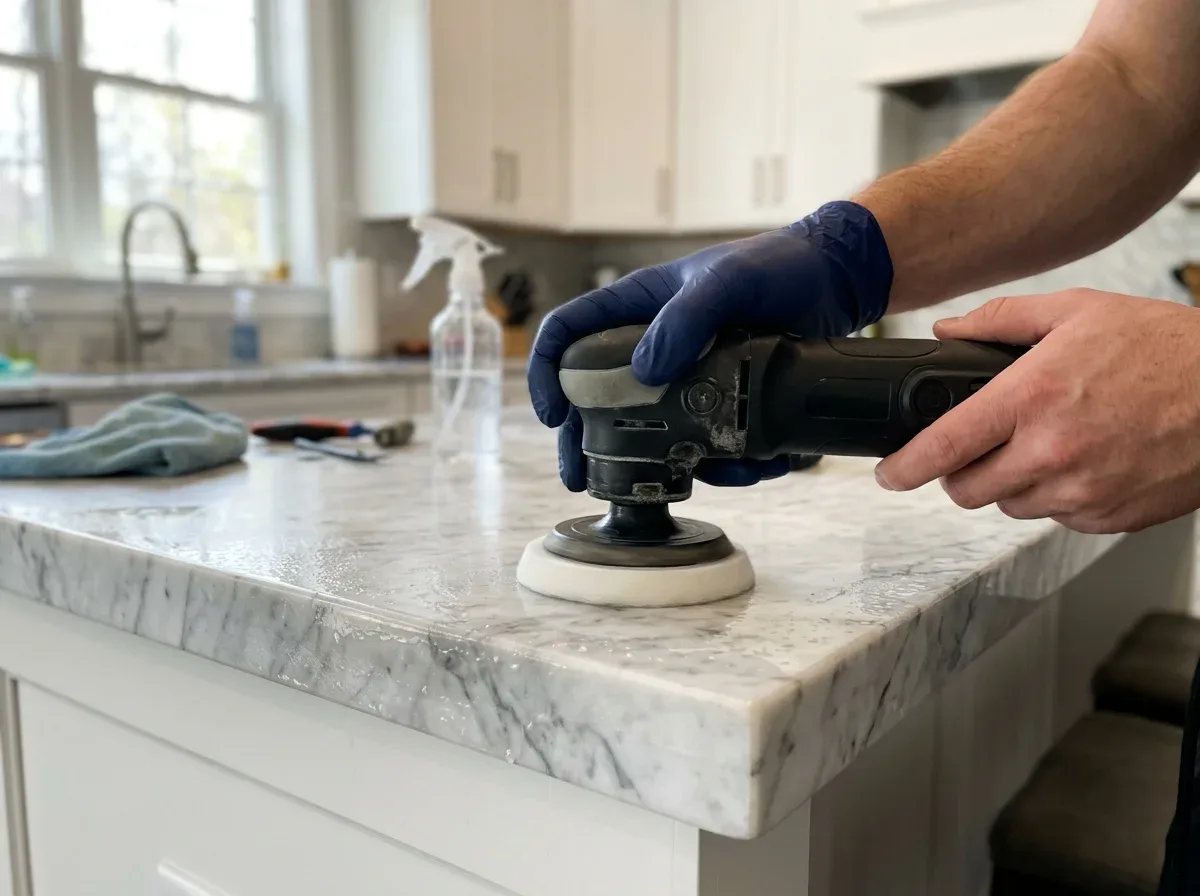
In honing, only a thin layer is removed from the surface, down to the depth where the scratches end. The stone that emerges underneath is as vibrant as the day it first arrived from the factory. That is why a well-maintained marble floor can be honed several times over the years and polished back to a shine each time.
Why Do Veins Become More Visible After Grinding?

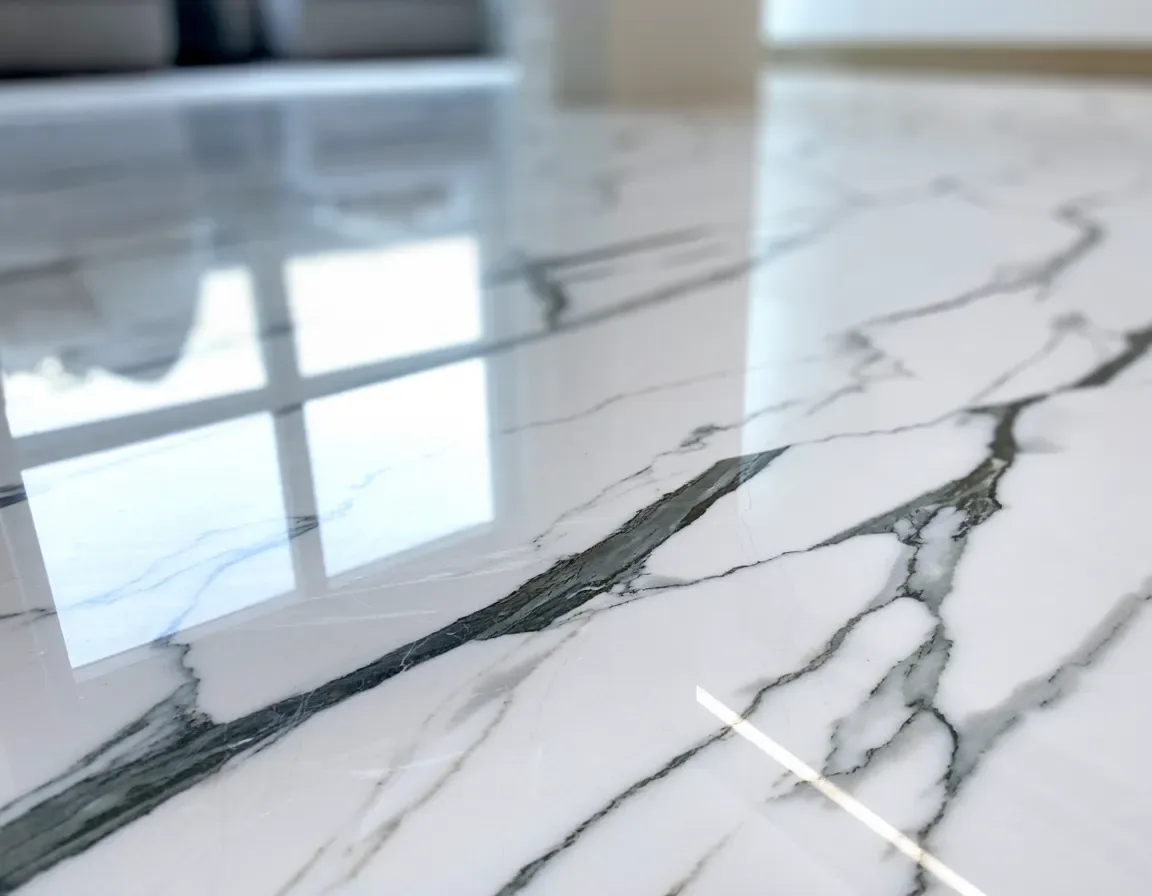
On a marble floor that has been in use, the veins often look faded. This is not because the veins have disappeared, but because fine scratches covering the surface scatter the light. A matte surface hides the depth of the stone.
Once grinding and polishing remove this layer of scratches, light penetrates the stone again and is reflected back from the veins. This is why homeowners often say, "the color of the floor has changed" after grinding; in fact, what has changed is not the color, but the true appearance of the stone coming to light.
Glossy or Matte? Choosing by Use

The way marble is formed also affects which finish it should be given. In heavily used kitchen entrances, hallways and bathrooms, a high-gloss polish shows every scratch; in these areas a honed, or silky matte, finish keeps looking even for longer.
In calmer areas such as living rooms, bedrooms and lobbies, a glossy finish shows off the veining of the stone at its best. During the grinding and polishing work, we decide together on-site during the survey which area will be finished at which level of gloss.
Marble, a stone formed over millions of years, asks only two things of you: protection from grit and from acid. A floor that is kept clear of both can be restored to its original look again and again through honing. — Expert Tip