The Formation and History of Granite: From Magma to Kitchen Countertop
The speckled stone on your kitchen countertop, the dark steps at a hotel entrance, or the rough slabs in city squares... Granite is one of the hard stones we encounter most often in everyday life. It is commonly said that "granite doesn't scratch or stain," but this is not true for every granite. Knowing how granite forms helps you understand why some granites absorb oil, why polishing it takes longer than marble, and why properly polished granite stays shiny for years. In this article, we go step by step through granite's story, which begins with fire, and what it tells us about its maintenance.
In short: Granite is a hard igneous stone made of quartz and feldspar, formed when magma cools slowly over thousands of years deep within the earth. It is far more resistant to scratches and acids than marble, but its porosity varies from stone to stone, and polishing it takes more time.
A Slow Cooling Deep Within the Earth
If marble is the story of a sea, granite is the story of a fire. Deep in the earth's crust, rocks melt and form magma . This hot melt sometimes erupts from volcanoes and cools quickly, turning into fine-grained stones such as basalt. Granite, on the other hand, is born from magma that could not escape.
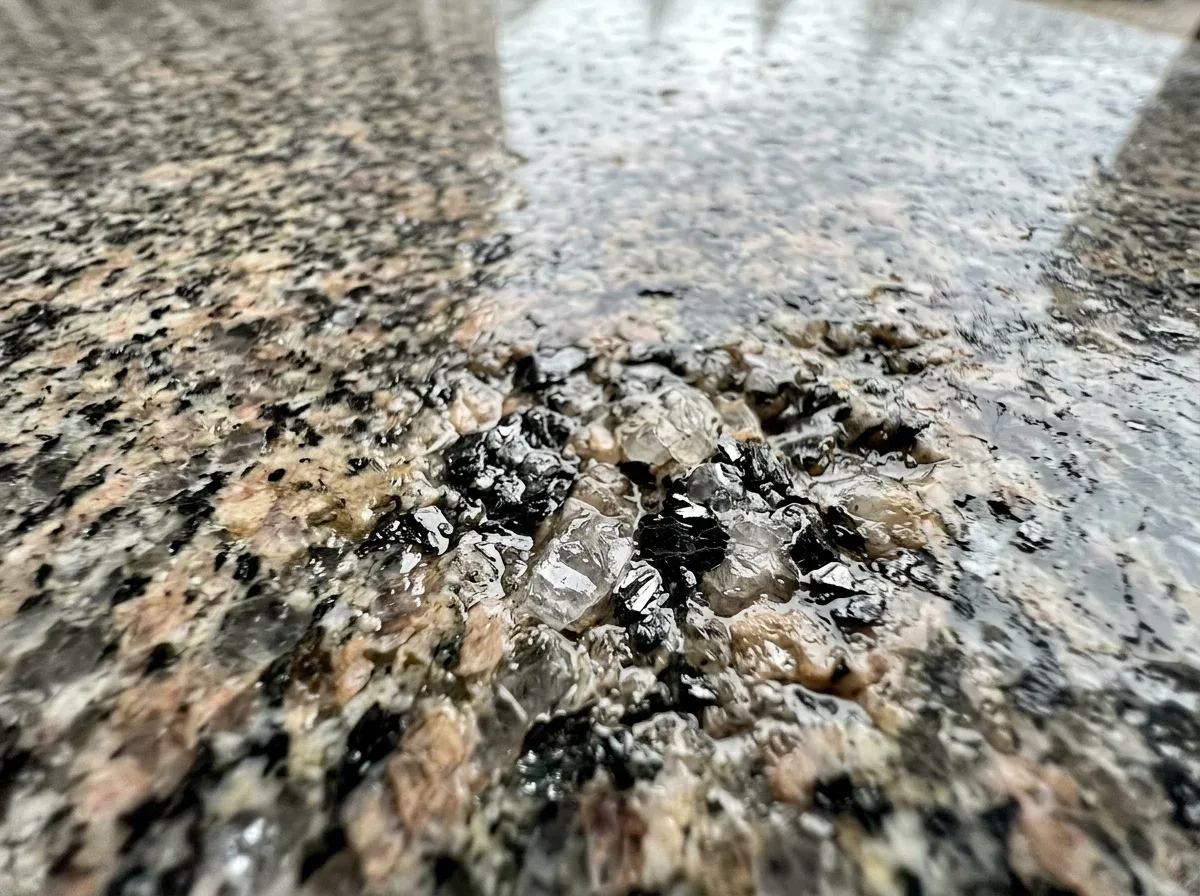
Magma that fails to reach the surface becomes trapped among the surrounding rocks, kilometers deep, and cools slowly over a very long period. This slowness gives the minerals time to grow. The result is a stone made of large crystals that are easy to see with the naked eye. Geologists call such stones plutonic rocks (intrusive rocks) .
So how does granite that formed so far below the earth end up under our feet? Mountain building, plate movements, and the erosion of the overlying layers over millions of years gradually bring granite masses to the surface. The granite extracted from quarries today is the result of this long ascent. This is also why granite is found at the core of many of the world's mountains.

The Building Blocks of Granite
Granite is formed by the combination of several minerals. The specks on the stone are these minerals themselves:
- Quartz: Glassy grains, usually transparent or gray. It is the main source of granite's hardness.
- Feldspar: Feldspar usually determines the color of the stone. Pink, red, white, or gray tones come from feldspar.
- Mica: Seen as black (biotite) or silvery (muscovite) flakes; the small points that sparkle in the light are usually mica.
Most of these minerals have a silicate structure. Silicates are both hard and far more resistant than marble to the acids found in the kitchen. Depending on the scale used, granite's hardness is between 6 and 7; a knife or a key cannot easily scratch it.
Why does hardness matter?
Hardness is both granite's advantage and its difficulty in maintenance. It wears very slowly in daily use, but once it becomes dull, re-polishing it requires harder abrasives, more steps, and more time. That is why the real goal with granite is to keep its shine for a long time.
"Commercial Granite" and True Granite
In the stone industry, the word "granite" is used in a broad sense. Many hard, polishable stones such as basalt, gabbro, syenite, and gneiss are sold under the name "granite." Geologically, some of these are not granite.
This distinction has practical importance:
- Some dark-colored "granites" are less porous and are hardly affected by oil stains.
- Some light-colored, coarse-grained true granites, on the other hand, absorb liquids more easily.
- Some of the stones sold as black granite may be dyed or filled with resin; a solvent such as acetone can change the color of such surfaces.
So the generalization that "granite doesn't stain" is not true for every stone. When planning maintenance for a floor or countertop, you need to look at the stone itself. A simple water drop test shows how absorbent the stone is within a few minutes.
| Granite type | Appearance | Absorbency | Point to note |
|---|---|---|---|
| Light-colored, coarse-grained | White, gray, pink speckled | Medium–high | Oil and water stains; impregnation is recommended |
| Dark-colored, fine-grained | Black, dark green | Low | Fingerprints and water marks show |
| Red and pink tones | Feldspar-dominant | Low–medium | Generally trouble-free; shine lasts long |
| Textured, patterned (gneiss type) | Wavy veined | Variable | Absorbency may differ along the veins |
Granite from Antiquity to Today
Granite's hardness made it a material that is difficult to work but lasts a very long time.
- Egypt: Obelisks, statues, and temple pieces were made from the red granite of the Aswan region. Some of these stones were transported thousands of kilometers to other cities; the Obelisk in Istanbul's Sultanahmet is one of them.
- Rome: Granite columns were used in colonnades, baths, and monumental buildings. During the Roman period, granite columns were also transported to ancient cities in Anatolia.
- Anatolia: The granite deposits around Bergama and in Central Anatolia have been quarried both in antiquity and today.
With the Industrial Revolution, cutting and polishing technologies advanced. Today, thanks to diamond saws and multi-head polishing lines, granite is used everywhere, from kitchen countertops to hotel lobbies, from municipal squares to metro stations.
The Journey After the Quarry: Surface Finishes
Granite blocks are separated from the quarry with diamond wire cutters and cut into slabs at the factory. Very different looks can be achieved depending on the surface finish:
- Polished: Mirror-like and glossy; common on indoor floors and countertops.
- Honed: Matte and silky; it reduces slipperiness and shows fingerprints less.
- Flamed (thermal): The surface is roughened by bursting it with high heat; it provides a non-slip surface on outdoor steps and walkways.
- Brushed and sandblasted: Gives a natural, textured look.
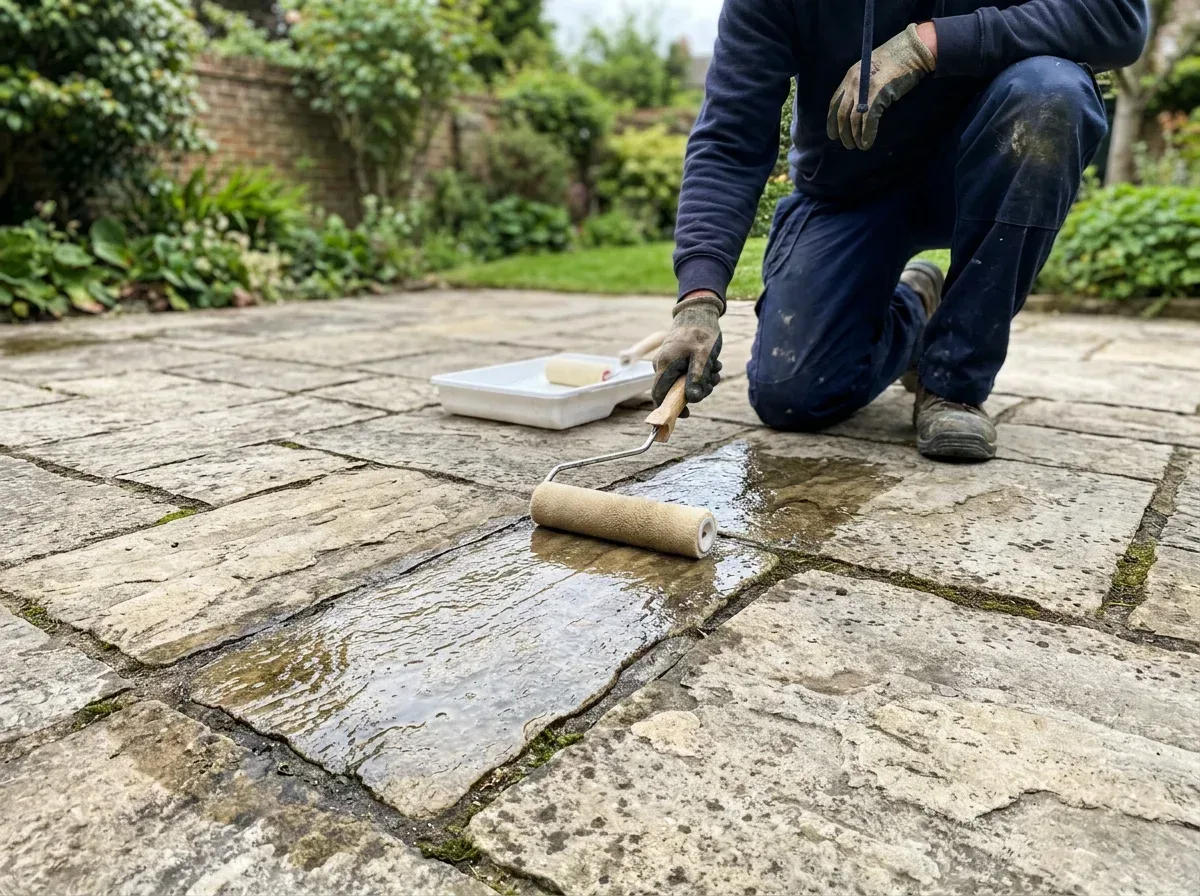
The chosen finish also determines maintenance. Polished granite absorbs less liquid but shows scratches more; flamed granite is non-slip but traps dirt in its pores and requires brush cleaning.
What Does the Story of Granite Tell Us About Its Care?
- Hard, but not invincible: Granite is scratch-resistant, but sand dragged across the floor for years and the wrong cleaning machines will dull its surface.
- Resistant to acids, but not to every chemical: Lemon and vinegar harm granite less than they do marble, but strong alkaline products and rust removers containing hydrofluoric acid can damage the surface.
- Porosity varies from stone to stone: Oil and water stains can show on light-colored granites. On these stones, an impregnator provides protection against staining.
- Grinding and polishing is laborious: Because it is hard, polishing granite takes longer than marble and requires more durable abrasives and patience. In return, a properly polished granite surface stays shiny for many years.
In Alanya, granite is frequently used especially at hotel entrances, on building staircases, and in kitchen countertops. The salty seaside air harms granite less than it does marble, but sand, heavy foot traffic, and the wrong choice of detergent gradually take away its shine.
Why Does Grinding Granite Take Longer?

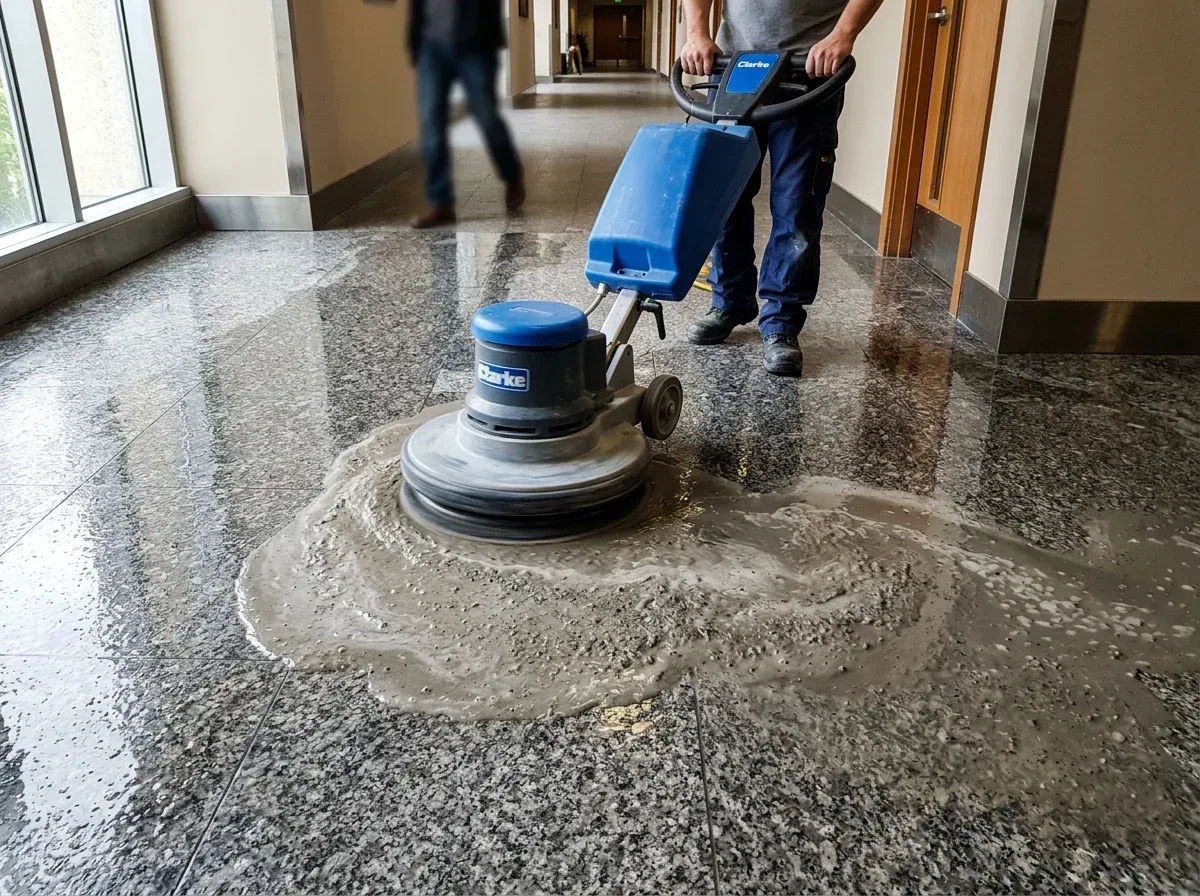
The quartz grains in granite are twice as hard as the calcite in marble. For this reason, the diamond abrasives used in grinding advance more slowly, and more passes are needed at each grit stage. A stage that takes an hour on marble can take much longer on granite.
On the other hand, once granite has been polished with the correct grit stages, it keeps that shine much longer than marble. This is why granite is preferred for hotel entrances and high-traffic areas.
Get to Know Your Granite with the Drop Test

To find out how absorbent your granite is, place a few drops of water on the surface and wait ten minutes. If the water stays beaded, the stone has low absorbency. If the drop spreads and leaves a dark mark on the surface, the stone is drawing the liquid in.
The darkened area disappears once it dries, but if the same thing happens with oil, the mark can be permanent. On such a stone, especially in the kitchen, applying an impregnating sealer prevents stains.
Granite at Hotel and Building Entrances

At the entrances of many hotels and apartment buildings in Alanya, you will find granite steps and floors. These are areas where thousands of people pass through over the season and where the most sea sand is carried in. Granite withstands this load, but over time sand dulls the walking path.
At heavily used entrances, regular dry sweeping, a good doormat and a maintenance polish once a year keep the floor looking vibrant without the need for a major honing job.
Granite is a hard stone, but it doesn't like being neglected. Sand, the wrong detergent, and use without sealing can dull the shine of even the hardest granite; with proper care, however, granite becomes the longest-lasting surface in a building. — Expert Note
Frequently Asked Questions About the Formation of Granite
01Is granite really scratch-proof?
02Why does granite sometimes stain?
03Is black granite really granite?
04Can granite be repolished by grinding and polishing?
05Do lemon or vinegar damage granite?
06Which is more durable, granite or marble?
07Can granite be used outdoors?
Related Articles
The Formation and History of Marble: A Journey from Limestone to Palaces, What to Do When a Granite Floor Becomes Dull, What Is Flamed (Burnt) Granite? Outdoor Use and Maintenance, Granite or Marble? Differences in Polishing and Maintenance, Oil and Water Stains on Granite Surfaces: Causes and Solutions