When Is Concrete Floor Renewal Necessary? Symptoms and the Right Time
Concrete floors do not wear out in a day; therefore, no one knows exactly when it should be renewed. The site management postpones the issue to the next year at every meeting, and the homeowner washes the garage once more and moves on. On the other hand, not every gray and dirty concrete needs renewal; sometimes a proper cleaning is enough. In this article, we explain the signs that indicate it's time to renew a concrete floor, what postponement leads to, the right period within Alanya's climate and season, and situations where renewal alone is not enough.
In short: If the floor is still dusty, stains do not appear, vehicle and pedestrian paths are rough, or the old paint on top is peeling, the cleaning has reached its limit and needs renewal. The most comfortable period for indoor spaces in Alanya is the off-season months; open areas choose dry days. If there is collapse, constant moisture, or deep deterioration, another specialist is required before renovating.
Let's Separate First: Is It Dirty or Worn Out?
The first step in the renovation decision is to make sure the floor is truly worn out. A parking lot that hasn't been washed for years may only carry a thick layer of dirt on solid concrete. The way to understand this is to clean the floor once according to the rules before making a decision: dry sweeping, brushing with the right cleaner, collecting dirty water, and drying. How to do it concrete floor cleaning We explained it step by step in the article.
The picture becomes clearer when the floor dries after cleaning. If the tone is lightened, the floor doesn't leave dust on your hands, and most stains are gone, your problem is lack of maintenance; a regular cleaning routine is enough, and you don't have to spend money on renovation. If the floor still produces dust, stains stay in place, and the surface remains rough, the dirt is gone, leaving behind a worn surface. Renovation is the solution to this second situation.
Signs That Are Time for a Renewal
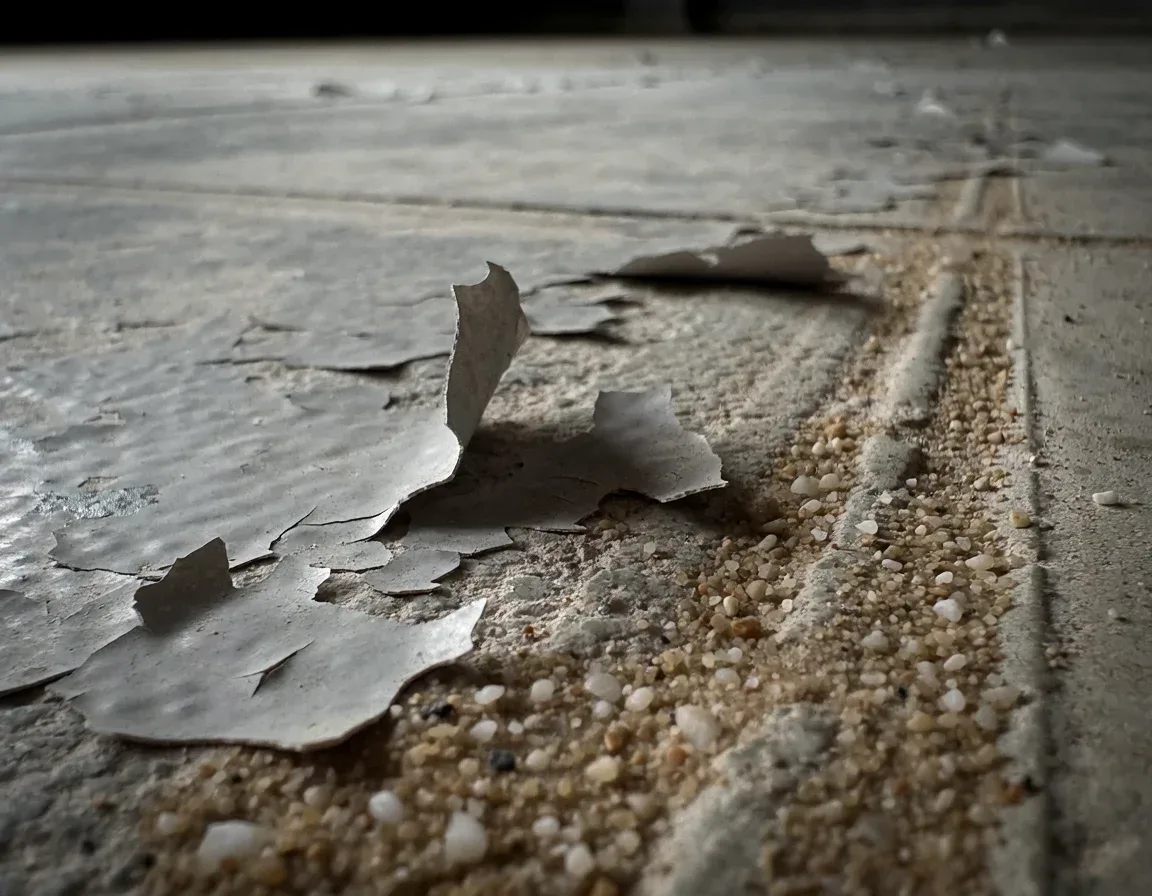
Worn concrete reveals itself; as long as it is known where to look. One of the following signs alone may not make a decision, but if two or three are together, the top layer of the floor has reached the end of its life:
- Dust that comes out when sweeping: If the floor is dusty again a day after sweeping and a gray layer is placed on the vehicles, the dust is not coming from outside, and the concrete itself is crumbling.
- Spots that do not come off: Even if the right brush is done with a clean cleaner, if the oil, rust, and water stains remain intact, the dirt has settled deep into the pores and can only be removed by removing that layer.
- Ways of wear: If the lines that vehicles and people always pass through appear different colors, rough, and slightly pitted than their surroundings, the surface has thinned along those lines.
- Exposed sand and gravel: If there are areas on the surface where cement has gone, and where sand grains and small stones have been picked out one by one, the protective outer shell has been depleted at those points.
- Money laundering: If thin crusts are peeling off the surface of the concrete, and a lighter and dusty layer emerges from underneath, the top layer has started to separate from the body.
- Old paint and coating residue: If the floor paint applied years ago is peeling off in places, the remaining parts hold dirt, and the floor looks patched, cleaning cannot fix this appearance.
Do not look at every part of the floor with the same eye while looking for signs. Wear starts first at the beginning and end of the ramp, at corners where vehicles turn, at the wheel level of the parking lot, and in front of doors. Wall bases and corners that are never pressed show the original state of the floor; comparing the two is an easy way to understand how far progress has been made.
Most of these signs are based on the same reason: the thin layer on top of the concrete is weaker than the body and wears down over the years. The work done in renovation involves removing this layer using what craftsmen call 'grinding'—that is, thinning the surface with diamond-tipped machines and hardening the solid concrete underneath. How the work is done concrete surface renewal You can find the details in the article.
Try it at home: A Handful, a Coin, and a Glass of Water
It is possible to get an idea about your floor before calling an expert. No tools are needed for this; three things at hand are enough. None of the following surveys yield definitive results, but all three together say enough.
The first is the hand probing. Press your palm against the swept and dry floor and rub it several times. If your palm turns gray and you can do it again the next day at the same spot, the floor is producing dust. The second is the boot probing. Press the edge of a coin against the ground and pull it; a fine mark remains on solid concrete, while on a weak surface, the coin easily opens a groove and dust accumulates on both sides of the groove. The third is a water probe. Pour a tea glass of water onto the floor; if the water is fully absorbed within minutes and leaves a dark stain, the pores are open and the floor will absorb every spilled liquid in the same way.
Repeat these checks in different places on the ground: on the driveway, in the middle of the parking lot, in a corner that is never pressed. If the results are very different, wear depends on traffic; if the results are the same everywhere, there is a weakness caused by concrete pouring. Both cases are renewable, but the depth of the layer to be taken and the scope of work vary.
What Does Postponing Cost?
A worn floor does not repair itself; it does not stay in place either. Opened pores draw each spilled liquid a little deeper, so stains both multiply and deepen year by year. An oil stain that remains on the surface today can turn into a stain that remains shadowed even after renovation a few years later.
Wear also accelerates. After the upper shell is gone, the sand grains underneath begin to break off one by one; each broken particle acts as an abrasive under the tire and wears down the surrounding surface. Small pits retain water, and the water-holding pit grows. The joint edges break, and each wheel delivers another blow to the broken edge. In an early refurbishment, the work is limited to the surface; if delayed, filling, edge repair, and deeper abrasion are added to the same work, and the time is extended.
There is also an invisible price. Dust in the basement parking lot settles on vehicles, is carried to stairwells, and comes to elevators and apartment entrances with shoes. It settles on products and shelves at the workplace. The cleaning staff's effort increases, but the result does not change. In short, postponing does not eliminate the work; it only increases it.
The Right Period in Alanya: Season, Precipitation, and Humidity

Renovations can be done in any month of the year, but in Alanya, the calendar is determined by two things: the tourism season and the weather. From mid-spring to mid-autumn, summer houses fill up, complexes become crowded, hotels operate at full capacity; emptying parking lots in sections during these months is difficult. The period from late autumn to early spring is calm, but most of the year's rainfall falls during these months.
In enclosed areas such as basement parking lots, garages, and storage rooms, rain does not affect the work itself. What to pay attention to is humidity: during rainy weeks, vehicles carry water inside, basement air becomes heavier, and the drying of hardeners and protectors is prolonged. In open areas like yards, garage paths, and open parking lots, dry ground and a few days without rain are necessary. There is a problem opposite to summer: concrete under the sun heats up a lot and dries without absorbing liquids applied to the surface; therefore, summer work is done early in the morning.

| Period | Conditions | Which jobs are suitable for |
|---|---|---|
| November – February | Off-season, frequent rainfall, humid weather | Hotel and site basement parking lots, summer garages, covered storage rooms |
| March – April | Rainfall decreases, last weeks before the season | Indoor and outdoor areas; tasks that need to be completed in time for the season |
| May – September | Dry and very hot, busy season | Open courtyard and garage paths; small and short-term jobs |
| October | End of the season, warm weather, rain still infrequent | Open parking and courtyards; the first tasks of the winter program |
The table is not a rule, but a trend. Sunny days that come one after another in winter provide opportunities for outdoor work; in mid-summer, the floor of an empty warehouse can be easily renewed. We consider seasonal selection for all types of flooring The best time for floor mopping The writing also guides the way.
Winter also provides convenience for summer house owners. When the house is empty, the garage and basement can be cleared of furniture, noise does not disturb anyone, and the floor dries without rushing. Homeowners living abroad often have this work done by the site management or a trusted relative, without them coming.
There is another factor that determines the schedule: other tasks. If painting, plumbing, or electrical work is to be done in the garage or basement, floor renovation is left behind; otherwise, paint drips onto the new surface, and stair footings leave marks. In small businesses like markets, workshops, and car washes, the right time is the busiest days of work; most of the time, it is chosen after the weekend or closing time.
Planning at the Site and Hotel: Time from Decision to Work
In a detached house, the decision belongs to one person. In a site and hotel, months can pass between the appearance of symptoms and the start of work; therefore, to catch the right time, the calendar must be set upside down. If the work is to be done in winter, preparation should begin in summer. The process usually proceeds in the following order:
- Assessment of the situation: Management or the technical responsible person surveys the ground, photographs the symptoms, and notes dust and stain complaints; this record serves as the basis for the decision meeting.
- Discovery and offer: The ground is inspected on site, repair-needed areas are identified, and the scope of the work is documented; it becomes clear whether curbs and ramps are included.
- Decision and budget: In the housing complexes, the matter comes to the board of directors or the condominium owners' assembly; the summer meeting, when most summer residents are present, is a suitable time for this decision.
- Calendar and announcement: The work is divided into sections, the date of each section is set, and the dates when vehicles will be towed are announced to residents in advance, preferably in multiple languages.
- Application: The sections are emptied and renovated one by one; the corridor through which everyone passes via the entrance ramp is left to the last, on days with the least traffic.
The schedule is tighter in hotels. If concrete floors such as service entrance, staff parking, and goods reception areas are included in the program immediately after the season closes, they will not overlap with the painting, plumbing, and furniture work before the opening. Details of the decision and work plan for site managers site parking floor renewal guide We explained in the article.
Situations Where Renewal Is Not Enough
Surface renewal, as the name suggests, is the work of the surface. If the problem is deeper, the renovation covers it but does not solve it; shortly after, the same symptoms return. In the following cases, another step is needed first:
- Collapse and level difference: If the ground is set to one side and a step has formed between the slabs, the problem lies with the ground beneath the concrete and should be evaluated by a structural engineer.
- Expanding cracks: Cracks that open slightly each year and remain at different levels on both sides indicate that movement continues; the filling, which is done without finding the cause, reopens again.
- Constant moisture coming from below: If the floor remains damp even during rainless weeks and salt accumulates at the base of the walls, the water source and insulation should be addressed first.
- Rusted reinforcement: If the iron inside the concrete rusts and fluffs the surface, and rust-colored cracks seep out, this is not a surface but a structural problem.
- Deep loose concrete: If the surface is still crumbling like flour after a few millimeters of preservation, a solid base cannot be achieved; repair mortar or a new top layer is needed.
Which of these is often known during exploration is determined by testing a small area. The encouraging thing is that in most of the grounds we see in the field, the problem is actually on the surface.
A Brief Roadmap for the Decision
First, clean your floor thoroughly and wait for it to dry. If dust, stains, and roughness have passed, continue with regular maintenance. If not, photograph the symptoms, conduct check-ups at several points, and plan the work to coincide with the quiet period of the season. In Alanya city center and in all towns from Mahmutlar to Konaklı Our Concrete Floor Renewal Service We conduct on-site inspections within this scope and mention this where renewal is not necessary. Photos and approximate area service request form You can transmit it through the channel.
Renovation May Also Be Needed in the New Building

Renovation is not only the job of old buildings. If the parking floor in a site that has been receiving it for a year or two has been dusting since the first winter, the problem is not age but the pouring: the concrete was poured in the heat, not kept sufficiently moist, or the surface was leveled with excessive water.
These floors do not improve by waiting; the top layer is weakly born. The only condition is that the concrete is matured. Newly poured concrete gains strength in the first weeks, and renewal is not done before this period expires.
Puddle Is Not a Sign of Renewal

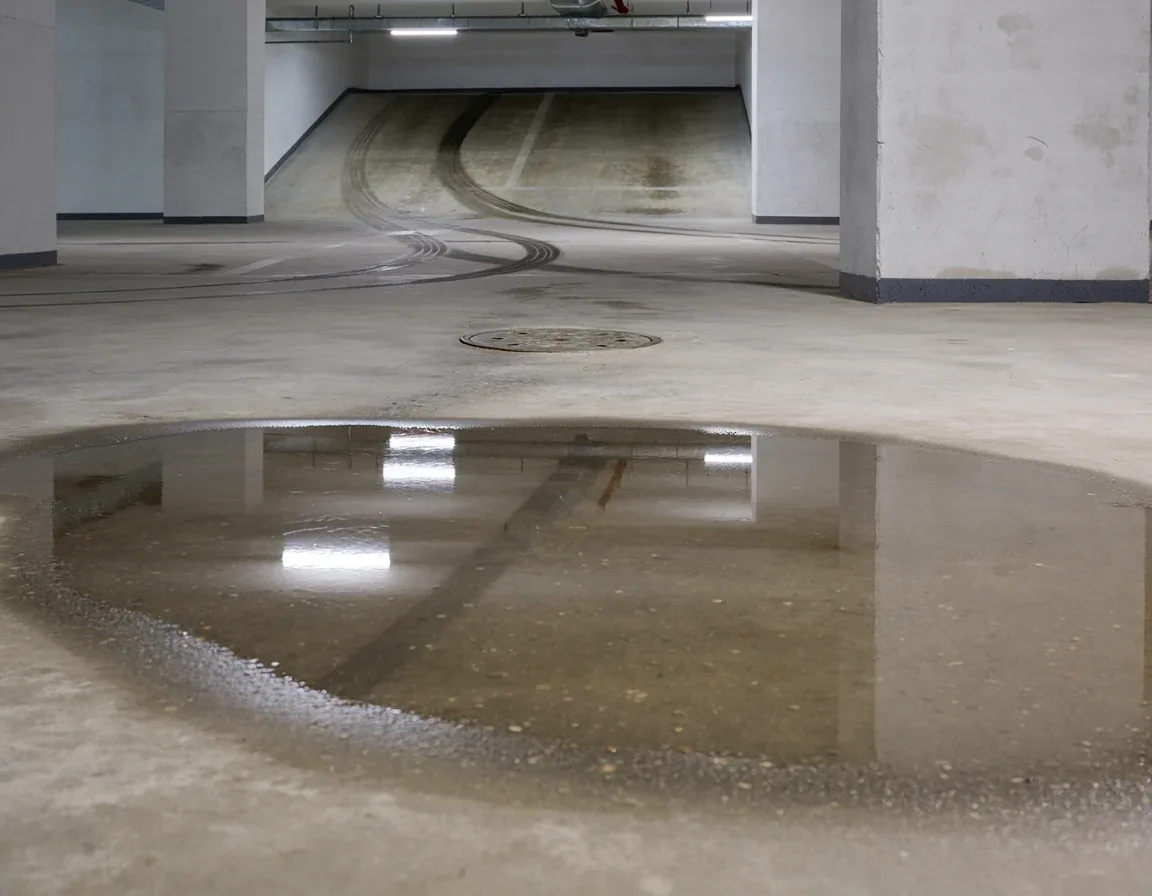
Water standing for days in the middle of the parking lot after rain is the most common reason managers cite for renewal. However, the accumulation is not due to surface wear but from the slope of the ground; the water cannot flow toward the drain.
The layer taken in surface renewal is at the millimeter level. Small bumps can be removed, but a wide depression or reverse slope cannot be corrected this way. On such a surface, the water's path, i.e., slope and drains, are addressed first; renewal comes next. Both can be planned together in the same work schedule.
Do not make a renovation decision based on dirty ground: first clean a section according to the rules; if it still produces dust after drying, the decision becomes clear. — Expert Note