What is Concrete Surface Renewal and How Is It Done?
The concrete of the garage or parking lot turns gray, dusty, and stains over the years; one day you see, no matter how much you wash it, it looks old. The first solutions that come to mind are expensive and troublesome: breaking and repouring or covering it with something. However, most concrete floors only have problems with the top few millimeters, and when that layer is removed, a solid, clean surface emerges underneath. In this article, we explain what concrete surface renewal is, who it is the right solution for, the steps to proceed in your home or site, and what to expect when it is finished.
In short: Concrete surface renewal involves removing the worn top layer of the floor with diamond-tipped machines, hardening the resulting solid concrete with a special liquid, and polishing and protecting it as desired. The floor does not break, does not cover it, and its level does not rise. It works for concrete with a solid body; for deeply damaged or hollowed floors, repair is required first.
What Do We Mean by Renewal?
In everyday language, renovation says a lot: painting the floor and laying tiles on it are considered renovations. The task we explain in this article is narrower and simpler: instead of adding something on top of concrete, removing the damaged part. It's like sanding the top of a scratched wooden table and revealing the clean wood underneath.
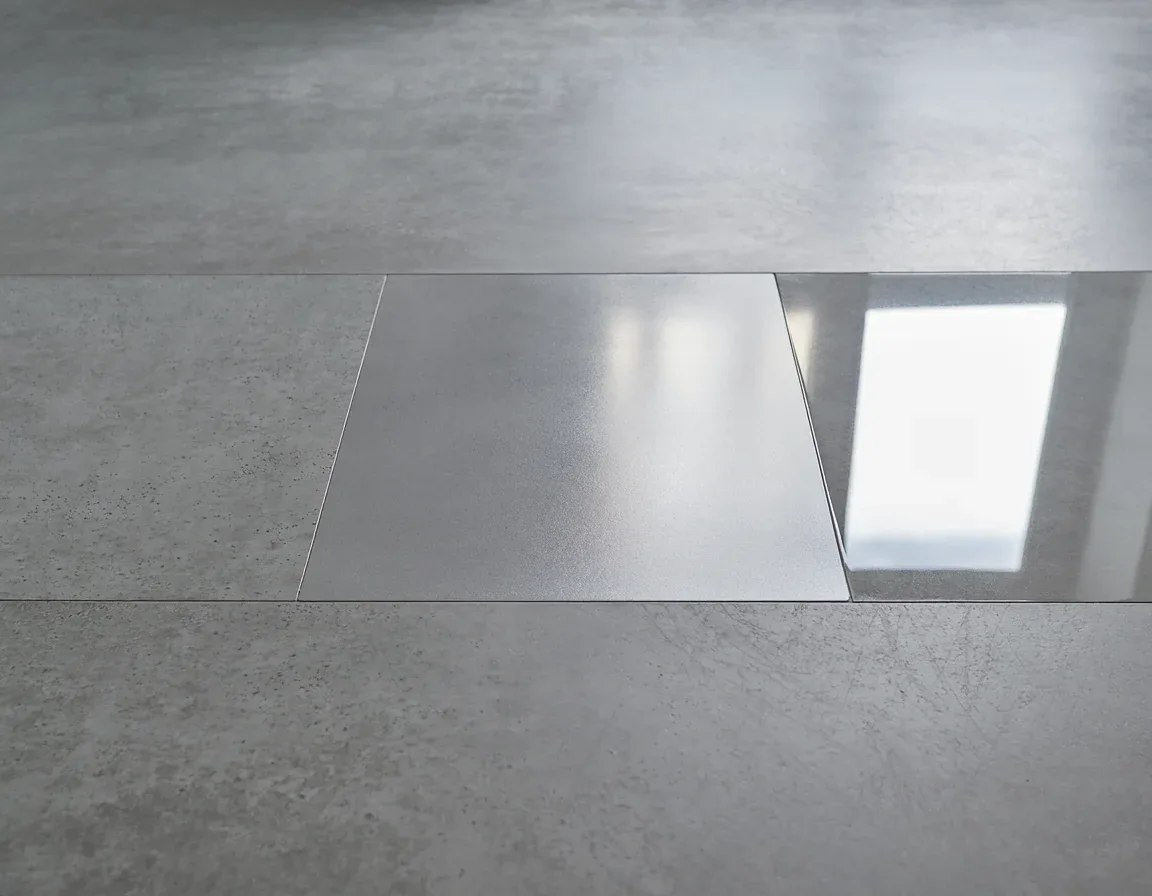
This work consists of three steps. In the first, the weak, dirty, and worn top layer is removed with a machine. In the second, a hardener that reacts with concrete and tightens it is impregnated onto the exposed surface. In the third, the surface is thinned to the desired smoothness and finished with a stain-retardant protector. Craftsmen call this entire work 'polishing'; that is, the surface is renewed step by step by thinning it with diamond-tipped machines. If you hear the words concrete polishing, concrete polishing, or polished concrete when receiving a quote, know that you are encountering different names for the same job.
The important point is that at the end of the work, there should be no coating on the floor. The surface you are pressing on is not paint, resin, or varnish, but the concrete itself. Therefore, there is no layer to peel, bubble, or lift under the tire.
Why Does Concrete Age? The Problem Most Often Lies in the Top Layer
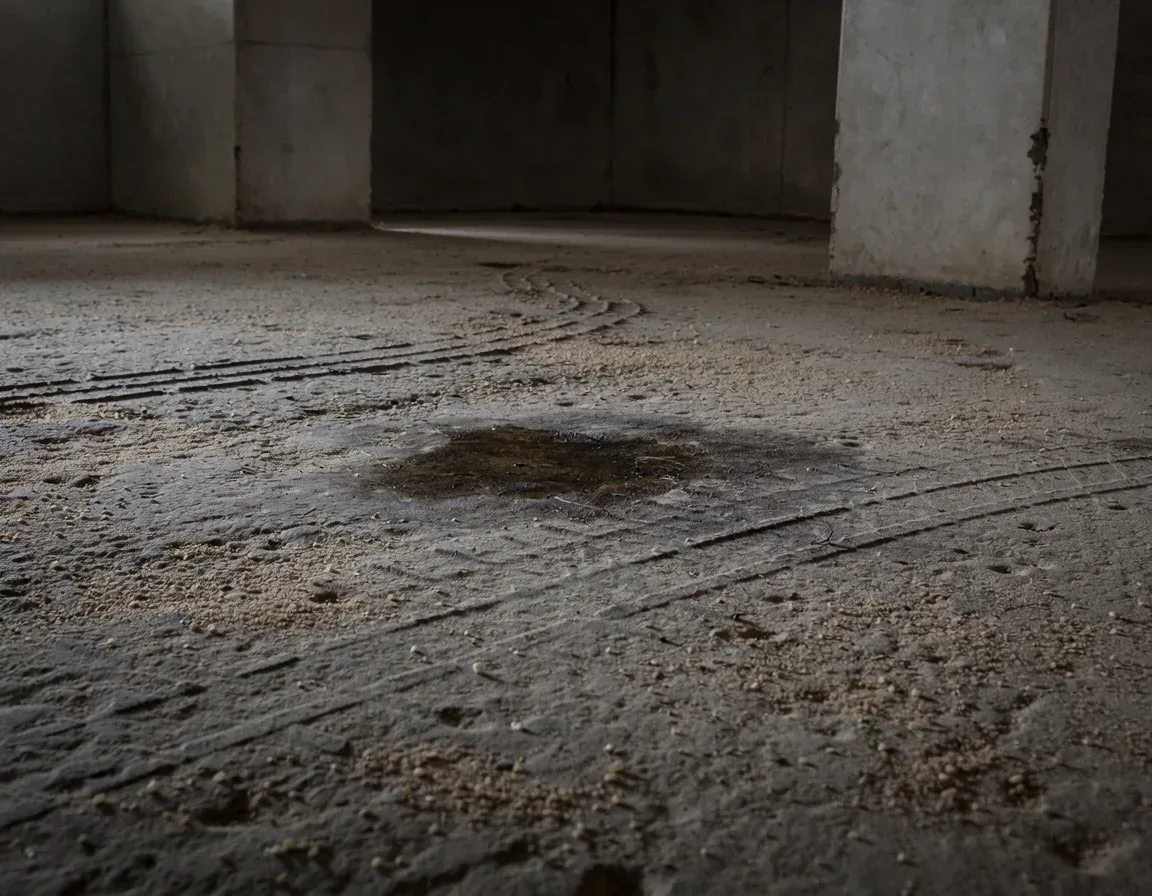
When pouring concrete, some of the water in the mixture rises to the surface and carries fine cement and sand along with it. Therefore, a thin shell forms at the top of the floor, more porous and softer than the body. If the concrete is poured in hot weather, not kept sufficiently moist, or corrected by sprinkling extra water on its surface, this shell remains even weaker.
Over the years, rubber, foot, and broom wear down this shell. The floor starts to produce dust, absorbs every drop as its pores open, and stains accumulate. The gray and tired appearance comes from here; the concrete underneath is often very solid. The causes of dust and how the hardener responds Why does a concrete floor produce dust We explained this in detail in the article.
There are also local factors accelerating this wear in Alanya. In sites close to the sea, sand transported with tires works like sandpaper. Humid and salty air keeps the basement floors moist for a long time. In winter, water carried by vehicles during heavy rain, and in summer, condensate water dripping from air conditioners all accumulate at the same points, and those points open up first.
Breaking Down, Coating, or Replacing
There are three ways to use a worn concrete floor, and which one is correct depends on the condition of the floor. The table below lists the most frequently asked questions by the homeowner and site management when making decisions.

| To break and recast | Coating the top (paint, epoxy, tile) | Surface regeneration | |
|---|---|---|---|
| What to do | Old concrete is removed, new concrete is poured | A new layer is placed on top of the existing concrete | The top layer is removed, and the concrete is hardened |
| Debris and noise | A lot | The | No debris; dust is absorbed in the machine |
| Ground level | Readjust | Rises | It is considered unchangeable |
| Return to use | Weeks; waiting for the new concrete to mature | Days by product | Most jobs are walkable when finished |
| What happens over time | New concrete can wear out in the same way | Peeling and blistering may be observed | No coating; the worn area is reprocessed |
| When is it right | If the concrete is deeply damaged | If chemical resistance or color is required | If the body is solid, the problem is on the surface |
The painting says this: renovation is not a cure, but it is the way to achieve results with minimal destruction on solid concrete with a solid body. Breaking and tearing should only be considered if the concrete has truly become incapable of support. Coating is meaningful for a chemically poured workshop or a space that requires a certain color; a coating done just because it looks old can bring you back to the same spot with a peeling layer after a few years.
Who Is It Suitable For, Who Is It Not?
Surface renewal is most effective in places where concrete is used barely. The most frequently requested places for this job are:
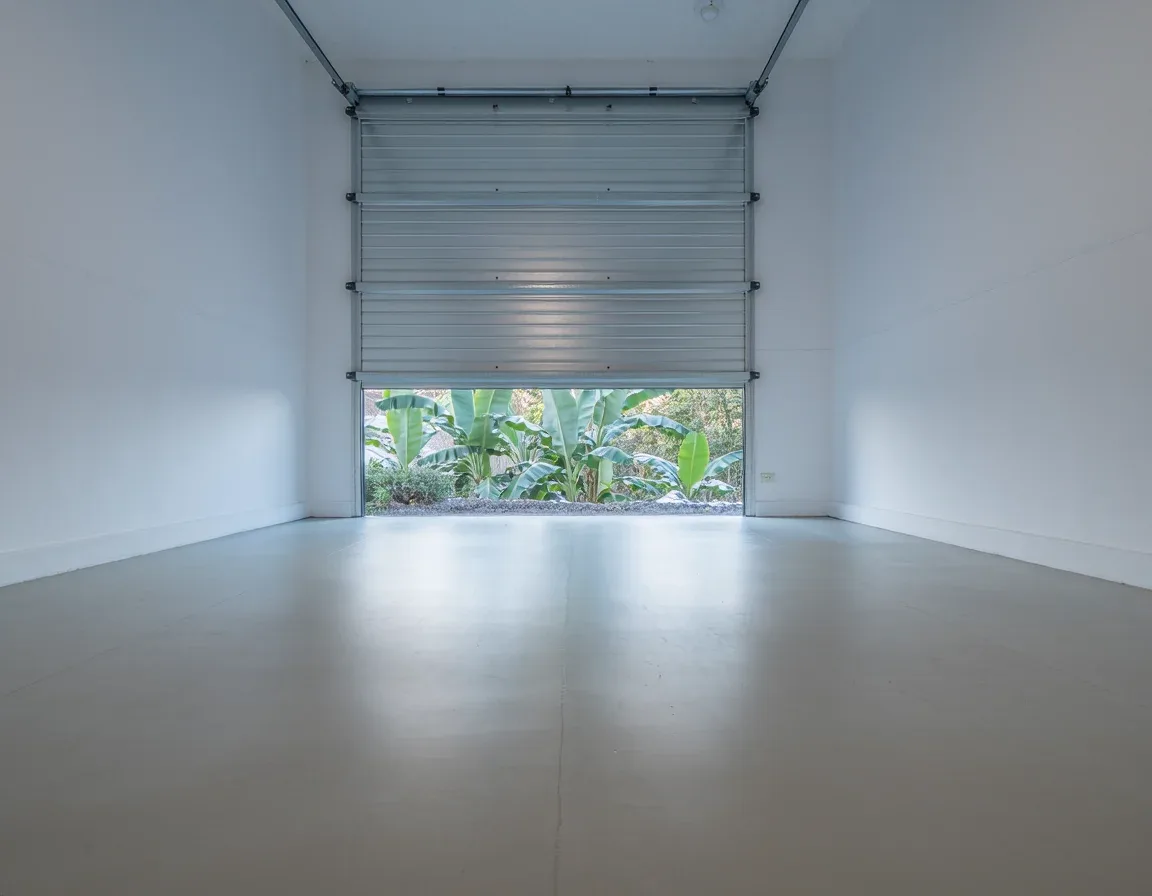
- Villa and summer garage: When you get off the vehicle, the floor, worn by dust and grease stains, returns to a clean, easy-to-wipe surface without the need for a floor.
- Site and apartment parking: The gray dust placed on the vehicles and the trace carried to the elevator are largely cut off; the floor is illuminated, and machine washing becomes easier.
- Basement, storage, and pantry floor: The floor that dusts the box and the item becomes compact; a surface that can be maintained with a damp cloth and does not produce dust is achieved.
- Shop, workshop, and small warehouse: The paths opened by pallet trucks and car wheels are smoothed, and since the floor does not produce dust, products and shelves remain clean.
- Apartment and office with the cladding removed: Concrete that comes out from under the carpet or old covering is removed from adhesive residue and can be used as a simple and modern floor.
There are also situations where it is not suitable. If the concrete is soft enough to be scraped off with a nail and this softness is limited to a few millimeters, there is no solid surface underneath to reach. On floors with a very thin and loose layer of screed, the machine can break this layer. If moisture and salt constantly come from beneath the floor, or if the iron inside the concrete rusts and lifts the surface, that problem must be solved first. Which of these is involved is often determined during exploration by testing a small area.
Open areas are a separate topic. In rainy places such as courtyards, garage paths, and open parking lots, worn layers are removed and the surface is hardened, but the ground is not polished; it is deliberately left rough to prevent slipping when wet. With freshly poured concrete, there is no rush: this work should not be started before the concrete has gained strength and matured.
How to Upgrade Your Business? Steps From Your Perspective
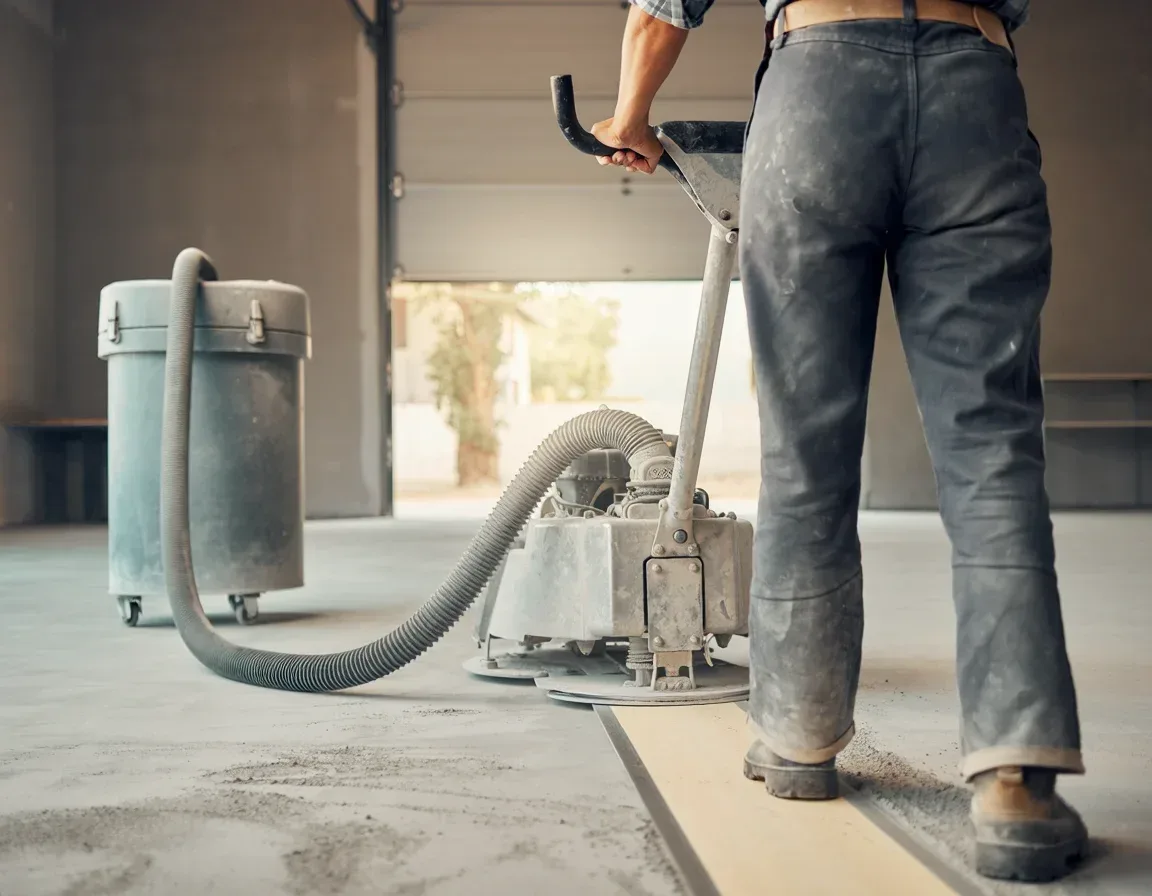
The technical detail of the job is the craftsman's job; as a homeowner or manager, what you need to know is what will happen in order on your floor and what is expected of you at which stage. In a garage or parking lot, the work progresses in five stages:
- Introduction and discovery: The floor is inspected on site; you point out the areas where you are most uncomfortable, and we note cracks, stains, and the hardness of the concrete. If necessary, a corner is tested to show how the result will look.
- Preparation day: You remove the vehicle and belongings; the team installs the electrical and water connections, covers the door opening to the house and the shelves that don't move, and pre-cleans dense grease stains.
- Noisy stage: The heavy machine erodes the worn shell, old paint, and dirt with the diamond tips underneath it down to solid concrete. This is the stage where the sound and movement are most intense; the color of the floor unfolds before your eyes.
- Silent stage: The resulting cracks and pits are filled, then silicate-based liquid hardener is impregnated on the surface. This liquid reacts with the lime in the concrete, tightening the surface; during this time, no pressure is applied to the ground.
- Final passes and delivery: The surface is made matte, satin, or shiny with thinner diamonds, and a stain retardant protector is applied. The floor is toured with you and daily maintenance is explained.
The fourth stage often takes longer than expected because the real condition of the floor becomes visible when dirt is removed and the fillings are expected to harden. How these repairs are handled concrete floor cracks with Pothole and Break Repair We explained this in their articles.
The duration depends on the size of the area and the amount of repair. A small garage is completed in a few days; a large parking lot is divided into sections and worked on, and each section goes through the same five stages within itself. If you wonder how the days are spread out day-by-day workflow You can check the article.
Life at Home and on the Site While Business Continues
What keeps people away from this is the fear that the house will be filled with dust. The machines operate connected to powerful industrial vacuum cleaners, and most of the dust is absorbed as soon as it is removed. In some stages, water is used; then there is no dust, and gray sludge that needs to be collected forms instead. Still, some fine dust can mix into the air; therefore, it is advisable to keep the door from the garage to the house closed and cover the items on the shelves.
Machines are noisy. Working hours in apartments and sites are determined with management and rest times in mind. Large machines require a strong electrical connection; the location and capacity of the panel are checked during inspection. A tap for water and a system where muddy water is collected; this water does not pour into drains because it hardens inside the pipe.
The biggest issue in the parking lot is the vehicles. The work is done in parts; the vehicles of each section are moved to a different place on the announced day and time. A single vehicle staying in place means that parking spot remains patched. In many Alanya complexes, some apartments are closed for most of the year, and vehicles wait in the parking lot when their owners are away. Therefore, making the announcement well before the work starts and informing summer residents separately is the most important part of preparation.
What to Expect and What Not to Expect When the Job Is Done?
The right expectation is half the satisfaction. From a renewed concrete floor, you can expect the following:
- Cutting the powder: The dust that comes out as you sweep largely disappears; the gray layer that accumulates on the vehicle hood, shelves, and boxes no longer forms.
- A clear and clean tone: Because the dirty crust is gone, the concrete's own gray appears, reflecting more light and illuminating the space.
- Easy cleaning: The tightened surface does not absorb dirt; daily maintenance with a vacuum cleaner and neutral cleaner is sufficient.
- Delayed spotting: The protector delays the spilled liquid from penetrating the concrete and saves you time to wipe it off.
There are also things that should not be expected. Concrete is not a single-colored tile; sections that were poured on different days, old repairs, and repaired cracks remain visible with a slight tone difference. Deeply penetrated old oil stains lighten but their shadow may remain. It delays or prevents the protective stain; oil or acidic liquid left for hours still leaves marks. Mirror-like shine is possible but not true everywhere: in garages and parking lots, matte or satin surfaces are more suitable for wet tires and shoes, while ramps are not polished at all.
Next: How to Care for the Renewed Floor?
Renewed concrete requires little maintenance but does not go unattended. Regular sweeping of the sand, washing with a neutral cleaner, and wiping off spills without delay are sufficient. Salt spirit and similar acidic products are not used on this floor either. If the surface becomes matte again at the points where vehicles turn the most after years, the whole process does not need to be redone; those areas are gently cleaned up.
If you are unsure whether the right time has come for your floor When is concrete floor renewal needed Check the symptoms in the article. In Alanya city center and towns Our Concrete Floor Renewal Service we conduct on-site inspections within the scope; measurements and several photographs service request form Sending it through is sufficient for the initial evaluation.
Matte, Saline, or Shiny?

How thin the surface is chosen in the final stage of the renovation is your choice. The matte finish does not emit light from the floor, looks simple and natural; it has high wet adhesion. The satin finish gives a light sparkle, is easy to clean, and is a balanced choice for most garages and parking lots. The bright finish reflects light like a mirror; it suits dry, enclosed spaces like shops and salons.
As the brightness increases, the duration of the work lengthens, and more attention is needed on wet grounds. A healthy way to decide is to see three finishes side by side on your own floor.
Garage of the Covered Summer House: An Exemplary Plan

Let's consider a summer house in Kestel or Kargıcak where the owner spends the winter abroad. The garage floor is dusty, and there is an old grease stain where the vehicle is parked. Winter months are suitable for such work: the house is empty, noise does not bother anyone, and the floor dries without rushing.
The homeowner leaves the key with the site management or a trusted relative. The pre- and post-work situation is shared with photos; when you arrive at the beginning of the season, the garage is ready for use. Moving items to a room in advance shortens the work.
When requesting a quote, ask not only the square meters but also whether edge and column bases, crack repair, and protector are covered; a non-renewed edge strip will continue to produce dust. — Expert Note
Frequently Asked Questions About Concrete Surface Renewal
01Should fixed shelves and cabinets at the base of the wall be removed?
02Can only my own storage or parking space be renewed in the apartment?
03What determines the cost of renewal?
04Can the color of concrete be changed?
05I spend most of the year abroad; can the work be done without me?
06Does noise continue throughout the whole thing, and what should I tell the neighbors?
Related Articles
What is Concrete Plaster and How Is It Done? Turning Dusty Concrete into a Glossy Floor, When Is Concrete Floor Renewal Necessary? Symptoms and the Right Time, Concrete Floor Cleaning: Step by Step in Home, Site, and Workplace, Concrete Coating or Epoxy Coating? Which Floor Is Suitable for Which, Protection and Maintenance After Concrete Smoothing