The Most Common Mistakes in Concrete Floor Cleaning
Concrete is a solid material; so it is believed that anything can be done with it. The salt is poured out, scraped off with a wire brush, pressurized water is brought close to the bottom, and often the result looks good at first glance. The damage appears weeks later: the floor produces more dust than before, gets dirty faster, and stains no longer come out. In this article, we address the nine most common mistakes we see in concrete floor cleaning in order; in each, we explain why it was made, what it does to the concrete, and what should be done in its place.
In short: The cleaning mistakes that cause the most damage to concrete floors are using acidic products, scraping with hard tools, and holding pressurized water too closely; all three destroy the thin top crust of the surface. Too much detergent, not rinsing, and leaving the floor wet bring back dirt. Proper cleaning is simple: first dry sweeping, then brushing with a measured product, collecting and drying dirty water.
Mistake 1: Washing with Spirit Salt and Acidic Products
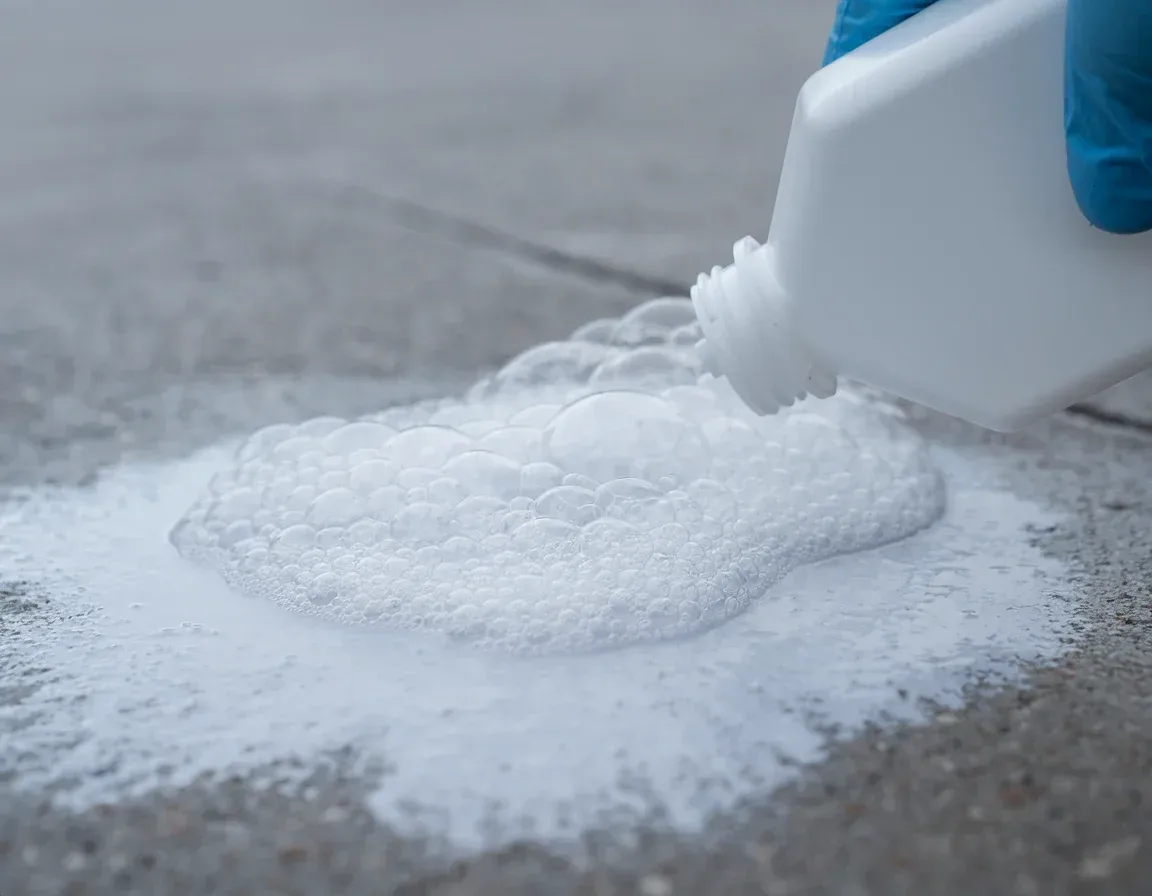
Concrete poured with salt spirit foams, and when the foam is removed, a light-colored, spotless-looking surface emerges underneath. Because of this appearance, salt spirit has been known for generations as the product that opens concrete. However, what foams is not dirt but the concrete itself. The cement binder that holds the concrete together is lime-based and dissolves when it encounters acid. The opened color is the result of the thin layer on top melting away.
What remains is a rough surface with enlarged pores exposed by sand grains. This surface releases more dust than before, absorbs liquid faster, and pulls the next dirt deeper. Acid vapor released indoors burns the eyes and respiratory tract; it rusts surrounding metal doors, plumbing, and vehicle rims.
Acid is not only found in spirit salt bottles. The main acidic products poured onto concrete floors at home are:
- Spirit of salt: It is diluted hydrochloric acid and the household chemical that damages concrete the fastest; diluting further does not stop the damage, it only slows it down.
- Limescale and rust removers: Most of these products made for bathrooms contain acid; since the concrete itself is lime-based, they dissolve the surface along with the stain.
- Vinegar and citric acid: Because they are natural, they are thought harmless, but although weak, they are acidic and when used regularly, they dull and roughen the surface.
The correct approach is to use a neutral cleaner for everyday dirt and an alkaline cleaner for greasy dirt. If there are special cases requiring acid, such as cement residue or a stubborn lime layer, this task should be left to an expert who pre-wet the surface, apply the product in a controlled manner, and then rinse it thoroughly. If your floor has seen acid and light-colored, rough stains have formed, these will not be fixed by cleaning; that layer must be removed with a machine.
Mistake 2: Pouring Bleach on Every Dirt
Bleach is known as a product that cleans everything at home; therefore, it is poured both on grease stains in the garage and on darkened corners of the terrace. Bleach bleaches and kills germs; it works when used diluted on moss and mold stains. However, it does not dissolve the oil, nor does it remove sand and mud. Bleach poured onto the grease stain slightly lightens the color of the stain, while the oil remains in the pores.
When used intensively and frequently, it wears down any protective layer and can weaken the surface over time; it damages surrounding plants and metal parts. The main danger is mixing. When bleach combines with salt spirit or another acidic product, chlorine gas is released, and when combined with ammonia-containing cleaners, other toxic gases are released. In a closed garage or basement, this mixture can lead to serious poisonings.
The correct approach is to use bleach alone only for algae and mold, diluted according to the ratio on the label, and then rinse thoroughly with plenty of water. If another product has been spilled on the floor before, that product should be rinsed completely first.
Mistake 3: Scraping with a Wire Brush and Hard Tools
In the face of a stubborn stain, a person's hand goes to the wire tips attached to the wire brush, spatula, or drill. The logic is simple: the harder I rub, the cleaner it gets. This is not the case with concrete. Steel wires scratch the surface, lift off the thin shell in places, and the scraped area remains as a light-colored, rough patch around it. The stain looks gone, but there is now a wound in place that traps dirt more easily.
The second problem is more insidious. Small steel particles breaking off from the wire brush stick into the pores. As the floor gets wet, these particles rust, and after a while, orange spots appear on the scraped area. The same applies to dishcloth.
The correct approach is to use a stiff nylon bristle brush; nylon is hard enough to remove dirt from the pore and soft enough not to scratch concrete. For raised residues like dried paint or gum, a plastic scraper is sufficient. If the brush is not enough, the solution is not a harsher tool but the right cleaner and a slightly longer waiting time.
Mistake 4: Putting Too Much Detergent, Skipping Rinsing
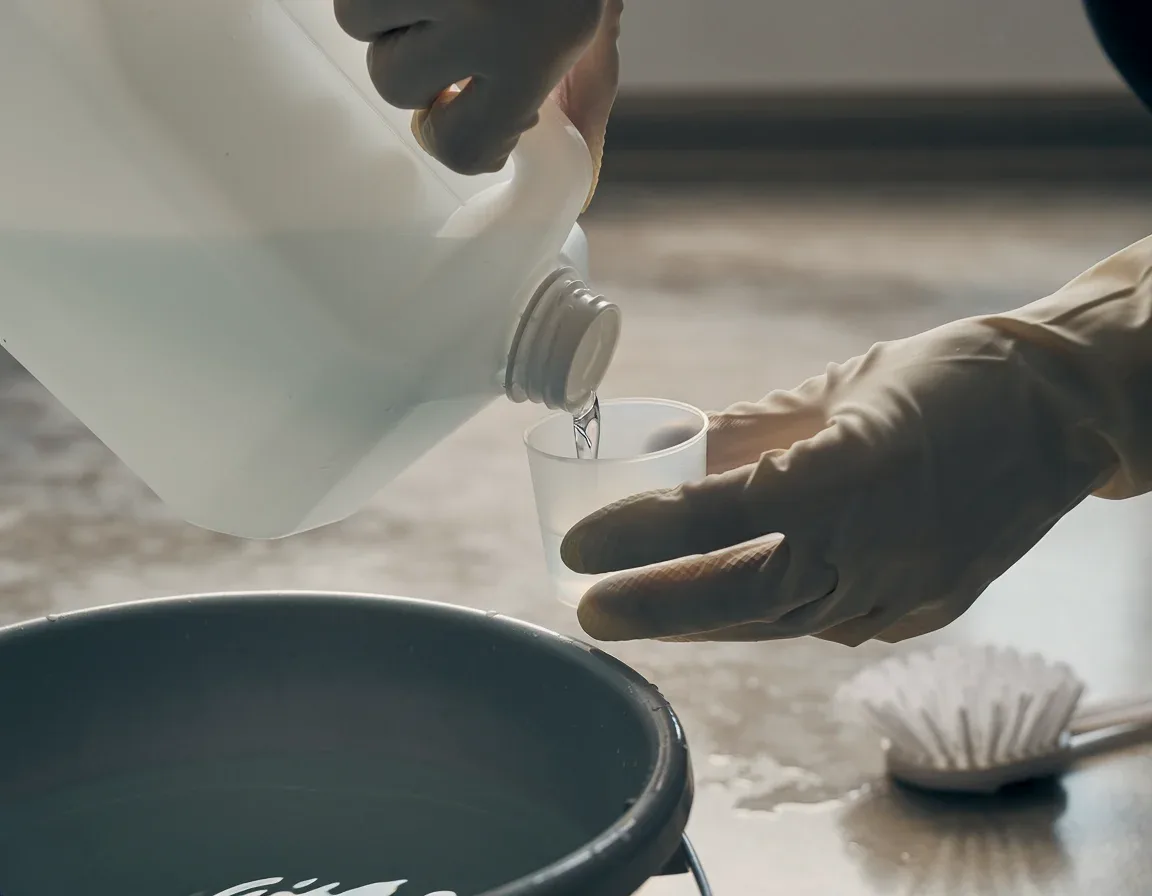
Plenty of foam provides a sense of cleanliness. Two to three times the amount of detergent is placed in the bucket, the floor is brushed, the foaming water is pushed out with a kik, and the work is considered done. Since concrete is porous, part of this detergent remains on the surface and pores. When dry, an invisible, slightly sticky film forms.
This film holds the dust like a magnet; the floor looks dirtier than before a few days after cleaning. When wet, it becomes slippery; on a rainy day, it can cause falls at the parking lot entrance or in a garage entered with wet feet. Some of the whitish marks that appear on the floor when dried are also unrinsed detergent. The white mark is not always detergent; it is salt carried by moisture-like layers like salt at the bottom of walls and cracks, and this Salt and moisture escape on concrete floors We explained in the article.
The correct approach is to use the product at the rate stated on the label and rinse it at least once with clean water after washing, collecting this water from the floor. The less foam, the easier rinsing will be.
Mistake 5: Holding Pressurized Water Closely
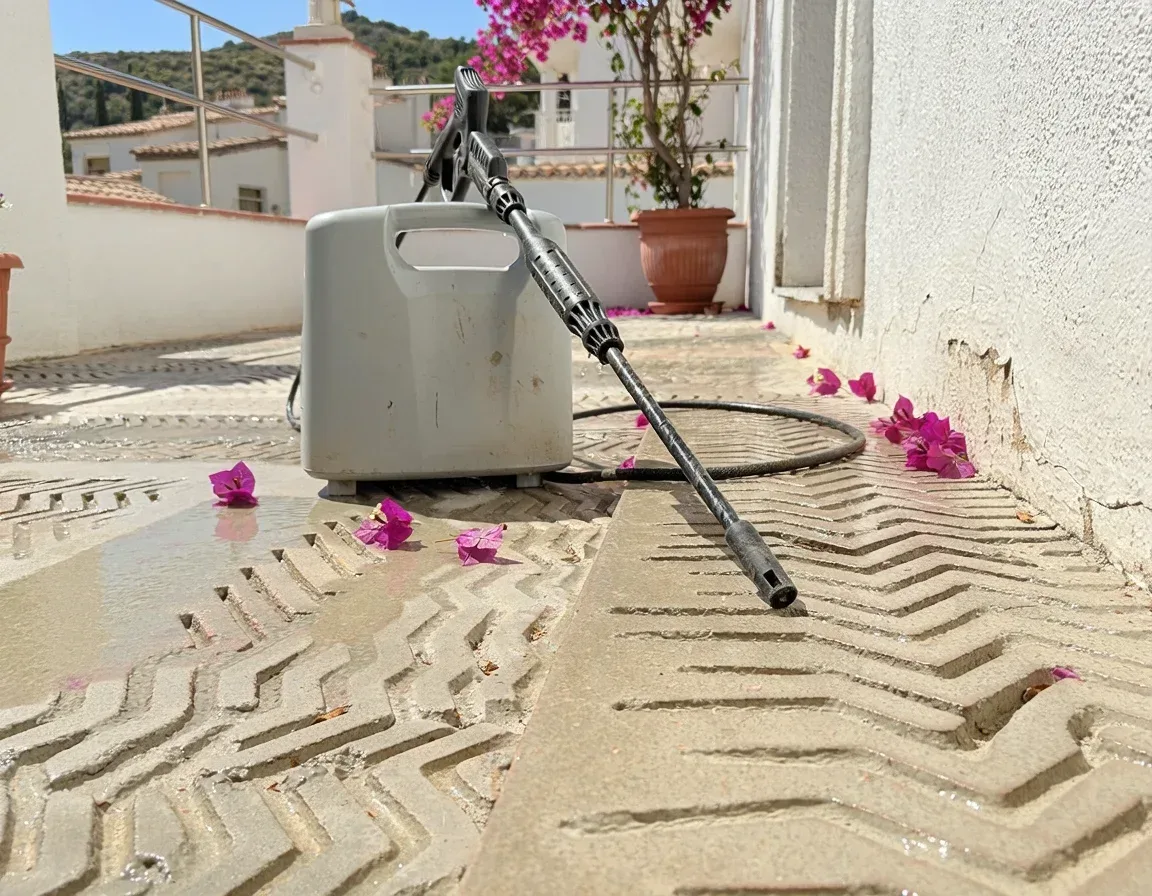
A pressure washer is a good tool for concrete in open areas; the mistake is to use it like an grinder. When no dirt comes out, the tip is brought closer to the floor, the narrowest spray nozzle is attached, and the water is held at one point. A narrow water jet removes the thin top layer of concrete from a few centimeters. The result is rough areas with lines drawn with a pencil, wavy stripes, and sand grains on the floor. These marks do not disappear when dried; the surface itself is carved.
The damage is greater at joints and crack edges. Water held close to the joint removes the joint, breaks the edge of the crack, and tears off weak points. When used in a closed basement, liters of water come out with no place to go to the surface. The truth is based on three rules:
- Wide-angle tip: Attach the fan-shaped spray tip; the narrow and pen-like spray head carves out the concrete, leaving permanent lines on the floor.
- Distance: Keep the tip at least 30–40 centimeters from the ground and try it in an unobtrusive corner first; if a mark remains, increase the distance.
- Continuous motion: Advance the water in neat strips layered together without leaving the water at a single point; keep it further away from the edges of joints and cracks.
It is not pressure that will remove dirt, but a pre-applied and left clean cleaner; water only removes the dissolved dirt. Which method is suitable for which area concrete floor cleaning We explained it step by step in the guide.
Mistakes 6 and 7: Spreading Oil with Water, Leaving the Stain Waiting
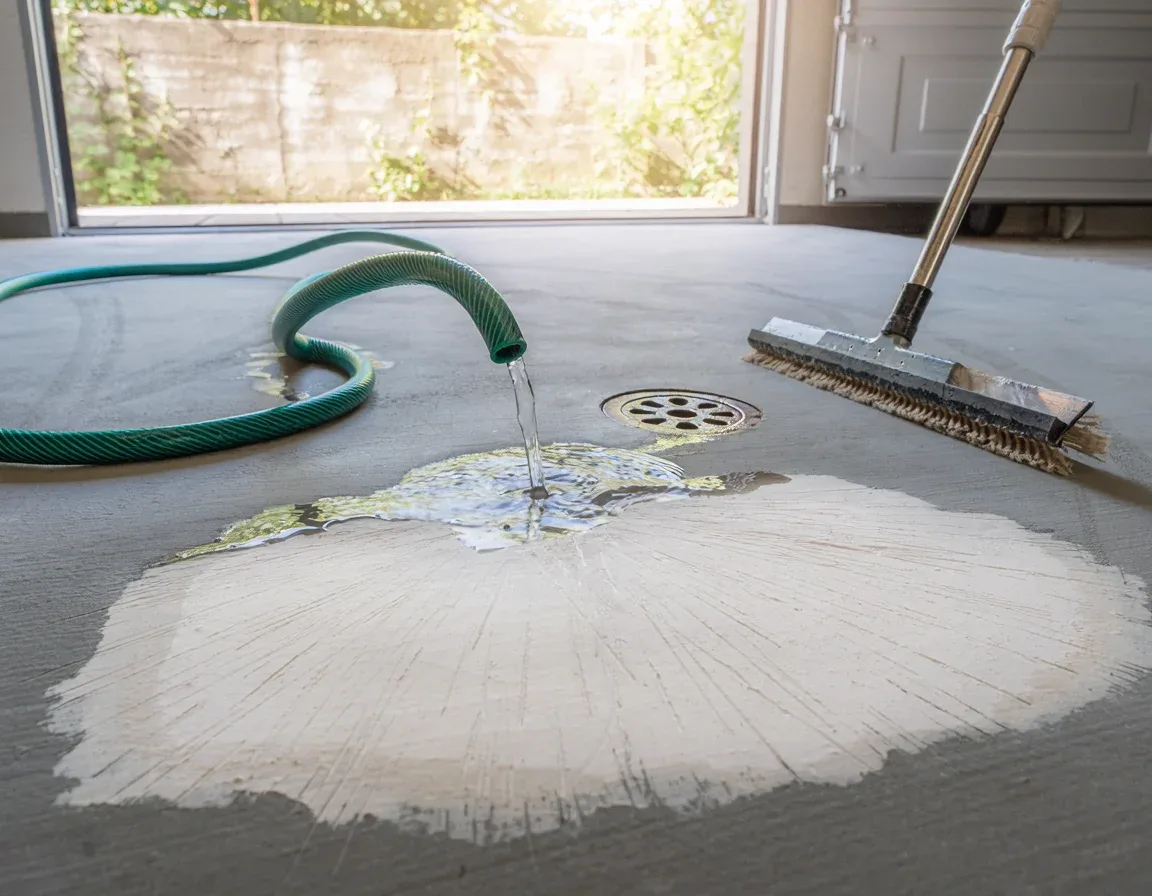
When oil drips on the floor, the first reaction is to hold the hose. The oil does not mix with water; water does not dissolve it, it only carries it. A drop about the size of a palm spreads over square meters with the hose and is pulled into the pores over a much wider surface as a thin film. Wiping with a cloth or mop gives the same result: the stain grows.
Waiting is the second mistake. The drip in the corner of the garage stays for weeks anyway, labeled as concrete. Concrete slowly but steadily absorbs liquid; the oil sinks a little deeper every day. The droplet, which can be almost completely removed on the first day with an absorbent material, turns into a shadow a few millimeters deep months later, which no cleaner can fully reach. The same applies to rust: a metal box or saucer forgotten on a wet floor quickly leaves an orange ring.
The correct approach is to immediately spread an absorbent material, such as cat litter or sawdust, over the spilled oil, wait a while and sweep it, then brush the remaining residue with an alkaline degreaser. Water comes last, after the dirt has dissolved. The procedure to follow for settled stains Removing oil and paint stains on concrete floors You can find it in the article.
Mistakes 8 and 9: Leaving the Floor Wet, Applying Polish or Varnish on Top
Leaving the floor untreated after washing seems harmless. Outdoors, the sun takes care of this quickly, but in a closed garage and basement, water can remain for hours, sometimes days. During this time, dirt in the washing water accumulates in rings where the water last evaporated, namely in pits and corners. In Alanya's humid air, the floor that does not dry smells of mold, salt production increases at the base of the walls, and moss settles in shaded corners. Wet floors are also slippery.
The last mistake is to cover the cleaned floor with floor polish, varnish, or oil paint to keep it shiny and prevent dirt from sticking. The result is good in the first week. Then the film removes from the rubbing areas, the moisture from below whitens and bubbles the film, and the peeled areas become visible patchily. These films are very slippery when wet. Moreover, the applied film does not come off with ordinary cleaning; most of the time, it can only be removed with a machine.
The correct approach is to collect the washing water with a rickshaw or wet vacuum cleaner and open the doors to dry the floor. If you want to protect the concrete from stains, use protectors that do not form a film on the surface but penetrate the concrete itself; these only work when applied to a clean and solid surface.
Nine Mistakes at a Glance
The table below summarizes the marks mistakes leave on the floor and what needs to be done to replace them. If you see one of these marks on your floor, you can guess which mistakes were made in the past.

| Error | The mark he left on the ground | Honestly |
|---|---|---|
| Spirit salt, acidic product | Light-colored, rough, dusty areas | Neutral or alkaline cleaner |
| Bleach for every dirt | Opened color, oil standing in place | Only seaweed and mold, diluted and alone |
| Wire brush | Scratch patches, orange rust spots | Hard nylon brush, plastic scraper |
| Excess detergent, inability to rinse | Adhesive film, quick dirt, slipperiness | Measured product, rinse with clean water |
| Holding pressurized water closely | Line grooves, dismantled joints | Wide-angle tip, distance, continuous motion |
| Spreading the oil with water | Enlarged, pale oil shadow | First absorbent material, then degreaser |
| To hold the stain | Deeply ingrained permanent mark | Same-day intervention |
| Leaving it wet | Dirt rings, mold, salt traces | Water collection, aeration |
| Applying polish or varnish | Peeling, whitening, slippery film | Protective penetration into concrete |
The Right Routine: The Order of Flawless Cleaning
The common point of all mistakes is trying to shorten the task: stronger product, harder tool, closer water. The right routine is the opposite; it requires patience but is easy. The same applies at home, on site, and at work:
- Dry cleaning: Sweep the floor with a soft-bristled wide broom or sweep it with a vacuum cleaner; the floor is wet without sand and dust removed, and the soil becomes muddy.
- First Intervention on the Stain: Spread absorbent material on the oil droplets and collect them, apply degreaser directly to the remaining marks, and let them sit for a few minutes.
- Measured cleaner: Dilute the neutral or alkaline product according to the label and spread it on the floor, rubbing it with a nylon brush to prevent drying.
- Collection and rinsing: Remove dirty water with a rickshaw or wet broom, run it again with clean water, and collect that water as well.
- Drying: Open doors and windows, and run a fan if necessary; do not bring vehicles and items inside before the floor is completely dry.
Even if you follow this routine and the floor continues to produce dust, old stains remain in place, or traces of the above mistakes are visible, the problem is no longer cleaning but the surface. In such floors, the damaged top layer is removed with a machine and the concrete is rehardened; this is what craftsmen call grinding concrete surface renewal We explained in the article. If you want your floor to be looked at on site service request form You can reach us through this channel.
Read the Label: Three Pieces of Information Are Enough

Before pouring a cleaning product onto concrete floors, check three things on the label. The first is the type of product: if it says it contains limescale, rust remover, or acid, that product is not suitable for concrete. The second is the dilution ratio; a dense product does not clean better, it only leaves residue.
The third is the warning signs. It says that gloves and goggles with abrasive and irritating symbols are necessary, and the warning not to mix with other products should be used alone. Never use a product with the label removed or transferred to another bottle.
First Minutes If the Wrong Product Is Spilled

If hydrochloride or another acidic product has been poured on concrete, the first step is to ventilate the area and rinse the floor thoroughly with plenty of water. Water dilutes the acid and slows down the reaction. Direct the rinse water into the drain with a rickshaw, and do not pour any other cleaning product on top.
Do not brush the floor; the brush will more abrasion the softened surface. If a light-colored and rough area remains after drying, this mark is permanent and will not be fixed by cleaning. If it splashes into the eyes or skin, wash thoroughly with plenty of water and consult a healthcare facility.
If a cleaning product foams on concrete, it is dissolving the concrete, not the dirt; rinse the foaming floor immediately with plenty of water and do not use that product on the concrete again. — Expert Note