Concrete Floor Cleaning: Step by Step in Home, Site, and Workplace
Concrete flooring is the most frequently used but least attentive surface of the house and complex. It stands for years under the vehicle in the garage, under boxes in the basement, around pots on the terrace; it is often forgotten whether the gray layer on top is dirt or the concrete itself. However, cleaning done in the correct order gives most concrete a much clearer and tidier appearance than commonly thought. In this article, we explain concrete floor cleaning step by step for homes, residential complexes, and small workplaces; we clearly explain which dirt will come out with cleaning and which require surface renewal.
In short: Concrete floor cleaning consists of three tasks: first dry dusting, then brushing and washing with the right cleaner, and finally collecting and rinsing dirty water. Neutral cleaners are chosen for everyday dirt, alkaline cleaners for greasy dirt; acidic products damage the concrete. Dust removed as you sweep, deeply ingrained old stains, and worn paths are fixed not by cleaning but by surface renewal.
Know the Concrete First: Dirt on the Surface or Inside?
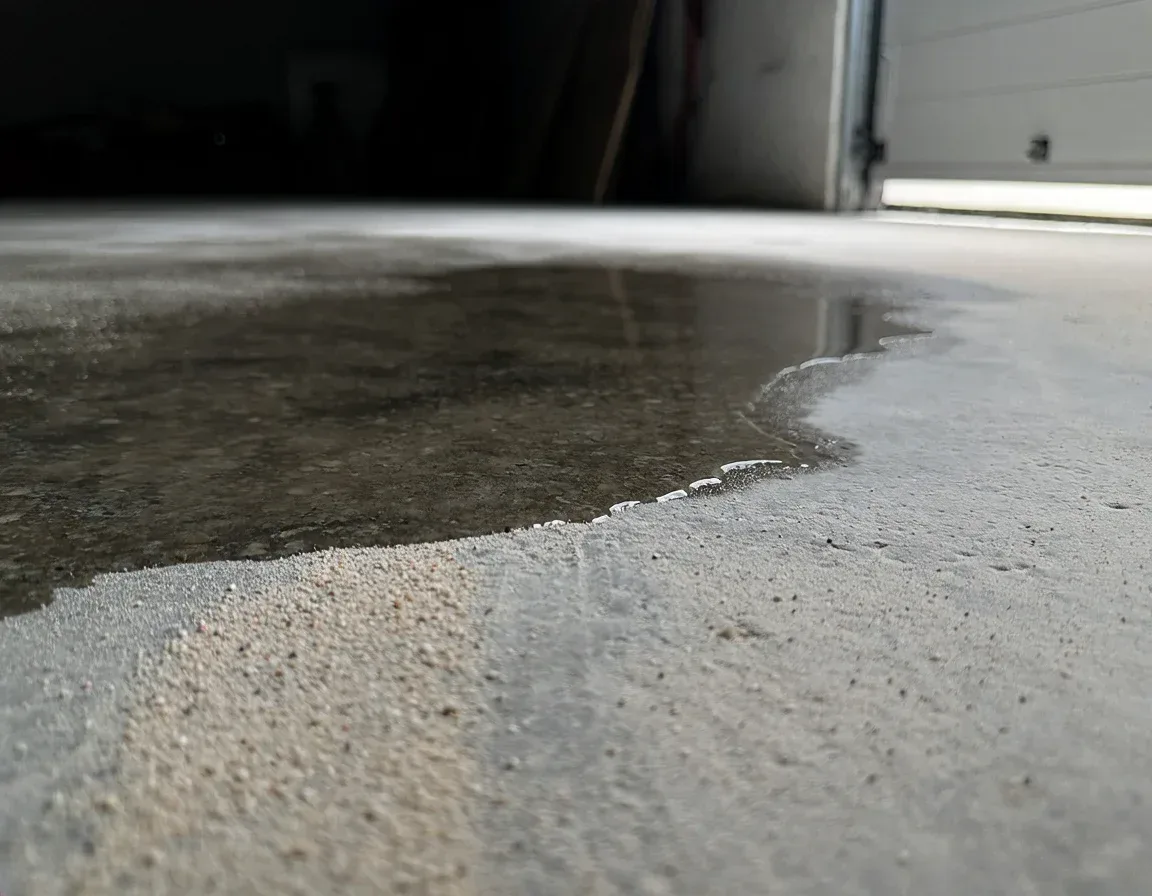
Concrete looks like stone from the outside, but its internal structure resembles a sponge; it contains fine channels and gaps that are not visible to the eye. If water poured on it leaves a dark stain within a few minutes, it is because the liquid is drawn into these gaps. This property also determines how the cleaning is done: part of the dirt stays on the surface, part penetrates inside.
Dirt standing on the surface; dust, sand, mud, leaf debris, soil carried by tires, and beach sand brought by shoes. These are removed by sweeping and washing. The dirt that penetrates inside consists of motor oil, diesel, rust water, spilled paint, and brown marks left by leaves left by leaves that have been wet for a long time. Since these are drawn into the pores, wiping from above is not enough; a suitable cleaner must also enter and dissolve the dirt, then remove that dirty water from the floor.
There is also dust coming from the concrete itself. If the top layer of the floor is weak, new dust will come out as you sweep; this dust does not come from outside, and the surface itself crumbles. It is important to keep this distinction in mind before starting cleaning to avoid wasting effort. We will return to this topic towards the end of the article.
Start with a Sweeper: Dust and Sand Before Wetting
Getting into wet cleaning directly is one of the most common mistakes. When water is poured on a dusty floor, the dust turns into mud, the brush rubs this mud into the pores, and when the floor dries, it looks grayer than before. Therefore, dry dirt is removed first.
A wide, soft-bristled field vacuum is sufficient in small spaces; a stiff brush vacuum is very good for nothing other than lifting dust into the air. A wet-dry vacuum cleaner in a closed garage or basement gives much cleaner results because it collects dust instead of moving it. In large places like site parking, this is done by pushing sweeping machines.
Concrete dust is fine and unhealthy to inhale. When sweeping indoors, open the door and, if present, the window, wear a dust mask, and if possible, pull it instead of sweeping. Corners, wall bases, and column areas are places where dirt accumulates; manually removing these strips that the machine cannot enter prevents a dark band from remaining on the edge after washing.
Wet Cleaning Step by Step
After removing the dry dirt, washing begins. The same logic applies to cleaning a garage at home and a parking lot of a residential complex; only the size of the tool used changes. The order is as follows:
- Drain the floor: Take out vehicles, boxes, pots, and mats; the floor washed by going around it will leave stains under the items and the boundary will be visible.
- Break it down: Visually divide the floor into several square meter pieces and move from the farthest corner toward the door; if you wet the entire area at once, the cleaner will dry without brushing.
- Dilute and apply the cleaner: Mix the product with warm water in the proportion indicated on the label, spread it over the part you are working on, and let it sit for a few minutes; excess product does not clean better, it only makes rinsing harder.
- Brush: Scrub the floor with a stiff nylon bristle brush or a floor scrubber; it is this mechanical movement that removes dirt from the pore rather than the chemical.
- Collect dirty water: Direct the dissolved dirt to the drain with a rickshaw or remove it with a wet vacuum; dirty water drying on the floor leaves the dirt back in the same place.
- Rinse and dry: Run it with clean water once more, collect the water again, and open the doors to dry the floor completely.
The most frequently skipped step in this sequence is the fifth one. In cleaning with a bucket and mop, dirty water stays on the floor; the mop only spreads dirt. On a porous surface like concrete, removing dirty water from the ground is half the task.
Cleaning Agent Selection: Neutral or Alkaline?
The pH value written on the label of cleaning products indicates whether the product is acidic or base. Seven is neutral, six of seven is acidic, and the top is alkaline. By its nature, concrete is an alkaline material; therefore, it withstands alkaline products and reacts with acid, causing its surface to dissolve.
A neutral floor cleaner is sufficient for everyday dust, mud, and footprints. Alkaline degreasers are used for greasy dirt such as oil, soot, and tire residues; these break down the oil and make it transportable with water. Alkaline products are strong: they should not be used more intensively than recommended and must be rinsed off at the end of the work. If your floor is previously renewed, hardened, and preservatively applied, do not deviate from neutral products for daily cleaning; strong alkalis wear down the protector over time.
Salt spirit, limescale remover, vinegar, and similar acidic products are not used in concrete cleaning. They make the surface appear light-colored for a moment because they melt the top layer of cement; what remains is a rough, more dusty, and more easily soiled soil. These and similar mistakes Mistakes made in concrete floor cleaning We explained this one by one in his article.
At home: Garage, basement, terrace, and courtyard
Each concrete floor in the house gets dirty differently. In the villa's garage, the problem is usually oil droplets under the vehicle and sand carried by tires. Spreading an absorbent material on fresh droplets, such as cat litter, letting it sit for a while, and sweeping it largely prevents the stain from penetrating the concrete. The procedure to follow for settled stains oil and paint stains on concrete floors You can find it in the article.
There is little dirt in basements and storage floors, but there is a lot of moisture. In Alanya, the basement of summer houses closed in winter does not get air for months, causing moisture to smell and mold stains appear in the corners. Washing with plenty of water makes things worse; water cannot dry. Dry drying, damp cleaning with little water, and then a few days of ventilation are the most appropriate steps. If you see white, salt-like dust at the bottom of the walls, this is not dirt but salt carried by the moisture, and the source should be examined separately.
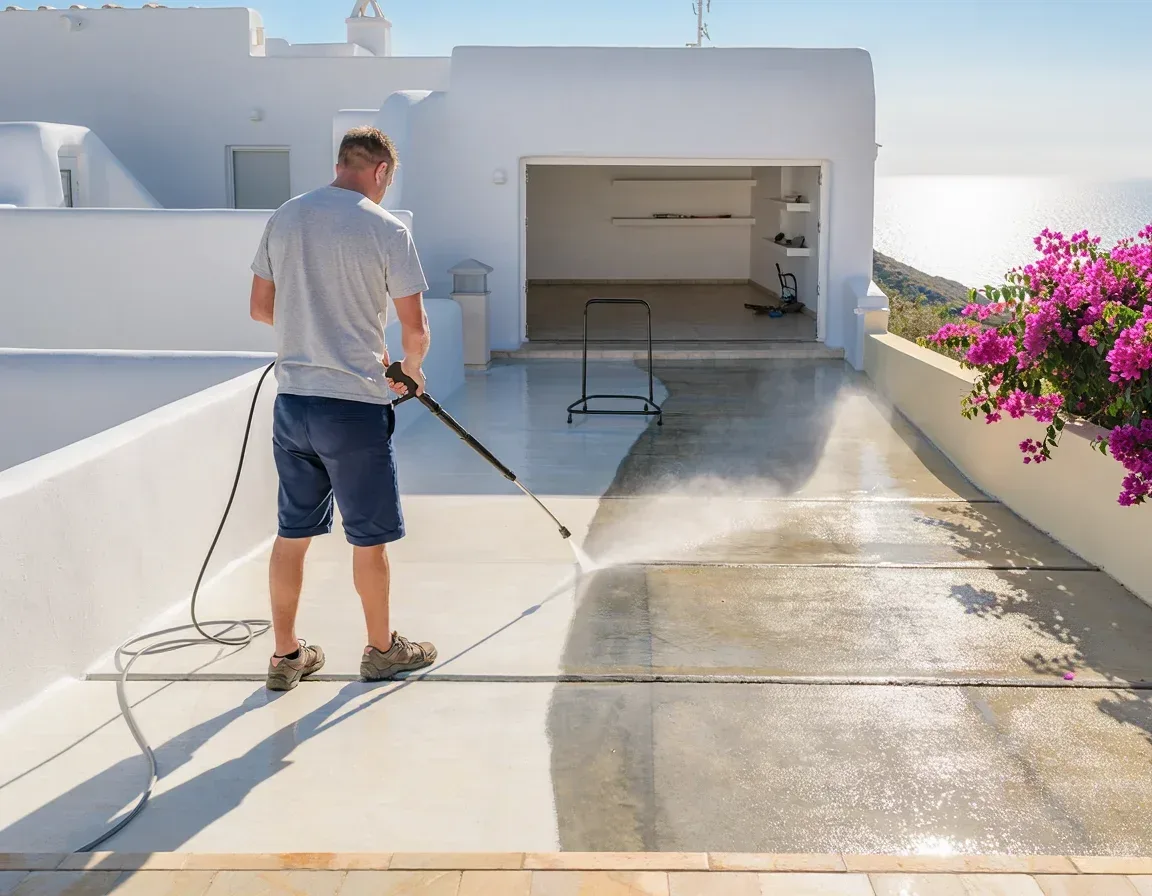
In open areas such as terraces, courtyards, and garage paths, moss is seen alongside dust and leaf stains; especially in north-facing corners that remain shaded and stay wet for days in winter. A pressure washer works well outdoors. Install the fan nozzle, do not place the tip too close to the ground, and do not leave it standing in one spot; water held narrow and close will erode the top layer of the concrete, leaving streak marks on the floor. Make sure the wash water flows down the drain and does not splash onto neighboring walls or vehicles.
Cleaning Arrangements on Site and Small Workplaces
What makes cleaning in common areas difficult is not the amount of dirt but its continuity. Think of the basement parking lot of a site near the sea in Mahmutlar or Oba: dozens of car tires carry sand every day, water and mud on rainy days. Here, a short but regular routine works much better than a big wash done once a year. Weekly sweeping, brush washing at regular intervals, and same-day intervention against oil drops keep the floor tidy for years. Detailed schedule Parking Floor Cleaning and Maintenance Plan We stated in the article.
In small workplaces, dirt varies depending on the type of work. Here are three common examples we encounter in Alanya:
- Car wash: The floor is constantly wet; since shampoo and polish residue leave a slippery film, frequent washing with a brush machine and thorough rinsing stand out.
- Market and banana packaging warehouse: Crushed fruit, cardboard dust, and pallet truck wheel marks accumulate; dry vacuuming is done daily, wet cleaning once or twice a week.
- Workshop: Oil and metal shavings are together; the shavings must be collected without getting wet, otherwise it will rust on damp ground and leave orange stains.
The table below shows the cleaning frequencies that can be taken as a starting point for concrete floors at home and workplace.

| Alan | Main dirt | Dry cleaning | Wet cleaning |
|---|---|---|---|
| Villa garage | Sand, oil droplet | Once a week | Once a month, with an alkaline product in the oily area |
| Basement, storage floor | Dust, moisture trace | Every two weeks | Once a season, with little water |
| Terrace, courtyard, garage path | Leaf, soil, moss | Once a week | Pressure washing in spring and autumn |
| Site basement parking | Sand, tire track, oil | Once a week, more frequently at check-in | With a brush machine once a month |
| Car wash, workshop | Shampoo film, oil, wood chips | Every day | Several times a week |
| Market and packaging warehouse | Cardboard dust, fruit residue | Every day | Once or twice a week |
The frequencies in the table are a starting point; proximity to the sea, the number of vehicles, and the condition of the ground shorten or extend these intervals. The rule is simple: if the ground is cleaned before it starts to look dirty, it requires less effort each time.
Which dirt comes out with cleaning, and which doesn't?
To be frank, not every concrete is like new with cleaning. Knowing what will and won't work before spending effort and money helps. The situations we frequently encounter in the field are as follows:
- Dust, sand, and mud: It completely disappears with dry sweeping and a single wash; the floor color brightens noticeably, and this effect is maintained with regular cleaning.
- Fresh oil and fuel drops: It largely comes off with absorbent material and alkaline cleaner; the sooner you act, the fewer marks remain.
- Moss and mold: It goes away with brushing and pressurized water, but it returns as shade and moisture persist; therefore, periodic cleaning is necessary.
- Old, deeply penetrated fat: The color lightens with cleaning, but a dark shadow often remains because the oil has settled just a few millimeters inside the concrete.
- Dust that comes out when sweeping: It does not decrease with washing, sometimes it increases; because dust does not come from outside, the weak top layer of the concrete crumbles.
- Worn roads and rough surfaces: The cleaner does not restore wear; the paths opened by the tire and foot remain visible even after washing.
The last three items are not about cleaning but about surface renewal. In this work, which the craftsmen call 'elimination', concrete is thinned with diamond-tipped machines to remove its worn top layer, and the solid surface underneath is hardened. What it is and how it is done concrete surface renewal We explained in the article.
Safety During Cleaning and Dirty Water
Cleaning concrete is not a dangerous task, but a few rules must be followed. Do not mix cleaning products; bleach combining with salt spirit or another acidic product releases toxic gases. Keep doors open in closed garages and basements, and do not work inside for long periods without expelling odors and steam. When working with alkaline degreasers, use gloves and goggles, and wash off any splashing product on your skin thoroughly without letting it sit down.
Wet concrete is slippery, wet concrete with detergent is even more slippery. Make sure no one enters the washed section until it dries; if you work on site, schedule the wash at the time of light vehicle traffic and announce the section in advance and turn it off. When using an electric machine, make sure the extension cord is not submerged in water and that the socket is protected.
Where the dirty water goes is also important. Oily washing water should not be given to the garden or rain drain; water collected with a wet vacuum should be emptied into the wastewater drain. Oil collected with absorbent material is disposed of in a sealed bag in accordance with the municipality's waste regulations.
If It's Still Gray and Dusty: Next Step
If you cleaned the floor according to the rules, it is dry, and it still looks gray, dusty, or stained, the problem is not dirt but the surface. At this point, looking for stronger chemicals does not provide a solution; it often causes damage. What needs to be done is to check the condition of the surface on site. In Alanya city center and its towns Our Concrete Floor Renewal Service We are conducting inspections within the scope and clearly stating this where cleaning is sufficient. A few photos and approximate measurements of your floor service request form Sending it through is sufficient for the initial evaluation.
Keeping the Sand at the Door

In sites close to the sea, most of the dirt entering the parking lot is sand, and almost all of it enters through a single place: the ramp. Placing a grid mat embedded in the ground or a coarse-textured sand catcher at the top of the ramp drops a significant portion of the sand carried by the tires before it enters.
The mop itself also needs cleaning; the filled grate does not hold the sand but disperses it. Sweeping the ramp and the first few parking spaces twice a week allows the entire parking lot to be cleaned less frequently. The same logic applies to pedestrian entrances.
Should You Get a Brushed Floor Machine?

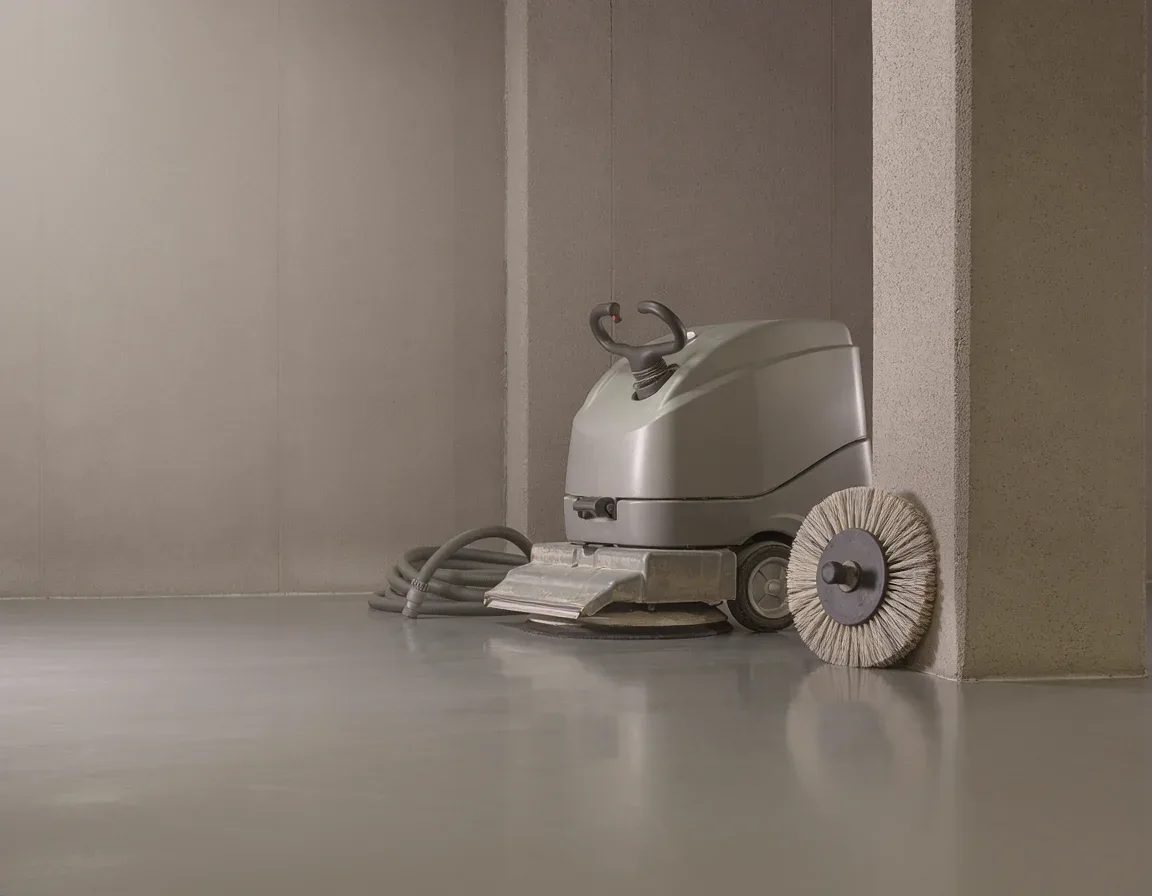
Washing a parking lot with a bucket and brush is a tiring task that takes hours; a push-operated brushed floor machine does the same job much faster and draws dirty water into its own tank. For small sites, renting the machine from time to time or outsourcing it is often more sensible to buy the machine.
If a machine is to be purchased, a medium-hard brush or pad suitable for concrete should be chosen. Abrasive hard pads wear the surface during daily washing; they are only used for periodic cleaning where dense dirt is removed.
Pour a glass of water onto the floor before cleaning: if the water is absorbed within minutes and leaves a dark stain, your concrete is unprotected, and you need to respond to every liquid poured on it on the same day. — Expert Note