Cracks in Concrete Floors: Repair Before Grinding
In short: Almost every concrete floor has cracks.
What matters is identifying the type of crack correctly and repairing it properly before polishing. On a floor that is polished without being repaired, cracks become more visible, their edges chip, and they collect dirt. In this article, we explain the types of concrete cracks and the repair steps before polishing.
Why Does Concrete Crack?
Concrete is a durable but inflexible material. It cracks because it cannot flex in response to volume changes and movement. The main causes are:
- Shrinkage: Concrete loses volume as it dries. If enough joints have not been cut or curing was poorly done, hairline and random cracks form.
- Temperature changes: Concrete expands and contracts with day-night and seasonal differences; a surface that cannot flex eventually cracks from this repeated movement.
- Subgrade settlement: When the fill or soil beneath it settles, the concrete is left unsupported and breaks under its own weight and the load above.
- Excessive load: Heavy machinery, rack legs and forklift traffic impose more point load than the concrete can bear, causing cracking.
- Reinforcement corrosion: Rusting reinforcement expands, cracking and lifting the concrete; since the problem comes from within, lines and bulges that spread across the surface are visible.

Types of Cracks
Hairline (Shrinkage) Cracks
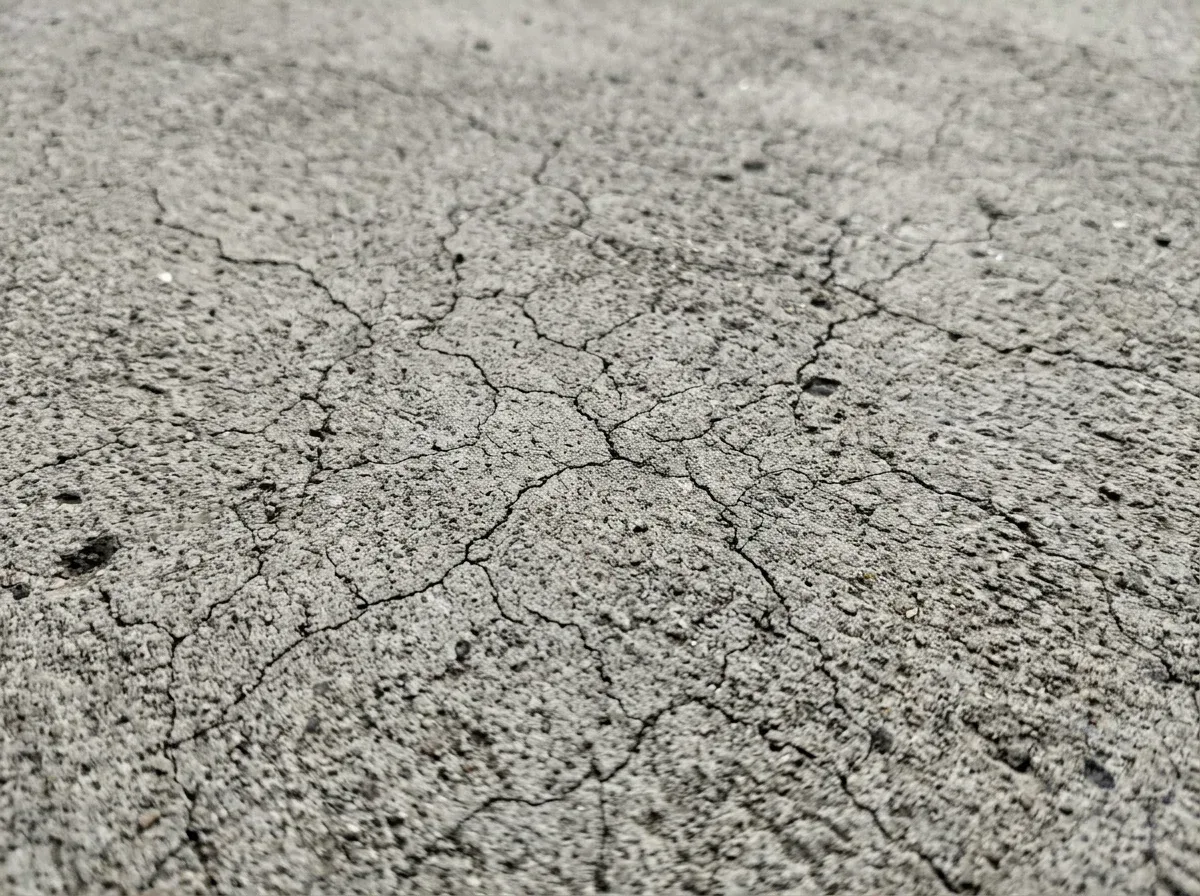
Thin, web-like or random lines. They are usually superficial and pose no structural risk.
Repair: They can be sealed during polishing with thin fillers or with hardener and polishing slurry. Some may continue to appear as fine lines after polishing; this is considered part of the concrete's character.
Distinct, Static Cracks
Cracks a few millimeters wide, with sound edges, that do not grow over time.
Repair: The crack is opened into a "V" shape with a diamond disc, the dust is removed, and it is filled with a suitable rigid filler material (for example, semi-rigid or rigid resin-based fillers). Once hardened, it is brought level with the surface by polishing.
Moving (Active) Cracks
Cracks that open and close depending on the season or load and grow over time.
Repair: Rigid filler breaks again in these cracks. Flexible filler materials must be used and the cause of the crack must be investigated.
Structural Cracks
Wide cracks with a noticeable level difference, indicating subgrade settlement or a problem in the load-bearing system.
Important: This type of crack is not a flooring workmanship issue; it must first be assessed by a civil engineer.
Joint Spalling
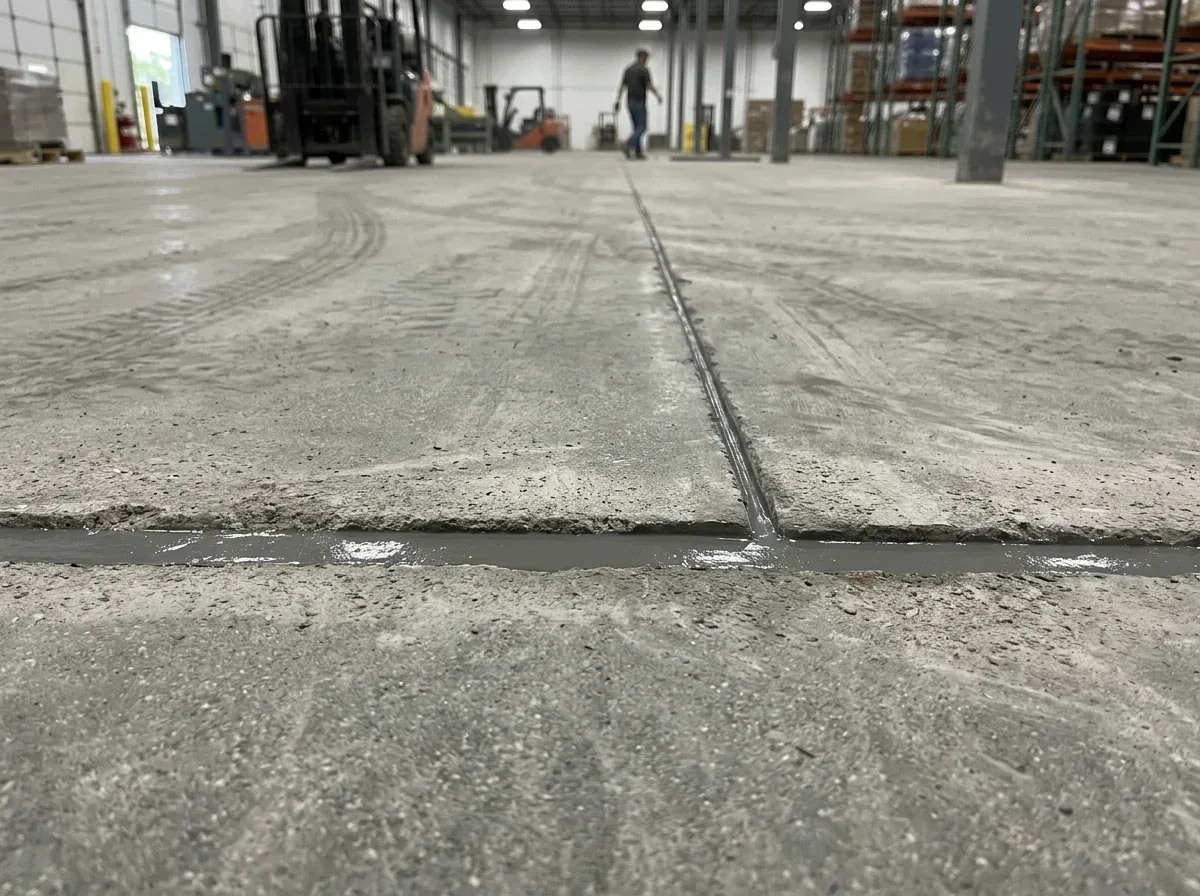
In concrete floors, control joints are cut so that cracks form in controlled locations. Over time:
- Joints fill with dirt and dust: Over time the inside of the joints fills with dirt and dust; this fill prevents the joint from working and is constantly carried out during cleaning.
- Spalled joint edges: Joint edges take impact every time forklifts and vehicle wheels pass, and gradually break off piece by piece.
- Deteriorated joint filler: Joint filler hardens, cracks or comes out over time; the edges of the emptied joint are left unsupported.
Repair: The joint is cleaned, the broken edges are reshaped and it is filled with a suitable joint filler material. In high-traffic areas, semi-rigid fillers protect the edges and reduce wheel impact.
Potholes, Spalling and Bulges
Potholes and bulges are repaired before polishing; however, if the cause of the damage is not resolved, the repair will not be long-lasting.
- Potholes: Pieces broken off by dropped loads or weak concrete. They are cleaned and filled with repair mortar or resin-based fillers.
- Concrete bulging from rusting reinforcement: Repairing only the surface without resolving the source of the problem is temporary; as long as the rusting continues, the bulging will reappear.
Why Before Polishing?
Doing the repair before polishing lets you see the true extent of the damage and integrate the filler with the surface.
- The real condition is revealed: Rough grinding opens up the crack edges and shows the real condition; the width and depth of a crack that looks thin on the surface become clear.
- The filler blends with the surface: Once hardened, the filler is brought level with the surface by polishing; it does not appear as a separate surface.
- Later repairs look like patches: A repair made after polishing looks like a patch on the glossy surface; the filler cannot be brought to the same gloss as its surroundings.
That is why the typical sequence is: rough grinding → repair → curing → continue polishing.
Repair Summary by Crack Type
| Crack type | How to identify | Recommended repair |
|---|---|---|
| Hairline (shrinkage) | Thin, web-like, no difference in level | Sealing with polishing slurry or a thin filler |
| Distinct, stationary | A few mm wide, edges sound, not growing | V-grooving, dust removal, hard resin filler, leveling by polishing |
| Moving (active) | Opens and closes with the season or load | Flexible filler, investigation of the cause |
| Joint breakage | Chipping along the joint edges, loss of filler | Edge shaping, semi-rigid joint filler |
| Structural | Wide, with level differences, growing | Civil engineer assessment first |
Understanding Whether a Crack Is Moving
There is a simple way to tell whether a crack is active: mark both sides of the crack with a pencil, measure and note the distance between the marks, and measure again after a few weeks. Gluing a thin plaster or paper strip across the crack serves the same purpose; if the strip breaks, the crack is still moving. Cracks that open and close or lengthen with the change of seasons are not sealed with hard filler. This small observation protects you from fillers that crack again later and from repeated costs.
What We Pay Attention to During Repair
The durability of a crack repair depends on the care given to cleaning, moisture, the application method, and the curing time.
- Dust and loose particles are removed: Before filling, the dust and loose particles inside the crack are completely removed with a vacuum; filler does not adhere to a dusty surface.
- Waiting when the crack is damp: In damp cracks, the filling is postponed until the moisture drops to the level the material allows.
- Slight overfilling: The filler is applied slightly proud and, once hardened, brought down to the surface level by polishing; filler that stays sunken collects dirt.
- Color matching: Polishing dust or a suitable pigment can be mixed into the filler for color matching; this way the repair stands out less from its surroundings.
- Waiting for the curing time: Polishing does not resume before the curing time is over; filler that is polished too early comes loose.
Cracks We Frequently See in Alanya
In villa garages, hotel service areas, and the indoor car parks of housing complexes in Alanya, we most often encounter shrinkage cracks and broken joint edges. The difference between high summer temperatures and the rainy winter period increases expansion cracks, especially in concrete areas open to the outdoors. In structures close to the sea, swelling caused by reinforcement corrosion is more common; in this case, instead of repairing only the surface, we recommend addressing the source of the corrosion first. During the site survey, we examine the cracks one by one and clearly state which ones can be repaired within the scope of polishing and which require an expert assessment.
Filler Color

Filler materials will never match the color of concrete exactly. Gray tones can be chosen to come close to the concrete; in some projects, the cracks are deliberately left visible. Expectations should be discussed from the start.
Our Concrete Grinding Service in Alanya

We grind concrete floors in warehouses, factories, car parks, shops and homes, then strengthen them with a hardener to create a dust-free surface that is easy to clean. Depending on the look you want, we apply a matte, satin or glossy finish.
We inspect the age and condition of your floor on site and choose the right method together with you. Explore our Concrete Grinding service.
Sealing a crack is easy; the hard part is understanding why it formed. A crack whose cause has not been resolved will reappear after a while, even with the best filler.
Frequently Asked Questions
01Does honing close cracks?
02Will a repaired crack open again?
03Should all hairline cracks be filled?
04Can honing be done on a structural crack?
05Will the crack filler look a different color from the floor?
06How long should I wait after the repair?
Related Articles
- Repairing Potholes and Spalling (Scaling) in Concrete Floors
- Forklift Traffic and Concrete Floor Wear
- What Is Concrete Grinding and How Is It Done? Turning Dusting Concrete into a Glossy Floor
- When Should Grinding Be Done on Freshly Poured Concrete?
- Concrete Grinding or Epoxy Coating? Which Is Right for Which Floor