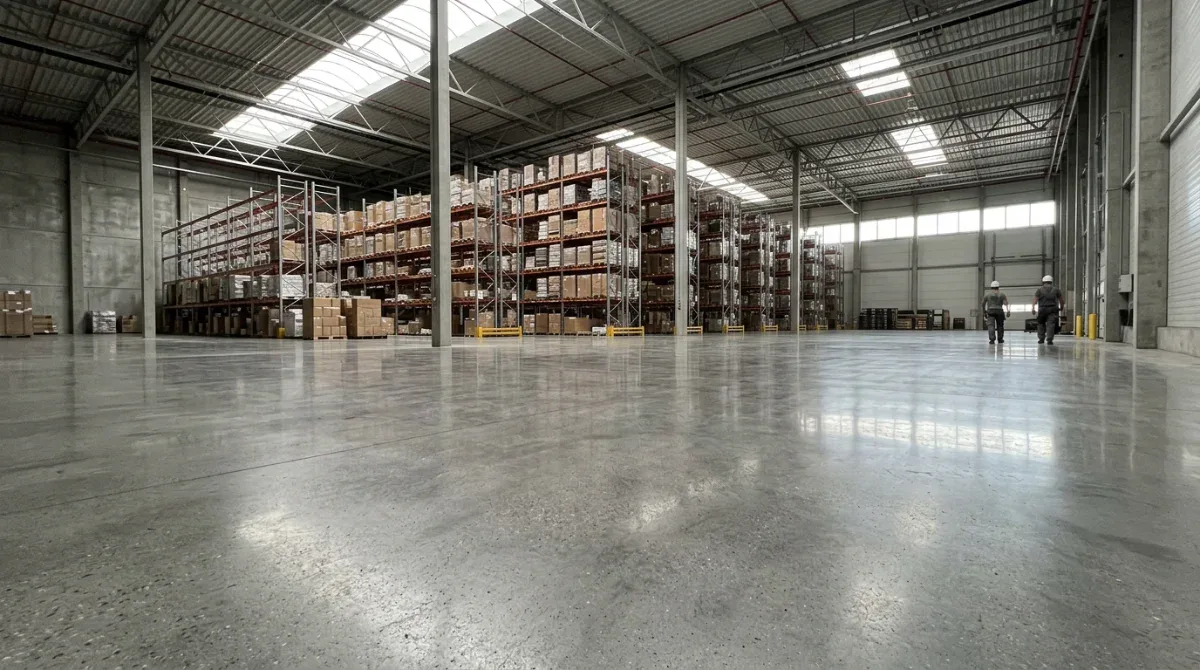
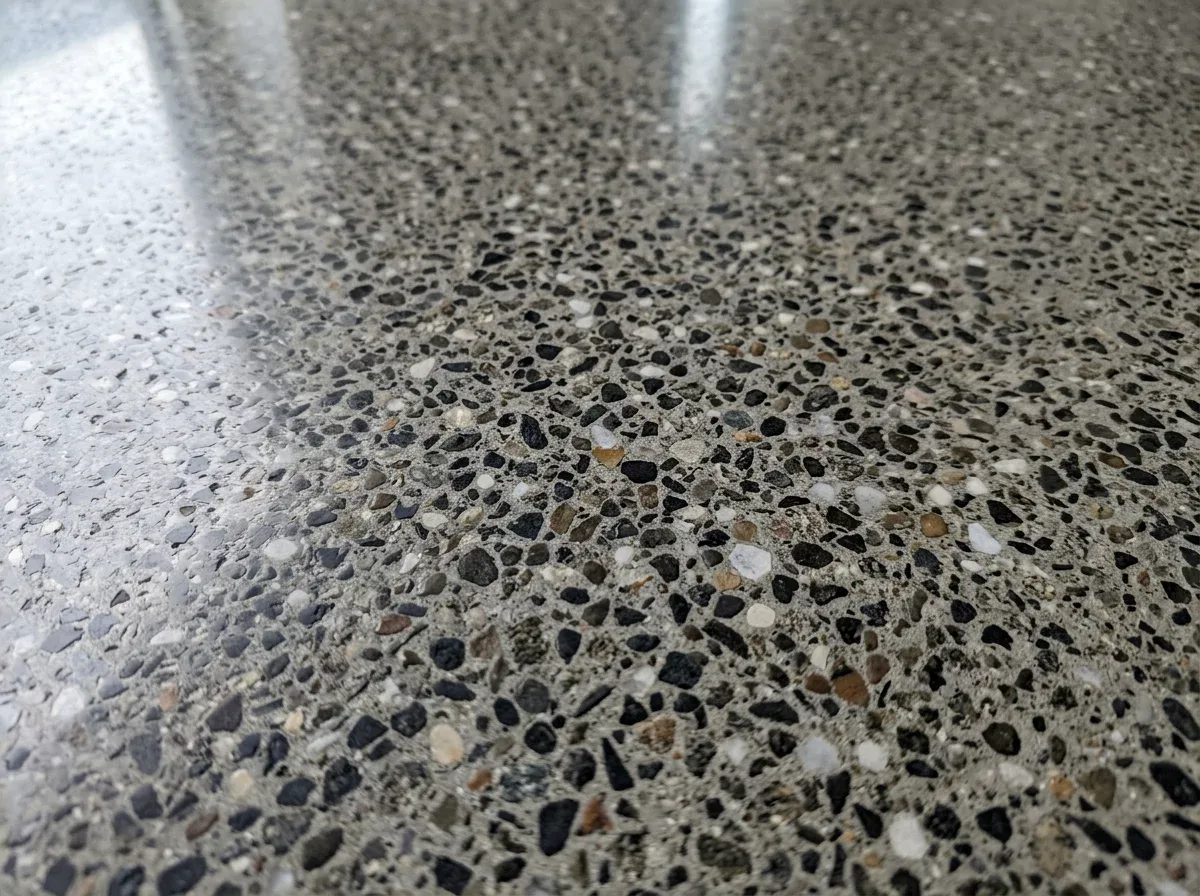
Protection and Maintenance After Concrete Grinding
In short: Ground, hardened and polished concrete is one of the lowest-maintenance floor types, but that does not mean it needs no maintenance at all.
With proper cleaning and a few small precautions, the shine is preserved for many years. In this article we explain the post-grinding protection steps and a daily and periodic maintenance plan.
First Protection After Grinding
Stain Protector
The hardener densifies the concrete and stops dusting, but it does not provide full protection against oil, coffee, wine and chemical stains. That is why a stain protector suitable for concrete (penetrating or semi-penetrating) is usually applied at the end of grinding.
- Less oil and water absorption: The stain protector penetrates the pores and reduces oil and water absorption; spilled liquid stays on the surface and does not soak deep before it is wiped up.
- Easy cleaning: Dirt cannot cling to a protected surface; daily cleaning takes less effort and harsh cleaners are no longer needed.
- Support for shine: Some products also enhance the shine; without forming a separate film on the surface, they help the floor reflect light better.
The product is chosen according to how the area is used. Different products may be preferred in food, chemical or garage areas.
The First Days
In the days right after grinding, the protector has not yet fully cured, so the floor is more sensitive to impact, friction and water.
- Do not wet clean: Wet cleaning must be avoided while the protector cures; water arriving too early prevents the product from fully penetrating the concrete.
- Do not drag shelves: Heavy equipment and shelves must not be dragged while being positioned; friction leaves scratches and marks on a freshly polished surface.
- Protect the floor: If construction or installation work continues, the floor should be protected with a cover; falling materials, paint and mortar splashes can stain the surface.
Daily Maintenance
Dry Cleaning
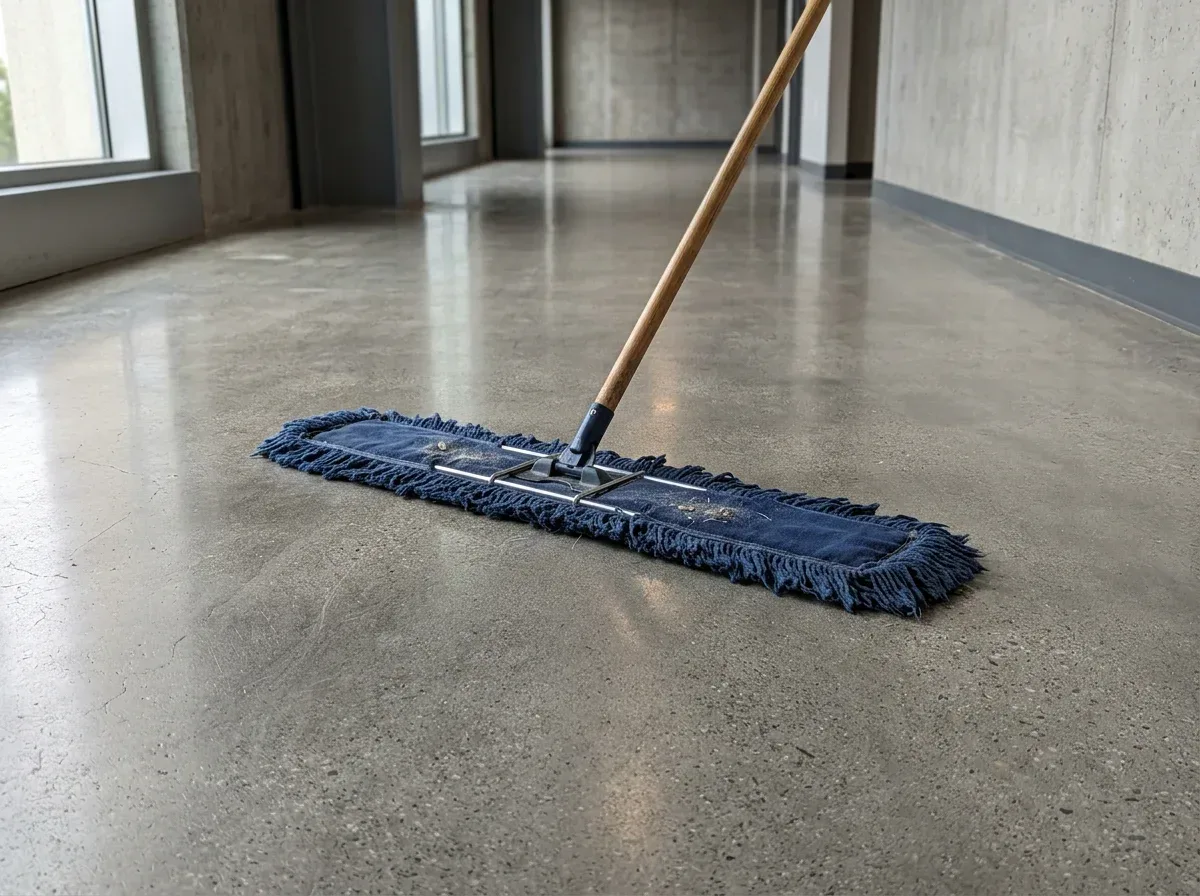
Dust and sand are the biggest abrasives for polished concrete. On a daily basis:
- Dry cleaning: Daily dry cleaning with wide dust mops or sweeping machines removes the abrasive dust and sand from underfoot.
- Mats and sand traps: Mats and sand traps placed at entrances catch the sand carried in on shoes before it reaches the floor and delay dulling at entrances.
Damp Cleaning
If the right product and machine are chosen for damp cleaning, the polished concrete surface is cleaned without damaging the protective layer.
- pH-neutral cleaner: pH-neutral or mild cleaning products suitable for concrete remove dirt without dissolving the protector or dulling the surface.
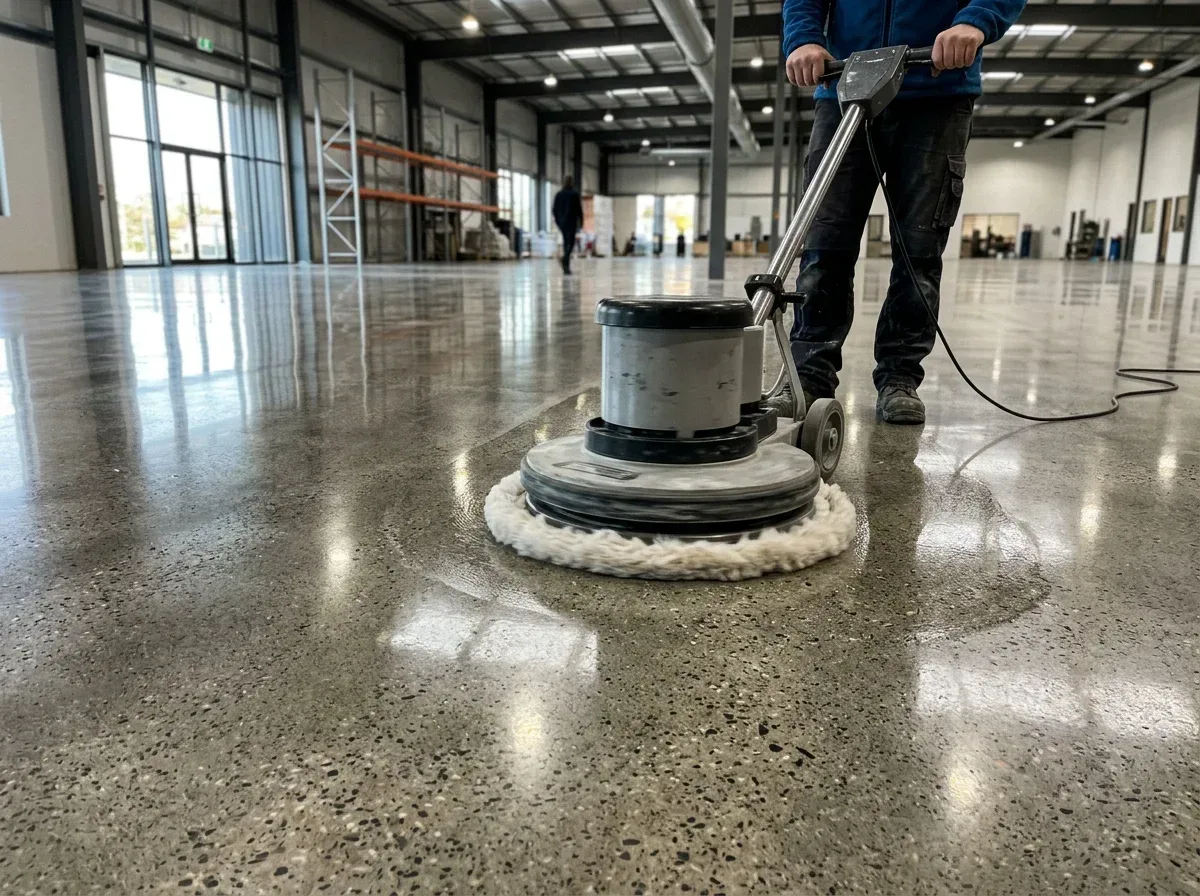
- Soft-pad machine: In large areas, floor scrubbing machines with soft pads clean a wide area quickly and evenly without scratching the surface.
- Do not let water pool: Do not allow water to accumulate on the floor; water standing for a long time leaves marks and can seep into the pores.
What to Avoid
The most damage to polished concrete floors is caused by the wrong cleaning products, hard pads and spills left on the surface for a long time.
- Acidic cleaners: They etch the concrete surface and remove the shine; even a single wrong application can leave a dull mark in that area.
- Strong alkalis and solvents: They can damage the protector; once its protection weakens, the surface starts absorbing oil and liquids again.
- Hard and abrasive pads: They scratch the surface during daily cleaning; as fine scratches build up, the shine fades quickly.
- Oily and waxy polishes: They leave a film on the surface, creating slipperiness and trapping dirt; over time the floor looks stained rather than shiny.
- Liquids left standing: Oil, coffee and chemical spills must be cleaned up immediately; the longer they sit, the more they can soak into the pores and leave a permanent stain.

Periodic Maintenance
Refreshing the Shine
In high-traffic areas, especially at entrances and in corridors, the shine dulls over time. These areas are refreshed with fine diamond pads or polishing pads without the need to grind the floor again. Depending on usage intensity, this is done every few months or once a year; regular maintenance with suitable pads fitted to a floor scrubbing machine also helps preserve the shine.
Renewing the Protector
The stain protector wears off over time. It is checked with a water drop test and renewed when necessary.
Joint and Repair Inspection
Joint fillers and repaired spots should be checked regularly, and broken edges should be repaired in time.
Sample Maintenance Schedule
| Frequency | Task | Note |
|---|---|---|
| Every day | Dry cleaning with a dust mop or sweeping machine | Sand and dust are the biggest abrasives |
| 1-3 times a week | Damp cleaning with a pH-neutral cleaner | Machine with soft pads in high-traffic areas |
| Immediately | Removing oil, coffee and chemical spills | Liquid left standing leaves a stain |
| Every 3-12 months | Refreshing the shine in heavy-traffic areas | Varies depending on use |
| Once a year | Drop test, and renewing the stain protector if necessary | If water darkens the surface, it is time to renew |
| Once a year | Checking joints and repair points | Broken edges should be repaired early |
Responding Quickly to Stains
The stains that cause the most problems on polished concrete are oil, motor oil, coffee, wine and marks left by rusting metal feet. As soon as a spill is noticed, it should be blotted with an absorbent cloth, not rubbed, so that it does not spread. Then wipe with a pH-neutral cleaner and rinse. If an oil stain has penetrated the surface, degreasers suitable for concrete or absorbent poultices can be used; acidic products and bleach should not be used because they dull the surface. Placing felt or plastic pads under metal shelves and furniture legs prevents rust and scratch marks.
Measures That Make Maintenance Easier
A few simple habits slow down the wear of a polished concrete floor and reduce the need for periodic maintenance.
- Put a mat at the entrance: Place sufficiently long mats and sand traps at building entrances; sand is caught before it reaches the floor.
- Don't drag equipment: When moving heavy equipment, lift it or use a wheeled carrier instead of dragging it; this prevents scratches and pits on the surface.
- Choose polyurethane wheels: In areas where forklifts are used, prefer polyurethane wheels; they cause less impact on the floor and joint edges than hard wheels.
- Notify products in writing: Inform the cleaning team in writing which products are to be used; this prevents the use of a wrong acidic product.
- Make dry cleaning a habit: Make regular dry cleaning a habit; the more dust and sand is removed, the longer the shine is preserved.
Maintenance Support in Alanya
In buildings near the coast in Alanya, sand is easily carried indoors on shoes, and the first wear on polished concrete floors usually starts at the entrances. For hotel service areas, shops and the common areas of housing complexes, we prepare a periodic maintenance plan after polishing and, when needed, carry out shine refreshing and protective renewal treatments on site. During maintenance visits, we also check joints and repair points so that small problems are fixed before they grow.
Maintenance by Area Type

| Area | Key maintenance |
|---|---|
| Parking lot and garage | Remove oil drips immediately, periodic washing |
| Warehouse | Daily sweeper machine, cleaning of forklift marks |
| Store and showroom | Daily dust mopping, periodic shine restoration |
| Home and office | Dry mopping, damp cleaning, felt pads on furniture legs |
| Restaurant kitchen | Degreaser products that are safe for concrete, frequent cleaning |
Our Concrete Grinding Service in Alanya

We grind concrete floors in warehouses, factories, car parks, shops and homes, then strengthen them with a hardener to create a dust-free surface that is easy to clean. Depending on the look you want, we apply a matte, satin or glossy finish.
We inspect the age and condition of your floor on site and decide on the right method together. Explore our Concrete Grinding service.
In high-traffic areas, slight dulling occurs over time. In this case, regrinding is not necessary; a polishing pass with fine diamond pads restores the shine. In some areas, this process can also be carried out with a regular maintenance machine. — Expert Note
Frequently Asked Questions
01Does polished concrete need wax or polish?
02Does the shine fade over time?
03Can a floor scrubber be used?
04How often should the stain protector be renewed?
05Can a floor scrubber damage a polished concrete floor?
06Does the floor need to be re-honed to renew the protector?
Related Articles
- What Is Concrete Grinding and How Is It Done? Turning Dusting Concrete into a Glossy Floor
- Parking Garage Floor Cleaning and Maintenance Plan
- Glossy Concrete, Polished Concrete and Power-Troweled Concrete: What Are the Differences?
- Removing Oil and Paint Stains from Concrete Floors
- Concrete Grinding or Epoxy Coating? Which Is Right for Which Floor