Removing Oil and Paint Stains from Concrete Floors
In short: Oil and paint stains on garage, parking lot, workshop and warehouse floors both spoil the appearance and can cause slipping.
Because concrete is porous, oil does not stay on the surface; it soaks in. In this article, we explain cleaning methods for each type of oil and paint stain and where grinding comes into play.
Oil Stains
Why Are They Hard to Remove?
Concrete draws oil into its pores like a sponge. Part of the oil wiped from the surface stays inside and can resurface over time, bringing the stain back.
Fresh Oil
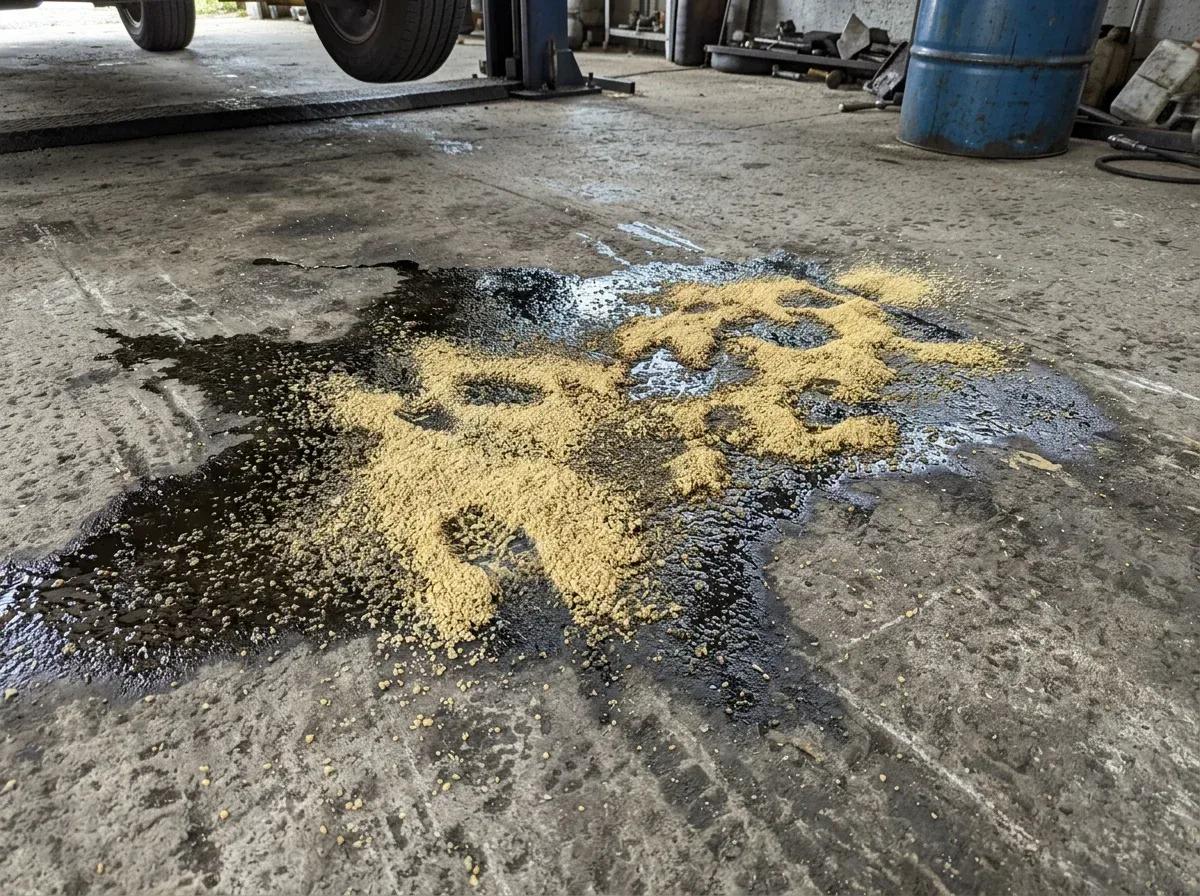
- Do not spread the oil by wiping: Wiping with a cloth spreads the oil over a wider area and lets it soak deeper into the pores.
- Pour on absorbent material: Pour an absorbent material such as cat litter, sawdust or a special absorbent powder over it; the oil is drawn into the material before it soaks into the concrete.
- Wait, then sweep: Leave the absorbent material for a while and then sweep it up; most of the oil is removed from the floor along with the material.
- Scrub the remaining mark: Then clean the remaining mark with a degreasing detergent suitable for concrete and a stiff brush; the fine oil in the pores is dissolved and brought to the surface.
- Rinse and dry: Finally, rinse with plenty of water and let it dry; whether any mark remains is easier to see after the floor has dried.

Old and Deep Oil Stains
Old oil that has soaked deep into the concrete cannot be removed by surface cleaning; you need methods that draw the oil out of the pores.
- Degreasing poultice: A poultice made of absorbent powder and a suitable solvent is applied over the stain and left until it dries, drawing the oil out from within. Several repetitions may be needed.
- Biological degreasers: Some products break down the oil with microorganisms; they can be effective over a long period and must be kept on the stain for a long time.
- Hot water and pressure: When used together with a degreaser, they can increase the effect; hot water makes the oil fluid, and pressure forces the dissolved oil out of the pores.
Oil and Grinding
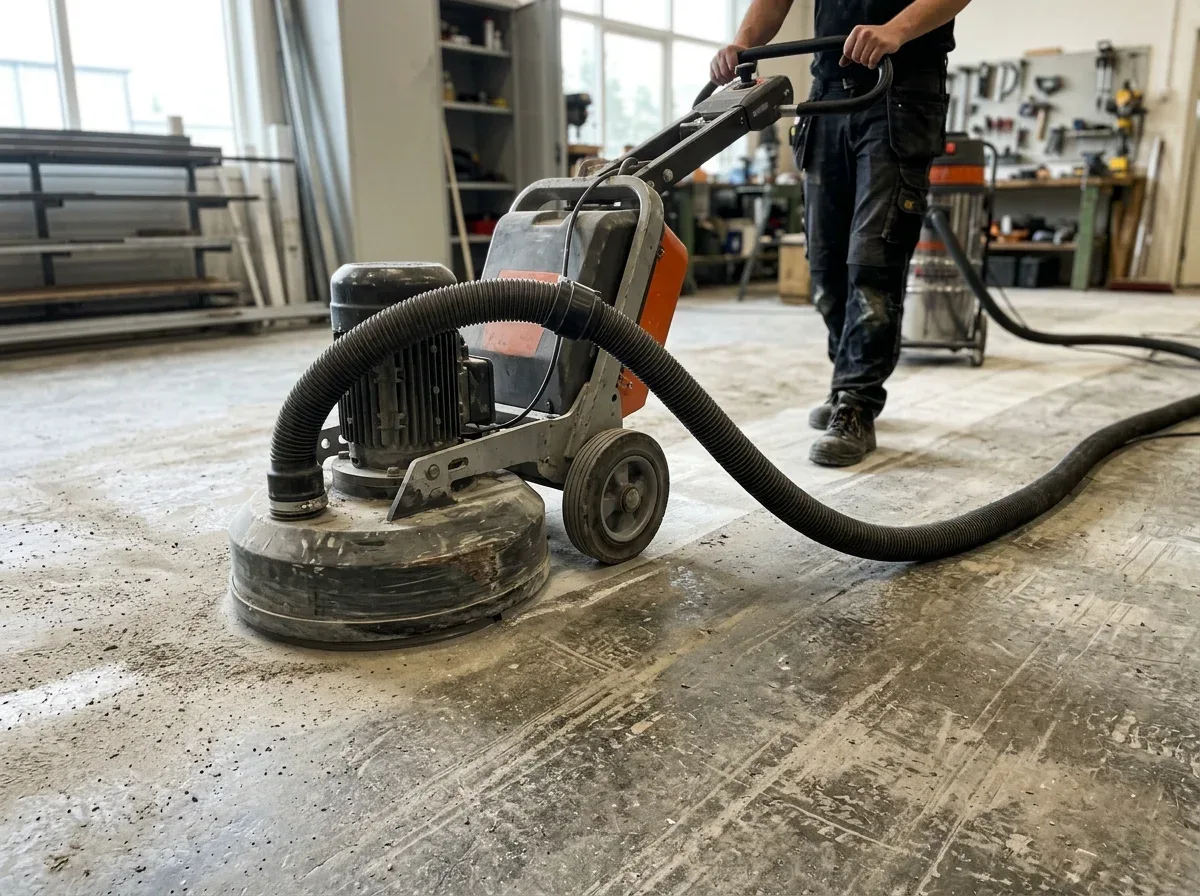
Grinding removes the top layer of the surface and takes away surface oil as well. However, oil that has soaked deep:
- Spreads over the surface: During grinding, oil heated under the machine can spread over the surface and stain clean areas too.
- Blocks the hardener: Oil in the pores can prevent the hardener from penetrating the concrete; that area does not harden sufficiently and may keep dusting.
- Resurfaces: Deep oil can resurface over time after grinding and form dark shadows on the polished floor.
For this reason, heavy oil stains should be cleaned as much as possible before grinding.
Fuel, Hydraulic Fluid and Antifreeze
Fuel, hydraulic fluid and antifreeze spills are not just stains but also a safety hazard, so they must be removed immediately and properly.
- Gasoline and diesel: The part that evaporates quickly disappears, while the oily part remains; it is cleaned like oil. Plenty of ventilation is essential because of the fire risk.
- Brake fluid: It can damage paints and some protective coatings; it must be removed immediately, otherwise it leaves a permanent mark on the floor paint and protective coating.
- Antifreeze: It is both slippery and toxic to living things; it should be picked up with absorbent material and disposed of safely.
Paint Stains
Water-Based Paints
Fresh water-based paint is easily removed with a damp cloth and plenty of water before it dries. Dried drops are softened with hot water and detergent and scraped off with a plastic spatula; for stubborn marks, removers suitable for water-based paints can be used. Fine residues that have soaked into the pores disappear completely in the first stages of grinding.
Solvent-Based and Spray Paints
Because solvent-based and spray paints adhere tightly to concrete, they are first softened, and the part remaining in the pores is removed by grinding.
- Scraping with paint remover: The paint is softened with suitable paint removers and scraped off; a thick paint layer is thus lifted without damaging the concrete.
- Residue in the pores: Paint residue that has soaked into the concrete pores is removed by grinding; fine color traces the remover cannot reach disappear in the first stages.
- Graffiti removers: On large areas such as graffiti, special graffiti removers are used; spray paint dissolves faster and more evenly over a large surface.
Old Line and Floor Paints
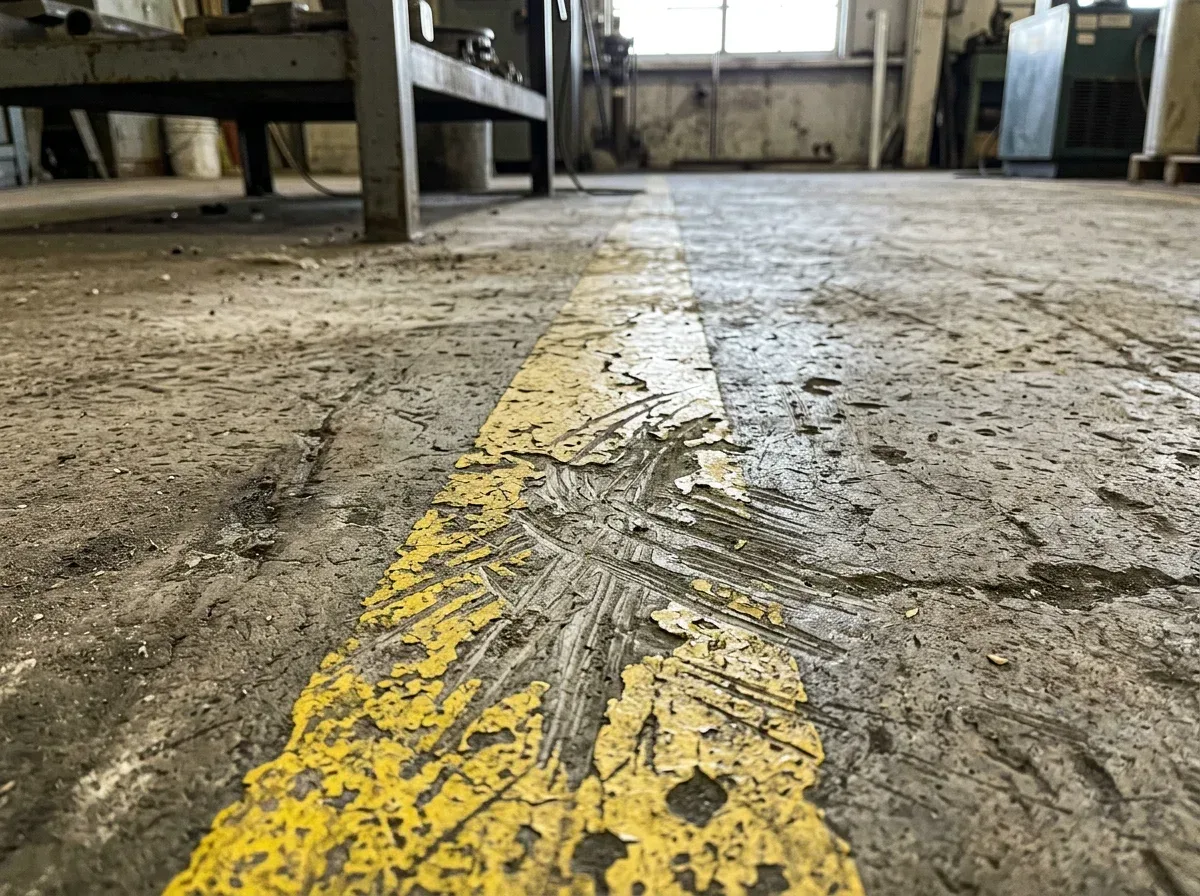
Parking lot lines and old floor paints are removed by coarse grinding. This is one of the first steps of concrete grinding.
Other Stains
Rust, tire and organic stains come from different sources, so each requires its own suitable cleaning method.
- Rust stains: They come from metal shelf legs and iron parts. They are removed with rust removers suitable for concrete; deep ones are lightened by grinding.
- Tire marks: They are cleaned with special cleaners and brushed machines; permanent marks that have penetrated the surface are removed by grinding.
- Organic stains: Organic stains such as leaves and food are removed with suitable cleaning products; if they have penetrated the pores, grinding is applied when necessary.
Safety
The solvents and chemicals used in stain removal pose risks to both the worker's health and the environment.
- Ventilation and protection: When working with solvents, turn on ventilation and use gloves and eye protection; vapors and splashes can harm the skin and eyes.
- Do not mix chemicals: Do not mix chemicals with one another; when some products are combined, harmful gases or unexpected reactions may occur.
- Do not pour waste down the drain: Do not pour waste oil and chemicals down the drain; dispose of them properly, otherwise the plumbing and the environment will be polluted.
Method Summary by Stain Type
| Stain | First response | If a permanent mark remains |
|---|---|---|
| Fresh motor oil | Absorbent material, degreasing detergent | Poultice application, grinding if necessary |
| Old, deep oil | Degreasing poultice, several repetitions | Always clean before grinding |
| Water-based paint | Damp cloth, hot water, scraping | Coarse grinding |
| Solvent-based / spray paint | Suitable paint remover, scraping | Coarse grinding |
| Rust | Rust remover suitable for concrete | Lightening by grinding |
| Tire mark | Special cleaner, brushed machine | Grinding |
Cleaning or Grinding?
For occasional oil drops and small paint marks, a good cleaning is usually enough. However, if stains have spread over a large part of the floor, there are old oil deposits, old floor paint that needs to be removed, or the surface is dusting and worn, grinding the floor rather than dealing with stains one by one is both more economical and gives a more lasting result. In grinding, heavy oil deposits are cleaned first, then the paint and dirty top layer are removed with coarse stages; with a hardener and stain protector, the floor becomes more resistant to new stains.
Practical Ways to Prevent Stains
The easiest way to deal with oil and paint stains is to prevent the spill from reaching the floor and penetrating the pores in the first place.
- Place a drip tray: In the garage, place an oil drip tray or absorbent mat under the vehicle's parking spot; dripping oil never reaches the concrete.
- Cover the work area: In the workshop, protect the area where oil and paint are used with a cover; splashes stay on the cover and do not penetrate the floor.
- Respond immediately: Always respond to a spill immediately with absorbent material; the earlier it is removed, the less it penetrates the pores.
- Renew the protector: After grinding, renew the stain protector at regular intervals; a worn protector allows oil to penetrate the concrete again.
- Fit pads on metal legs: Fit plastic or felt pads under metal legs; this prevents legs that rust from moisture from leaving rust marks on the floor.
Floors with Oil and Paint Stains in Alanya
In the indoor parking lots of hotels and housing complexes, vehicle service shops, and villa garages in Alanya, oil stains and old parking lines are the problems we encounter most often. During the site survey, we examine the type and depth of the stain and clearly state whether cleaning alone will be enough or whether the floor needs to be ground. In areas where grinding is done, we first clean heavy oil deposits, then harden the floor and deliver it with a stain protector.
Preventing Stains from Recurring

To keep oil and paint stains removed from concrete floors from coming back, you need to protect the surface and control the source.
- Apply a stain protector: Applied after polishing and hardening, a stain protector makes it harder for oil and paint to penetrate into the concrete.
- Place a drip pan: A pan placed under vehicles and machinery collects leaking oil before it reaches the floor and prevents stains from forming in the same spot.
- Clean up spills immediately: Oil and paint wiped up without delay stay on the surface; they do not soak into the pores and become permanent stains.
Our Concrete Grinding Service in Alanya

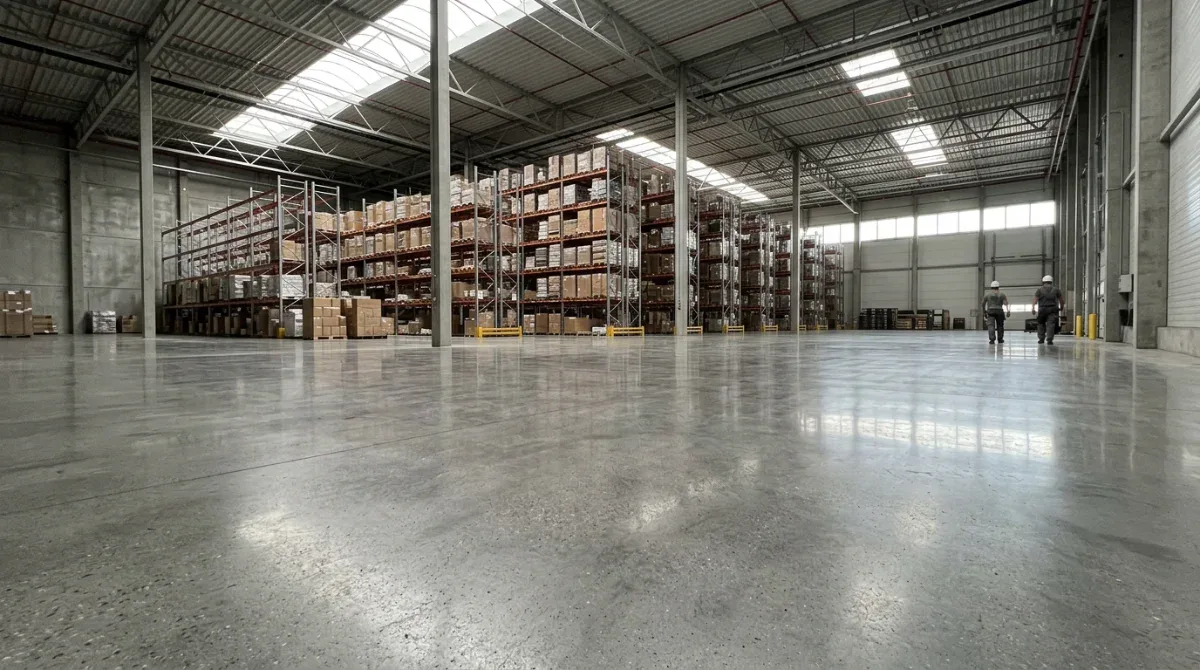
We grind concrete floors in warehouses, factories, car parks, stores, and homes, then strengthen them with a hardener to create a dust-free surface that is easy to clean. Depending on the look you want, we apply a matte, satin, or glossy finish.
We inspect the age and condition of your floor on site and decide on the right method together with you. Explore our Concrete Grinding service.
If fresh, it can be removed with water and a brush. Dried-on stains are cleaned with a scraper and suitable removers. — Expert Note