Wet vs. Dry Concrete Grinding: How to Manage Dust
In short: Concrete grinding removes material from the surface of stone and concrete, so it produces dust or slurry.
There are two ways to manage this by-product: bind it with water or capture it with powerful vacuum systems. In this article, we explain wet and dry concrete grinding methods, their advantages and limitations, and which one to choose under which conditions.
Wet Grinding
In wet grinding, the abrasives work together with water.
Advantages
The main strength of wet grinding is that water binds the dust at the source and cools the abrasive while it works.
- Almost no dust: Water instantly binds the fine dust produced by grinding and turns it into slurry, so the dust does not become airborne or spread into the surroundings.
- Cooler abrasives: Water absorbs the heat generated by friction; heat build-up is reduced, the life of some abrasives is extended, and cutting efficiency stays more consistent.
- Efficient in coarse steps: Because water keeps the abrasive surface clean and cool, it can make cutting easier in the coarse steps, especially on hard concrete.
Disadvantages
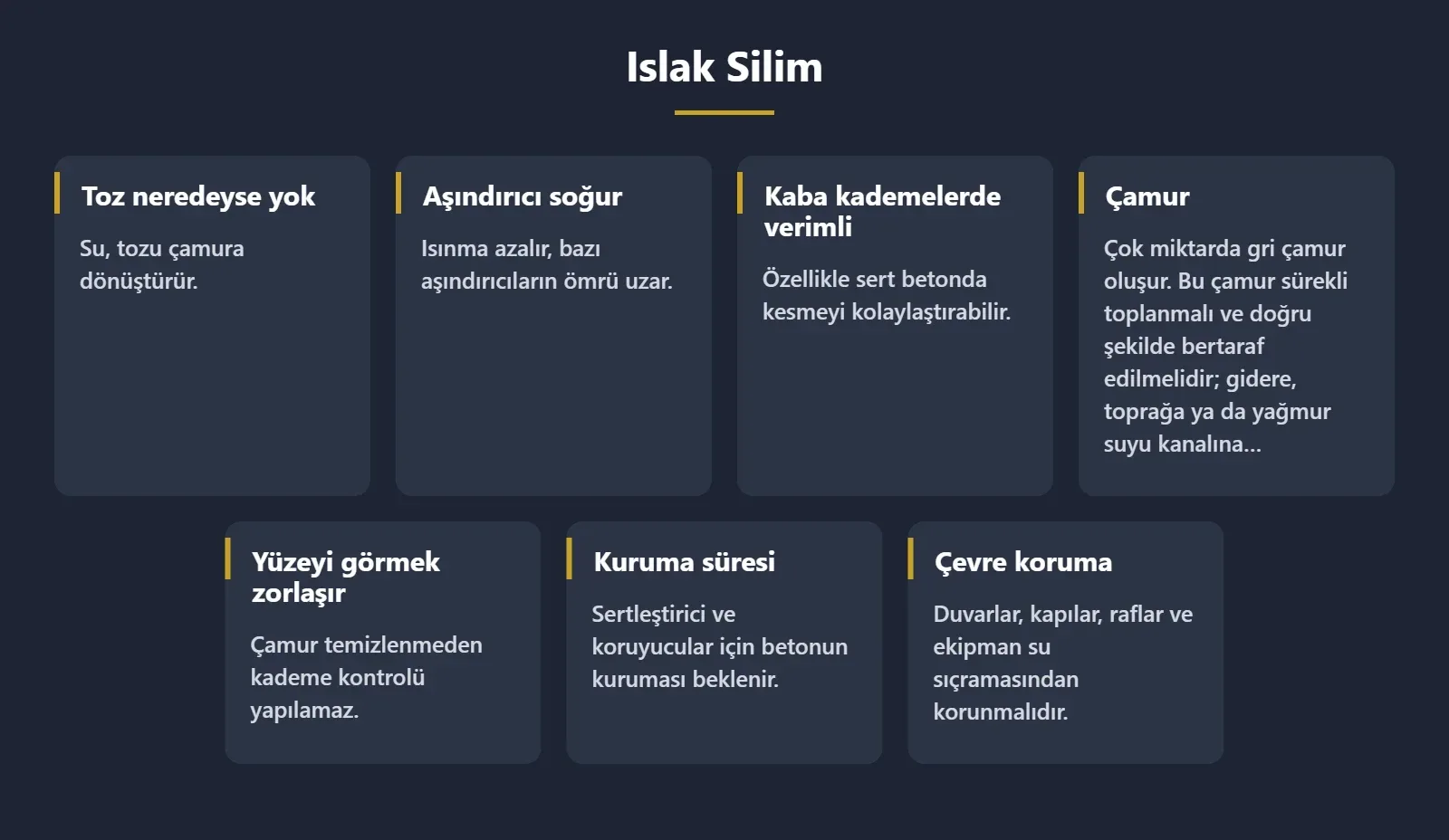
Wet grinding eliminates the dust problem, but it is replaced by other tasks such as slurry handling, waiting time, and protecting the surroundings.
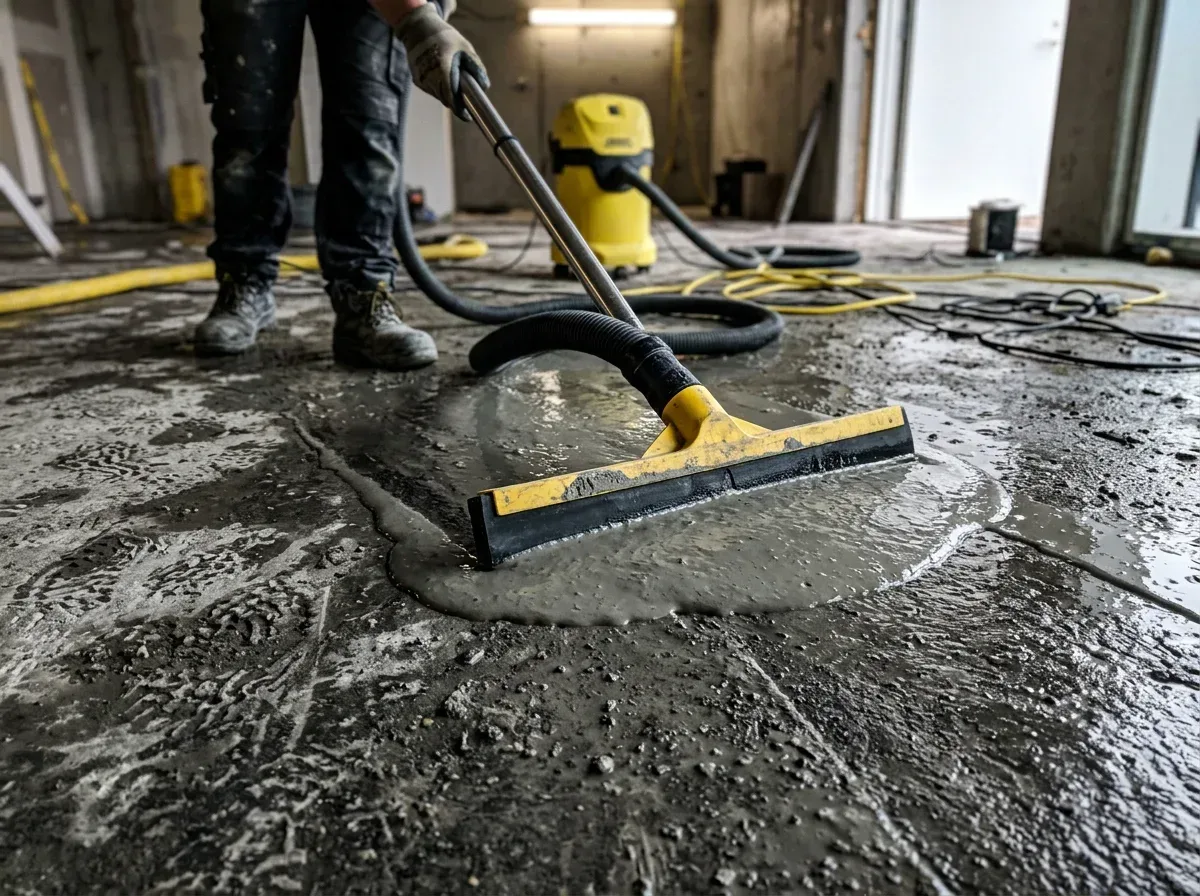
- Slurry: A large amount of gray slurry is produced; it must be collected continuously and disposed of properly, and must not be poured into drains, soil, or stormwater channels.
- Harder to see the surface: Because slurry covers the surface, whether a step is sufficient can only be checked after the slurry is cleaned up, which slows the work down.
- Drying time: Hardeners and sealers cannot be applied to wet concrete; you have to wait until the concrete is completely dry for the products to work properly.
- Protecting the surroundings: Walls, doors, shelves, and equipment must be protected from water splashes; when muddy water dries, it leaves marks on these surfaces that are hard to remove.
Dry Grinding
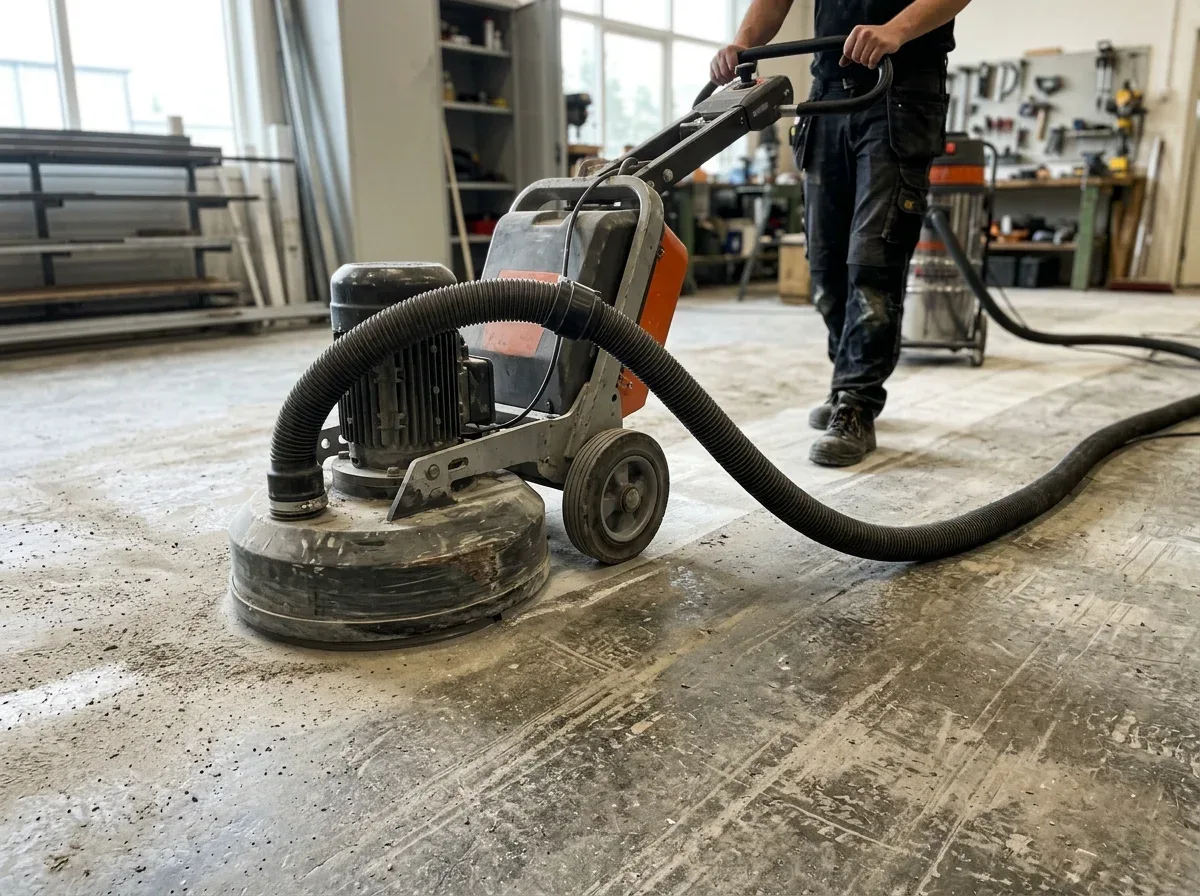
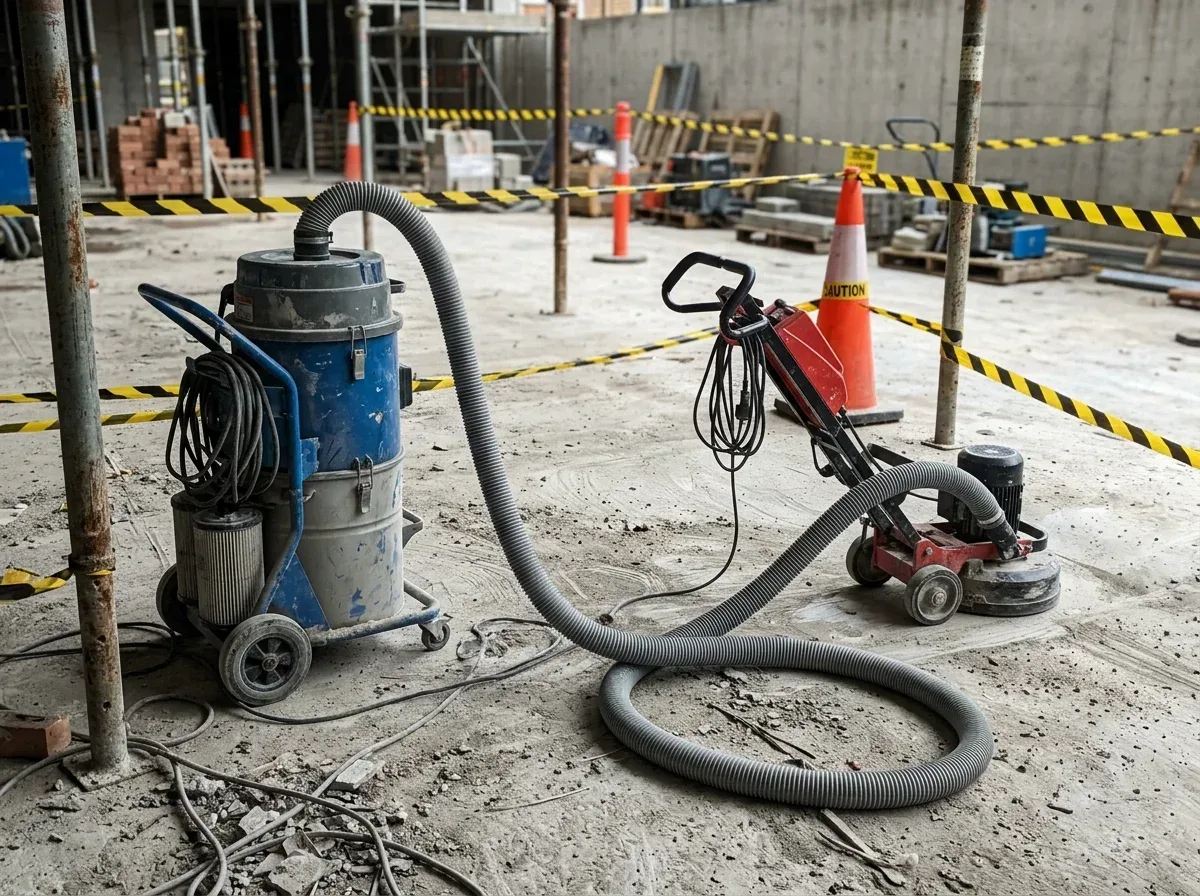
No water is used in dry grinding; a powerful industrial vacuum system connected to the machine captures the dust at the source.
Advantages
Since no water is used in dry grinding, slurry and waiting time are eliminated, and the work proceeds more cleanly and without interruption.
- No slurry: Because the dust is collected directly by the vacuum, no slurry forms; disposal and cleanup of the area are easier and quicker.
- Surface always visible: Because the surface is not covered with slurry, the result of each step is seen immediately; step checks are fast and missed spots are easily noticed.
- No waiting for drying: Because the concrete never gets wet, hardeners and sealers can be applied sooner, as soon as grinding is finished; the project schedule is shortened.
- Practical in operating facilities: It is preferred in areas with electrical installations, shelves, or products that could be damaged by water, and in businesses that continue to operate.
Disadvantages
The success of dry grinding depends almost entirely on the vacuum system used and the choice of abrasives.
- Dust control depends on the equipment: Insufficient vacuum, filter problems, or connection issues cause serious dust spread; capturing dust at the source depends on the power and maintenance of the equipment.
- Heat build-up: Some abrasives can heat up more in dry use; therefore, abrasives suitable for dry grinding should be chosen.
Why Does Concrete Dust Matter?
Concrete dust contains crystalline silica from the concrete's aggregate. Breathing fine dust containing crystalline silica over a long period can cause serious lung diseases. Therefore:
- High-efficiency filtered vacuum: High-efficiency filtered vacuum systems must be used in dry grinding; ordinary filters cannot hold fine silica dust and release it back into the air.
- Respirator: Workers should use a suitable respirator; no matter how good the vacuum is, some fine dust may be present in the air near the machine.
- Isolating the area and ventilation: The work area should be isolated and ventilated; this way the dust does not spread to other parts of the building and the dust concentration inside the area decreases.
- Vacuum cleaning: Cleaning should be done with a vacuum instead of dry sweeping; a broom lifts fine dust that has settled on the floor back into the air.
These rules matter not only for the crew but for everyone who uses the space.
Which Method Where?
| Situation | Suitable method |
|---|---|
| Operating warehouse, products sensitive to dust and water | Dry, with powerful suction |
| Enclosed area with poor ventilation | Wet, or dry with very good suction |
| Hardener to be applied immediately | Dry |
| Very hard concrete, heavy rough grinding | Wet may be preferred |
| Outdoor areas, open car parks | Both; sludge disposal must be planned |
| Food and precision production areas | Dry, strict dust control |
In practice, wet and dry methods can also be used together on the same job.
Two Methods Together on the Same Job
On many concrete grinding jobs, wet and dry methods are used together. For example, on a very hard floor with a thick coating, the coarse stages can be done wet; the abrasive stays cool and the dust is fully bound. After the sludge is collected and the floor has dried, the hardener is applied and the fine stages are completed dry, on a surface that stays continuously visible. The reverse is also possible: the coarse stages are done with powerful dry machines, and a small amount of water is used for the final polishing. What matters is that the dust or sludge is controlled at the source at every stage.
What You Should Ask the Crew
A few questions put to the crew before work begins will show clearly how the chosen method will manage dust and sludge.
- Method and rationale: Ask which method will be used and why it was chosen; the answer should be based on the hardness of the concrete, how the area is used, and its sensitivity to water.
- Quality of the vacuum filter: For dry grinding, ask whether the vacuum system's filter is capable of capturing fine dust; an inadequate filter sucks up the dust and releases it back into the air.
- Sludge collection: For wet grinding, ask how the sludge will be collected and where it will be taken; sludge poured into a drain or the garden causes blockages and environmental problems.
- Sealing off the area: Ask whether the work area will be isolated and whether door and ventilation openings will be sealed; dust spreads most through these openings.
- Respiratory protection: Ask whether the crew uses suitable respiratory protection; this also shows whether they take the risk of concrete dust seriously.
- Final cleaning method: Ask whether the final cleaning at the end of the job will be done with a vacuum; sweeping with a broom throws fine dust back into the air.
Home Garages and Basements
In garages that open into the house and in basements, dust spreads easily to other parts of the home through door gaps and ventilation ducts. Before working in these areas, the door leading from the garage into the house and the ducts are sealed with tape, the area is ventilated under negative pressure, and, if possible, no one stays in the house during the work. If there is electrical wiring, stored items, or wooden doors that could be damaged by water, a dry method with powerful suction can be preferred over the wet method.
Work in Alanya
A significant share of the areas where we do concrete grinding in Alanya are hotel and residential complex car parks, warehouses, and villa garages. Because ventilation is limited in enclosed car parks, dust control is especially important; high-suction dry systems and, when necessary, wet rough grinding are often used together. The sludge produced during wet work is collected without being poured into stormwater channels or the garden, and is disposed of properly.
Proper Slurry Management

The slurry produced during wet polishing can contaminate both the work area and the environment, so its collection and disposal are planned in advance.
- Wet vacuum collection: If the slurry is collected with a wet vacuum as it forms, it does not spread across the floor, dry out or harden, and the work area stays clean.
- Settling in a bucket or bag: When the collected slurry is left to stand in a bucket or bag, the solids settle to the bottom and the water can be separated.
- Separating water and solid waste: Once the water has been separated, the solid portion is transported as appropriate waste, which makes transport and disposal easier.
- Do not pour into drains or onto the ground: Concrete slurry settles in drain pipes and causes blockages, and it pollutes the environment when poured onto soil or into water.
Our Concrete Grinding Service in Alanya

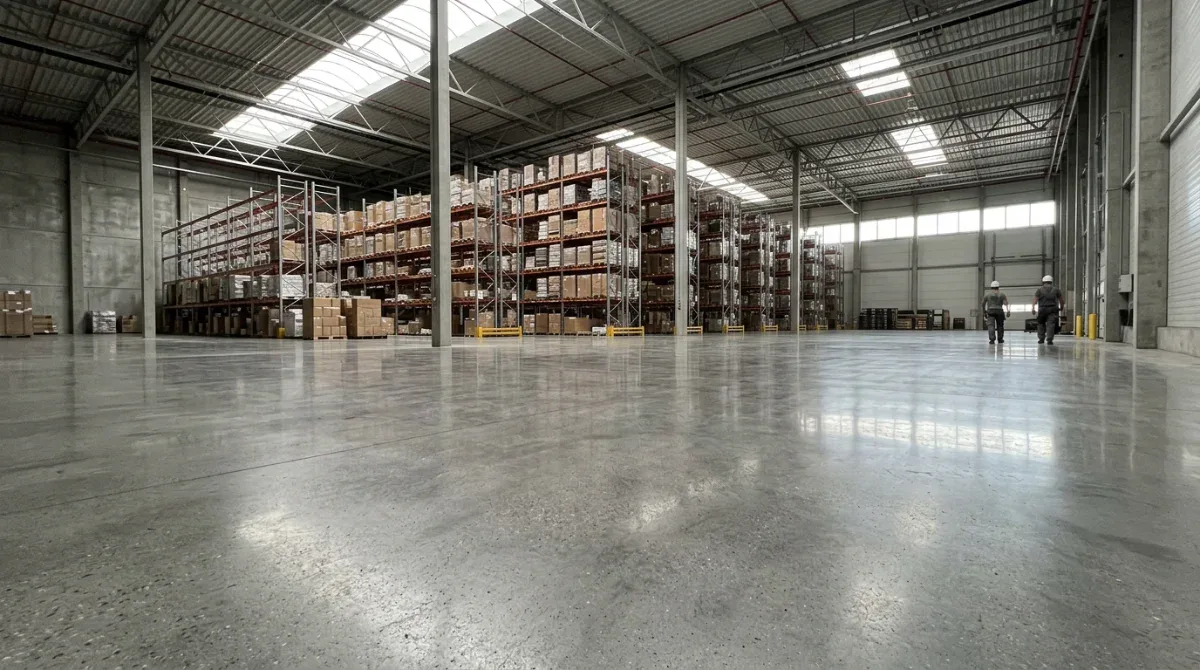
We grind concrete floors in warehouses, factories, parking garages, stores, and homes, then strengthen them with a hardener to achieve a dust-free surface that is easy to clean. Depending on the look you want, we apply a matte, satin, or glossy finish.
We inspect the age and condition of your floor on site and determine the right method together with you. Explore our Concrete Grinding service.
Dust or slurry is unavoidable in polishing; what matters is catching it at the source. A good crew delivers not just a gleaming floor at the end of the job, but also dust-free walls and a clean surrounding area.
Frequently Asked Questions
01Does dry grinding create a lot of dust?
02Does wet grinding damage the concrete?
03Which method is preferred in a home garage?
04Does the dust spread to other rooms in the house?
05Is it safe to stay in the area during dry grinding?
06Can wet grinding slurry be poured down the drain?
Related Articles
- What Is Concrete Grinding and How Is It Done? Turning Dusting Concrete into a Glossy Floor
- Slurry Management and Cleanup in Wet Grinding
- Concrete Grinding Process and Duration: A Day-by-Day Workflow
- Grinding Machines: The Difference Between Single-Disc and Planetary Machines
- Concrete Grinding or Epoxy Coating? Which Is Right for Which Floor