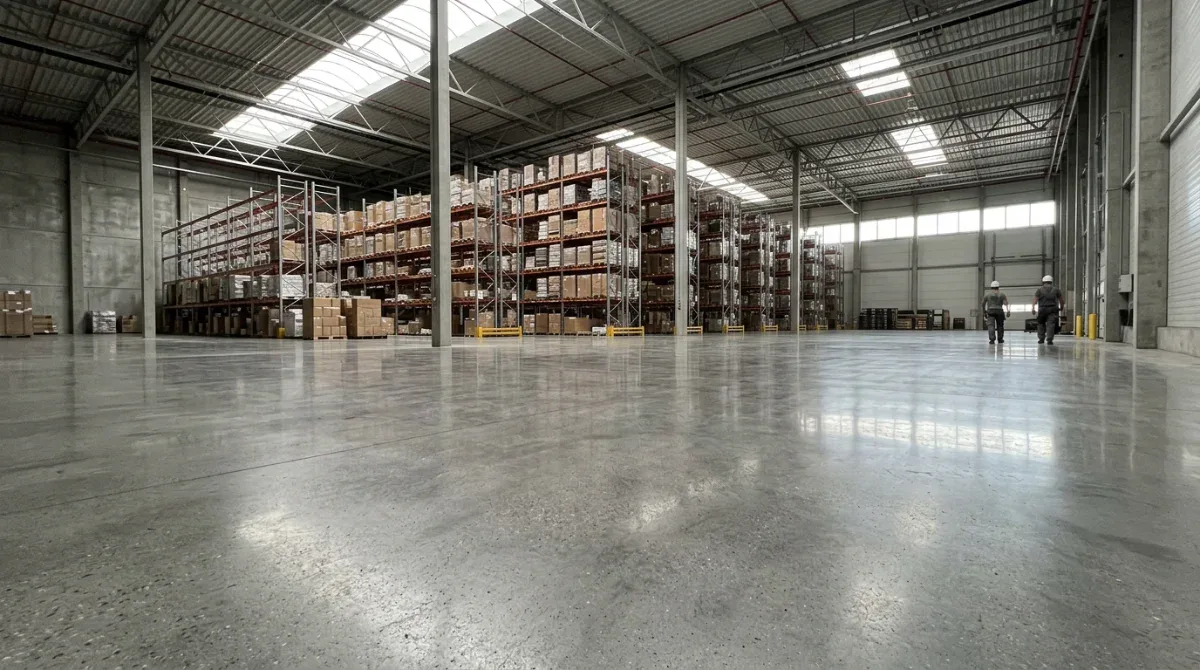
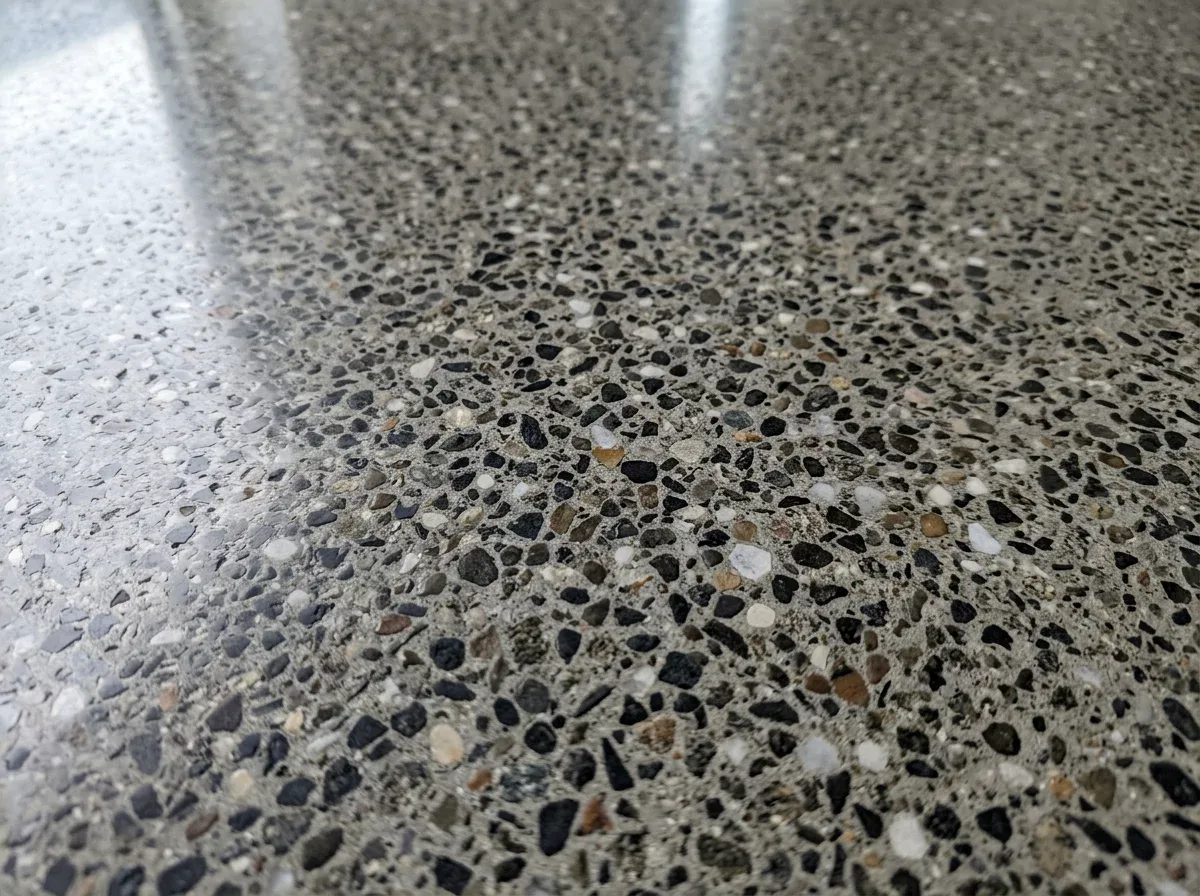
Industrial Warehouse and Factory Floor Renewal
In short: Warehouse and factory floors are exposed to constant forklift traffic, heavy loads and chemical contact.
A worn floor doesn't just look bad; it causes dust, equipment failures, workplace safety risks and lost efficiency. In this article, we explain how industrial concrete floors are renewed through grinding and polishing, hardening and repair, and how the work is planned in a facility that remains in operation.
Problems Industrial Floors Face
Forklift traffic, heavy loads and chemical contact cause several typical problems in industrial concrete floors that feed into one another.
- Dusting: Dust released from the weakening concrete surface settles on products, shelves and machines; it increases the cleaning workload and can cause equipment failures.
- Forklift marks and wear: Wheel marks and wear concentrate especially in aisles and turning points; over time the surface becomes rough and starts to dust.
- Joint spalling: Joint edges break under forklift wheels; this is also harmful to the wheels and the load, and the impact increases as the damage grows.
- Cracks: Shrinkage and load-induced cracks widen over time; a crack with broken edges collects dirt and creates an impact point when wheels pass over it.
- Chemical and oil stains: Oil and chemicals spilled in maintenance areas, production lines and loading ramps soak into the concrete, making the surface slippery and stained.
- Peeling of paint and coatings: Floor markings and old coatings lift off under traffic; peeling areas look untidy and also accelerate the deterioration of the concrete beneath.

Advantages of Concrete Grinding and Polishing in Industrial Areas
Because grinding and polishing treats and strengthens the concrete itself, it provides clear gains in durability, cleanliness and maintenance in industrial areas.
- Durability: Ground and hardened concrete shows high resistance to abrasion; under forklift traffic and heavy loads, the surface wears out more slowly.
- Low maintenance: The densified surface is easy to clean; it does not require periodic renewal like a coating, and regular cleaning and occasional polishing are enough.
- Dust control: With a hardener, dusting is largely eliminated; products, shelves and machines are protected from concrete dust.
- Light reflection: Because the glossy surface reflects light back, lighting becomes more effective; warehouse aisles and work areas look brighter.
- No peeling: Since the concrete itself is treated, there is no flaking or blistering; there is no separate layer on the surface that could come off.
Application Process
1. Survey and Surface Analysis
Concrete strength, old coatings, crack and joint condition, moisture, oil contamination and traffic layout are examined. Which areas will be treated, and in what order, is determined.
2. Rough Grinding
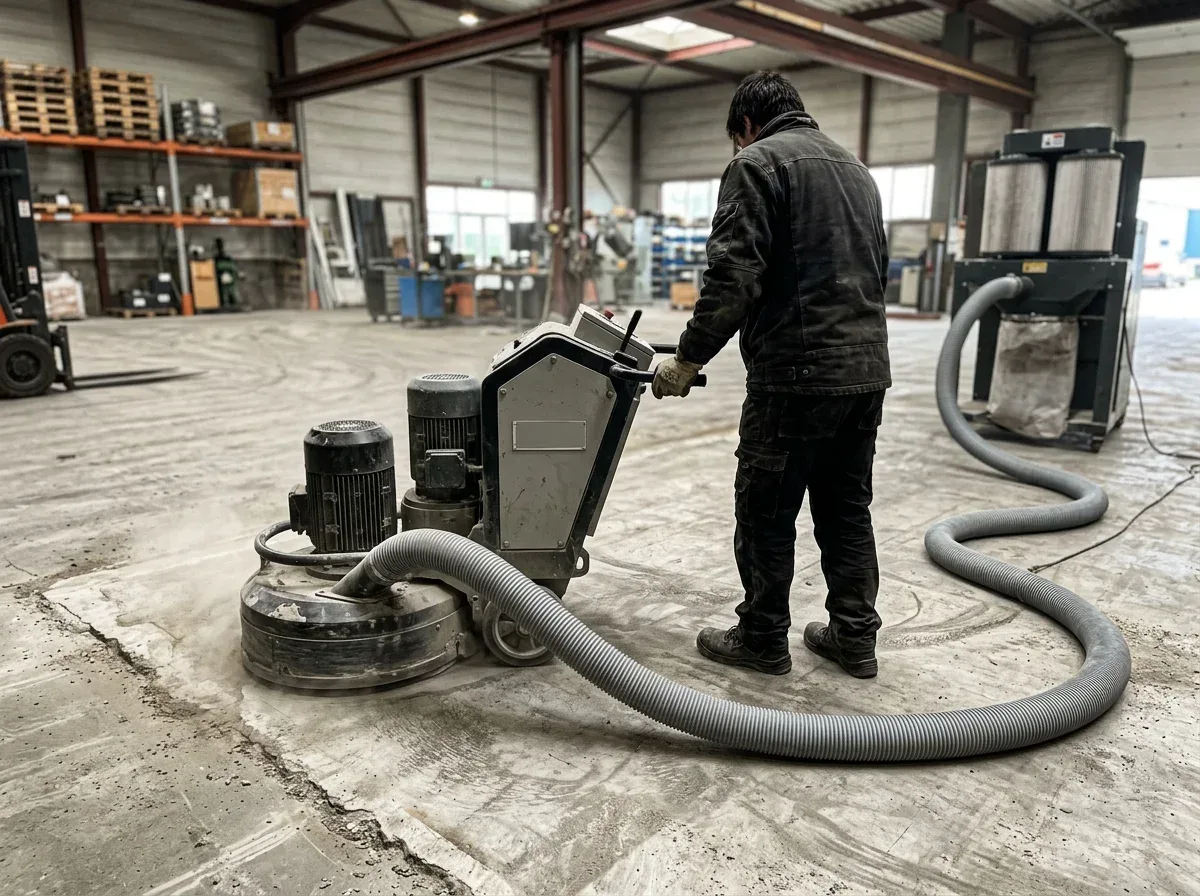
Heavy planetary machines remove the weak top layer, old coatings and paints. Powerful dust extraction systems are used in dry grinding.
3. Joint and Crack Repair
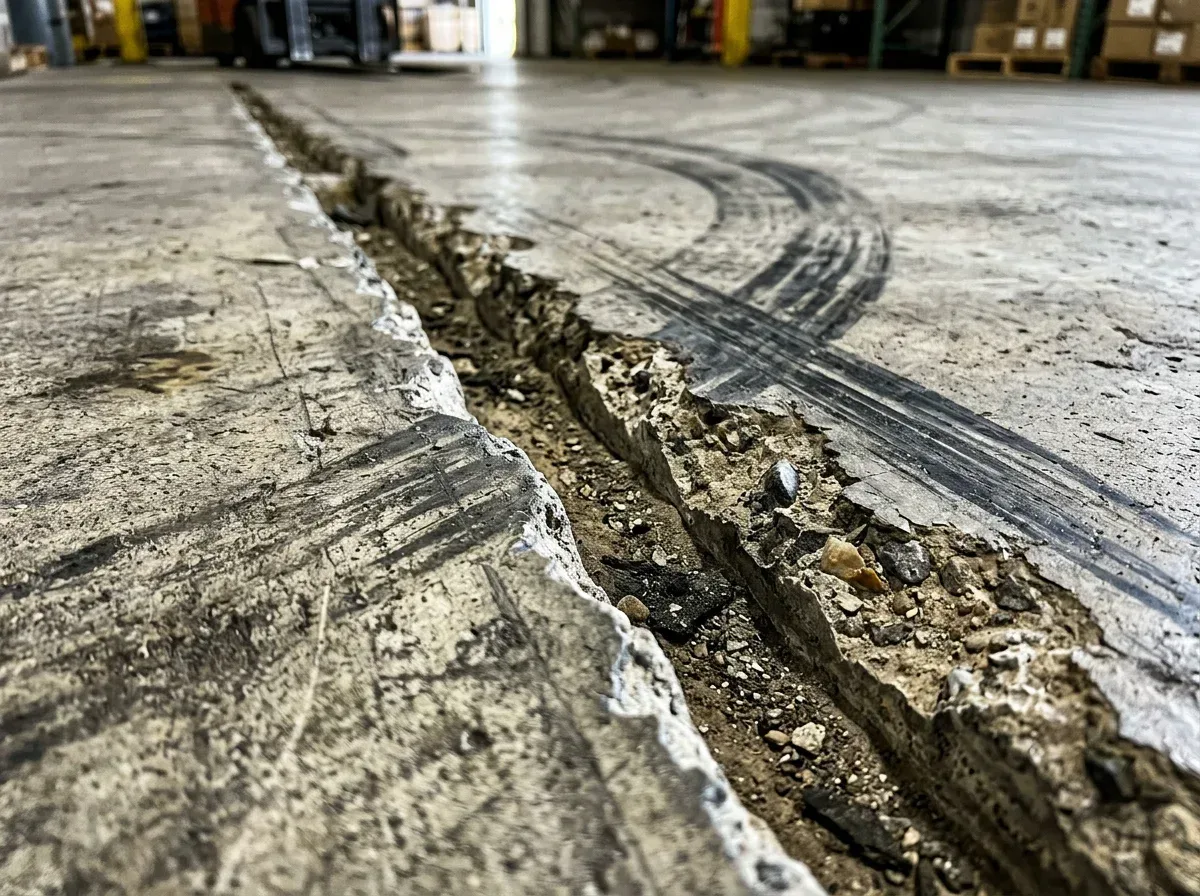
- Broken joint edges: Broken joint edges are cleaned and filled with suitable semi-rigid filler materials; this way, the wheels do not take impacts when crossing the joint.
- Cracks: Cracks are opened up and sealed with suitable repair materials; a crack whose edges are supported does not break down further under traffic.
- Potholes and spalls: Potholes and spalls caused by dropped loads or wear are cleaned down to sound concrete and repaired, and the surface is brought to a single level plane.
Joint repair also prevents damage to forklift wheels and loads.
4. Hardener
A hardener is applied to the exposed concrete; the surface becomes densified.
5. Polishing Levels
Depending on the intended use, the surface is left with a satin or high-gloss finish. Glossier finishes may be preferred in product warehouses and showroom areas, and more matte surfaces in oily production areas.
6. Protection
Stain protector and, when necessary, applications resistant to chemical contact.
7. Marking
Pedestrian walkways, forklift aisles, restricted areas and safety lines are redrawn.
Planning in an Operating Facility
The biggest challenge with industrial floors is carrying out the work without stopping production or shipping:
- Section-by-section work: The area is divided into sections and shelves and stock are moved in sequence; only one section is closed while the rest of the facility continues to operate.
- Using downtime periods: Downtime periods such as nights, weekends or holiday breaks are used; this way production and shipping are affected as little as possible.
- Dust and slurry management: Dust is controlled in dry grinding; slurry management is planned in wet grinding, so that working areas and stock do not get dirty.
- Separating the work area: For occupational safety, the work area is marked off and separated; forklift and personnel traffic is kept away from the zone where the machines are operating.
Target Surface by Area Type
| Area | Recommended surface | Why |
|---|---|---|
| Dry goods warehouse | Satin or glossy | Dust-free, bright, easy to clean |
| Forklift aisles | Satin | Balance of durability and grip |
| Production line, oily area | Matte or satin + stain protector | Slip and stain control |
| Loading ramp | Coarse or medium grade | Grip in wet weather and on slopes |
| Showroom and office section | Glossy | Appearance and light reflection |
Coating or Grinding?
In industrial floors, epoxy and polyurethane coatings can still be the right choice in areas that require resistance to specific chemicals. However, in general warehouse and production areas, the lifespan of coatings is limited by forklift traffic, load impacts, and moisture coming from below. Once a coating lifts locally, water and dirt get underneath, the deterioration spreads quickly, and repair often requires recoating the entire area. Ground and hardened concrete, on the other hand, is not a coating and therefore does not peel; worn aisles are refreshed in place. Which method is suitable should be assessed together, based on the chemicals present in the area, hygiene requirements, and traffic.
Maintenance Routine After Grinding
Ground concrete requires little maintenance, but a regular cleaning and inspection schedule noticeably extends the lifespan and shine of the surface.
- Daily: Sand and dust are removed with a dust mop or sweeping machine; sand trapped under the wheels abrades the surface like sandpaper.
- Weekly: Cleaning is carried out with a pH-neutral cleaner and a scrubbing machine with soft pads; dirt is removed without damaging the surface protector.
- Periodic: In forklift aisles, the shine is refreshed with fine pads; this way, the lanes with the heaviest traffic keep the same appearance as the other areas.
- Immediately: Oil and chemical spills are picked up with absorbent material without delay; a spill left standing can soak into the concrete and leave a permanent stain.
- Annually: Joints and cracks are inspected; if small breaks are repaired before they grow, wheel impacts and the need for more extensive repair are prevented.
Industrial Floors in Alanya and Surroundings
When people think of industrial floors in Alanya and its surroundings, what most often comes to mind are agricultural product and packaging warehouses, cold storage facilities, hotel central warehouses, industrial estate workshops, and building material depots. Since most of these facilities operate seasonally, floor renewal can be planned for downtime periods outside the season. If the facility will continue operating, the area is divided into sections, stock is moved in sequence, and work is carried out at night or on weekends; this way the floor is renewed without disrupting production and shipping.
When Is Grinding Not Enough?

In some warehouse and factory floors, the problem lies beneath the surface; in these cases, grinding alone does not give sufficient results.
- Low-strength concrete: If the concrete strength is very low and the surface is crumbling, grinding cannot find a sound surface; repair or a new layer is required.
- Subfloor settlement: If there is settlement or major subsidence underneath, a surface treatment will not solve the problem; the load-bearing structure of the floor must be addressed first.
- Chemical and hygiene requirements: In areas that require high chemical resistance or special hygiene standards, suitable coating systems are considered instead of ground concrete.
Our Concrete Grinding Service in Alanya

We grind concrete floors in warehouses, factories, car parks, shops and homes, then strengthen them with a hardener to create a dust-free, easy-to-clean surface. Depending on the look you want, we apply a matte, satin or glossy finish.
We inspect the age and condition of your floor on site and determine the right method together with you. Explore our Concrete Grinding service.
special coating systems or a new top layer may be required. This decision should be made after an on-site inspection. — Expert Note