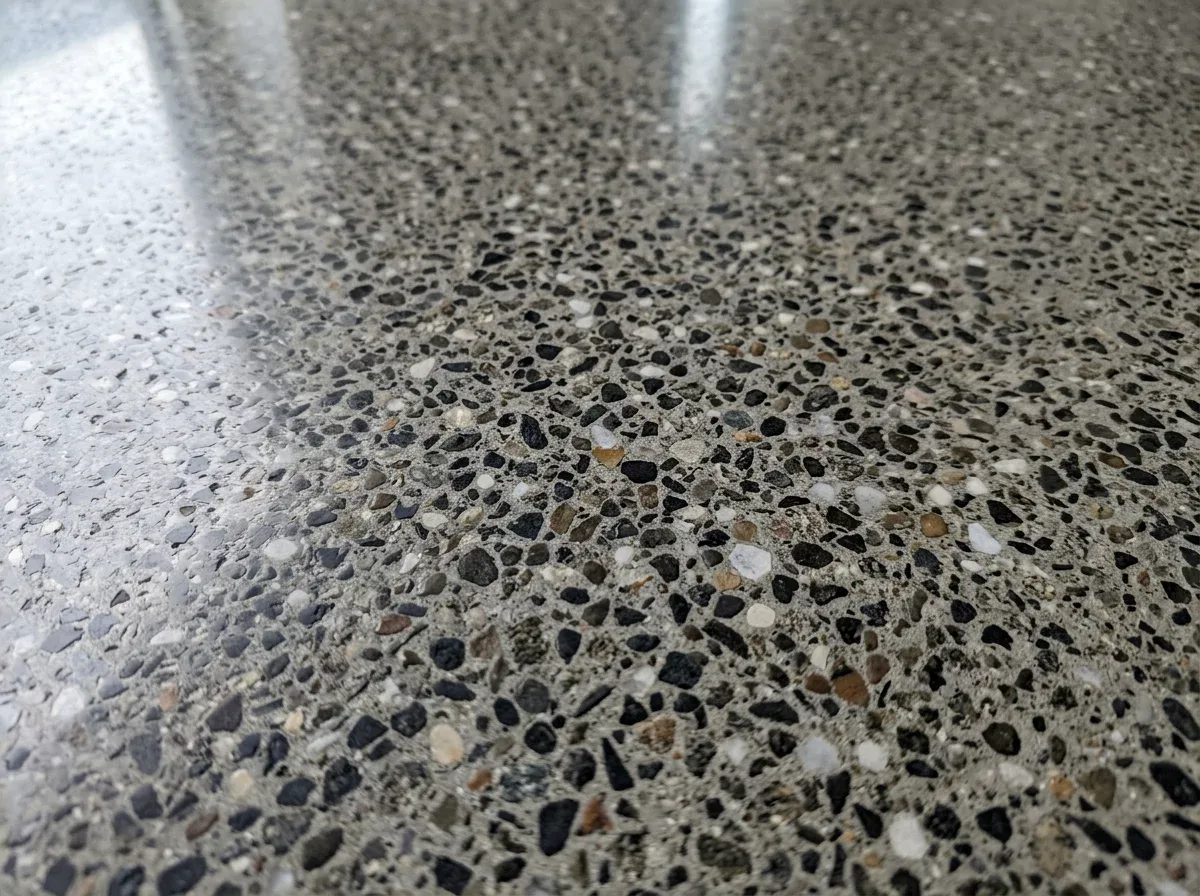
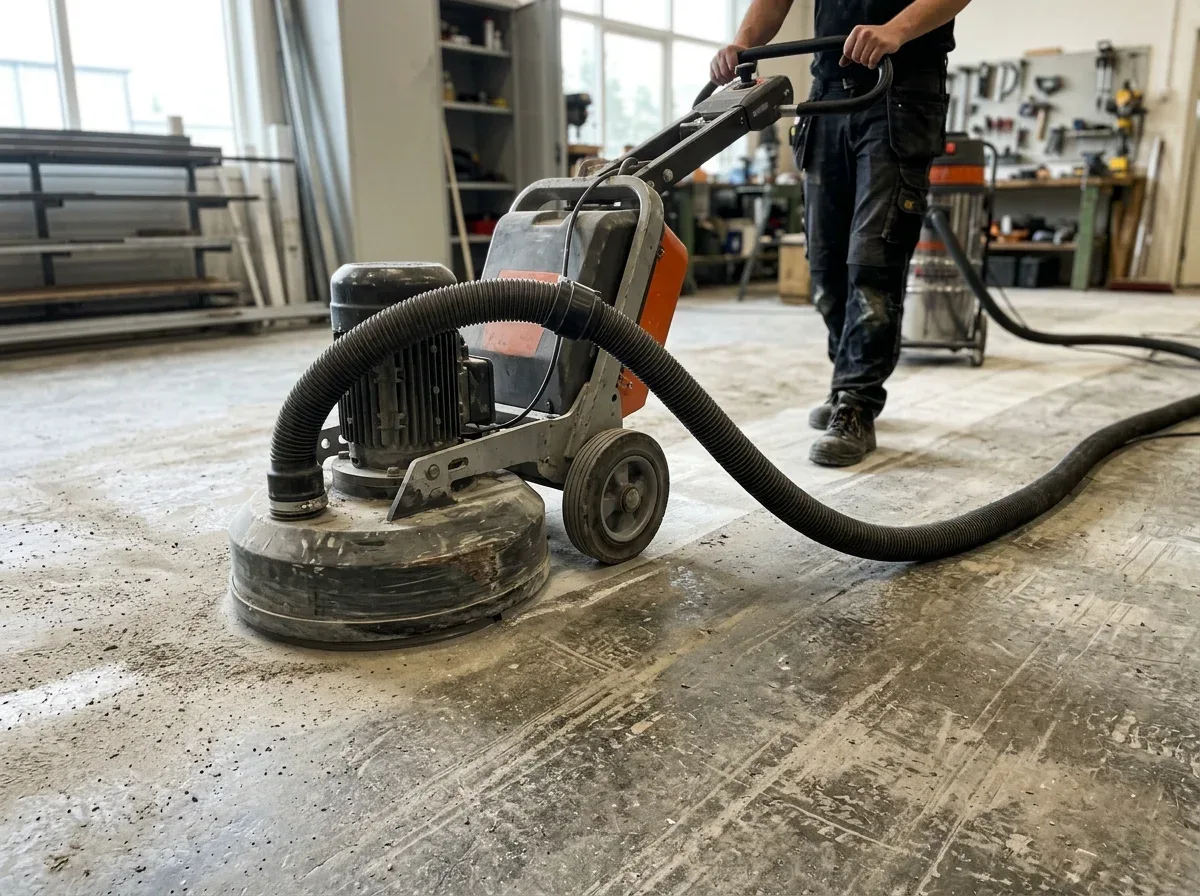
Garage and Parking Lot Floor Grinding
In short: Residential complex car parks, villa garages and hotel indoor car parks are the floors that wear out fastest from dust, oil stains, tire marks and dirt.
By grinding and hardening the concrete itself, without applying any coating, these areas can be made cleaner, brighter and easier to maintain. In this article, we explain how concrete grinding is carried out on garage and car park floors.
Typical Problems of Car Park Floors
Car park floors wear down in several different ways through vehicle traffic, fluids dripping from vehicles and water.
- Dusting: Concrete dust kicked up by vehicles entering and leaving settles on cars and walls; as the weak top layer crumbles, the dust never stops.
- Oil and fluid stains: Drops of engine oil, brake fluid, antifreeze and fuel seep into the pores of the concrete and leave dark stains under parking spaces.
- Tire marks: Black marks form from tire friction, especially on ramps and turning points; on matte, porous concrete these marks do not come off easily.
- Standing water: Water pools in areas without a slope and around drains; the accumulated water spreads dirt and oil, leaving marks and slipperiness on the floor.
- Worn paint and coatings: Old line markings, flaking paint or coatings give the floor a messy and neglected look, and the peeling pieces also trap dirt.
- Cracks and spalling: Concrete breaks from vehicle impacts at joint edges, ramp entrances and heavy load points; spalls that are not repaired grow over time.
- Dark appearance: Dirty, matte concrete absorbs light; even when the lighting is sufficient, the area looks darker and gloomier than it really is.

Why Grinding?
Because grinding strengthens the surface itself without adding a separate layer on top of the concrete, it offers a long-lasting solution for car parks.
- A surface that does not peel: It does not peel or flake like a coating; since the concrete itself is treated, there is no layer that tire heat and friction could lift off.
- Dusting stops: When the weak top layer is removed by grinding and the surface is densified with a hardener, dusting largely stops and vehicles and walls get less dirty.
- Easy cleaning: Because the surface becomes denser, stains penetrate less easily; oil and dirt can be removed from the surface before they settle into the pores, which makes cleaning easier.
- A brighter space: A light sheen reflects light; with the same lighting the space looks brighter, and the car park gives a more spacious and safer impression.
- Preserved slip resistance: When the surface is left at the right grade, slip resistance is maintained; since the surface is not polished to a high gloss, grip is retained even with wet tires.
Application Steps
1. Preparation and Inspection
The emptying of the area is planned; in residential complex car parks, work is usually done section by section and vehicle owners are informed in advance. Cracks, spalls, old coatings and oil stains are identified.
2. Oil and Stain Pre-Cleaning
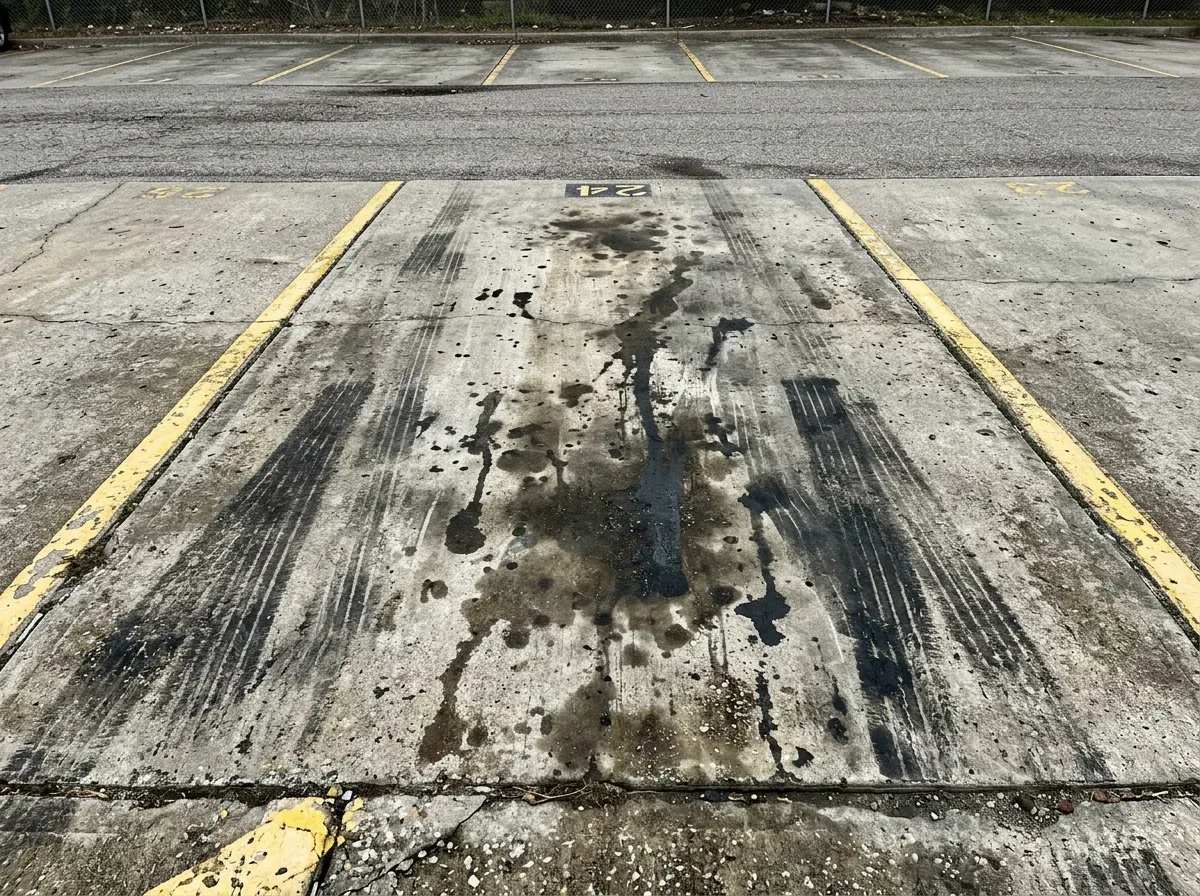
Heavy oil stains are removed with suitable degreasers before grinding. Otherwise, the oil may spread during grinding and stains may remain on the surface.
3. Coarse Grinding
The weak, dusting layer, tire marks, old paint and coatings are removed with metal-bond diamonds.
4. Repair
Cracks and broken joint edges are filled with suitable repair materials.
5. Hardener
A surface hardener is applied to the exposed concrete; the dusting problem is largely solved at this step.
6. Medium-Grade Grinding
In car parks, the aim is usually not a high gloss but a satin or lightly glossy surface. This way, slip resistance is preserved and tire marks are less visible.
7. Stain Protector
A suitable stain protector can be applied to the concrete against oil and fluid stains.
8. Line Marking
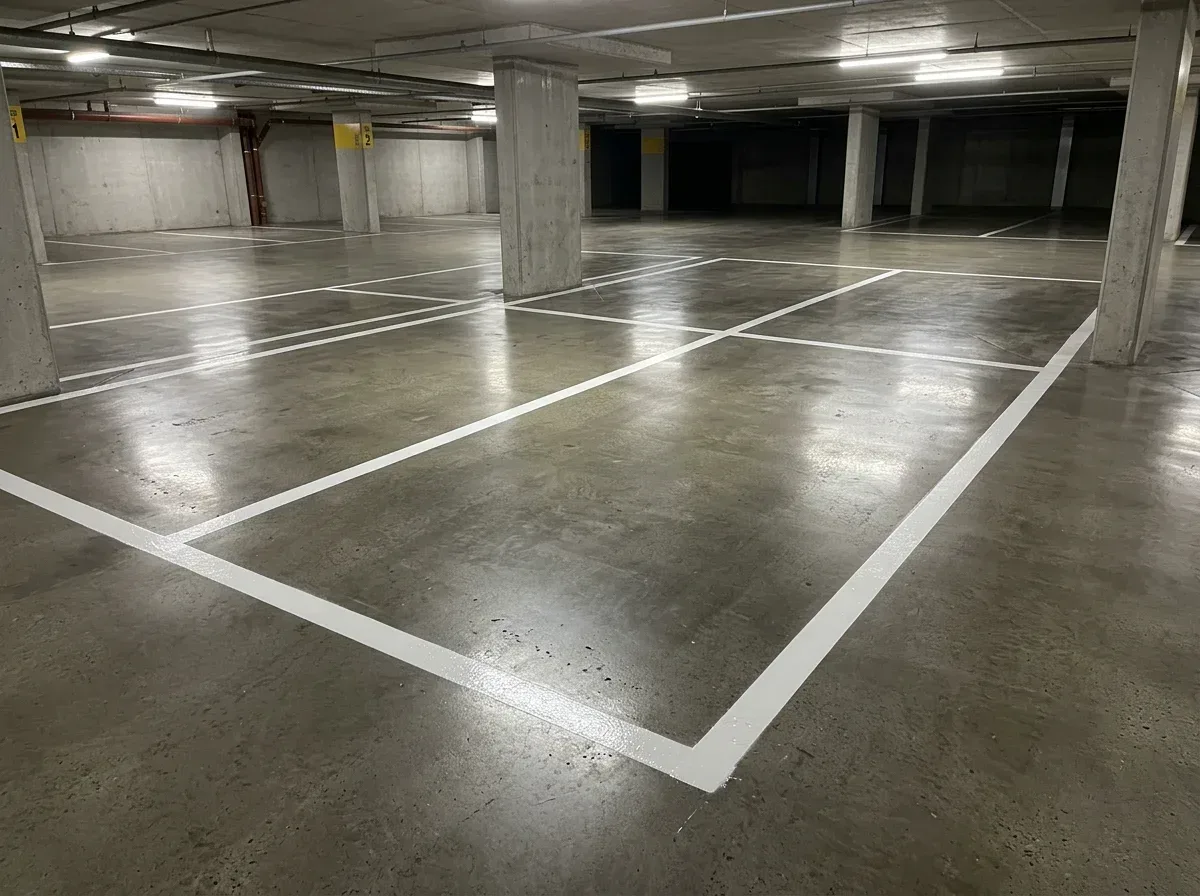
Parking space lines, direction arrows and pedestrian paths are repainted with suitable paints after grinding.
A Separate Approach for Ramps
Ramps are both the most worn and the riskiest part of a car park. Vehicles accelerate, brake and turn here; tire marks build up most heavily here. The risk of slipping for vehicles and pedestrians entering with wet tires or shoes is also highest here. For this reason, a glossy surface is not targeted on ramps:
- Coarse or medium-grade surface: The ramp surface is left at a coarse or medium grade; since it is not polished, grip is retained for wet tires and pedestrians' footwear.
- Transverse anti-slip grooves: If necessary, transverse anti-slip grooves are cut into the surface; the grooves carry water away from the surface and help the tire grip during braking.
- Durable joint repair: The joints at the top and bottom of the ramp are renewed with repair materials that withstand vehicle impacts; this reduces breakage at the points that take the most impact.
- Drainage channels: The drainage channels below the ramp are cleaned; water running down the ramp must not spread into the car park, and a blocked channel leads to pooling.
Goal by Parking Lot Type
| Area | Target surface | Priority |
|---|---|---|
| Villa garage | Slightly glossy, satin | Clean look, resistance to oil stains |
| Residential complex indoor parking lot | Satin | Eliminating dusting, bright appearance |
| Hotel parking lot | Satin | Working section by section, keeping guest traffic flowing |
| Ramps | Coarse or medium grit level | Slip resistance |
| Pedestrian walkways and areas in front of elevators | Satin, clear marking | Safety and wayfinding |
Why Grinding Instead of Epoxy?
For many years, epoxy and similar coatings have been preferred in parking lots. Although these coatings look glossy and clean in the first days, they blister, peel and stain over time due to the heat and friction of vehicle tires, oil, fuel and moisture coming from below. Repairing and renewing a peeling coating costs as much as the initial application. Ground and hardened concrete, on the other hand, is not a coating, so it does not peel; worn areas are refreshed on the spot. In parking lots where the existing epoxy has deteriorated, the coating can also be removed by grinding and the concrete can be polished.
Residential Complex and Hotel Parking Lots in Alanya
In Alanya, most residential complex and hotel parking lots are indoor areas with limited ventilation. The dust from a dusting concrete floor is carried onto vehicles, into storage rooms and elevator shafts. In hotel parking lots that are heavily used throughout the season, work is carried out at night and section by section; vehicle owners are informed in advance, and the job is completed without closing the parking lot entirely. After grinding, daily dust removal and periodic machine cleaning keep the floor looking the same for many years.
Maintenance

How long a polished garage and parking lot floor stays clean depends on a regular, simple maintenance routine.
- Weekly dry sweeping: Sand and dust removed with a broom or sweeping machine will not wear down the surface under vehicle tires.
- Machine wet cleaning: Using a floor scrubber at regular intervals removes dirt and tire marks that sweeping cannot get off.
- Remove oil drips immediately: Oil dripping from vehicles seeps into the concrete if left; removing it as soon as it is seen prevents a permanent stain.
- Drain and slope check: A clogged drain or a slope that has deteriorated causes water to pool on the floor and leads to dirt and limescale buildup.
Our Concrete Grinding Service in Alanya

We grind concrete floors in warehouses, factories, car parks, shops and homes, then strengthen them with a hardener to create a dust-free surface that is easy to clean. Depending on the look you want, we apply a matte, satin or glossy finish.
We inspect the age and condition of your floor on site and decide on the right method together with you. Explore our Concrete Grinding service.
On ramps, slip resistance comes first. Ramp surfaces are not polished; they are cleaned and hardened, and if necessary the surface is given a rougher texture. Chipping at the ramp edges is repaired. — Expert Note
Frequently Asked Questions
01What happens to the vehicles during parking lot grinding?
02Will the floor be slippery after grinding?
03What if there is an old epoxy coating?
04Will oil stains come out completely?
05How long does parking lot grinding take?
06Do tire marks form on ground concrete floors?
Related Articles
- Residential Complex Parking Garage Floor Renovation: A Guide for Property Managers
- Slip Resistance and Wear on Parking Ramps
- Removing Tire Marks and Brake Marks from Parking Garage Floors
- Removing Oil and Paint Stains from Concrete Floors
- What Is Concrete Grinding and How Is It Done? Turning Dusting Concrete into a Glossy Floor