Why Does a Concrete Floor Dust? What Does a Hardener (Densifier) Do?
In short: A concrete floor that creates dust again every time you sweep it is the most common complaint in warehouses, garages, parking lots and workplaces.
This dust doesn't just make cleaning harder; it also settles on shelves, vehicles, products and in workers' lungs. In this article, we explain why concrete dusts and how a surface hardener (densifier), one of the most important steps in concrete grinding, works.
Why Does Concrete Dust?
Weak Surface Layer
When concrete is poured and troweled, a thin layer rich in cement paste and fine particles forms on the surface. This layer:
- Troweling with excess water: If the concrete has been troweled with too much water, the cement paste on the surface becomes diluted, and the top layer remains porous and weak.
- Insufficient curing: If curing (keeping the concrete moist) is inadequate, the cement at the surface cannot fully harden and easily turns to dust under use.
- Premature drying or freezing: If the concrete dries too early or freezes, the strength of the top layer cannot develop and the surface starts to wear within a short time.
Under these conditions, the top layer remains weak. Over time it wears under traffic and breaks off as dust.
Carbonation and Aging
Over time, the surface of the concrete reacts with carbon dioxide in the air. This process and years of traffic contribute to the softening of the surface and to dusting.
Abrasive Traffic
Forklifts, pallet jacks, vehicle tires and dragged loads continuously wear down the surface. Sand and gravel accelerate this wear.
Improper Cleaning
Machines with hard brushes, acidic cleaners and constant wet cleaning can wear down a weak surface even further.
The Harms of Dusting
Dusting concrete is not just a cleaning problem; it also harms products, machinery, hygiene and workers' health.
- Dust accumulation: Dust builds up on shelves, products and machinery; products look dirty and have to be wiped constantly.
- Filter clogging: The filters of vehicles and machines get clogged; fine concrete dust reaches engines and ventilation systems.
- Ongoing cleaning costs: Because the floor produces dust again every time it is swept, cleaning never ends and labor and material costs keep rising.
- Hygiene problems: In food and sensitive-product warehouses, dust that accumulates in the air and on surfaces makes it harder to keep products clean.
- Respiratory problems: Fine concrete dust in the air can cause respiratory tract problems in workers when inhaled over a long period.
What Is a Hardener (Densifier)?
A hardener is a liquid chemical product that penetrates the pores of concrete. The most common ones are lithium, sodium or potassium silicate based.
How Does It Work?
Concrete contains calcium hydroxide released while the cement hardens. This substance is the weak part of the concrete. The hardener reacts with calcium hydroxide and converts it into calcium silicate hydrateThis is the main component that gives concrete its strength.
As a result:
- Hardened top layer: The top layer of the surface hardens and densifies; the weak calcium hydroxide is converted into the component that gives concrete its strength.
- Narrowed pores: As the reaction products fill the pores, the pores narrow and the concrete absorbs less water, oil and dirt.
- Dusting stops: Dusting largely stops; since no loose particles are left to separate from the surface, no dust is raised under traffic.
- Easier polishing, slower wear: The surface is polished more easily and wears more slowly; hardened concrete reaches a higher gloss with resin pads.
The hardener does not form a film on the surface; it becomes part of the concrete. Therefore, unlike paint or coatings, it does not flake or peel.
Using Grinding and Hardener Together
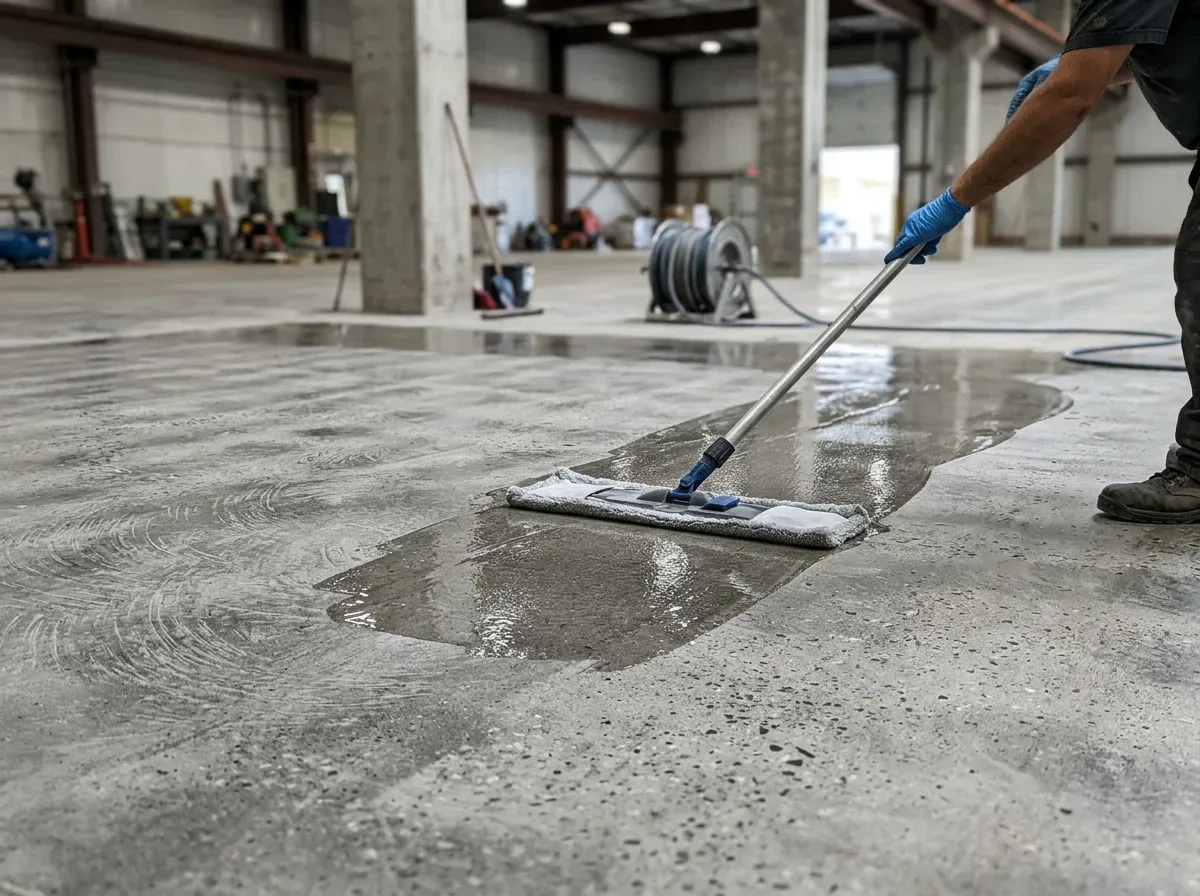
The typical process in concrete grinding is as follows:
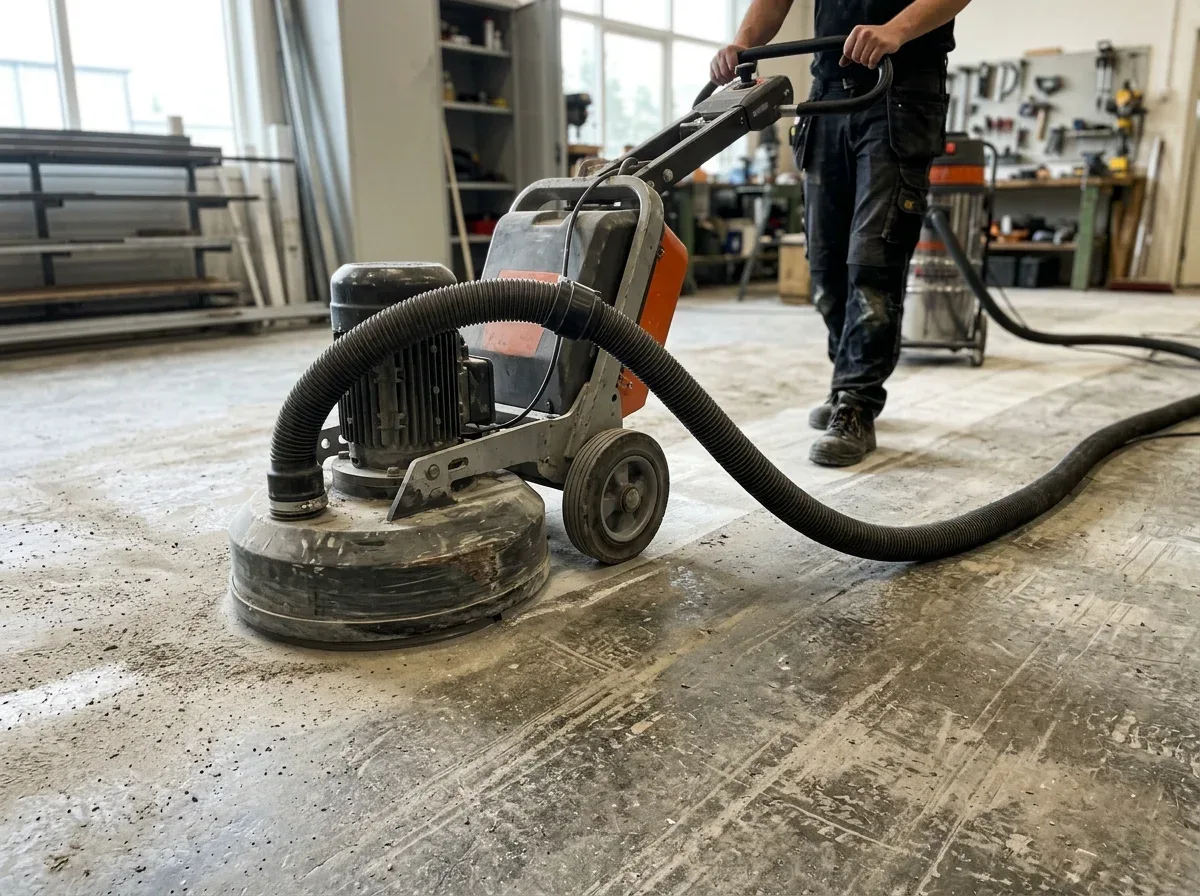
- Coarse grinding: The weak, dusting top layer, old paint, dirt and coatings are removed, exposing sound concrete.
- Repair: Cracks and pits are then filled; after the fillers harden, they are leveled with the surface in the following grit stages.
- Hardener application: It is applied to the exposed surface; the product is left for its required time, during which it reacts within the concrete pores.
- Medium and fine grinding: The hardened surface is then polished in stages; each stage removes the scratches left by the previous one.
- Protection: Finally, a stain protector or surface sealer can be applied; this reduces the penetration of oils and liquids into the pores.

The application time and amount of the hardener vary depending on the product and the condition of the concrete. In some applications, more than one coat is applied, or the application is done in different stages.
Is a Hardener Alone Enough Without Grinding?
The hardener can also be applied simply by spreading it on, and it reduces dusting. However:
- It cannot penetrate a dirty surface: If there is dirt, paint or coating on the surface, the product cannot penetrate the concrete, and the reaction takes place only at the exposed spots.
- The weak layer can come off: If a weak and loose top layer remains, even if that layer hardens, it can come off over time and the dusting starts again.
That is why the best result is achieved by removing the weak layer and applying the product to clean concrete.
Is Your Floor Dusting? Simple Checks
You can tell for yourself whether the floor is dusting and whether the top layer is weak with a few simple tests.
- Palm test: Press a clean, dry hand onto the floor and rub. If fine gray dust remains on your palm, the surface is dusting.
- Key test: Lightly scratch the surface with the tip of a key. If dust and scratches form easily, the top layer is weak.
- Water test: Pour a few drops of water and wait. If the water is absorbed quickly and the floor darkens, the surface is porous and unprotected.
- Look at the shelves: If fine dust builds up on shelves and products one day after sweeping, the source is often the floor.
Types of Hardeners
| Type | Characteristics | Points to note |
|---|---|---|
| Lithium silicate | Small molecule, penetrates deeply, leaves little residue | Generally more costly |
| Sodium silicate | Common and economical | Excess can leave white residue on the surface; it must be cleaned well |
| Potassium silicate | An option between the two | The application instructions must be followed |
| Colloidal silica | Very fine particles, fast reaction | The number of coats varies by product |
Which product to choose is determined by the age of the concrete, the condition of the surface, the type of use and the desired gloss. What matters is not only the product itself but also that it is applied correctly: excess product must not be left on the surface, and the concrete must be opened up enough to absorb the product.
Maintenance After Hardening
A hardened and polished concrete floor is one of the easiest floors to maintain. Daily dust mopping or sweeping, and weekly machine or mop cleaning with a pH-neutral cleaner, is sufficient. Acidic products and hard, abrasive machine pads should be avoided. If the gloss fades over time in corridors with heavy traffic, it is refreshed in place with fine pads; the floor does not need to go through coarse grinding again.
Concrete Floors in Alanya
In Alanya and its surroundings, the places where we most often encounter dusting complaints are hotel storage rooms, residential complex parking garages, greenhouses and agricultural product warehouses, workshops in the industrial estate, and store back areas. In most of these areas, the concrete was poured years ago, its top layer has worn away, and a few coats of paint or epoxy have been applied over it. After these layers are removed by grinding and the sound concrete is reached, the hardener applied stops the dusting and turns the floor into an easy-to-maintain surface.
What a Hardener Does Not Do

A hardener strengthens the surface of concrete but does not solve every problem; knowing its limits helps you set the right expectations.
- Complete stain protection: It does not provide full protection against oil and chemical stains, so a separate stain protector may be needed.
- Deep cracks: The hardener penetrates into the surface but does not fill voids; deep cracks must be repaired separately.
- Crumbling concrete: It cannot save badly deteriorated, crumbling concrete; in that case, repair or a new topping layer is required.
Our Concrete Grinding Service in Alanya

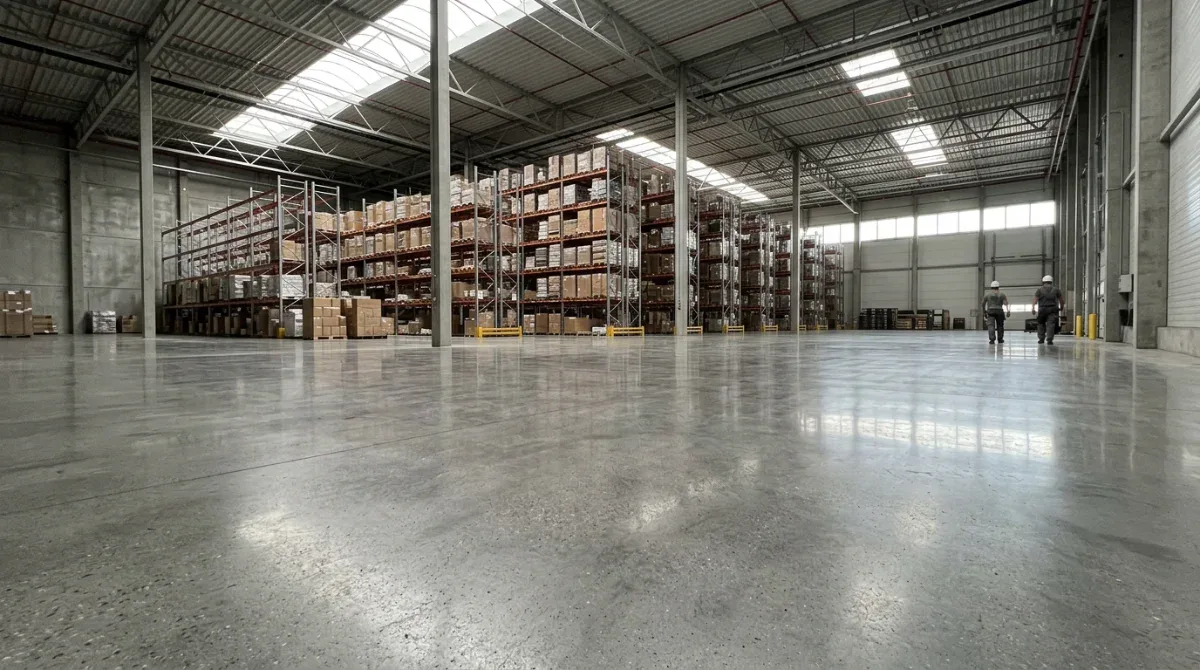
We grind concrete floors in warehouses, factories, parking garages, stores, and homes, then strengthen them with a hardener to create a dust-free, easy-to-clean surface. Depending on the look you want, we apply a matte, satin, or glossy finish.
We inspect the age and condition of your floor on site and decide on the right method together. Explore our Concrete Grinding service.
Applying paint or a coating over dusting concrete does not solve the problem; it only covers it up. Any coating applied without removing the weak layer will eventually peel off along with that layer. The lasting solution is to get down to sound concrete and harden it.