Granite Entrance Steps and Staircase Maintenance
In short: Granite steps are a popular choice at the entrances of apartment buildings, housing complexes and hotels because they are durable.
But being durable doesn't mean they can go without maintenance. Polished granite steps become slippery in the rain, lose their shine with heavy use, and get dirty. In this article, we explain how to maintain granite entrance steps and keep them safe.
The Most Important Issue: Slip Resistance
Polished granite outdoors is very slippery when wet. In Alanya, winter rains and sea humidity increase this risk.
Options
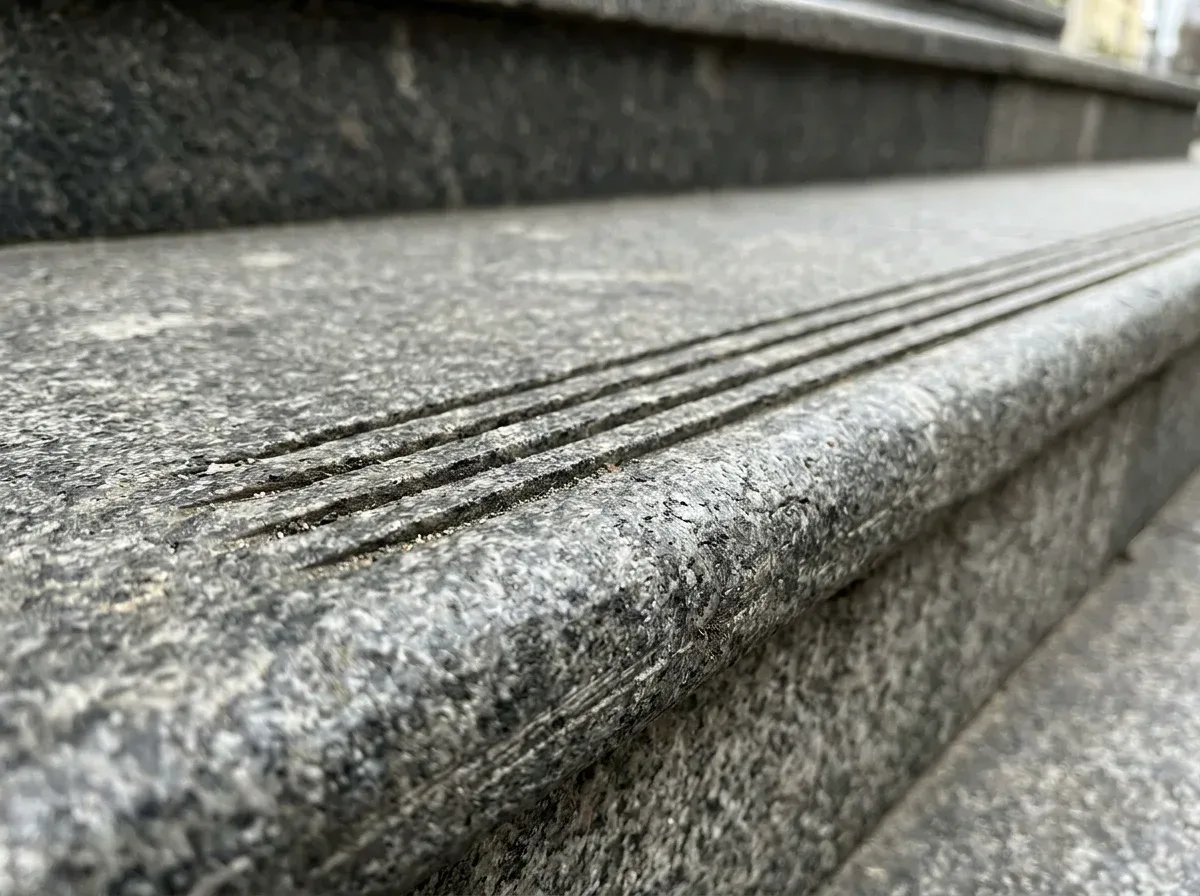
The slipperiness of polished granite steps is reduced by changing the texture of the surface or by adding grip to the step nosing.
- Changing the surface: This means making the polished surface less slippery by honing it or giving it a brushed texture; safety is achieved without removing the step.
- Step nosing slip resistance: This involves cutting an anti-slip groove into the nosing or applying a suitable anti-slip strip; the edge where the foot lands first becomes safer.
- Flamed finish: For newly built steps, flamed (thermal-finish) granite is suitable for outdoor use; its rough texture provides grip even when wet.

At a building entrance, slip resistance comes before aesthetics.
Dulling and Dirt
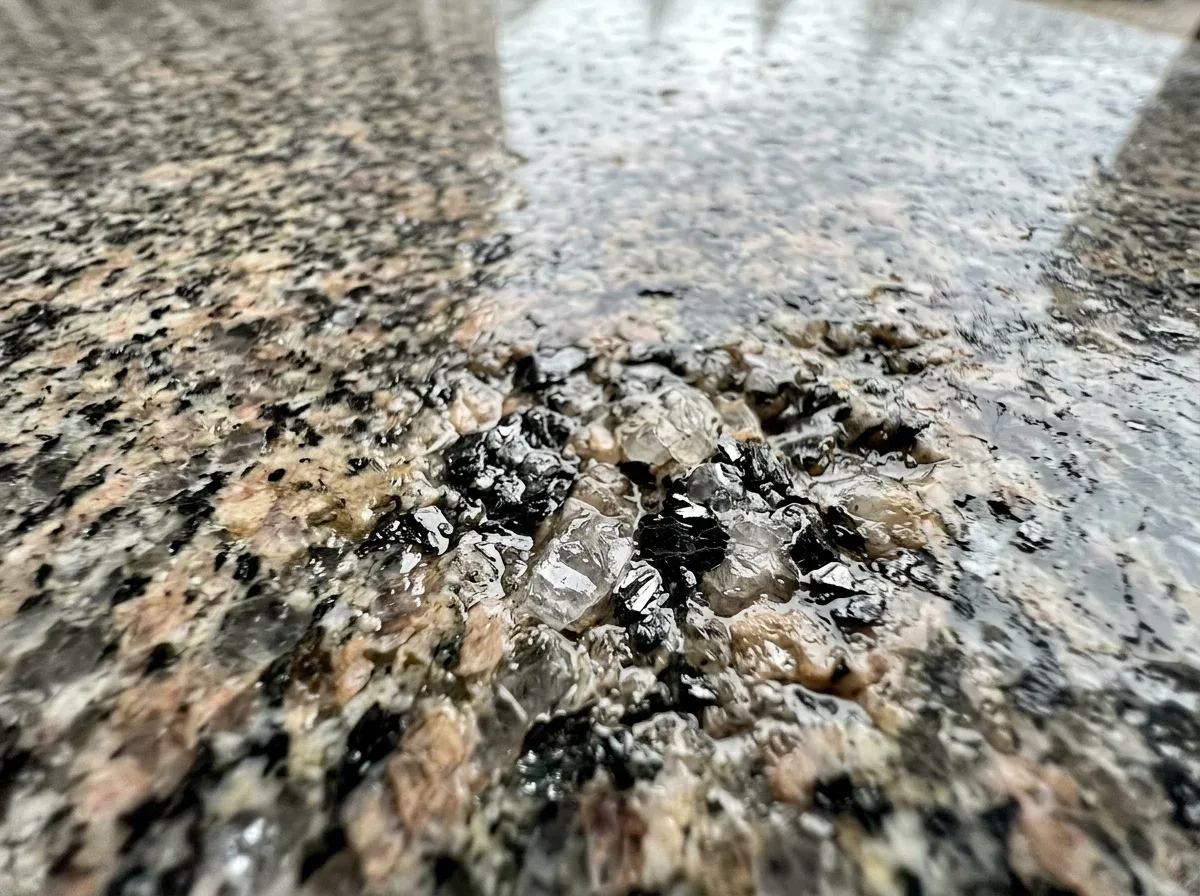
Heavy foot traffic, sand and dust gradually dull the surface of polished granite. Because granite is hard, it wears more slowly than marble, but it still shows marks at entrances that carry in sand.
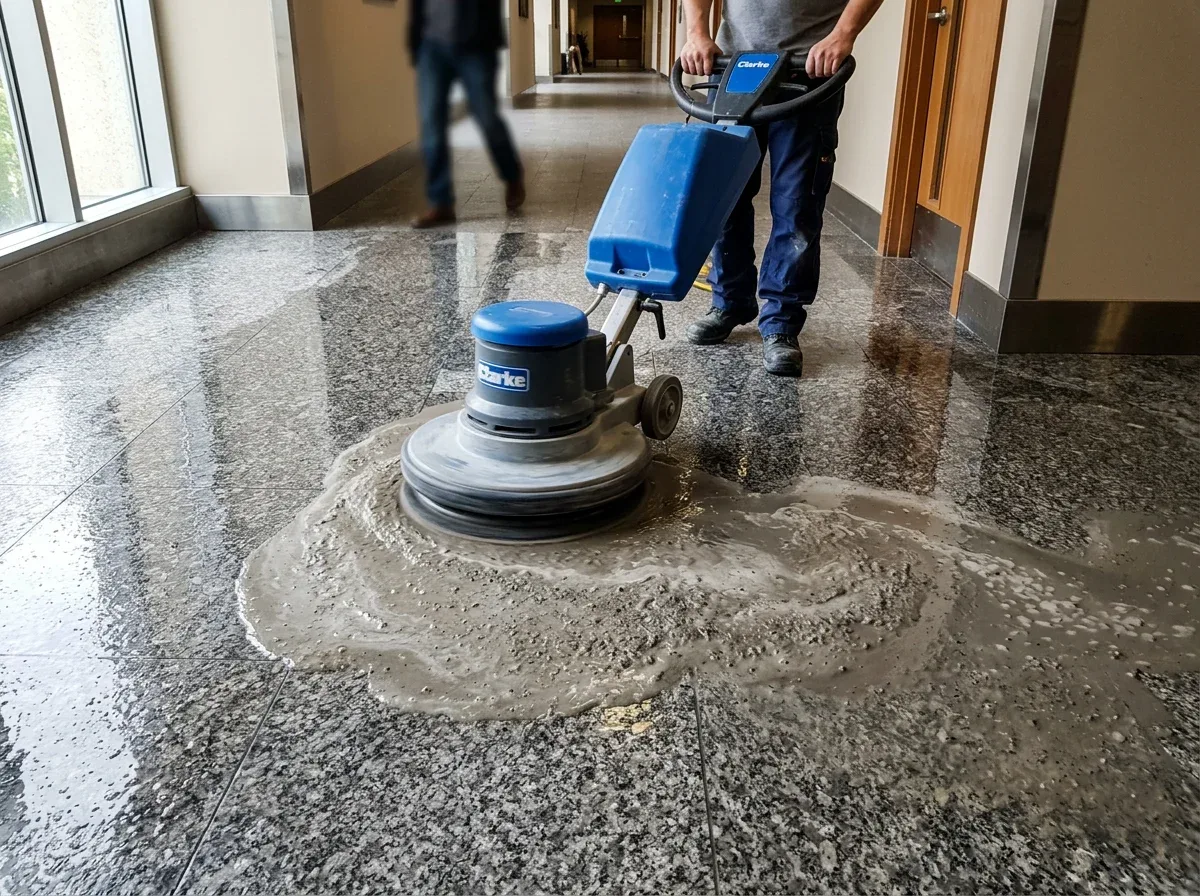
- Deep cleaning: Deep cleaning often improves the appearance noticeably; part of what looks like dullness is actually dirt that has settled into the surface.
- Grinding and polishing: Grinding and polishing restore the shine on indoor stairs; on outdoor steps, however, a glossy surface is not preferred because of slip resistance.
Stains
Stains on entrance steps mostly come from foot traffic, nearby items and leftovers from renovation work.
- Shoe marks and dirt: With heavy traffic, dirt and marks from shoe soles settle into the step; most of them come out with deep cleaning using a detergent suitable for the stone.
- Oil: Oil from trash bins and vehicles can penetrate the surface of the granite; if it isn't removed promptly, it remains as a dark stain and may require a poultice.
- Chewing gum: Gum stuck to a step is lifted from the surface without scratching the stone, usually by cooling it or using a suitable remover.
- Rust: Water running from iron railings and under flowerpots leaves orange rust marks on granite; they are removed spot by spot with a rust remover suitable for the stone.
- Mortar and cement residues: Mortar and cement residues left on the steps after renovation harden and stick to the surface; they must be cleaned with methods that do not damage the polish.
Each type of stain is removed with its own method; acidic products must be used carefully, as they can affect some minerals in granite as well as the polish.
Broken Step Nosing
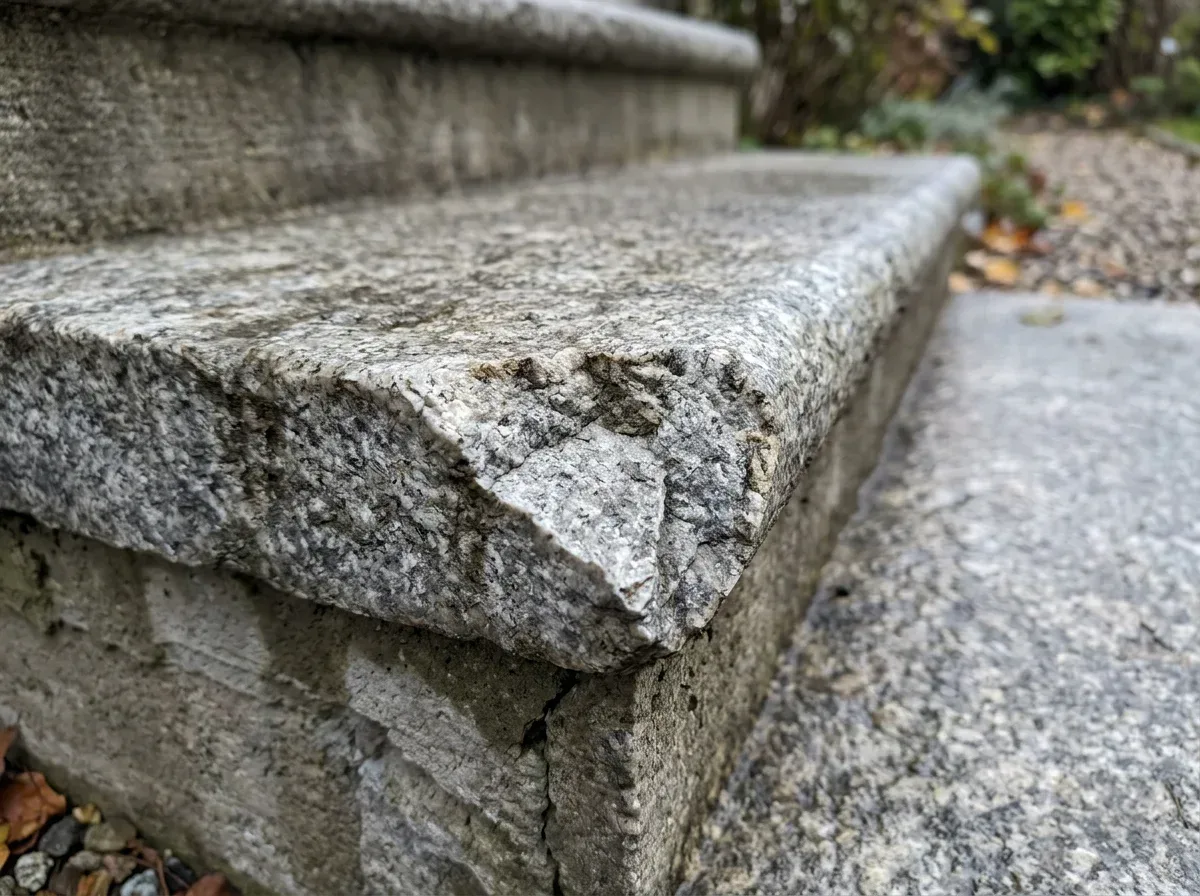
A step nosing can break from impact. Small chips are repaired with a color-matched filler and polished. For larger breaks, the piece may need to be replaced.
Joints and Connections
The joints between steps and between a step and the riser are the points outdoors where water and dirt reach the underside of the stone. Water entering through emptied or cracked joints gradually weakens the mortar beneath the step; if the step sounds hollow or moves, the risk of the nosing breaking increases. Joints should be checked regularly, and deteriorated ones should be renewed with a joint material suitable for outdoor use. The silicone sealants where the steps meet the railing bases and walls should be checked in the same way.
Summary of Problems and Solutions
| Problem | Solution |
|---|---|
| Slipperiness when wet | Honing, brushing, anti-slip groove on the nosing |
| Dulling | Deep cleaning, grinding and polishing indoors |
| Dirt and shoe marks | Regular washing, brush machine |
| Chewing gum | Scraping after cooling, suitable remover |
| Rust | Rust-removing poultice |
| Broken nosing | Color-matched filling or piece replacement |
| Damaged joint | Joint renewal |
Grinding Granite Steps
Granite is a much harder stone than marble, so grinding it takes longer and requires more stages. On indoor stairs, dulled granite steps can be re-polished with progressive grinding. Outdoors, the goal is often not shine but safety; polished granite steps are made slip-resistant by honing or brushing. The step nosing and riser are treated with the same stages, so the staircase gets a uniform look.
Daily Maintenance Tips
Keeping steps safe and clean depends less on heavy jobs and more on small maintenance habits repeated every day.
- Sweep regularly: Sweep the steps regularly; sand and small stones act like sandpaper underfoot and speed up the wear of polished granite.
- pH-neutral products and drying: Use a pH-neutral product for wet cleaning and dry the steps afterwards; polished granite left wet becomes slippery, and harsh products can damage the polish.
- Put up a warning sign: Put up a warning sign at the entrance on rainy days; someone who knows the wet step is slippery will walk more carefully.
- Place an absorbent mat: Place an absorbent mat at the start and end of each flight of steps; water and sand on shoes are trapped before they reach the steps.
- Report breakage immediately: Report broken and loose steps immediately; the nosing of a loose step breaks easily and creates a risk of tripping and falling.
Granite Steps in Alanya
In the vast majority of apartment buildings and housing complexes in Alanya, the entrance steps are made of polished granite, and slipping complaints are frequent during the rainy winter months. On these steps, we make the surface slip-resistant by honing or brushing it and, if necessary, cut anti-slip grooves into the step nosings. On interior stairs, we grind and polish dulled granite steps and repair broken nosings with color-matched fillers.
Maintenance Schedule

- Daily / weekly: Sweep and wipe with a neutral cleaner.
- Monthly: Deep wash and stain check.
- Yearly: Check slip resistance, grout joints and stair nosings; polish or apply a surface treatment if needed.
- Doormat at the entrance: Reduces the amount of sand carried indoors.
Our Granite Grinding and Polishing Service in Alanya

Granite is a hard stone, and its shine is restored not with polish but by honing with the right diamond grits. We re-polish dulled interior granite and clean exterior surfaces and steps while preserving their slip-resistant finish.
We determine on site which treatment your granite floor needs, based on its condition. Explore our Granite Grinding and Polishing service.
The joints between the steps and the wall junctions must not take in water; joints that open up allow water to get underneath and cause the step to come loose. — Expert Note