Repairing Potholes and Spalling (Scaling) in Concrete Floors
In short: On parking lot, warehouse and workshop floors, pieces of the concrete surface break off over time, leaving potholes and broken edges.
These damages look insignificant when small, but they grow quickly under vehicle and forklift traffic. In this article we explain the causes of spalling and the right repair method before grinding.
What Is Scaling?
When the concrete surface lifts off in a thin layer, flake by flake, it is called scaling. Sounder concrete is usually found underneath.
Causes
Breakage on the concrete surface usually starts from the combined effect of weak pouring, impact, water and chemicals, and grows with traffic.
- Weak top surface: In concrete poured with too much water or cured poorly, the top layer stays weak and flakes off under use.
- Impact and load: Dropped heavy loads, forklift wheels and hard-wheeled vehicles leave spot damage on the surface, which turns into a pothole over time.
- Joint edges: Joint edges break as wheels pass over them; spalling progresses quickly, especially in joints that are empty or filled with a soft filler.
- Water and salt: On surfaces that stay constantly wet or are exposed to salt water, the concrete weakens and the top layer gradually breaks down.
- Chemicals: Acids and some other chemicals erode concrete; in areas where spills are frequent, the surface becomes rough and pieces break off.
- Old coating: Peeling coatings can also pull off pieces of the surface; blistering epoxy or paint takes part of the concrete beneath it along with it.

Repair Steps
A lasting repair starts with properly delineating the damaged area and ends with grinding the repaired spot flush with the floor.
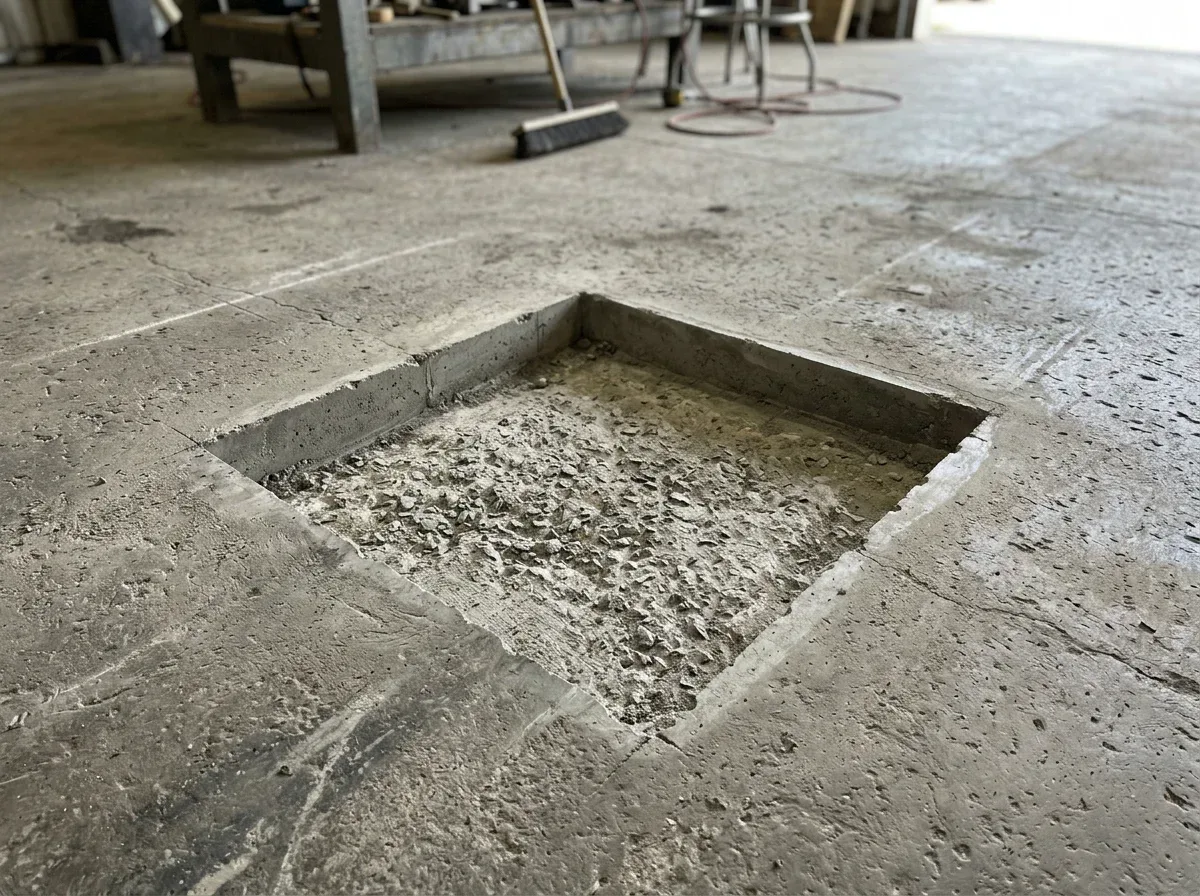
- Delineation: The damaged area is marked out; loose and weak concrete is removed down to sound concrete.
- Edge cutting: The area is cut with clean, straight edges so that the repair mortar does not end in feathered edges; thin edges can later crack and break off.
- Cleaning: Dust, oil and loose pieces are removed completely; repair mortar will not bond well to an unclean surface.
- Preparation: Depending on the product, the surface is dampened or primed; this step allows the mortar to bond with the old concrete.
- Filling: The area is filled with a suitable repair mortar and compacted; leaving no voids inside ensures the repair withstands traffic.
- Curing and hardening: The curing and hardening time specified by the product is observed; mortar that is loaded or ground too early remains weak.
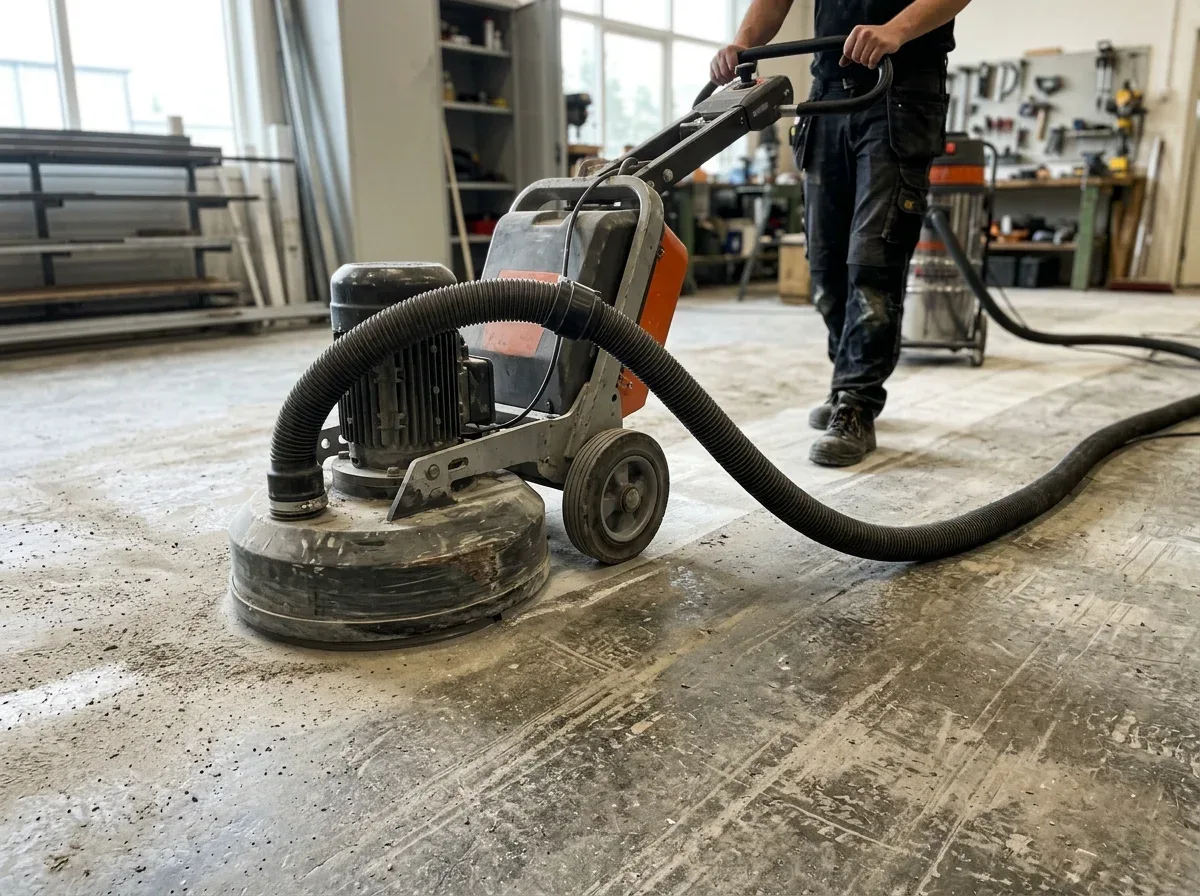
- Grinding: After hardening, the repaired spot is ground flush with the floor, so that no edge is left for wheels to catch on.
Joint Edge Breaks
The most common breakage on concrete floors occurs at the edges of control joints. When the joint is empty or filled with a soft filler, forklift and vehicle wheels hit the joint edge on every pass and break it off piece by piece. For repair, the broken edge is properly widened, reshaped with a suitable repair mortar, and then the joint is filled with a semi-rigid filler suitable for traffic. This filler supports the edge and cushions wheel impact, preventing new breaks.
Appearance Expectations
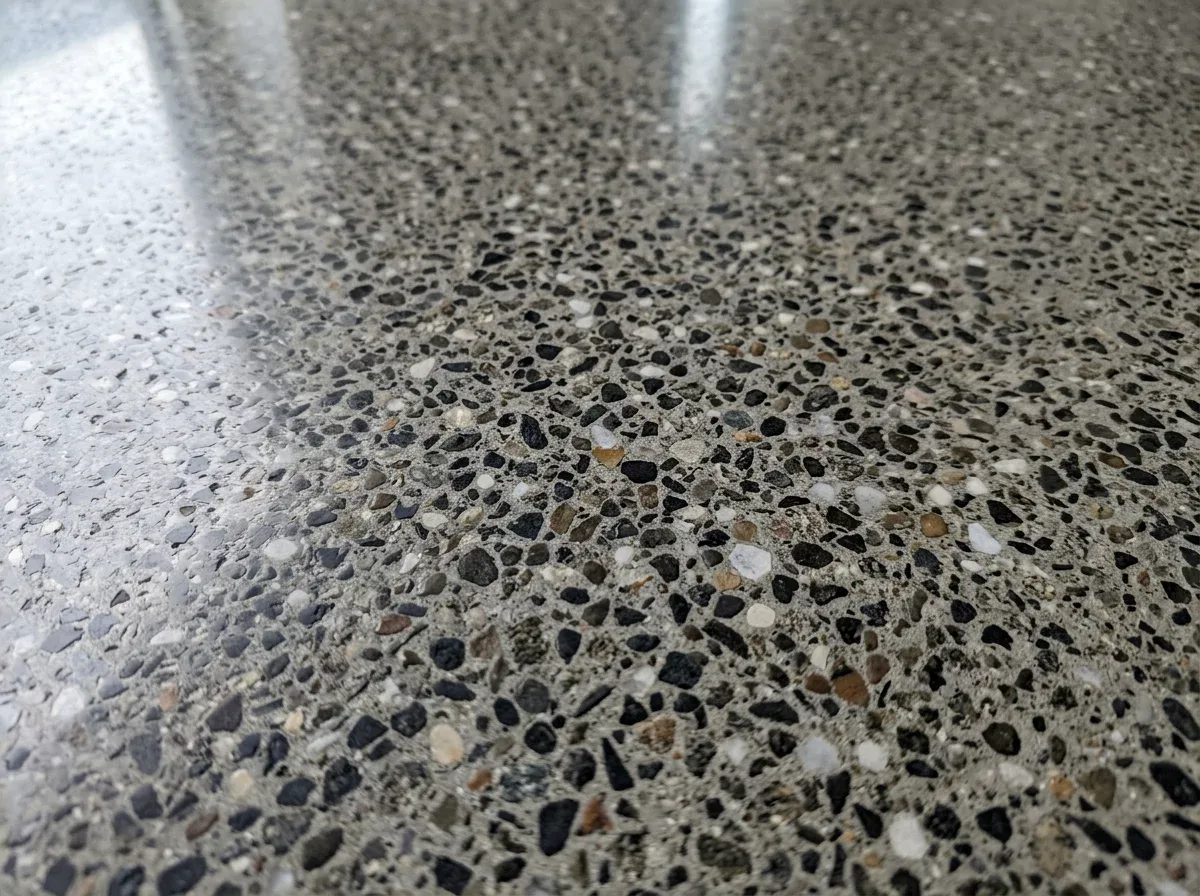
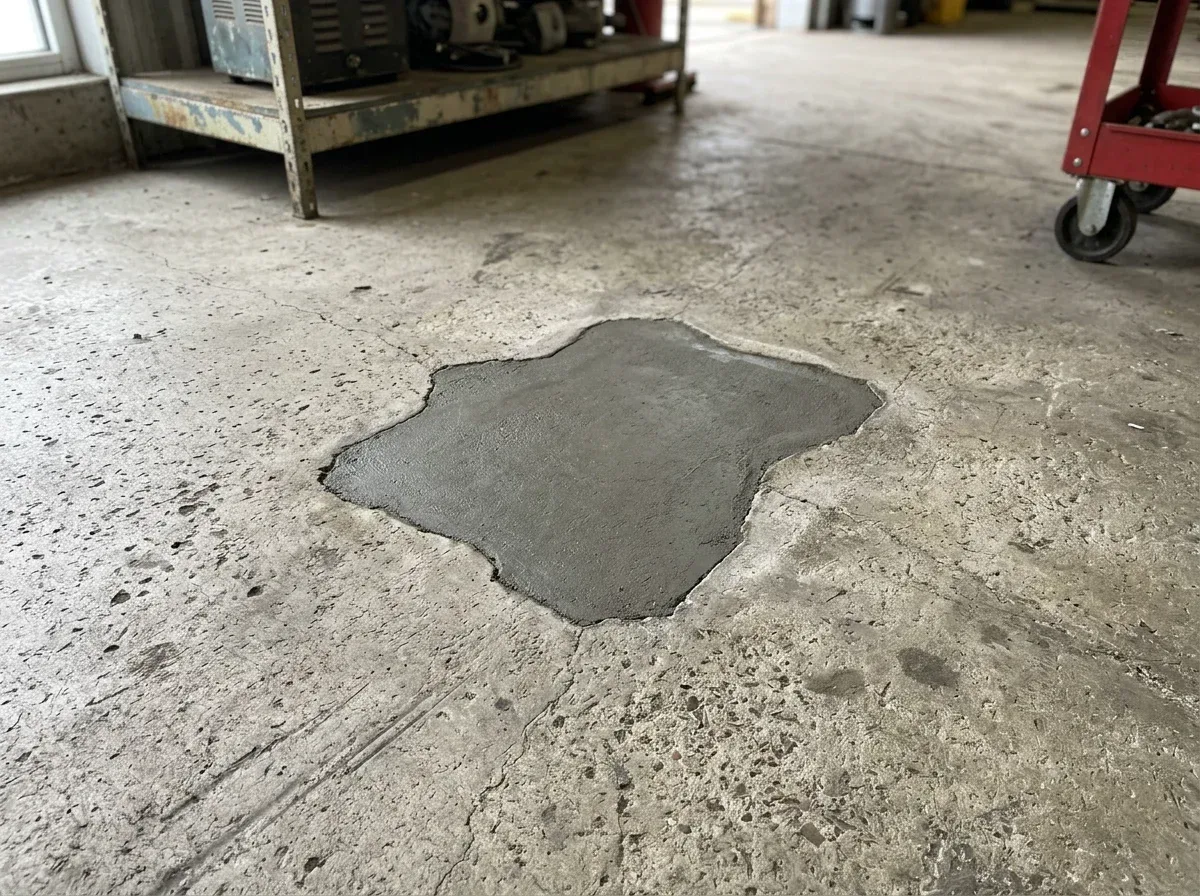
The repair mortar has a different tone and texture from the concrete itself. After grinding, the repaired spots are noticeable, but the surface is flat, sound and usable. In industrial and parking lot areas, these differences are generally accepted.
When Is Repair Not Enough?
Some damage goes beyond the limits of a surface repair and first requires an assessment of the concrete's structural condition.
- Deep deterioration: If the concrete has deteriorated deeply over large areas, local repairs are not enough; a different solution is considered for most of the floor.
- Subsidence: If the ground has settled or there are structural cracks, the source of the problem is underneath; filling the surface will not stop the movement.
- Rusted reinforcement: If the reinforcement has become exposed and rusted, the concrete keeps swelling as long as the corrosion continues, and the repair fails quickly.
These situations require a structural assessment.
Repair by Damage Type
| Damage | Repair method |
|---|---|
| Surface scaling | Removing the loose layer, thin repair mortar, grinding |
| Small potholes | Cleaning, filling with resin or repair mortar |
| Deep spalling | Edge cutting, primer, repair mortar |
| Joint edge breaks | Edge reshaping, semi-rigid joint filler |
| Rusted rebar is visible | Structural assessment |
Choosing the Repair Material
The repair material is chosen based on the depth of the damage, how the area is used, and how soon it needs to be reopened. Fast-curing resin-based fillers are practical for small, shallow damage and can be ground within a few hours. For deeper and wider damage, cement-based, high-strength repair mortars are preferred; these take longer to cure. In every case, the material must bond well with the concrete and withstand traffic.
Preventing Spalling
Most spalling can be prevented with simple measures such as choosing the right wheels, maintaining joints, and addressing minor damage early.
- Use polyurethane wheels: Use polyurethane wheels on forklifts; they deliver less impact to the concrete surface and joint edges than hard wheels.
- Fill the joints: Do not leave joints empty; fill them with a suitable filler. The filler supports the edges and reduces chipping when wheels pass over.
- Lower loads: Lower heavy loads rather than dropping them onto the floor; the impact of a falling load can start pits and cracks on the surface.
- Repair small pits: Repair small pits before they grow; vehicle and forklift traffic can turn minor damage into extensive spalling in a short time.
- Apply a hardener: Strengthen the floor with a hardener; once its pores are filled, the concrete surface becomes harder and more resistant to impact.
Concrete Repair in Alanya
In Alanya, joint edge chipping and surface delamination in hotel service areas, warehouses, and residential complex parking lots are an important part of our concrete grinding work. Before grinding, we mark all damage, choose the repair method according to the type of damage, and bring the repaired spots to the same level as the floor through grinding. Where rebar is exposed or there is any structural doubt, we recommend an expert assessment first.
Prevention

Spalling and potholes in concrete floors often grow out of a weak surface and repairs that are made too late.
- Hardener: A hardener densifies the top layer of the concrete; the surface stops dusting and becomes more resistant to impact and abrasion.
- Filled joints: Unfilled joint edges break and chip away under wheel impact; when joints are kept filled, the edges are protected.
- Suitable wheels: Hard, small wheels concentrate the load on a narrow point; wheels suited to the floor reduce concrete spalling.
- Early intervention: A small chip widens quickly as wheels pass over it; if it is filled early, the repair stays small and inexpensive.
Our Concrete Grinding Service in Alanya

We grind concrete floors in warehouses, factories, car parks, shops and homes, then strengthen them with a hardener to create a dust-free surface that is easy to clean. Depending on the look you want, we apply a matte, satin or glossy finish.
We inspect the age and condition of your floor on site and decide on the right method together with you. Explore our Concrete Grinding service.
Joint edges are the places that most often chip. If, after the edge is repaired, the joint is filled with a suitable material, wheel impacts put less load on the edge. — Expert Note