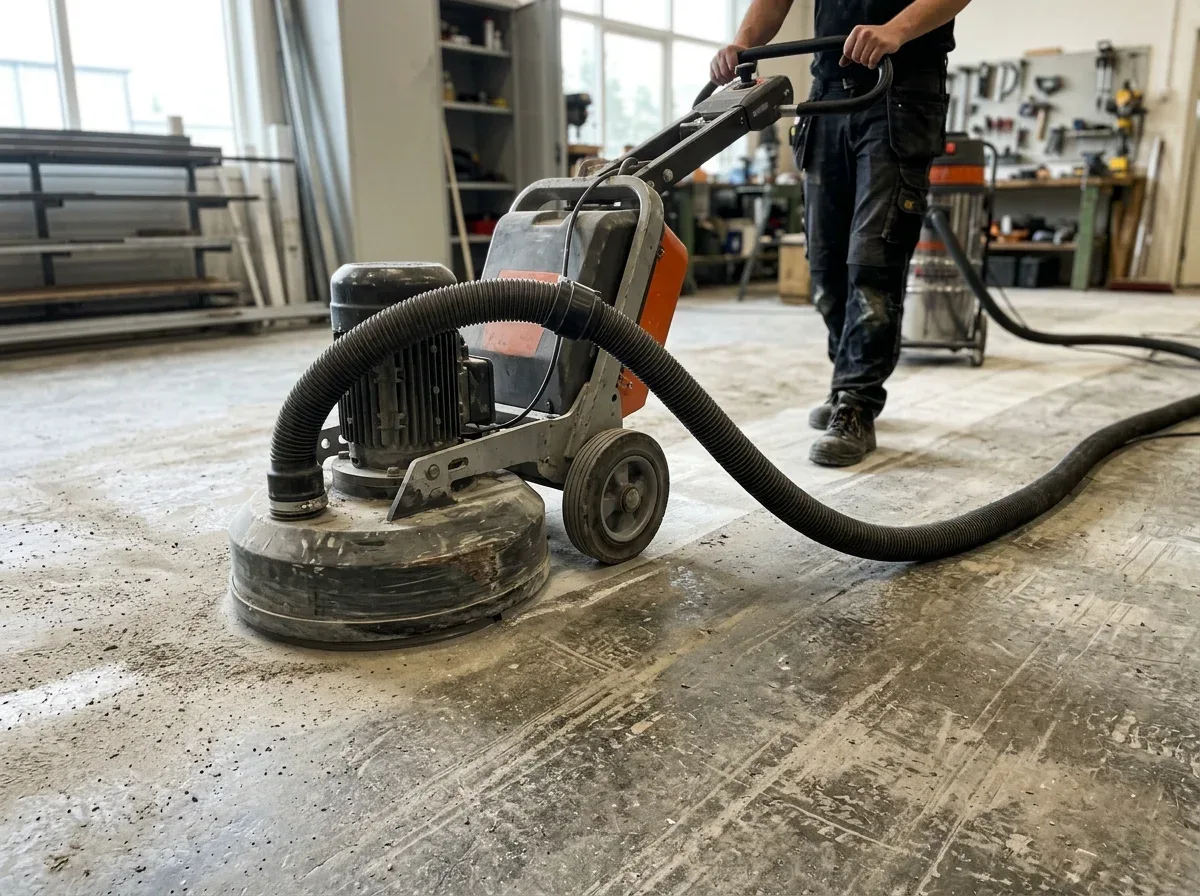
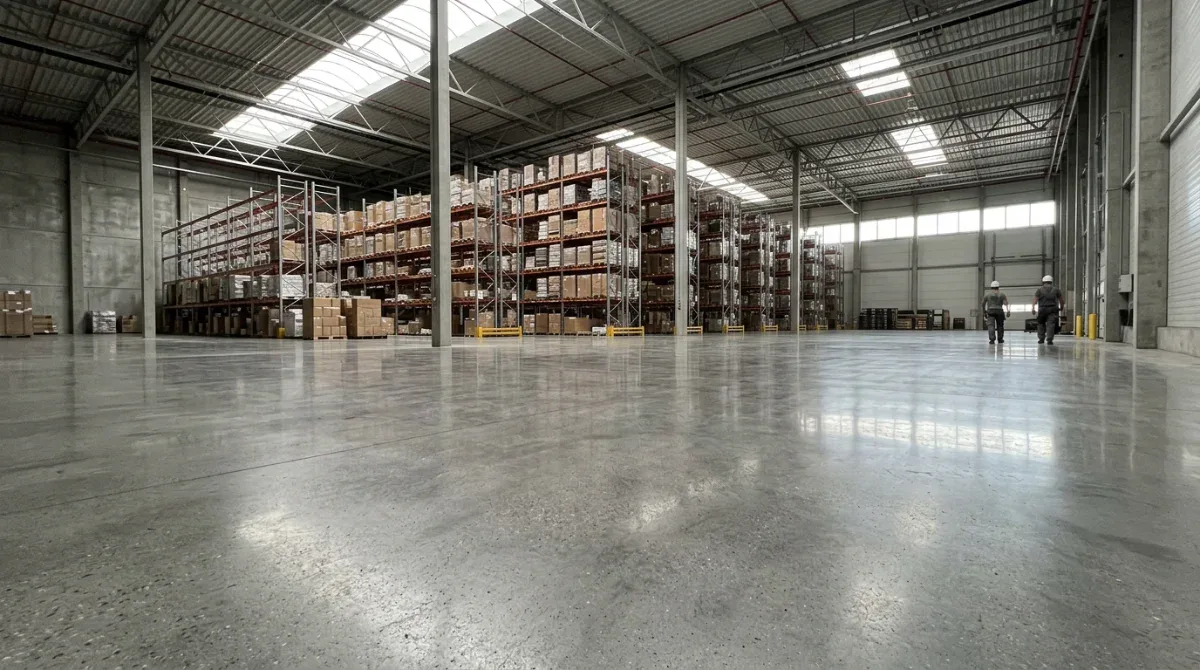
Removing Old Epoxy and Switching to Polished Concrete
In short: On many warehouse, parking garage and workshop floors that were epoxy-coated years ago, the coating blisters, peels, scratches and yellows.
Instead of recoating, some businesses prefer to remove the old coating and grind the concrete itself. In this article, we explain how this transition is made and what to watch out for.
Note: Our company does not apply epoxy; we provide removal of old coatings and concrete grinding services.
Why Make the Switch?
Moving from old epoxy to concrete grinding is usually considered when the coating keeps failing and maintenance becomes increasingly difficult.
- Patchy appearance: When the coating lifts in places, the concrete shows through; because the patches are a different color, the floor looks messy and neglected.
- Frequent damage under traffic: If the coating is often damaged by forklift and vehicle traffic, every repair remains temporary, and the points where it lifts also weaken the surrounding coating.
- Yellowing and scratches: Epoxy yellows over time and scratches under traffic; even when cleaned, the floor continues to look old and stained.
- Ease of maintenance and durability: If you want a floor that is easy to clean and lasts a long time without a layer that can peel, grinding and strengthening the concrete itself meets this need.

With concrete grinding, there is no separate layer on the surface that can peel; the concrete itself is strengthened and leveled.
Removal
The old coating is removed using metal-bond coarse diamond abrasives or tools suited to coating removal.
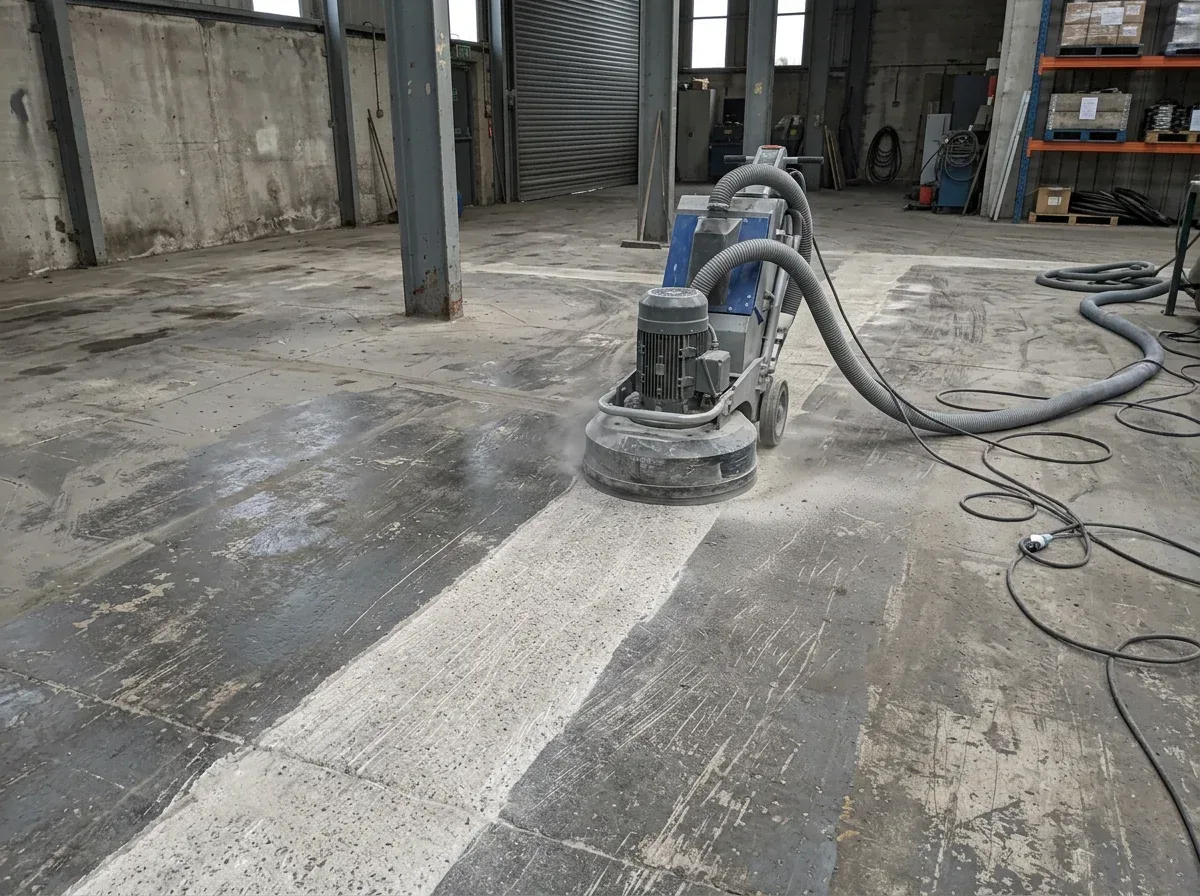
- Thick coatings take longer: Thick coatings take longer; abrasives can overheat and clog, so work is paused periodically and tools are cleaned often.
- The coating must be removed completely: The coating must be removed completely; otherwise, the grinding results in a stained and uneven appearance.
- Dust-extraction machines: The heavy dust generated during removal is captured at the source with machines equipped with extraction; this protects surrounding areas and workers from dust.
Surprises in the Concrete Underneath
Once the coating is removed, the true condition of the concrete is revealed, and the following findings are often encountered.
- Old repairs and patches: Repairs made before the coating was applied have a different color and texture, so they may still appear as separate marks on the floor after grinding.
- Cracks and spalls: Cracks and spalls hidden under the coating come to light after removal and must be repaired before moving on to grinding.
- Dark stains: Dark stains that have soaked into the coating are generally removed to a large extent by coarse grinding, but deep ones may leave a faint mark.
- Weak or dusty areas: In some areas the concrete surface is weak and dusty; these areas are strengthened with a densifier, but their appearance may still differ from the surroundings.
For this reason, expectations for the result are clarified by examining the concrete after removal. It is a good idea to carry out a trial removal on a small area during the site survey.
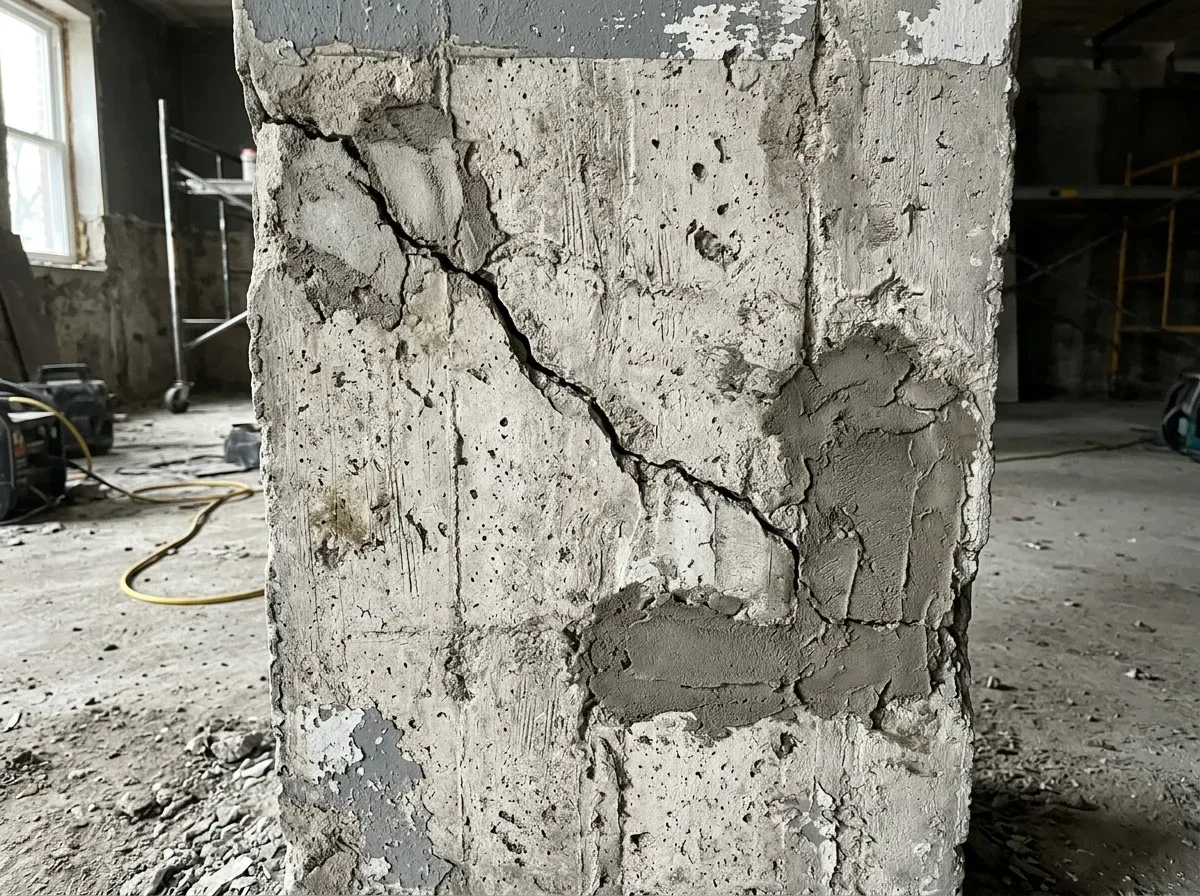
Repair
Cracks revealed after removal are opened up and filled with suitable fillers; spalled and weak areas are cleaned back to sound concrete and completed with repair mortar. Dark stains that have soaked into the coating are generally removed to a large extent by coarse grinding, but deep ones may leave a faint mark. Control joints are cleaned and refilled. Grinding continues after waiting for the repair materials to cure; fillers ground in a rush may come loose.
Grinding and Densifier
After removal and repair are complete, the concrete goes through the steps of leveling, strengthening, polishing and protection, in that order.
- Coarse grinding: First, the surface is leveled with coarse grinding; removal marks, remaining coating residue and the weak top layer are taken off.
- Densifier: Then a densifier is applied; the product penetrates the exposed concrete, strengthening the surface and stopping dusting.
- Intermediate and fine stages: The hardened surface is worked through intermediate and fine stages; the desired look and gloss are reached step by step.
- Protector: Finally, a protector is applied; it reduces oil and stain absorption and makes the ground surface easy to clean.
Comparison of Epoxy and Ground Concrete
| Topic | Epoxy coating | Ground and densified concrete |
|---|---|---|
| Surface | A separate layer on top of the concrete | The concrete itself |
| Lifting, peeling | May occur over time | No layer to peel |
| Forklift and impact | Scratches and peels in places | More durable |
| Color options | Wide | Natural tone of the concrete |
| Maintenance | Patching and recoating | Cleaning, refreshing when needed |
Both solutions have their place; the choice should be made according to how the area is used and what is expected of it.
During the Work
Removing epoxy and grinding the concrete can take anywhere from a few days to several weeks, depending on the size of the area and the thickness of the coating. In a working warehouse or car park, the job is divided into sections; racks and materials are moved section by section. The dust generated during removal is captured at the source with vacuum-equipped machines; with very thick coatings, breaks are taken to keep the abrasives from overheating. Periods when the area can be completely emptied allow the job to be completed in the fastest and cleanest way.
Before You Decide
Seeing the concrete underneath before deciding on the switch helps you set realistic expectations for the result.
- Have a trial removal done: Have a trial removal done in a small area; the thickness of the coating, the removal time, and the condition of the concrete underneath will all become clear in this trial.
- Assess the concrete together: Assess the condition of the concrete underneath together with the contractor; the amount of cracks, patches, and stains determines how the result will look.
- Accept the repair marks: Accept that repaired spots will be visible after grinding; because concrete is a natural material, repaired areas may remain a different tone from their surroundings.
- Ask for a sectioning plan: Ask for a plan that divides the work into sections according to your operating schedule; that way the warehouse or car park does not shut down completely for the duration of the job.
Switching from Epoxy to Concrete Grinding in Alanya
In Alanya, epoxy coatings applied years ago peeling off in hotel service areas, warehouses, and indoor car parks is a problem we encounter often. In these areas, we first do a trial removal, show the condition of the concrete underneath, and clarify expectations together. Then we remove the coating and complete the repairs, and with concrete grinding and a hardener we achieve a durable, easy-to-maintain floor.
Appearance Expectations

Concrete that has been ground after removal of a coating may not be as uniform as freshly poured concrete that has never been coated. Old repairs, stains, and tone differences may remain as part of the concrete's character. In industrial and parking areas, this is usually not a problem.
Our Concrete Grinding Service in Alanya

We grind concrete floors in warehouses, factories, parking garages, stores, and homes, then strengthen them with a hardener to create a dust-free surface that is easy to clean. We apply a matte, satin, or glossy finish, depending on the look you want.
We inspect the age and condition of your floor on site and decide on the right method together. Explore our Concrete Grinding service.
Cracks, pits and chipped areas are repaired with suitable materials before honing. After honing, the repaired areas may look slightly different in tone. — Expert Note
Frequently Asked Questions
01Does removing epoxy create a lot of dust?
02Will the floor be level after removal?
03Can we do only the areas that are peeling instead of the whole floor?
04How long does it take?
05Will the concrete be glossy after the epoxy coating is removed?
06Can only the peeling epoxy areas be removed and ground?
Related Articles
- Concrete Grinding or Epoxy Coating? Which Is Right for Which Floor
- Industrial Warehouse and Factory Floor Renovation
- Repairing Pits and Spalling (Delamination) in Concrete Floors
- Why Does Concrete Floor Dust? What Does a Densifier Do?
- What Is Concrete Grinding and How Is It Done? Turning Dusting Concrete into a Shiny Floor