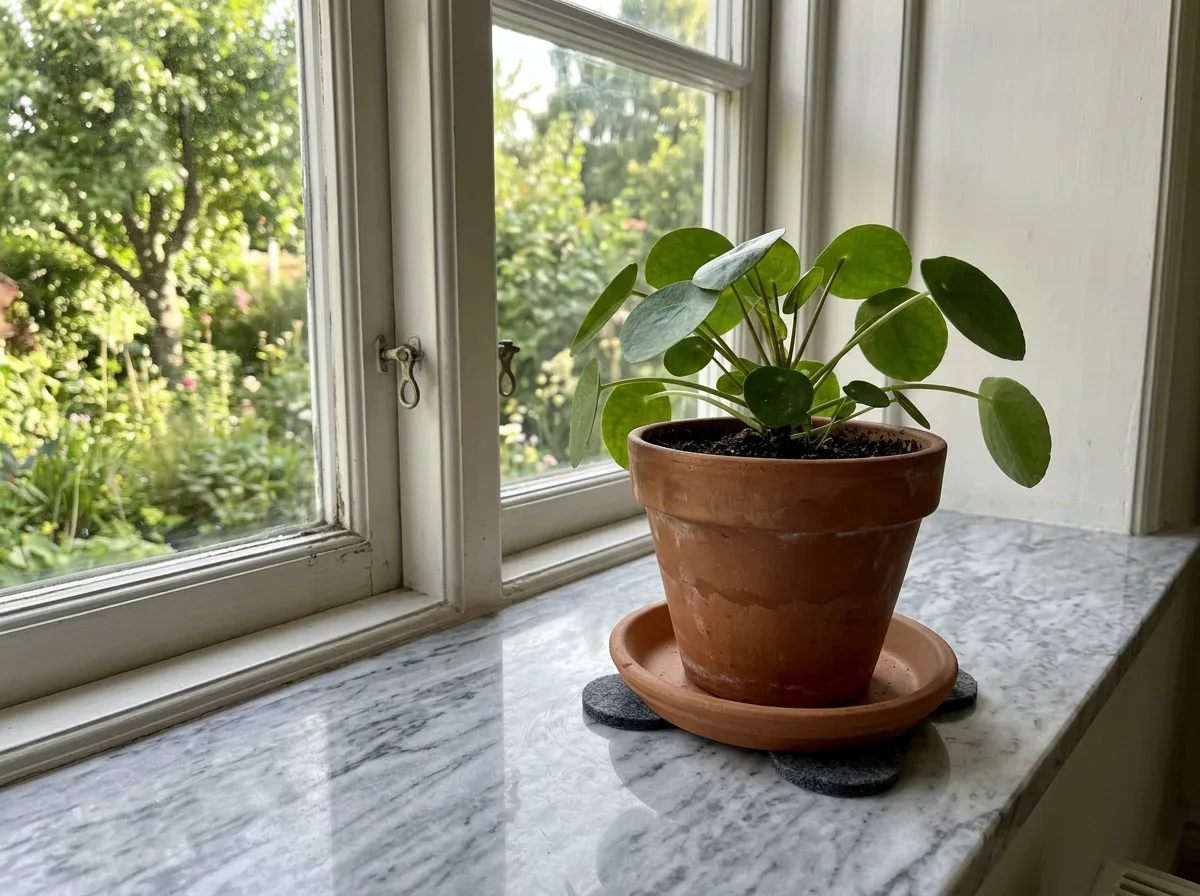
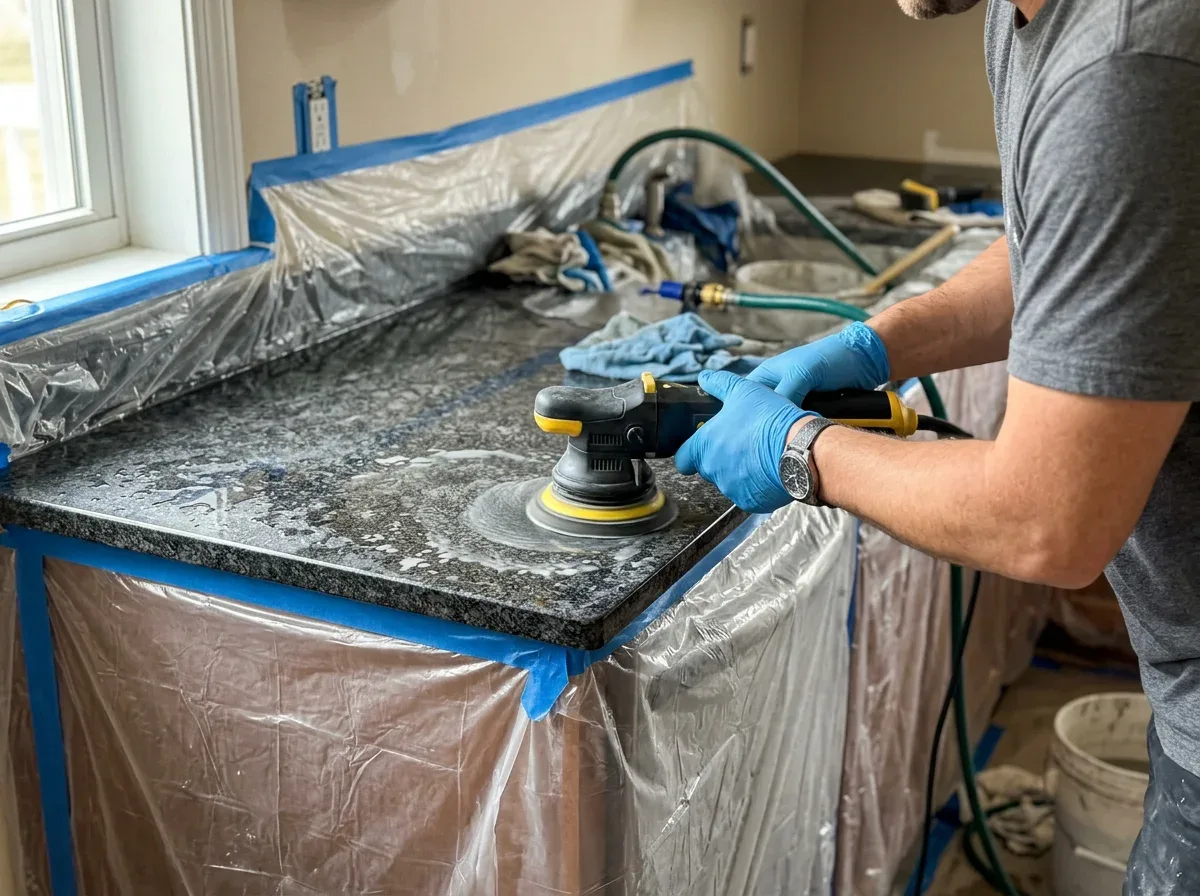
Marble Window Sill Restoration
In short: The marble windowsills in front of windows are the surfaces of a home that receive the most sun, condensation water and potted plants.
Over time they dull, get stained by pot rings and chip at the corners. Since replacing a windowsill means touching the window and the plaster, on-site restoration is often the more practical solution.
What Damages a Windowsill?
A windowsill is a small surface affected by water, sun and daily use all at the same time; the sources of deterioration are just as varied.
- Pots and vases: Water overflowing from the saucer and minerals in the soil leave white rings and brown stains.
- Condensation: In winter, water collecting on the glass runs down onto the windowsill; constant wetness causes stains and dullness, and mold may also appear in corners that stay damp.
- Sun: Some old polishes and varnishes turn yellow in the sun; because the windowsill receives direct light all day, this yellowing is more noticeable than on the surrounding stone.
- Cleaning products: Drops of glass cleaners and acidic products leave dull marks; drops that run down while wiping the glass often end up on the windowsill.
- Impact: Sashes that hit it when the window is opened, falling objects and moved pots cause chipping and cracks at the corners of the windowsill.
- Silicone and paint: Residues left during window installation and painting trap dirt over time and leave uneven stains along the edges of the windowsill.

On-Site Restoration
On-site restoration brings the stone closer to its original appearance through cleaning, repair and gradual honing, without removing the windowsill.
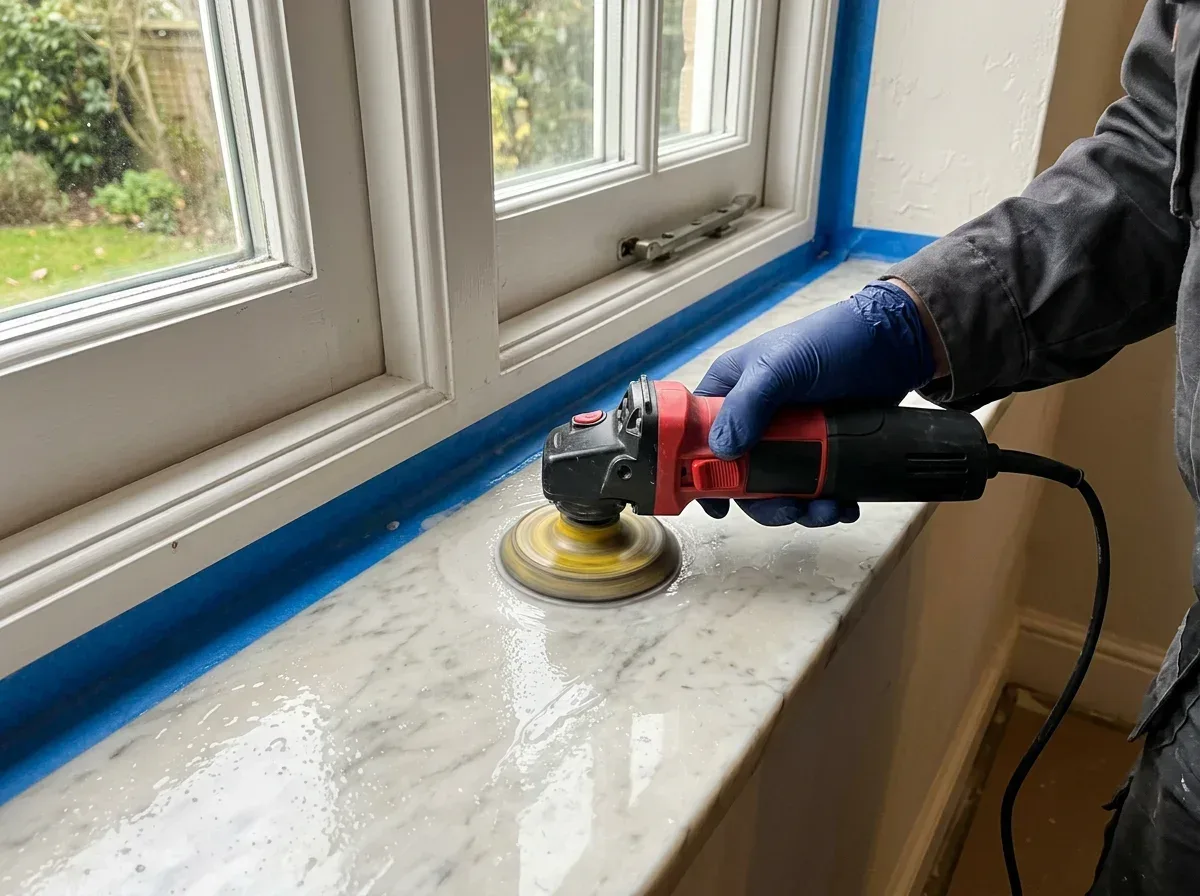
- Protection: Before starting work, the window frame, walls and curtains are covered to protect them; this way the water and slurry produced during work do not spread to the surroundings.
- Cleaning and removal of residues: Next, silicone, paint and dirt are cleaned off; if honing begins without removing these residues, the pads become dirty and the surface is not processed evenly.
- Repair: Broken corners and cracks are repaired with suitable fillers; once the filler has hardened, it is brought level with the surface in the following grit stages.
- Honing: Gradual honing is carried out with small hand machines and pads; each stage removes the marks left by the previous one, eliminating dullness and rings.
- Edge and nose: The nose at the front of the windowsill is processed with the same stages, so no difference in tone or gloss remains between the top surface and the front edge.
- Polishing: After honing, the surface is brought to the desired gloss; a glossy finish may be preferred for interior windowsills and a honed finish for exterior windowsills that receive sun.
- Impregnation: Finally, an impregnating sealer is applied to reduce water and stain absorption; pot water and condensation can be wiped away before they penetrate the stone.
By Type of Stain
The color of a stain on a windowsill often indicates its source and its solution.
- Pot ring (white): This is a mark left by limescale and acid; since the surface itself is etched, it does not come off with cleaning and is removed by honing and polishing.
- Brown stain: It may be caused by soil and rust; since it has penetrated the stone, it is drawn to the surface with a suitable poultice application.
- Black spots: This is mold caused by condensation; it can be removed by cleaning, but it will return if condensation on the glass and humidity are not controlled.
Exterior Windowsills
Windowsills facing the exterior facade are directly exposed to sun, rain and sea air. For these windowsills, a honed finish is preferred over a glossy polish; a glossy surface dulls quickly under outdoor conditions. After the surface is honed, a UV- and water-resistant, breathable impregnating sealer is applied. The silicone and joints where the windowsill meets the wall and the window frame should also be checked and renewed if deteriorated; otherwise, water can seep into the wall.
Summary of Problems and Solutions
| Problem | Solution |
|---|---|
| Dulling | Gradual honing and polishing |
| White pot ring | Honing, polishing |
| Brown stain | Poultice |
| Broken corner | Color-matched filler, shaping |
| Silicone and paint residue | Scraping, cleaning, honing |
| Mold caused by condensation | Cleaning, ventilation, impregnation |
Protecting the Windowsill
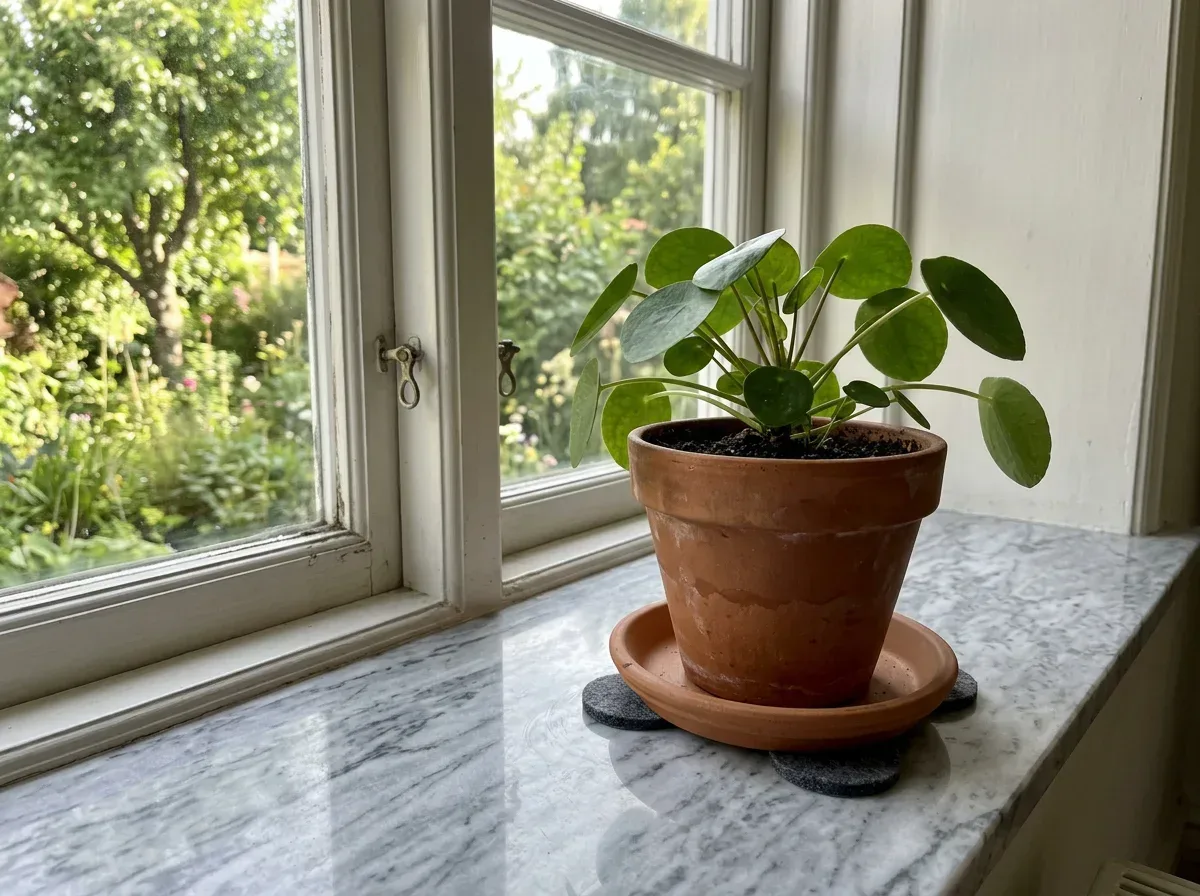
The most important precaution for keeping a renovated windowsill clean for a long time is to place a deep, waterproof saucer under the plant pots. Placing felt or cork pads under the saucer prevents both scratches and moisture rings. In winter, the condensation that collects on the glass should be wiped away every morning, and glass cleaners should not be sprayed directly onto the windowsill. Weekly cleaning with a pH-neutral cleaner suitable for marble and a soft cloth is sufficient.
Windowsill Restoration in Alanya
In apartments and villas in Alanya, marble windowsills often become dull and stained due to intense sunlight and the use of plant pots. We usually plan windowsill restoration together with floor honing, as part of the same job; however, we can also take on jobs where only the windowsill needs to be restored. During the work, we protect the window frames, walls and curtains, and we usually complete the job in a short time.
Protection Tips

- A saucer that doesn't overflow under the pot, with felt or feet in between,
- Wiping off condensation water in the mornings,
- Keeping glass cleaner from dripping onto the marble,
- Checking the impregnation once a year.
Our Countertop Honing Service in Alanya

We hone away etch marks, scratches and stubborn stains on marble and granite kitchen and bathroom countertops, usually on site without removing the countertop. We protect your cabinets and walls while we work, and we typically finish the job the same day.
After honing, we also apply a sealer suited to the type of stone your countertop is made from. Explore our Countertop Honing service.
Exterior window sills on the facade are exposed to rain, sun, and salty air. Here, the goal is a clean, protected surface rather than a glossy polish; a sealer suitable for outdoor use is applied. — Expert Note