Regrouting Marble Floors and Choosing Grout Color
In short: One of the things that determines the overall look of a marble floor is its grout joints.
No matter how clean the stone is, darkened, sunken or crumbling grout makes the floor look old. In this article we explain when grout should be renewed, how it is renewed, and how to choose the color.
Why Does Grout Deteriorate?
Because grout is softer and more porous than stone, it is the first part to be affected by dirt, water, movement and improper cleaning.
- Dirt and darkening: Porous grout absorbs the dirt and water that come with mop water; over time its color darkens and does not return to its original shade with cleaning.
- Crumbling: Through foot traffic, cleaning and moisture, the grout material gradually crumbles, leaving empty gaps between the slabs.
- Cracking: Settling of the subfloor and movement of the slabs put stress on the grout; grout that cannot flex cannot withstand this tension and cracks.
- Improper cleaning: Acidic cleaning products dissolve and erode cement-based grout, roughening the grout surface so it gets dirty more quickly.
- Honing: During honing, the top level of the grout lines is removed along with the stone; grout that is not refilled can leave depressions between the slabs.

When Should It Be Renewed?
The need to renew grout can be recognized from signs such as darkening that does not clear with cleaning and material that can no longer hold itself together.
- Darkening that cleaning does not remove: Grout that stays dark even after proper cleaning has drawn dirt deep into its pores, and it can regain its original clean look only by being renewed.
- Crumbling grout: Grout that crumbles and can easily be scraped out by hand or with a fingernail has lost its bond; water and dirt can travel through these weak spots to the underside of the slabs.
- Emptied grout joints: Gaps where the material has fallen out collect dirt and leave the slab edges unprotected, so they need to be refilled.
- Grout that is sunken after honing: Grout whose level has dropped during honing sits below the stone surface; dirt collects in these hollows and the floor does not look uniform.
Renewal Steps
Grout renewal is carried out in a fixed sequence of steps, from cleanly removing the old material to the final protection.
- Opening the old grout: First, the old grout is removed with suitable tools, without chipping the marble edges, to the depth at which the new material will bond.
- Cleaning: Dust and remnants of old grout are removed from the opened joints; new grout applied to an unclean surface does not bond well.
- Drying: Next, especially in wet areas, the joints are left to dry completely, because moisture remaining inside weakens the bond of the new filler.
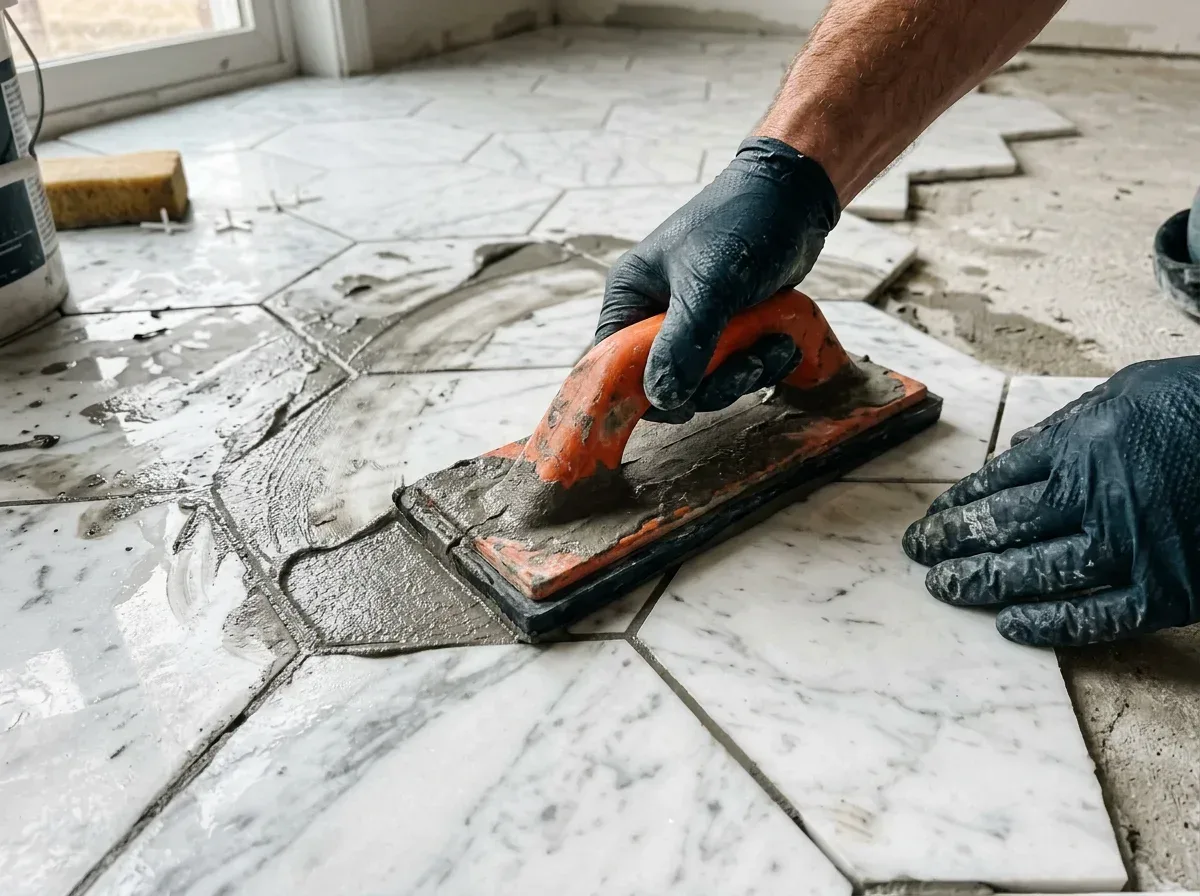
- Filling: Once the joints are dry, the chosen grout material is pressed in so that no voids remain.
- Removing excess: Grout that gets onto the stone surface right after filling is cleaned off before it dries and hardens, without leaving marks on the stone.
- Finishing with honing: If honing is being done, at this stage the grout and stone are honed together and brought to the same level, leaving no overflow or depressions at the edges.
- Protection: Finally, the grout and stone are protected with a suitable product, so the new grout is sealed before it starts absorbing water and dirt.
Grout Material
Grout materials differ in water absorption, durability and color; the choice is made according to how the area is used.
- Cement-based grout: It is a common and economical option; however, because it is porous it absorbs water and dirt, so it needs to be protected after application.
- Resin-based grout: Because it absorbs less water, it can be preferred in wet areas such as bathrooms; since it hardens quickly, applying it requires care and experience.
- Fillers prepared with marble dust: Fillers prepared with the stone's own dust give a grout tone close to the stone and make it almost disappear into the floor.
The choice is made according to how the area is used and the type of stone.
Choosing Grout Color
Tone Close to the Stone
The grout disappears into the stone, and the floor looks uniform and spacious. This is the preferred choice for most marble floors.
Dark Tone
It shows dirt less but makes the slab borders more prominent; the floor can look like a "grid."
Light Tone
It looks clean but is the option that shows darkening over time the most.
Color Test
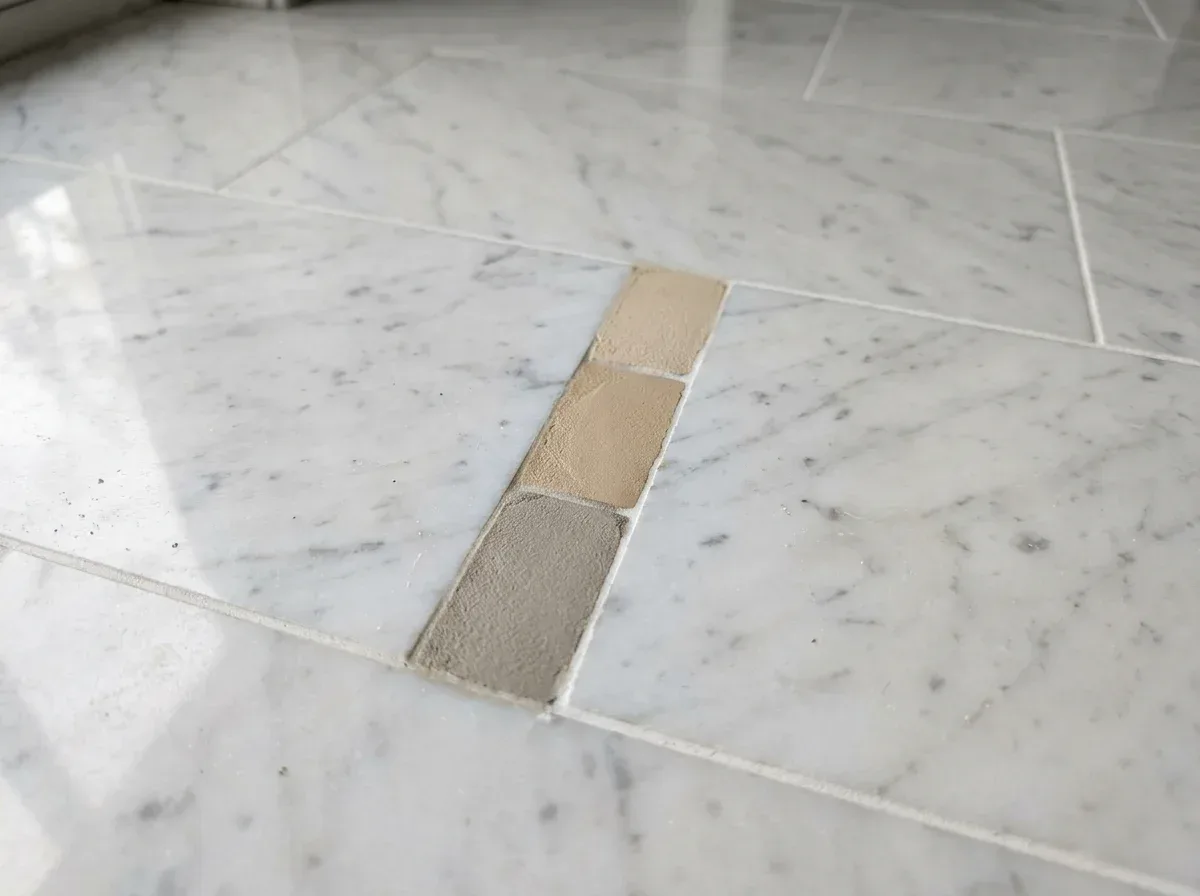
Grout color looks very different wet and dry; once dry it usually lightens by a shade or two. For this reason, before deciding, small tests with several different tones are made in an inconspicuous corner and evaluated after the grout has dried completely. Viewing the test both in daylight and under the room's own lighting makes it easier to choose the right tone.
Grout Color Comparison
| Tone | Appearance | Maintenance | Suitable areas |
|---|---|---|---|
| Close to the stone | Seamless, wide look | Medium | Living room, hallway, lobby |
| One shade darker | Slightly visible | Easy | Kitchen, entrance, bathroom |
| Very dark | Grid look | Very easy | Areas with design preferences |
| Light | Clean, bright | Difficult | Rarely used areas |
The Advantage of Renewing Grout Together with Honing
Grout renewal gives the best result when it is done together with honing. After coarse honing, the grout lines are opened and renewed; then the grout and stone are honed together through intermediate grits. This way the grout ends up exactly level with the stone, leaving no overflow or dips along the edges. Grout renewed before honing can wear away during honing, while grout renewed afterwards can leave overflow marks on the surface. For this reason, it is preferable to plan both jobs within the same work process.
Extending the Life of the Grout
How long renewed grout stays clean and intact depends largely on daily cleaning habits.
- Use a pH-neutral cleaner: Acidic products erode and roughen the grout; a pH-neutral cleaner cleans both the grout and the marble without wearing them down.
- Change the mop water often: As dirty mop water circulates over the floor, the dirt in it fills the grout lines and darkens them in a short time.
- Apply impregnation in wet areas: In wet areas such as bathrooms and kitchens, impregnation reduces the grout's absorption of water and dirt, delaying darkening and crumbling.
- Have small gaps filled: If small gaps that appear in the grout are filled before they grow, water does not reach beneath the slab and a comprehensive renewal can be postponed.
Grout Renewal in Alanya
In older apartment buildings and villas in Alanya, darkened and crumbling grout is one of the biggest reasons a floor looks old. In our honing work, we often include grout renewal, do the color test together with the homeowner, and finish the grout level with the stone. In wet areas, we prefer grout materials with low water absorption.
Points to Note

- Marble edges crack easily during grout removal, so care is required.
- If the grout joint is very narrow, different methods are required.
- In wet areas, use should not begin before the grout has completely dried.
Our Grout, Sealant and Silicone Service in Alanya

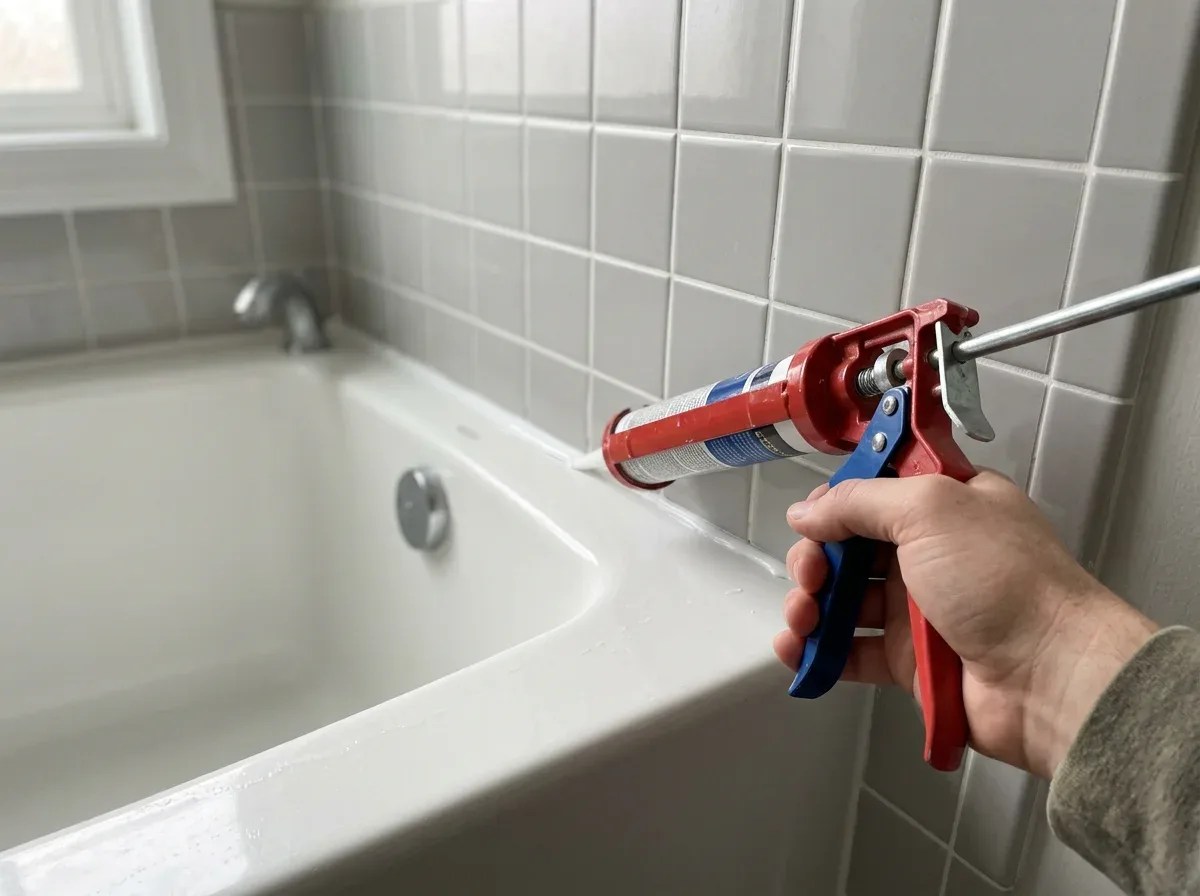
We remove and renew grout and silicone that have darkened, molded or come loose. In wet areas, we choose the right filler and silicone for the type of stone to keep water from seeping underneath it.
If needed, we plan grout renewal in the same job as honing and impregnation. Explore our Sealant and Silicone service.
Grout can lighten or darken as it dries. It's best to test it on a small area and see how it looks once it has dried. — Expert Note