How Is Grinding Done Along Walls and in Corners?
In short: The middle of the floor is honed quickly with large machines, but the real quality of the work is usually shown along the walls and in the corners.
These narrow strips that the machine cannot reach require separate workmanship. In this article we explain edge and corner honing and what to look for in the result.
Why Is a Separate Process Needed?
The disc of a large honing machine is round, and its body cannot get fully close to the wall. A strip a few centimeters wide remains along the wall, and a wider triangular area remains in the corners. If these areas are not honed separately, the result is noticeably spoiled.
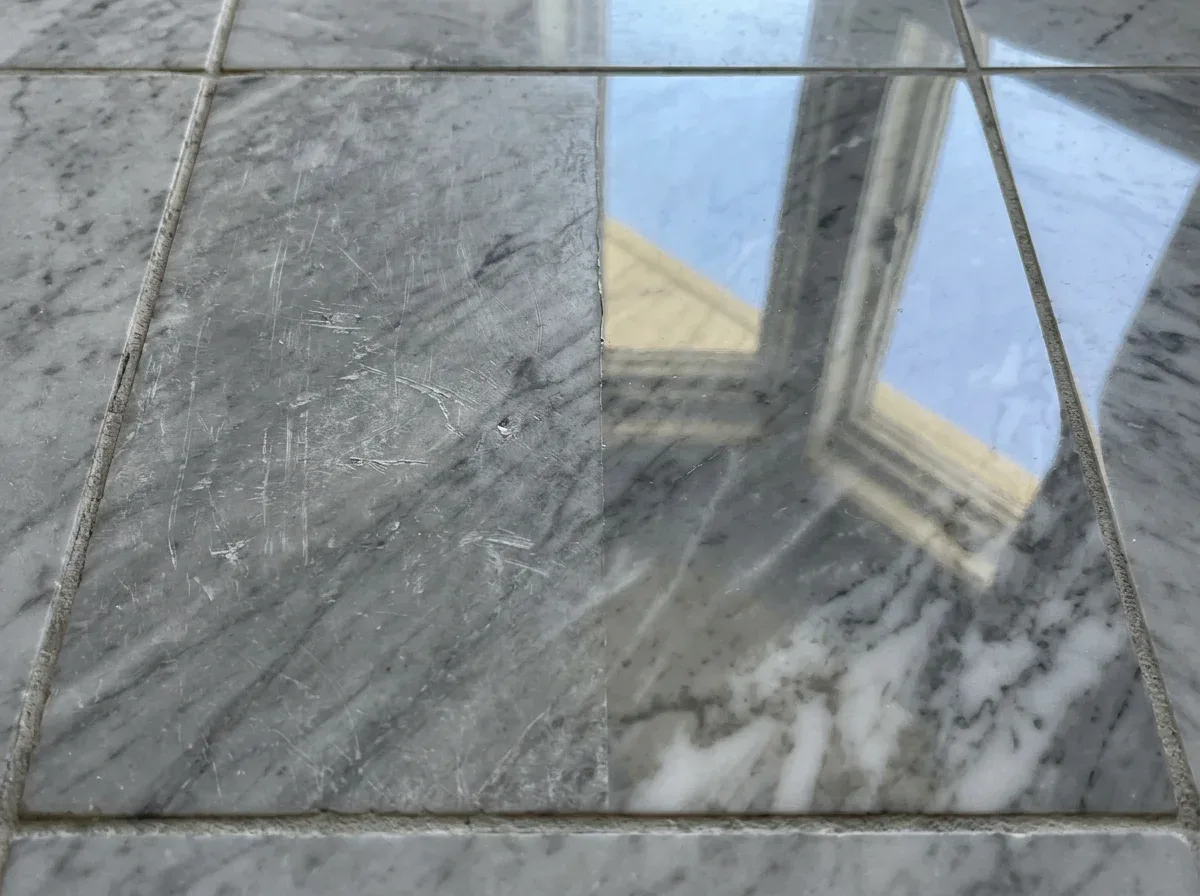
- Dull, dirty strip: The band of a few centimeters that the large machine cannot reach is left with old dirt and a worn surface; it looks like a dark frame around the edge of the shiny floor.
- Tone difference between the middle and the edge: While the honed middle area opens up and shines, the edges keep their old color; this difference becomes especially visible in light coming from a window and when viewed from an angle.
- Level differences remain at the edge: Height differences between slabs are corrected in the middle but remain as they are at the edge; they catch the foot and the floor's evenness is left incomplete.

How Are Edges Honed?
Edge Machines
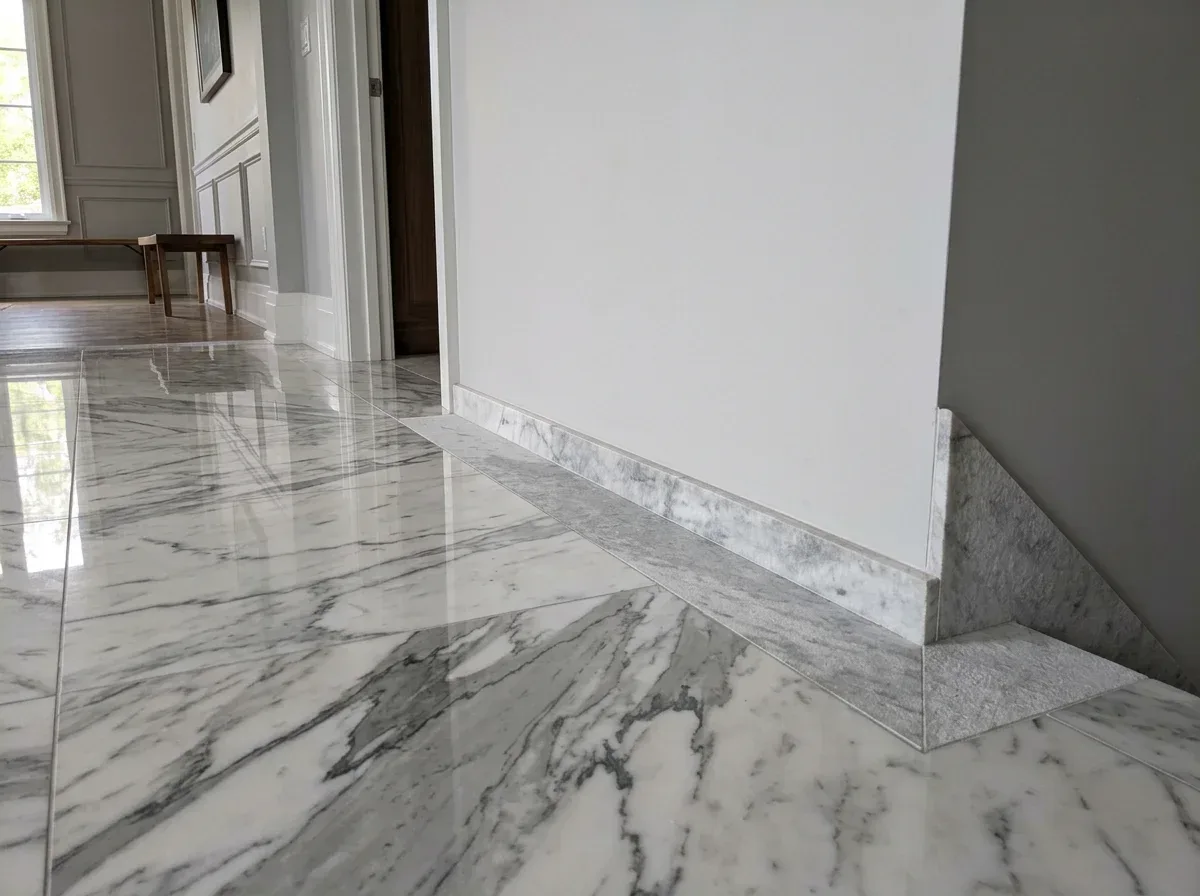
Smaller-bodied handheld machines and edge honing machines that can get close to the wall are used. With these, the strip that the large machine cannot reach is honed in the same stages.
Hand Work
In places such as under door frames, behind radiators, narrow niches and corner tips, work is done by hand with diamond pads.
The Same Stages
At the edges, the same abrasive stages as in the middle of the floor are followed. If a stage is skipped, the edge will appear with a different gloss.
Skirting Boards and Wall Protection
Since honing is a wet and muddy job, every surface that meets the floor must be protected before work begins.
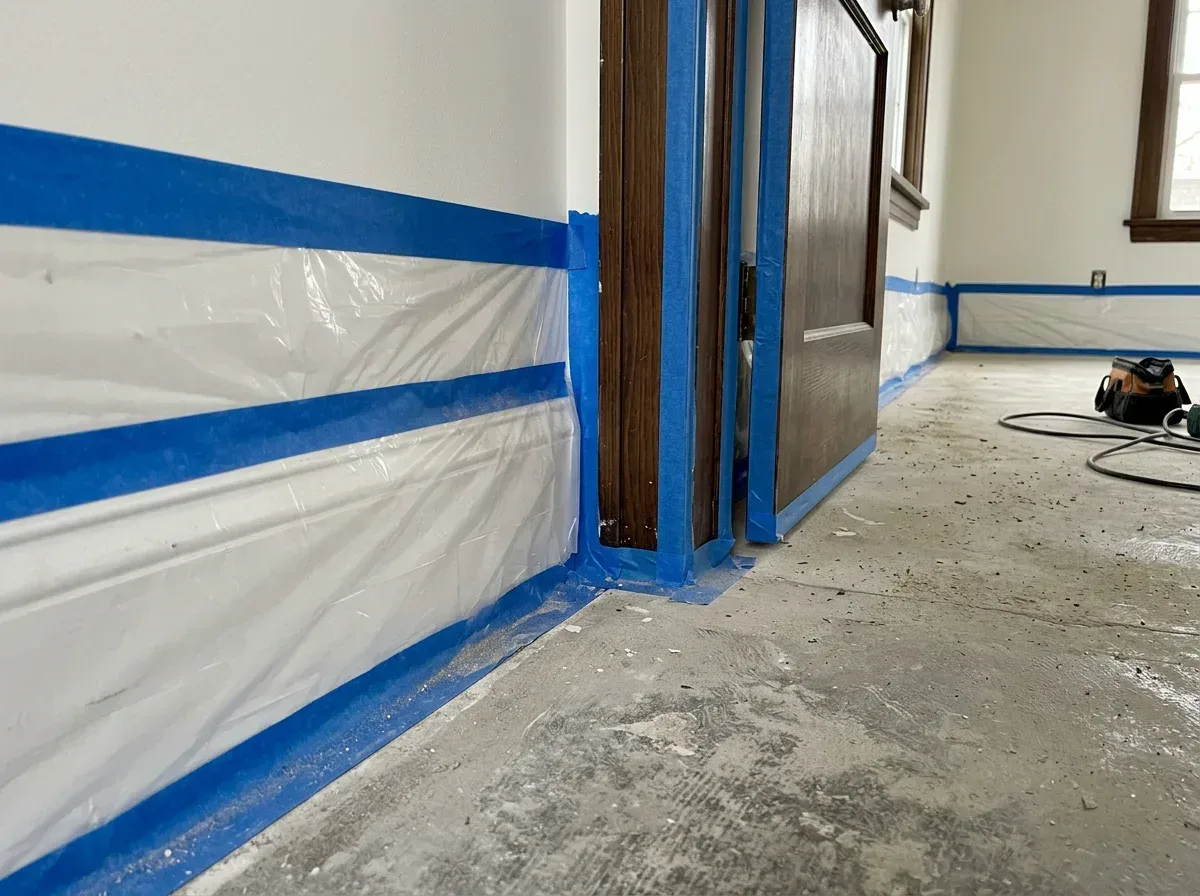
- Protection with tape: Before honing, skirting boards, wall bases and door frames are protected with tape, so that machine impacts and slurry do not leave marks on these surfaces.
- Preventing slurry splashes: If the stone slurry produced during wet honing splashes onto the wall, it leaves stains on paint and plaster; this is prevented by using controlled water at the edges and by applying protection.
- Wooden frames and under cabinets: Wood absorbs water and slurry and may swell or get stained; therefore frame ends and the undersides of cabinets are additionally covered for protection.
- Marble skirting board: If there is a marble skirting board, it can also be planned to be polished if desired; this way there is no gloss difference between the floor and the skirting board.
Columns and Obstacles
The surroundings of obstacles such as the area around columns, the starts of staircases, fixed furniture and utility outlets are also treated like edges.
The Importance of Edge Workmanship
| Edge workmanship | Result |
|---|---|
| Edge not honed at all | Dull, dirty strip along the wall |
| Edge honed with fewer stages | Different gloss and lines at the edge |
| Edge honed with the same stages | A unified, unnoticeable transition with the middle |
| Corners finished by hand | Clean finish even at the corner tips |
Around obstacles, the machine's turns must be made carefully, and the transition between the edge and the middle must be smooth. If the columns also have stone cladding, it can be honed and polished together with the floor if desired.
Why Does Edge Honing Extend the Time?
While the middle area of a room is honed quickly with a large machine, the edges and corners are worked with small machines and by hand, so they take much more time per unit area. In homes with many rooms, plenty of corners and fixed cabinets, the total edge length increases, which is reflected in the duration of the job. For this reason, when preparing quotes, not only the square meters but also the number of rooms and the edge length are taken into account.
Door Thresholds and Transitions
Door transitions where the marble floor meets parquet, ceramic or carpet require extra attention. At these points the honing machine must not touch the adjacent material, and parquet and wooden thresholds must be protected with tape. If there are marble thresholds, they are honed with the floor in the same stages; the edges of thresholds that stand high are slightly softened to reduce the risk of tripping. If the transition profiles are metal, they are additionally protected so that they are not scratched during honing.
Look at the Edges at Handover
Because the quality of honing is best understood at the edges, at handover you should look at the wall bases and transitions rather than the middle of the floor.
- Look at the wall bases at an angle: Look at the wall bases from an angle; no dull strip should remain, and the edge and the middle should appear with the same gloss.
- Check the corner tips: Corner tips that the large machine cannot enter at all are worked by hand; check whether any dirt, dullness or stage marks remain at these points.
- Look under thresholds and frames: Door thresholds and the areas under frames are narrow and hard-to-reach places; check whether any area was left unhoned or whether the adjacent material has scratches.
- Check the skirting boards: There should be no slurry or scratch marks on the skirting boards; after the protective tape is removed, the surface should be seen to be clean and undamaged.
Edge and Corner Honing in Alanya
In every honing job we do in Alanya, we work the wall bases, corners, door thresholds and areas around columns in the same stages as the middle area. Before starting, we protect the skirting boards, door frames and areas under cabinets, and at the end of the job we check the edges at an angle together with the homeowner.
What to Check at Handover

Wall edges and corners are the hardest spots for the machine to reach; these areas are checked separately at handover.
- Edge strip: Crouch down along the wall and look at it from a low angle; if the edge strip looks dull compared with the middle of the floor, the wall edge has not been fully polished.
- Dull triangles in the corners: In corners that the round discs cannot reach, we check whether any dull triangles remain; these areas are finished with a hand machine.
- Door thresholds and under frames: At door thresholds and under door frames, we check whether any strip has been left unpolished and still looks as it did before.
- Skirting boards and slurry on the walls: Slurry splashed during wet polishing is hard to remove once it dries; make sure no marks are left on the skirting boards or walls.
Our Marble Grinding Service in Alanya

We restore marble floors that have become dull, scratched, or uneven between slabs using wet grinding that keeps dust under control. From coarse grinding to polishing, we choose every stage according to the type of stone and, if needed, carry out crack and joint repairs as part of the same job.
We inspect your floor on site and tell you clearly whether it needs grinding or just polishing. Explore our Marble Grinding service.
To judge the quality of a sanding job, don't look at the middle of the room, look at its corners. Real craftsmanship shows itself where the machine can't reach.