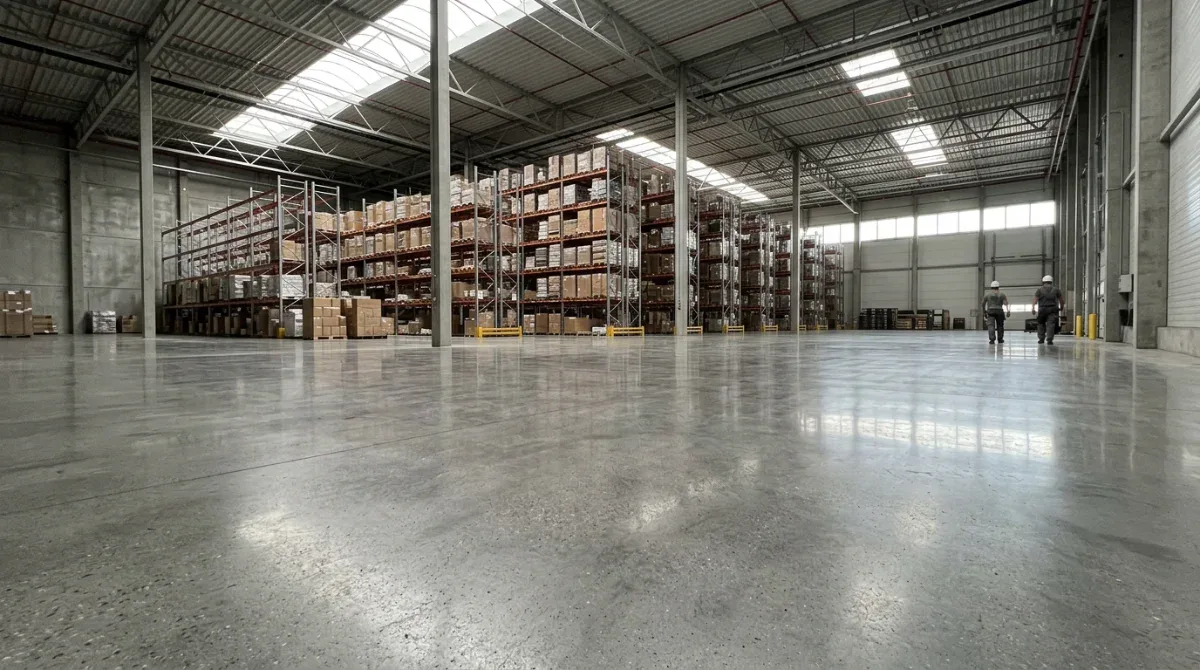
When Should Grinding Be Done on Freshly Poured Concrete?
In short: When pouring a new warehouse, parking lot, or store floor, the same question usually comes up: when is the concrete ready for grinding?
Starting too early leads to surface spalling and aggregate pull-out; starting too late delays the construction schedule. In this article, we explain the right timing.
Why Does Concrete Need to Wait?
After concrete is poured, the reaction between cement and water continues for weeks. During this time, the concrete gains strength. In concrete that has not hardened enough:
- Aggregate pull-out: Because the cement paste has not yet gripped the aggregates firmly, the diamond abrasives can pull the particles out; voids and scratches are left on the surface.
- Spalling and pits: The insufficiently hardened top layer cannot withstand the pressure of the machine; spalling and pits form on the surface, and the floor cannot be finished properly.
- Ineffective hardener: The hardener may not give the expected effect on concrete that is still reacting and damp; the surface does not reach the desired hardness and dust-free finish.

General Rule
On new concrete, the grinding time is determined less by the calendar than by the strength the concrete has reached and the curing conditions.
- Being walkable is not enough: Although concrete becomes walkable at an early stage, it has often not reached sufficient strength for grinding; the machine load and abrasive pressure are much greater.
- Planning weeks later: Grinding is usually planned for weeks later, once the concrete has reached sufficient strength; the exact time depends on the concrete class, the mix, the air temperature, and the curing conditions.
- Engineer and producer recommendations: The recommendations of the project engineer and the concrete producer should be taken into account; they know the mix and the pouring conditions best.
During the site survey, the age, class, and curing process of the concrete are asked about; if necessary, a small test is carried out on the surface.
Why Is Curing Important?
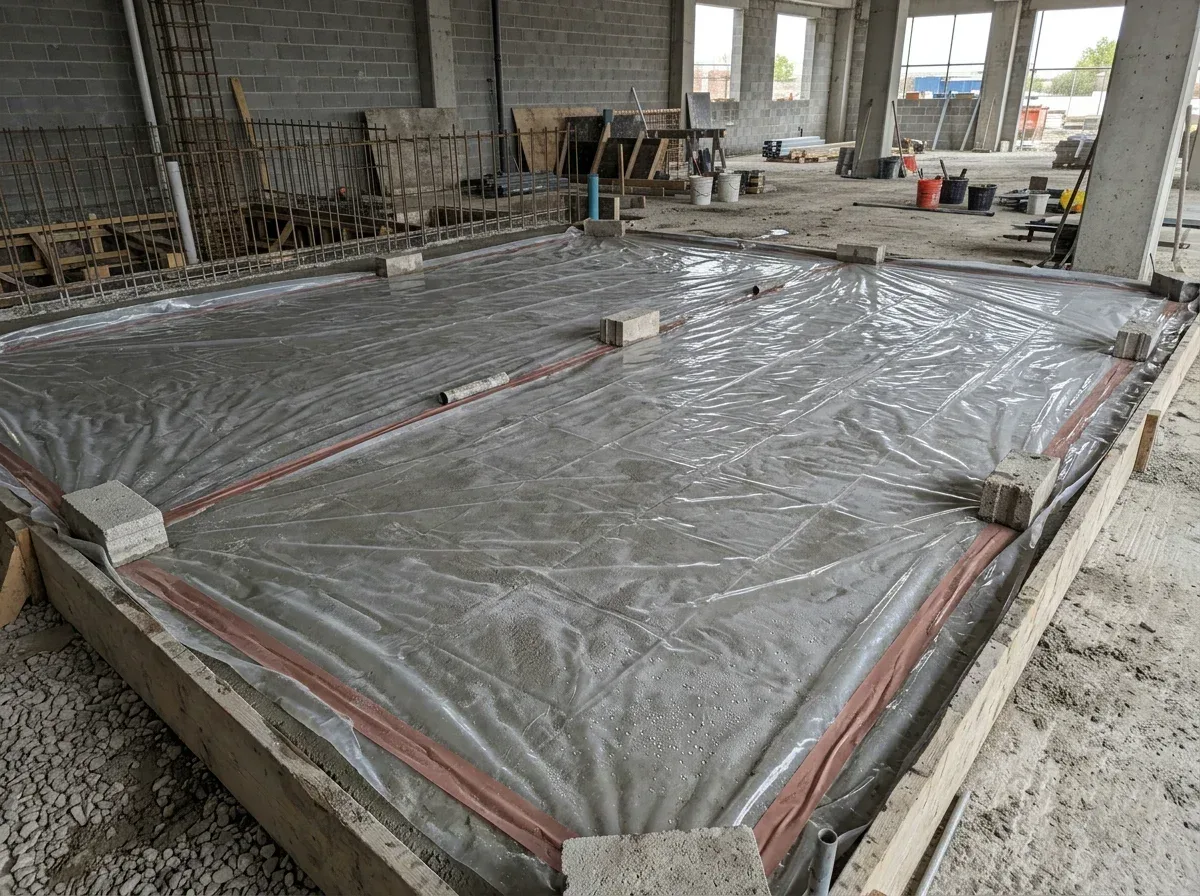
Curing keeps the concrete moist and allows it to harden properly. A poorly done curing process causes many problems.
- Weak, dusty surface: The top layer that loses its moisture early cannot harden fully; the surface stays weak, produces dust in use, and wears away easily during grinding.
- Hairline cracks: Rapid drying and shrinkage of the surface lead to hairline cracks; these cracks can remain visible even after grinding.
- Spalling during grinding: The weak top layer of poorly cured concrete breaks off piece by piece under the pressure of the diamond abrasive and leaves pits on the surface.
In summer in Alanya, the high temperatures make the concrete surface dry quickly; curing becomes even more important.
After Helicopter Troweling
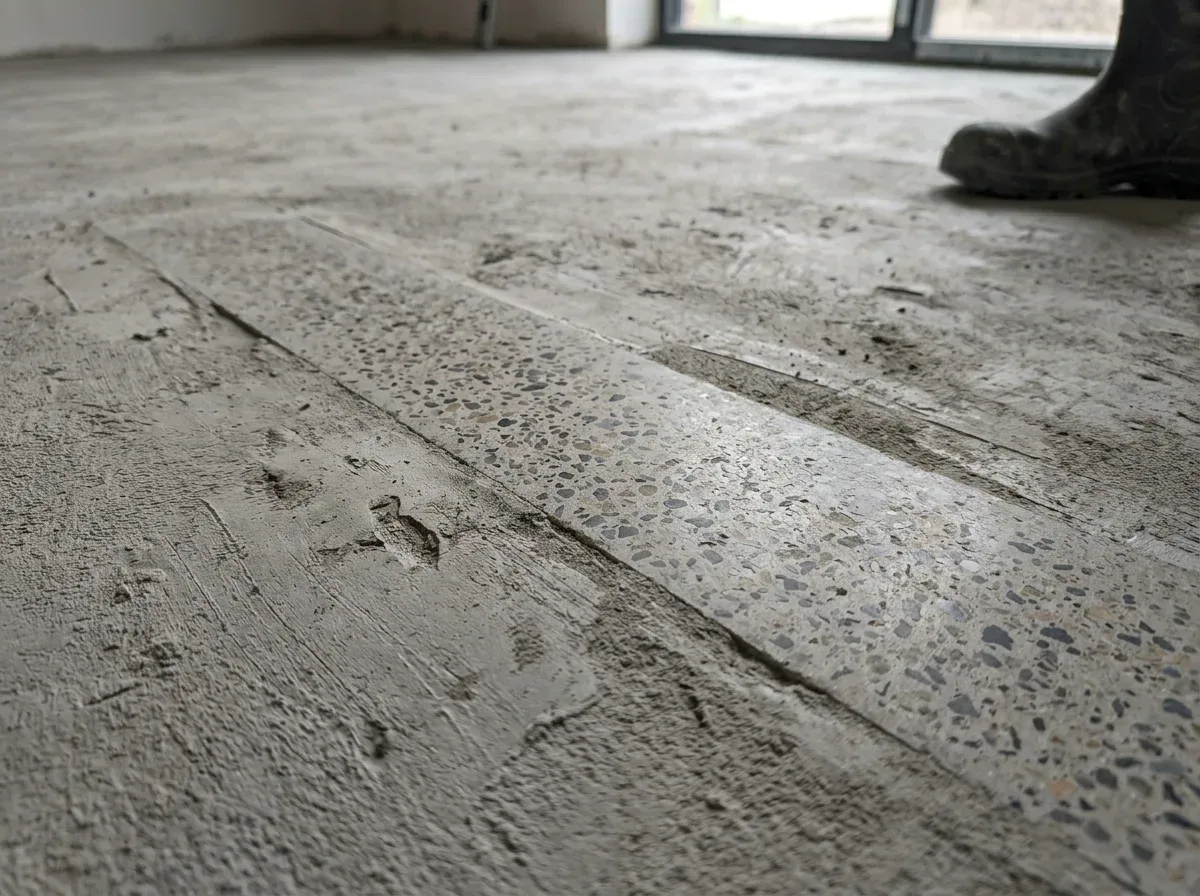
On helicopter-troweled floors, the top surface is smooth and dense. If grinding is to be done on these floors, there are three points to keep in mind.
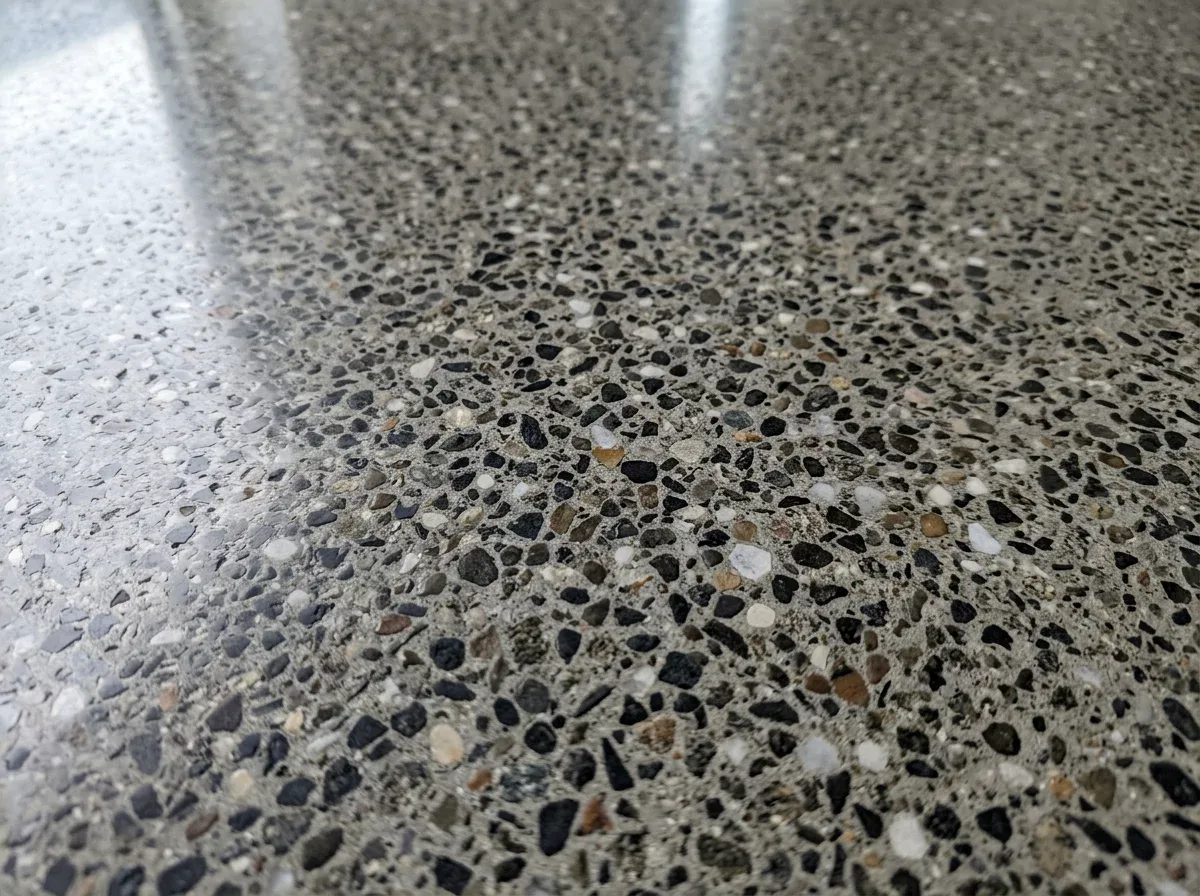
- Opening the troweled surface: The dense, smooth top surface left by helicopter troweling is opened up by grinding; the troweled look disappears and the texture of the concrete beneath is revealed.
- Decide on the target look from the start: Whether cream, salt-and-pepper, or aggregate exposure is wanted should be decided from the start; how deep the grinding goes depends on this choice.
- Curing compounds and surface products: The curing compounds and surface products used during the pour can affect grinding and the bonding of the hardener; therefore, the contractor should be informed in advance.
Moisture
New concrete holds moisture inside for weeks. For products such as hardeners and stain protectors to work properly, the surface moisture of the concrete must drop to the level the product allows. Concrete dries more slowly, especially in enclosed and poorly ventilated areas. Grinding can be done wet, but the surface is left to dry sufficiently before the protective product is applied. If necessary, a moisture measurement is taken before deciding.
Grinding Schedule for New Concrete
| Stage | What to Do |
|---|---|
| Pour day | Troweling, deciding on the target look |
| First days | Curing (covering, wetting), no loads on the floor |
| First weeks | Concrete gains strength; other construction work continues with the floor protected |
| After sufficient strength | Test area, then grinding and hardener |
| Final stage | Stain protector, joint filling, handover |
Exact times vary with the concrete class, mix, and weather conditions; this table only shows the sequence.
When Are Joints Filled?
If the control joints cut in new concrete floors are filled before the concrete has finished shrinking, the filler may separate from the edges. For this reason, joint filling is usually done in the final stages of grinding or afterwards, once the concrete has largely completed its initial shrinkage. In high-traffic areas, semi-rigid joint fillers are preferred; these fillers protect the joint edges against forklift and wheel impacts.
Protecting the Concrete During Construction
If the concrete to be ground is not protected while the rest of the construction continues, marks may remain on the surface that even grinding cannot remove.
- Protect it from mortar, paint, and chemicals: Do not mix mortar, or spill paint or chemicals, on the concrete to be polished; these materials can seep into the pores and leave permanent stains.
- Protect it from wheel marks and oil: Heavy construction machinery and scaffolding must not leave wheel marks or oil on the floor; oil that penetrates the concrete will show up as dark areas after polishing.
- Cover it with a protective sheet: If possible, the floor should be covered with a protective sheet; the cover protects the surface against falling materials, impacts and spilled liquids.
- Discuss curing compound compatibility: If a curing compound will be used, its compatibility with polishing should be discussed in advance; an incompatible product can prevent the hardener from penetrating.
New Concrete Floors in Alanya
In newly built warehouses, car parks, showrooms and hotel service areas in Alanya, concrete polishing is often planned for the end of the construction schedule. Because high summer temperatures make the curing process more difficult, we recommend speaking with the construction companies before the pour and clarifying curing and protection matters together. Depending on the age and condition of the concrete, we carry out a test area and determine the start date of polishing together with you.
Planning in the Construction Schedule

- Polishing should be done after the heavy construction work is finished; otherwise, the new surface will be scratched and stained.
- It should be clarified whether the ceiling, wall painting and installation work will be done before or after.
- The floor must be protected after polishing.
Our Concrete Grinding Service in Alanya

We grind concrete floors in warehouses, factories, parking garages, shops, and homes, then strengthen them with a hardener to create a dust-free, easy-to-clean surface. Depending on the look you want, we apply a matte, satin, or glossy finish.
We inspect the age and condition of your floor on site and decide on the right method together with you. Explore our Concrete Grinding service.
Polishing can be done wet or dry; however, the moisture content of the concrete matters when applying hardeners and sealers. Some products do not work properly on very damp concrete. — Expert Note
Frequently Asked Questions
01Can we walk on freshly poured concrete right away?
02Is it a problem to do the grinding late?
03Does curing compound affect grinding?
04Can construction work be done again after grinding?
05Does grinding prevent cracks in new concrete?
06Can hardener be applied to new concrete immediately?
Related Articles
- What Is Concrete Grinding and How Is It Done? Turning Dusting Concrete into a Glossy Floor
- Glossy Concrete, Polished Concrete and Power-Troweled Concrete: What Are the Differences?
- Aggregate Exposure in Concrete Grinding: Cream, Salt-and-Pepper, Full Aggregate
- Concrete Grinding Process and Timeline: Day-by-Day Workflow
- Concrete Grinding or Epoxy Coating? Which Is Right for Which Floor