What Causes Lippage (Uneven Tile Edges) Between Slabs?
In short: The plate edges that catch your bare foot when you walk or rattle when a vacuum cleaner passes over them are called lippage, or height difference.
It spoils the appearance and also causes the edges to chip. In this article, we explain the causes of lippage and how it is corrected by grinding.
What Is Lippage?
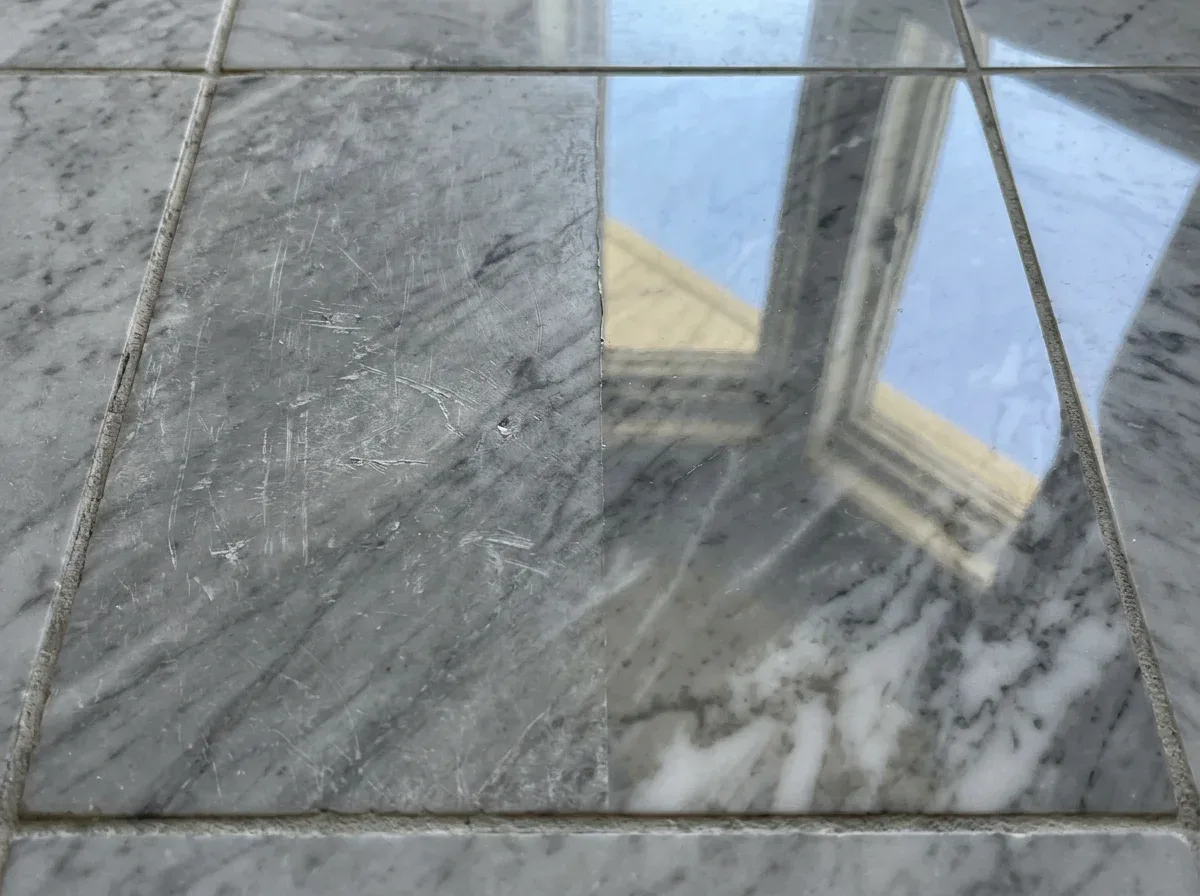
It is when the surfaces of two adjacent tiles are not at the same level. The difference is sometimes less than a millimeter, but when light hits at an angle it casts a shadow and can be felt by hand.
Causes
During Installation
Most lippage begins during installation; it stems either from the tile itself or from the way it was set in place.
- Tiles of different thickness: Even within the same batch, tile thickness can vary slightly; if the installer does not compensate for this with mortar, the thicker tile sits higher than its neighbor.
- Unevenly spread mortar: If adhesive or mortar is not spread evenly under the tile, the tile rises at one corner and sinks at another, creating a step along the edges.
- Level errors: If the installer does not regularly check levels with a string line or spirit level, small differences between tiles accumulate and spread across the entire room.
- Warped or crooked edges: If the tile edges are slightly warped or cut crooked, one edge stays higher along the joint line even when the tile is laid flat.
Over Time
Even a floor laid flat can develop height differences over the years through use and structural movement.
- Settling of mortar voids: A tile with a mortar void underneath gradually sinks as it is stepped on and ends up lower than the neighboring tiles.
- Movement of the substrate: Settlement in the screed or slab, shrinkage, and small structural movements push the tiles in different directions and create height differences at the edges.
- Concentrated heavy loads: Loads such as a cabinet, piano, or heavy furniture bearing on specific points can cause the tiles in that area to sink over time.
Harms of Lippage
Even if the height difference looks small, it negatively affects safety, the durability of the floor, and its appearance.
- Risk of tripping and falling: A raised edge catches the foot, especially when walking barefoot or in slippers; it can cause falls for the elderly and children.
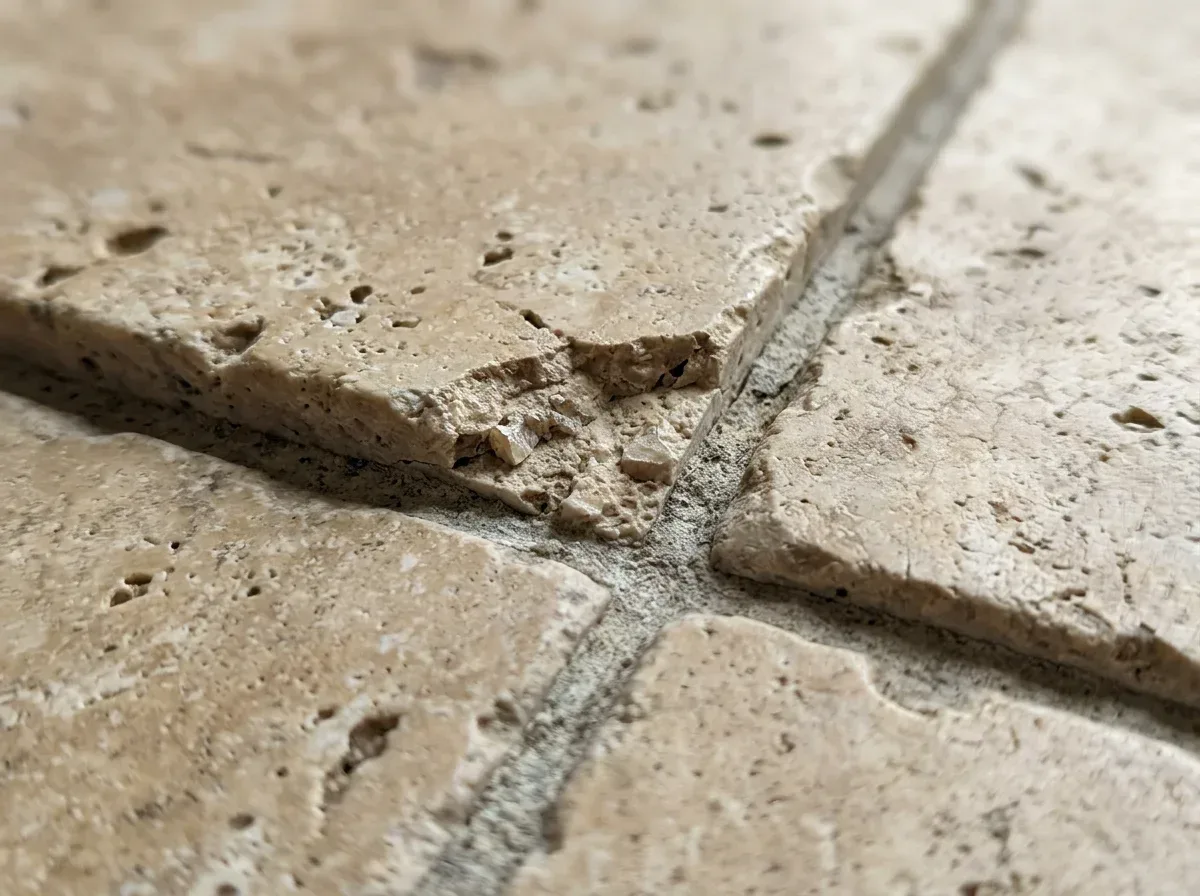
- Chipping at the edges: The higher edge takes every impact and every dragged object on its own; over time a piece breaks off the edge or a crack forms.
- Dirt buildup on the edge: Dust and dirt collect in the step between the low edge and the grout joint; because the mop does not reach it, the joint lines darken.
- Uneven shine: The polishing pad touches the high edges more and the low spots less; the polish looks wavy and shadows become pronounced in raking light.
Correction by Grinding
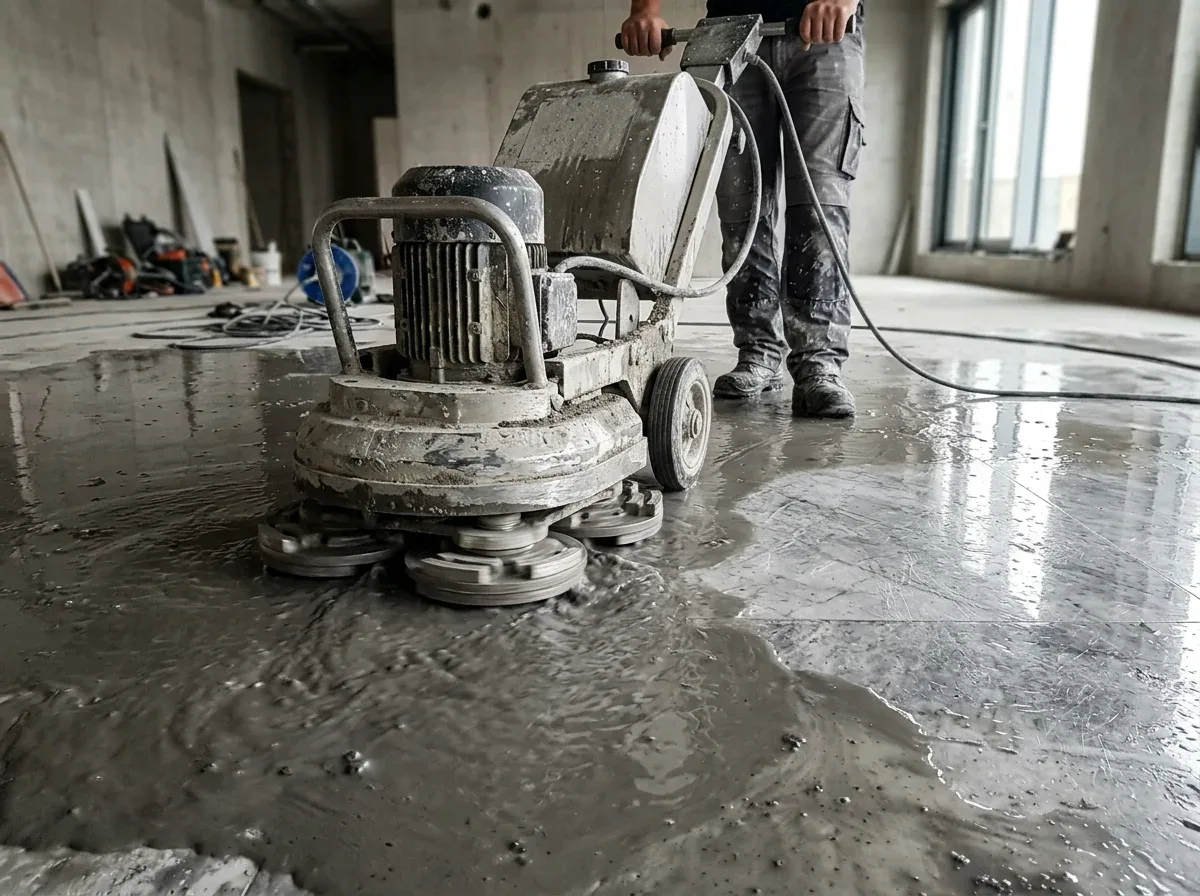
The permanent solution to lippage is coarse grindingThe process is carried out in three stages.
- Grinding down the high edges: First, the high edges are ground down with coarse diamond abrasives; not only the edge but also the surrounding area is ground to smooth out the transition.
- Creating a single plane: Then the whole floor is brought to a single plane; the machine grinds the tiles and joints together, removing steps that can be felt by hand.
- Intermediate stages and polishing: Next, the intermediate stages and polishing are carried out; the scratches left by the coarse diamonds are removed step by step and the surface reaches the desired shine.
In this process, not only the high edge but also its surroundings are ground together, so the transition is smooth.
Limitations
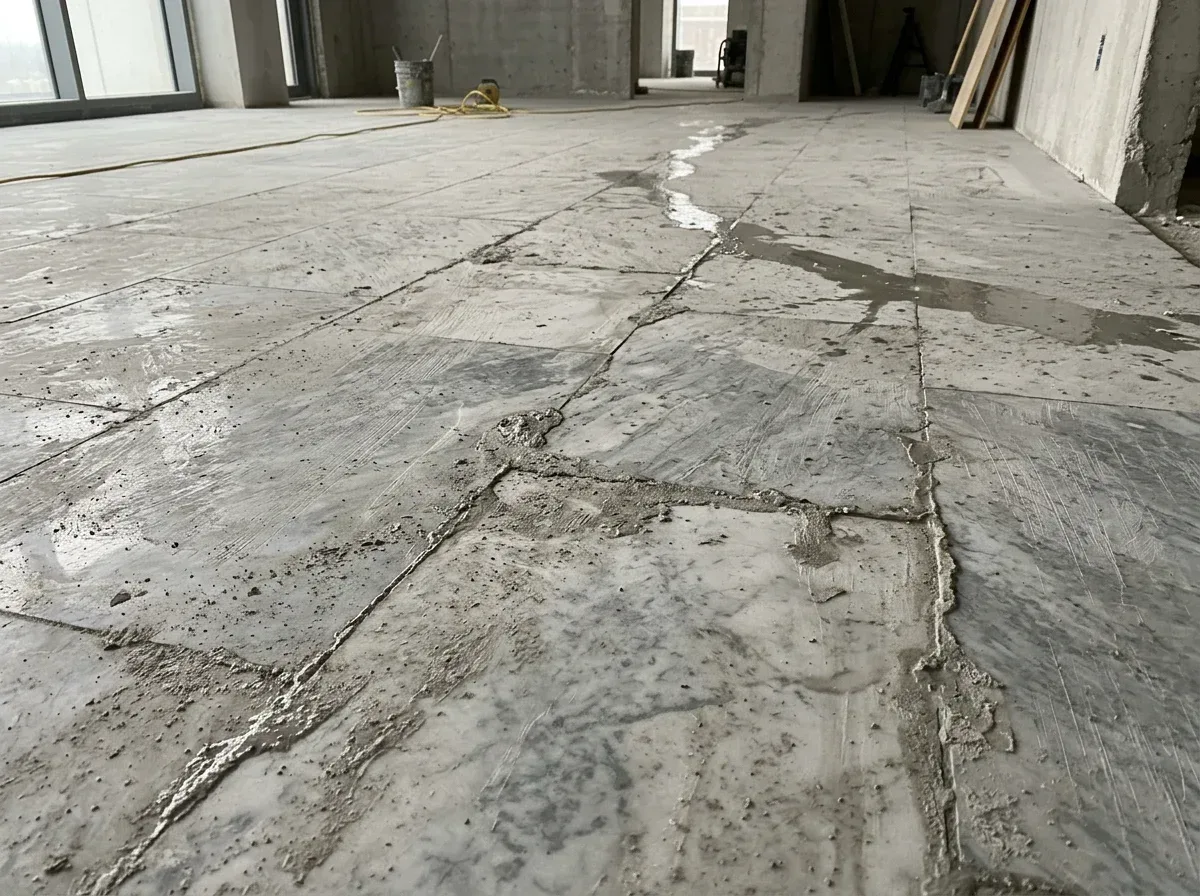
Coarse grinding eliminates most height differences, but in some cases another intervention is needed first.
- Very large height difference: When differences of more than a few millimeters are removed by grinding, there is serious loss of stone thickness. In this case, re-laying the tile may be the better option.
- Hollow (loose) tile: A tile with a void underneath cannot be corrected by grinding; it must first be secured or replaced, otherwise it may crack under machine pressure.
- Broken edge: If the edge is chipped, it is first repaired with a color-matched filler; only after that can grinding bring the damaged area to the same plane as the floor.

On New Installations
Some height difference is very common on newly laid floors. For this reason, the first grinding after installation is also done to eliminate height differences.
Approach by Degree of Height Difference
| Height difference | Symptom | Solution |
|---|---|---|
| Very light | Visible only under raking light | Honing from a mid-grit stage |
| Noticeable | Can be felt by hand; a broom catches | Leveling with coarse honing |
| Very large | Clearly visible to the eye, chipped edges | Re-laying of the slab is considered |
| Caused by a hollow slab | Movement under pressure, hollow sound | Fixing first, then honing |
Lippage and Joints
On floors with height differences, the joints usually deteriorate as well; along the higher edge the grout cracks, while dirt accumulates on the lower edge. During coarse honing, the joints are ground down together with the slabs and the surface is brought to a single plane. At this stage, emptied or cracked joints are cleaned and refilled. Honing slurry is sometimes used to fill the joints as well; this way the grout color matches the floor.
Preventing Chipped Edges
Lipped edges are the points most prone to chipping; if precautions are taken early, both repair work and stone loss are reduced.
- Correct them before they chip: Lipped edges should be corrected by honing before they chip; once they chip, the job grows into filling and repair, and the mark may not disappear completely.
- Do not drag items: Furniture and heavy items should not be dragged across lipped edges; if they are lifted when moved, the protruding edge is not hit.
- Repair chips with filler: Chipped edges should be repaired with color-matched filler; an open chip collects dirt and also weakens the surrounding stone.
- Secure hollow slabs: Hollow slabs should be secured without delay; a slab with a void beneath it shifts as it is stepped on, and its edges hit its neighbors and chip.
Lippage Correction in Alanya
In newly built homes and renovated apartments in Alanya, we encounter lippage on marble and granite floors very often. On floors with height differences, we first check for hollow slabs, then bring the floor to a single plane with coarse honing and finish with intermediate grit stages and polishing. For slabs with very large height differences, we openly discuss the option of re-laying.
Prevention

Most lippage occurs during installation; if slab selection and workmanship are right, the need for corrections afterwards is reduced.
- Calibrated slabs: When slabs of equal thickness are laid with the same adhesive layer, there is no height difference between neighboring slabs.
- Void-free adhesive: If a void is left under a slab, it will settle under load or its edge will lift; adhesive spread without voids prevents this.
- Leveling clips and a skilled installer: Leveling clips and the workmanship of an experienced installer keep the slabs on the same plane during installation.
- Corrective grinding: Small height differences remaining after installation are removed with coarse-to-fine staged grinding, and the floor becomes a single flat plane.
Our Marble Grinding Service in Alanya

We restore marble floors that have become dull, scratched, or uneven between slabs through wet grinding, keeping dust under control. From coarse grinding to polishing, we choose each stage according to the type of stone and, if needed, carry out crack and joint repairs as part of the same job.
We inspect your floor on site and tell you clearly whether it needs grinding or just polishing. Explore our Marble Grinding service.
Lippage cannot be hidden by polishing alone. On a glossy surface, the height difference between tiles becomes even more noticeable; the solution is a grinding process that starts at a coarse grit stage and brings the floor into a single flat plane.
Frequently Asked Questions
01Does grinding always fix lippage?
02How much does coarse grinding thin the stone?
03Does it work on travertine and granite too?
04Does it affect the grout joints as well?
05Does the floor produce a lot of dust while lippage is being corrected?
06Will lippage reappear after it has been corrected?
Related Posts
- Why Is an Initial Grinding Necessary on Newly Installed Marble?
- Detecting Hollow (Drummy) Tiles in Marble Flooring
- Does Grinding Damage the Floor? The Truth About Thickness Loss
- Marble Grinding Stages: Diamond Pad Steps from Coarse Grinding to Polishing
- What Is Marble Grinding and How Is It Done? A Guide for Your Home Flooring