Edge Cracks on Granite and Travertine Steps
In short: Cracks and chips at step edges are not just a cosmetic problem; over time they can grow, causing the piece to break off and creating a risk of falls.
In this article we explain the causes of edge cracks in granite and travertine steps, repair methods, and ways to prevent them from recurring.
Causes of Cracks
Hollow Space Under the Step
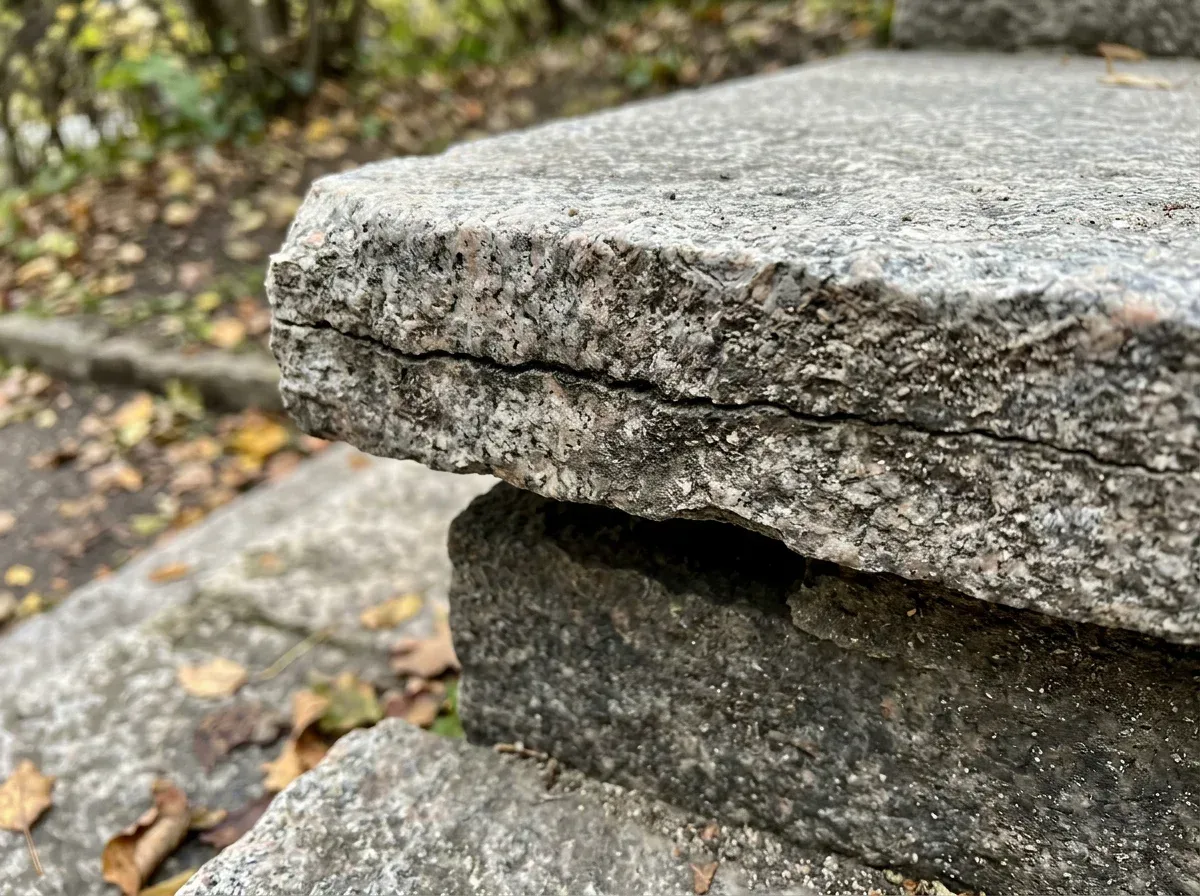
If the mortar or adhesive under the step slab is not fully filled, the nosing in particular is left unsupported. With every step, this part flexes slightly and eventually cracks. This is the most common cause of edge cracks.
Sign: A hollow sound when tapped, slight movement under pressure.
Impact
Moved items, heavy objects falling, and carts hitting the step cause cracks and chips at the edge.
Temperature Differences
Outdoor steps that receive sun heat up during the day and cool down at night. The stone and the concrete beneath it expand differently, and weak points crack.
Water and Freezing
Water that enters through cracks can freeze in cold weather and widen the crack. Frost is rare on Alanya's coast, but it can occur in the highlands and higher areas.
The Stone's Own Structure
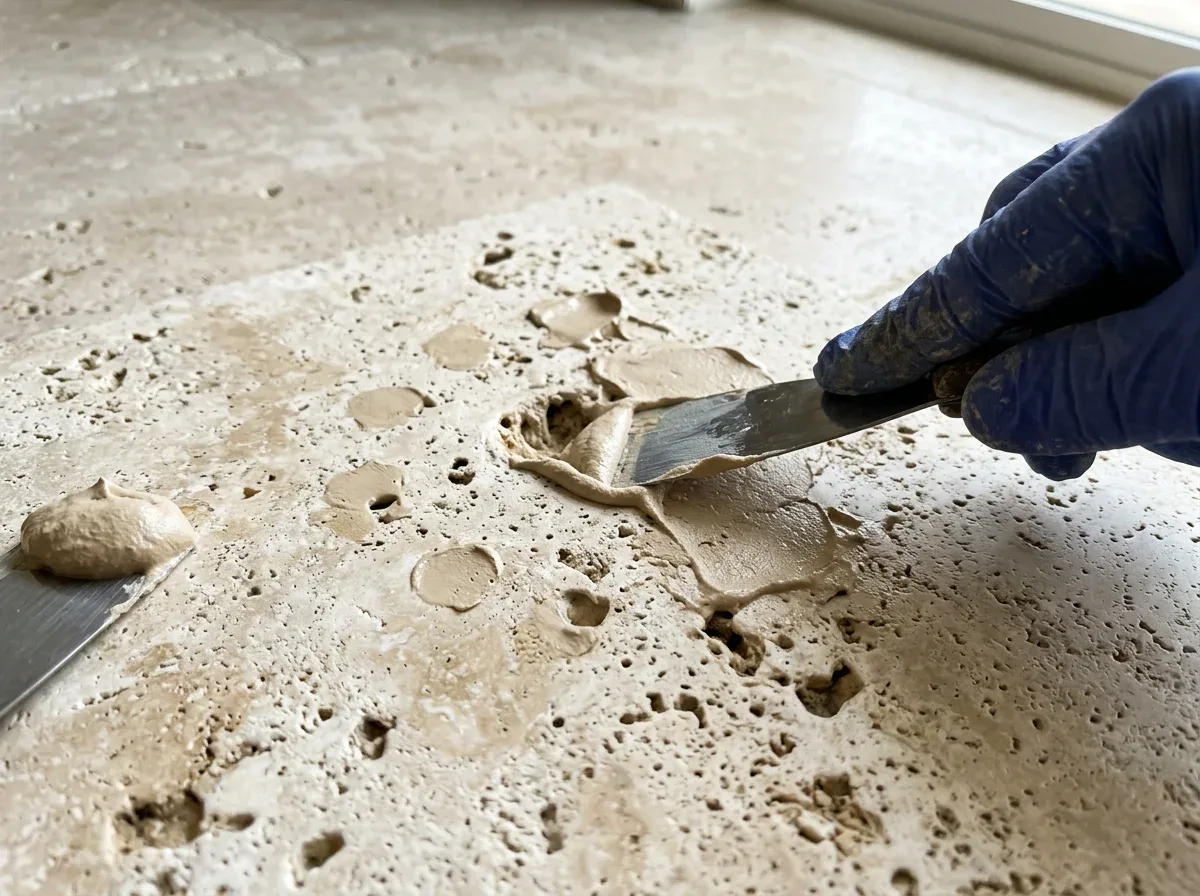
The porous structure and natural voids of travertine can weaken the edge areas. In some granites, natural hairline cracks or veins form a weak line.
Lack of Joints
If long steps and landings have no movement joints, tension shows up as cracks.
Repair Methods
Hairline and Stable Cracks
The crack is cleaned, dried, and filled with a low-viscosity, color-matched resin. The resin penetrates into the crack and bonds the two sides together. Any excess is wiped off once it hardens.
Broken Edges
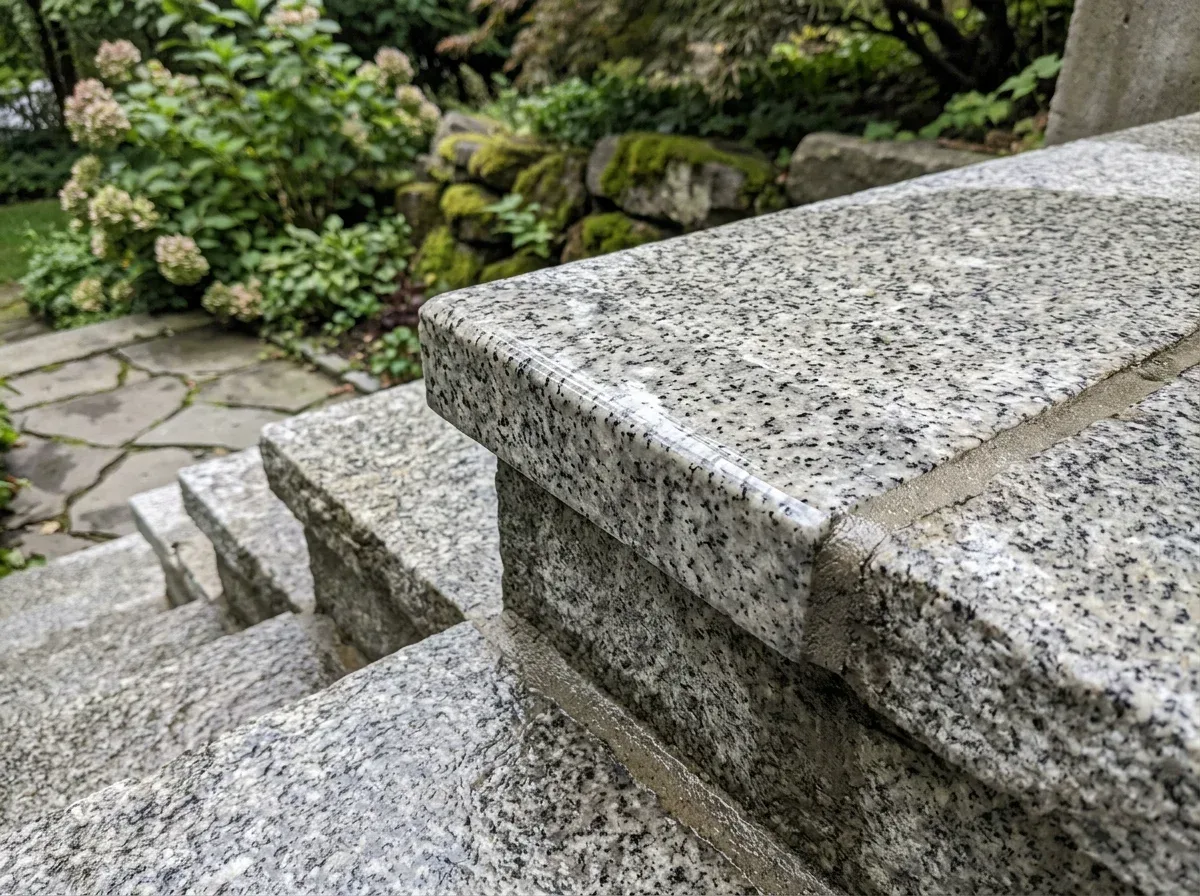
A broken step edge is repaired in one of two ways, depending on whether the broken piece is available.
- Bonding the piece back in place: If the broken piece is available, it is bonded back in place with a suitable adhesive; since the stone's own color and texture are preserved, this repair leaves the least trace.
- Reshaping with resin and stone dust: If the piece is missing, the edge is reshaped with a mixture of resin and stone dust, then sanded and polished or matched to the surrounding surface.

Hollow and Moving Steps
On a step with a hollow space underneath, simply filling the crack is not enough; the crack will open again. The options are:
- Injection: A suitable material is injected into the void under the step to fill it; the step settles back onto a load-bearing base without being removed.
- Removal and re-setting: The step is carefully removed, the underside is cleaned, and it is bonded back with a fully filled bed; this permanently prevents the nosing from being left unsupported.
Which method is suitable is determined by the condition of the step and whether it can be removed.
Replacement
If the crack is very extensive, if the piece has come apart and is lost, or if the stone is crumbling, the step needs to be replaced. Research should be done in advance to find the same stone.
Safety First
A step with a cracked edge or showing signs of breaking should be treated as a safety concern until it is repaired. If the piece is noticed to be shifting, the step should be marked, and if possible that section should be closed to use or a warning should be posted. Especially on steps at apartment building and hotel entrances, the risk of falls is serious for children and the elderly. Even a small edge crack, if neglected, can turn into a break within a few months.
Differences by Stone Type
| Topic | Granite | Travertine |
|---|---|---|
| Typical cause of cracks | Hollow step, impact, natural hairline veins | Pores and voids, hollow step, temperature difference |
| Filler | Color-matched hard resin | Travertine-toned resin, pore filler |
| Surface after repair | Polished, honed, or flamed | Honed or brushed |
| Outdoor protection | Impregnation | Impregnation and regular pore inspection |
Repair Sequence
The order matters in step repair; if cracks are filled before the underside of the step is secured, they will reopen in a short time.
- Identify hollow steps: First, all steps are tapped to identify the hollow ones; steps that sound hollow are marked, and the repair plan is made accordingly.
- Stabilize hollow steps: Next, the hollow steps are secured by injection or by re-bedding, so the nosing no longer flexes underfoot.
- Fill the cracks: Once the step is secured, the cracks are cleaned, dried and filled with resin; the resin bonds the two sides of the crack together.
- Repair broken edges: Broken edges are glued back on or rebuilt with resin and stone dust, so the step nosing regains its original lines.
- Polish together with the surroundings: The repaired steps are polished together with the surrounding surface to bring them to the same level; the difference in height and gloss between the filler and the stone disappears.
- Apply impregnating sealer: Finally, an exterior impregnating sealer is applied; this reduces water penetration into the stone and lowers the risk of new cracks forming at the repaired spots.
Step Repair in Alanya
In Alanya, granite is commonly used on housing complex entrances and villa staircases, while travertine is common for garden and pool steps. In summer, stone surfaces heat up strongly in the sun and cool down at night, which increases edge cracking, especially on south-facing exterior steps. In our repair work, we first identify the hollow steps, and after stabilizing them, we seal cracks and chips with color-matched fillers and bring the step to the same surface as its surroundings.
Preventing Recurrence

- Using a full mortar bed when laying the step treads,
- Providing flexible joints outdoors,
- Protecting the step edges during transport to prevent impact damage,
- Repairing cracks early (while they are still small),
- Reducing water absorption outdoors by applying an impregnating sealer.
Our Travertine Grinding Service in Alanya

We grind travertine floors that have open pores, have darkened or have worn down, and fill the voids with color-matched filler. In outdoor areas such as pool surrounds, terraces and gardens, we apply honed or brushed finishes that prioritize slip resistance over shine.
After grinding, we also recommend a suitable impregnating sealer to protect the travertine against stains. Explore our Travertine Grinding service.
A step with an edge at risk of breaking off should be marked until it is repaired and, if possible, closed to use. This risk is particularly high at residential complex and hotel entrances because of the number of users. — Expert Note