What Is Terrazzo Flooring and How Is It Restored by Honing?
In short: The speckled flooring commonly found in old apartment entrances, school and hospital corridors, public buildings, and some older homes is called terrazzo.
It is also popularly known as "mosaic" or "poured mosaic." With the right grinding, terrazzo can regain its first-day vibrancy even after decades. In this article, we explain what terrazzo is and how it is restored.
What Is Terrazzo?
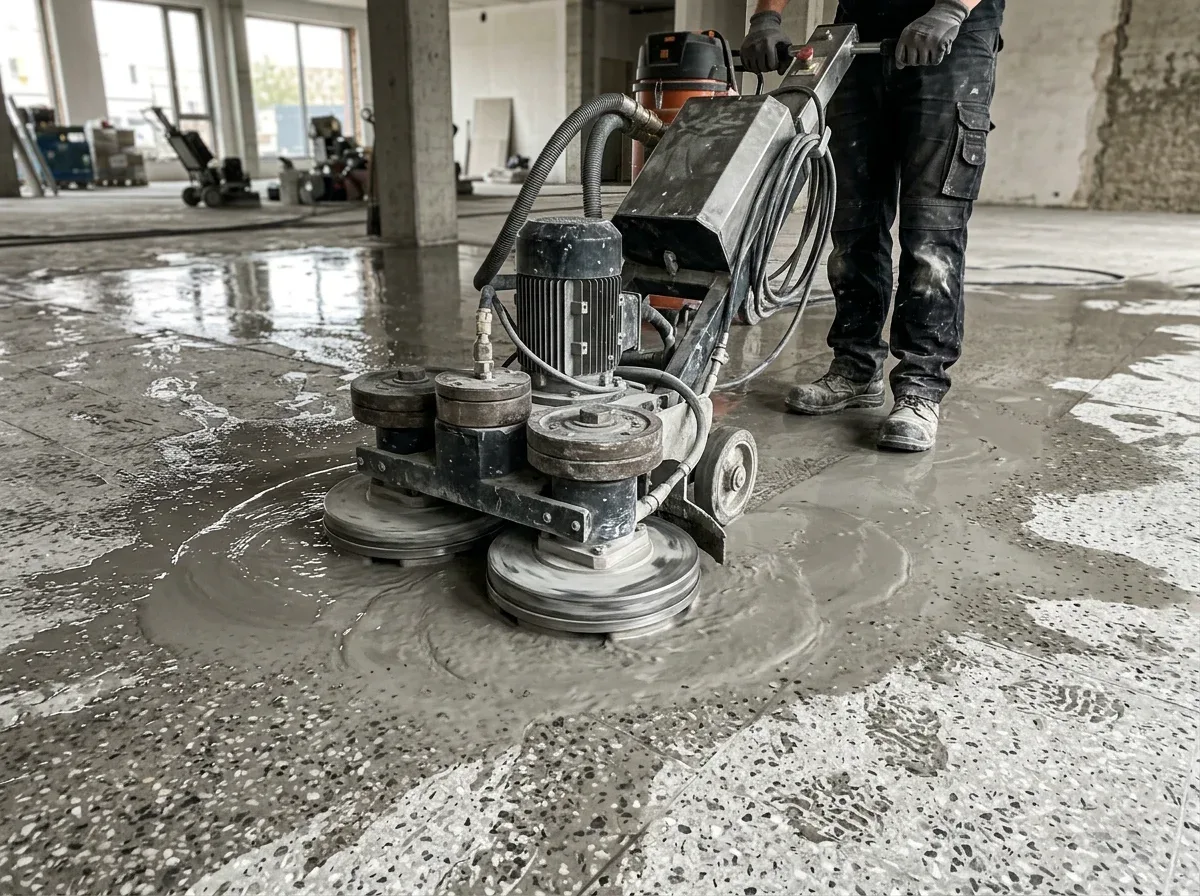
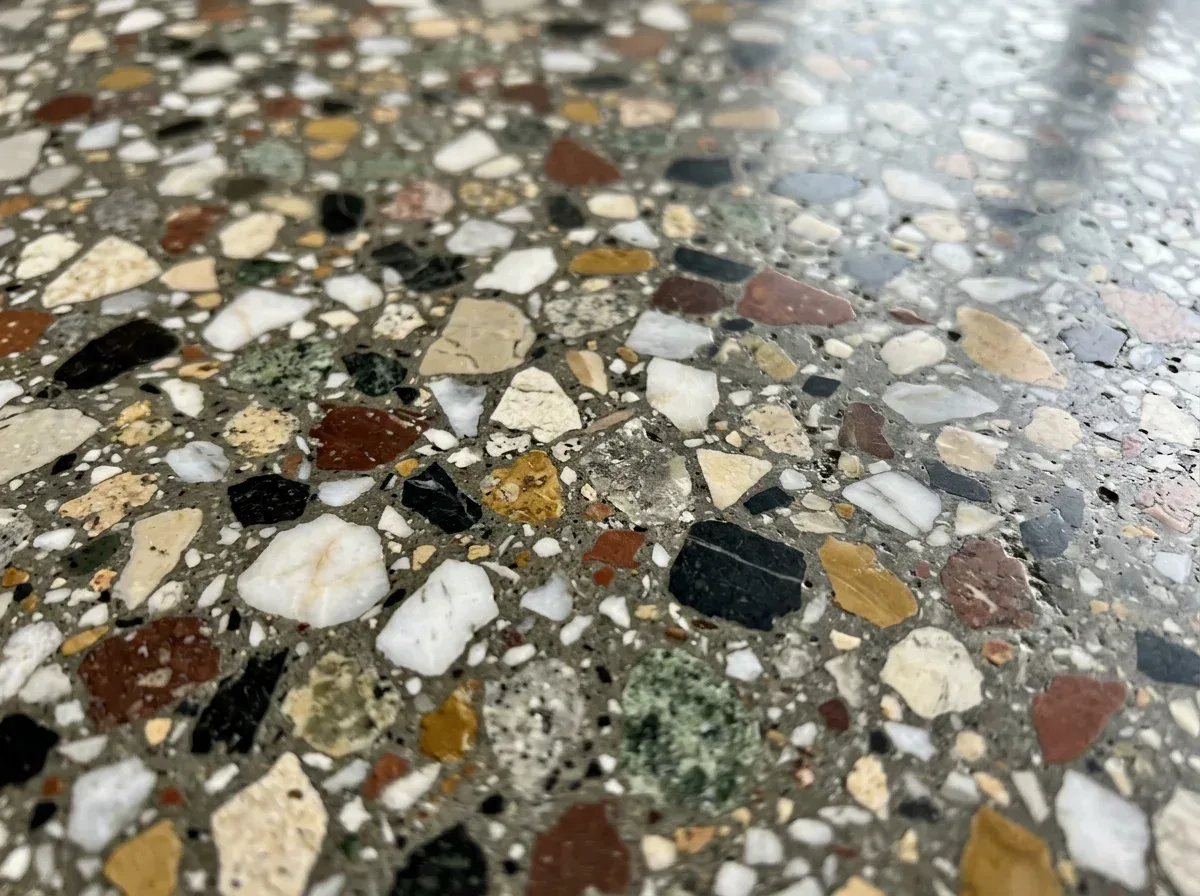
Terrazzo is a flooring material made by mixing marble, granite, or other stone chips with a binder (traditionally cement, resin in modern applications) and pouring it onto the floor or producing it as tiles. After hardening, it is ground to expose the stone aggregates on the surface and then polished.
Types:
- Poured-in-place terrazzo: It is poured on site and usually divided into sections with metal or plastic divider strips; the strips both create the pattern and limit shrinkage cracks.
- Tile terrazzo (mosaic tile): It is laid as factory-made tiles; the joints between tiles and the edge connections require extra care during grinding.
- Cement-based and resin-based terrazzo: They are classified by binder; in older buildings it is mostly cement-based, and since this binder absorbs dirt more easily, sealing is recommended after grinding.

Why Is It So Durable?
The stone chips on the surface of terrazzo and its thick structure make it very long-lasting. Even if a few millimeters are ground off the surface, the same pattern continues underneath. This is why terrazzo is a floor that can be restored many times.
What Happens Over the Years?
Over the years, terrazzo undergoes certain changes in both its surface and its structure; most of these can be remedied by grinding.
- Dulling: The surface polish wears down from foot traffic and sand, and the floor looks dull and gray; the stone chips disappear beneath this layer.
- Staining: Because the cement binder is porous, it absorbs dirt; the floor darkens over the years and does not return to its original color with washing.
- Old polish and varnish layers: Over time they form a yellowed, stained, and slippery film; this covers the terrazzo pattern and must be removed before grinding.
- Cracks: They occur due to building settlement and cement shrinkage; hairline ones remain superficial, while long cracks require repair with filler.
- Voids and dislodged chips: Especially in high-traffic areas, stone chips near the surface come loose; the small pits left behind collect dirt and make the floor look damaged.
- Divider strip problems: Divider strips can rise above floor level or come loose; a raised strip causes tripping, while a missing strip leaves a gap in the pattern.
Restoration by Grinding
1. Removal of Old Coatings
Any old polish, varnish, and coating layers are removed.
2. Coarse Grinding
The dulled and dirty top layer of the surface, level differences, and wear are removed. The stone chips are exposed again.
3. Repair
Defects revealed after coarse grinding are repaired; this way, the fillers are ground together with the floor in the fine stages and blend in.
- Crack and void filling: Cracks and voids are filled with a filler as close as possible to the original color and aggregate look; this way the repair disappears into the floor's pattern.
- Filling in for dislodged chips: Where chips have come loose, filling can be done with similar stone fragments; after grinding, these fragments look like the other chips in the floor.
- Leveling raised strips: Raised strips are ground flush with the surface; the tripping risk is eliminated and the strip appears as a clean line of the pattern.
4. Intermediate and Fine Stages
The stone chips and binder are brought to the same level and made smooth; the shine is built up step by step.
5. Polishing
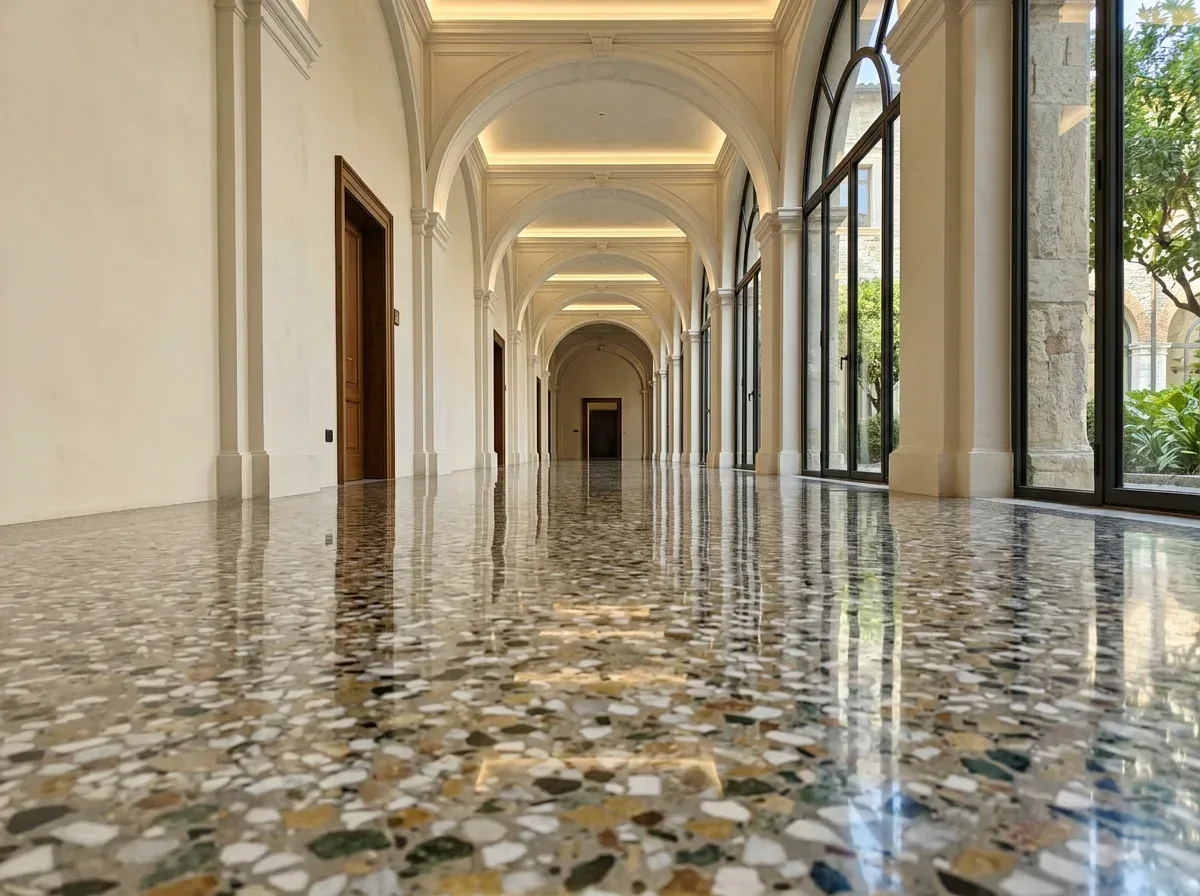
Thanks to the marble chips within it, terrazzo gains a beautiful shine. Depending on use, it can be left glossy or semi-matte.
6. Protection
Because the cement binder is absorbent, sealing is recommended; it reduces stain and dirt absorption.
Is Terrazzo Slippery?
Polished terrazzo is comfortable to walk on when dry; however, like any glossy stone surface, it can become slippery when wet. The problem usually comes not from the terrazzo itself but from the waxed polishes and varnish layers applied on top. When these layers are completely removed by grinding, the floor looks cleaner and is also less slippery. In entrances, bathrooms, and areas opening to the outdoors, traction can be increased by leaving the terrazzo semi-matte (satin).
Grinding or Covering?
| Topic | Terrazzo grinding | New covering on top |
|---|---|---|
| Original look | Preserved, revived | Lost |
| Level and threshold | Unchanged | Rises, doors may need to be trimmed |
| Rubble and demolition | None | Varies depending on the covering |
| Duration | A few days | Longer |
| Lifespan | Can be renewed again and again | As long as the lifespan of the covering |
Divider Strips and Patterns
In cast-in-place terrazzo, the brass, aluminum or plastic divider strips create the pattern of the floor. During grinding, these strips are ground and polished together with the stone; brass strips in particular add a warm line to the floor after polishing. Strips that have come loose or broken are fixed back in place, and missing sections are completed with filler. In patterned terrazzo floors of old buildings, motifs such as stars, frames or logos also become distinct again through grinding.
Preparation Before Work
Good preparation ensures that terrazzo grinding proceeds both cleanly and without interruption, and that no spot needing repair is overlooked.
- Clear and protect the area: The area is cleared, and the wall bases and doors are protected; the machine's ability to work comfortably and keeping the slurry from splashing onto the surroundings depend on this preparation.
- Remove the old polish: If there is old polish or varnish, it is removed first; otherwise it clogs the abrasive, slows down the grinding and the surface is not processed evenly.
- Mark the defects: Hollow areas and cracks are marked; during grinding, these spots are repaired according to the plan and none is skipped.
- Decide on the slurry method: If wet grinding is to be done, the method for collecting the slurry is determined; keeping the slurry from being poured down the drain and from spreading to the surroundings depends on this plan.
- Plan section by section: In apartment entrances, the work is planned section by section and a passage is left for residents; this way the work progresses without interrupting the use of the building.
Terrazzo Floors in Alanya
There are still many terrazzo floors in old apartment buildings, public buildings and some old hotels in the center of Alanya. Most of these floors are well suited to being renewed by grinding rather than being covered over. In the terrazzo grinding we carry out in apartment entrances and stairwell landings, we first remove the old layers of polish, fill in cracks and voids, and finish the floor glossy or satin depending on the intensity of use.
Daily Maintenance

- Dust with a dry mop,
- Damp clean with pH-neutral detergents,
- Avoid acidic products (the marble particles inside are affected by acid),
- Avoid oily polishes and waxes.
Our Terrazzo and Mosaic Grinding Service in Alanya

We grind and re-polish terrazzo and mosaic floors, commonly found in older apartment entrances, corridors and school buildings, without tearing them out. We level out height differences between tiles and repair cracks and voids with color-matched filler.
A terrazzo floor with a sound body can last longer after grinding than a new floor covering. Explore our Terrazzo Grinding service.
How Is Terrazzo Polishing Done?
You can watch one of our team's on-site jobs in the video below.
Polished terrazzo can become slippery when wet. In areas such as schools, hospitals, and apartment building entrances, a semi-matte finish and the right cleaning product should be preferred. — Expert Note