Renewing Old Mosaic Tile Floors by Grinding
In short: Many homes, balconies and apartment entrances built between the 1960s and 1990s still have "mosaic tile" flooring today.
These floors are usually not broken, just tired: dulled, dirty, with height differences between the tiles. In most cases they can be restored by grinding and polishing without being torn out. In this article we explain how it is done.
What Is Mosaic Tile?
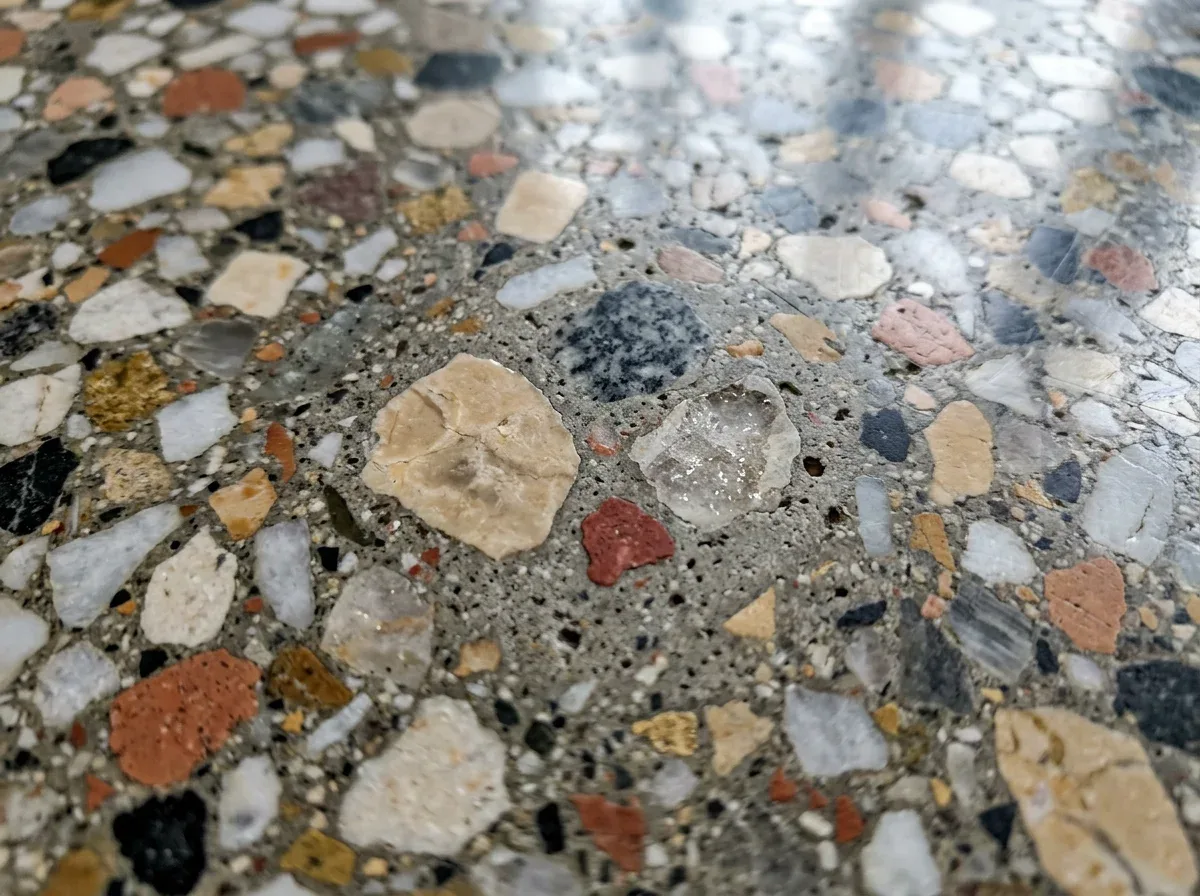
Mosaic tiles are tiles made by pressing stone chips and cement together, with a surface that has been ground smooth. You could call them the factory-made, tile version of terrazzo. They usually come in sizes of 20×20, 30×30 or 40×40 cm and are recognizable by their speckled look.
Typical Problems of Old Mosaic Tiles
In old mosaic tiles, problems usually do not come from the tile itself but from the wear that has built up over the years on the surface, in the grout and in the mortar beneath.
- Height differences: The tiles were not laid at exactly the same level; over the years the edges become more pronounced.
- Dullness and dirt: Over the years the cement binder absorbs dirt; even after cleaning, the floor looks gray and dull, and the color of the stone grains cannot be seen.
- Old polish layers: Varnish or polish applied in the past yellows over time and traps dirt, forming a cloudy layer that hides the tiles' original pattern and color.
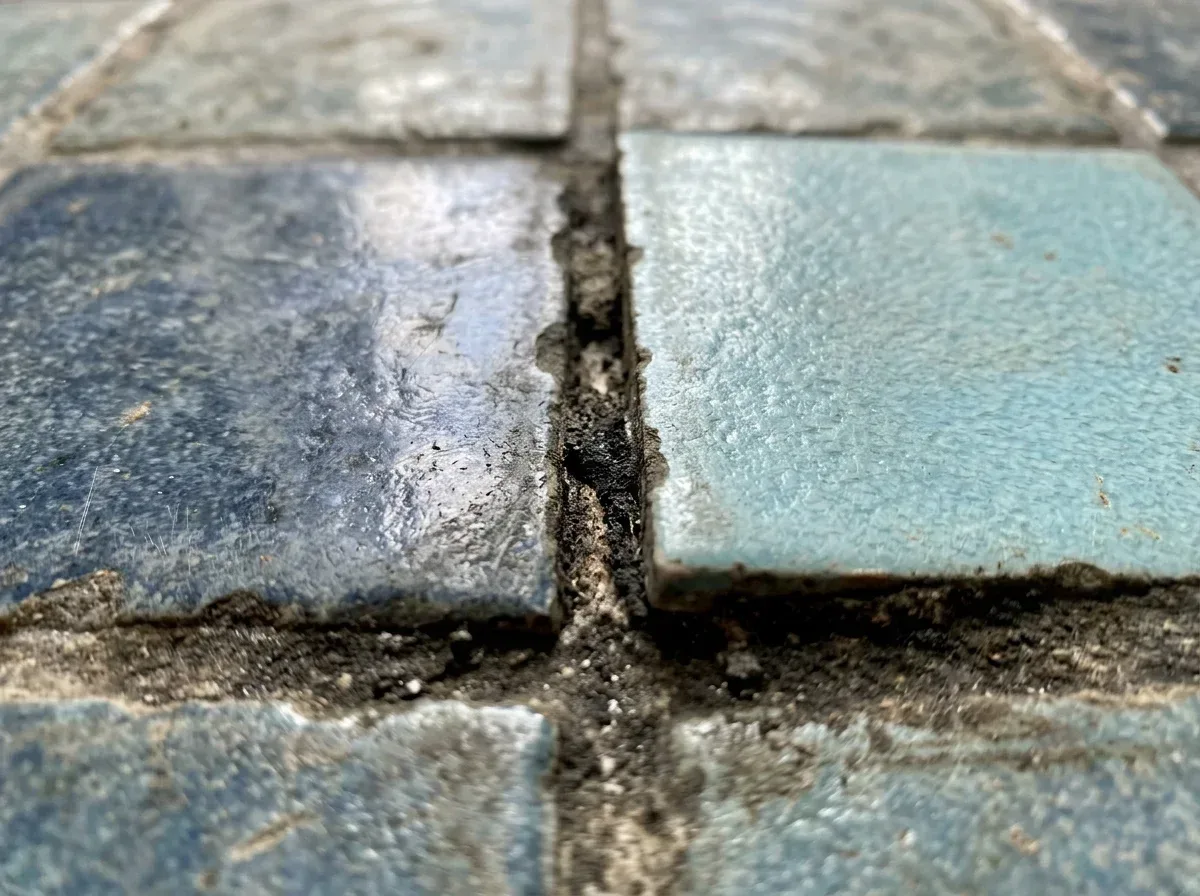
- Grout deterioration: Darkened, hollow or cracked grout both spoils the appearance and lets water and dirt get between the tiles.
- Broken and cracked tiles: Tiles broken by impact or ground movement must be repaired or replaced before grinding; otherwise the break can get bigger under the machine.
- Hollow (loose) tiles: Tiles whose mortar underneath has loosened sound hollow when stepped on; if ground without being repaired, they may shift or break.

Renovation Steps with Grinding
1. Inspection
Hollow tiles are identified with a rubber mallet. The number of broken tiles is assessed, along with whether replacement tiles can be found.
2. Repairing Hollow and Broken Tiles
Before grinding, hollow and broken tiles are repaired so that the machine works on a sound, uniform floor.
- Re-bonding hollow tiles: Hollow tiles are lifted, the underside is cleaned, and they are glued back; a firmly seated tile will not shift or break during grinding.
- Replacing broken tiles: Broken tiles are replaced with tiles of the same pattern where possible. If the old pattern cannot be found, tiles are taken from an inconspicuous part of the house, for example under a cabinet.
- Filling small cracks: Small cracks are repaired with filler; the filler, chosen in a color close to the tile, is leveled together with the surface after grinding.
3. Rough Grinding
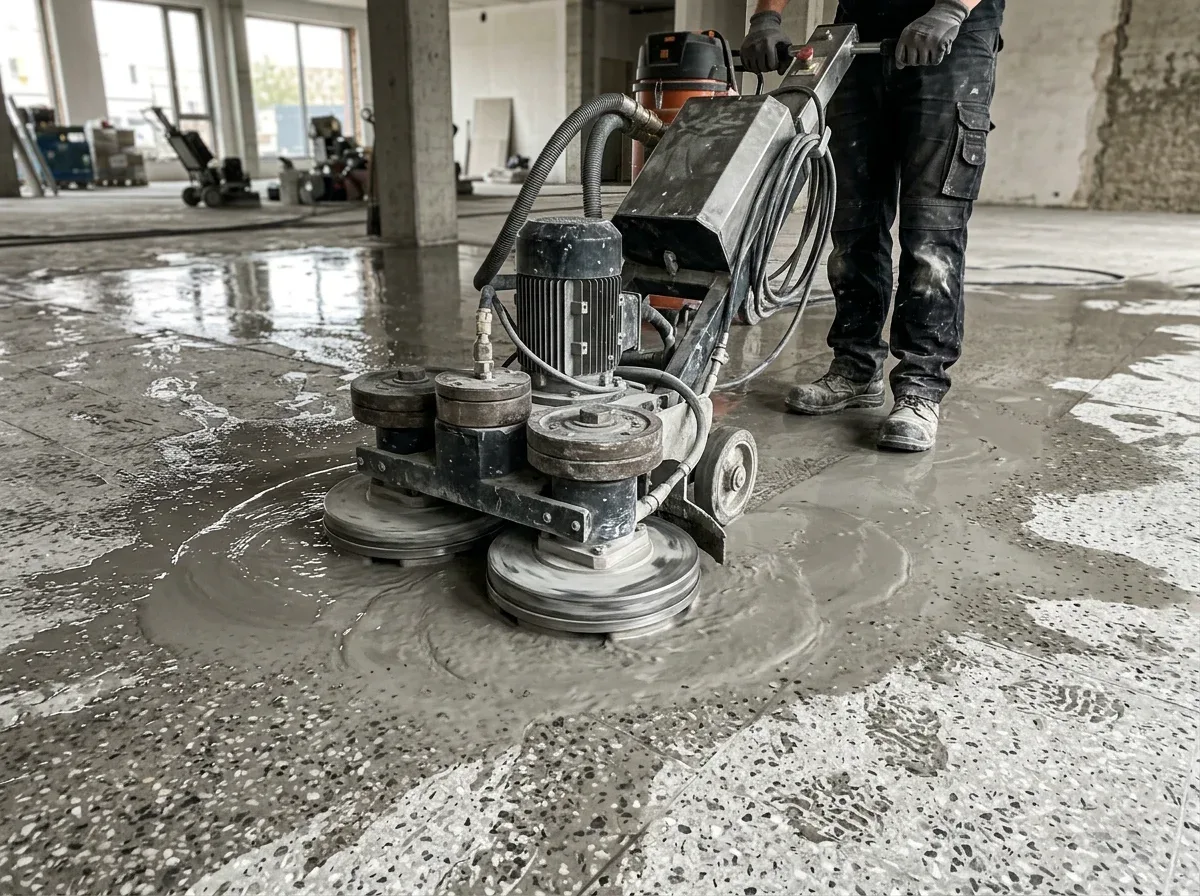
Height differences between tiles are removed in rough grinding with diamond abrasives. In this step, old polish residues and the dirty top layer are also removed, and the floor becomes a single plane. On floors with large height differences, this stage takes longer. When rough grinding is finished, the stone grains of the tiles become visible again, but the surface is still matte and streaked; the shine develops in later stages.
4. Grout Filling
Old and damaged grout is cleaned out and refilled in a color that suits the tile. The slurry produced during grinding is sometimes also used to fill the grout lines.
5. Intermediate and Fine Stages
The surface becomes smooth, and the stone grains and colors come alive.
6. Polishing and Protection
The desired level of shine is achieved; then an impregnating sealer is applied.
Points to Watch on Balconies
Balcony mosaic tiles are exposed to sun, rain and freezing. Therefore:
- Semi-matte surface: A semi-matte finish should be preferred for slip resistance; glossy tile that gets wet in the rain increases the risk of slipping on a balcony.
- Keep the water slope: The balcony floor slopes to direct water toward the drain; if grinding spoils this slope, water pools on the floor and seeps in through the grout.
- Grout suited to outdoors: Grout must be filled with material suitable for outdoor use; indoor fillers can crack and come loose under sun and temperature changes.
- Waterproofing problem first: If there is a waterproofing problem underneath (a stain on the ceiling of the floor below), it must be solved first; otherwise water keeps circulating under the renovated floor.
Mosaic Tile Problems and Solutions
| Problem | Solution |
|---|---|
| Height difference between tiles | Bringing to a single plane with rough grinding |
| Gray, dull surface | Grinding, polishing and impregnation |
| Yellowed old polish | Removal and grinding |
| Darkened, hollow grout | Grout cleaning and refilling |
| Hollow tiles | Removing and re-bonding |
| Broken tiles | Replacement or filling |
Mosaic Tile Grinding While You Live at Home
Because mosaic tile grinding can often be done room by room, it can be planned without completely emptying the house. The room to be worked on is cleared and the doors are closed; since wet grinding is used, no dust is spread. Once a room is finished and dry, the furniture is moved back and work moves on to the next room. For areas such as the kitchen and bathroom, the work schedule is set together with the family.
Care After Renovation
Keeping mosaic tile renewed by grinding looking vivid for a long time depends on simple, regular care with the right products.
- Dry-sweep daily: Remove sand and dust by dry sweeping or mopping daily; sand carried in on shoes scratches the surface and gradually dulls the shine.
- Use a pH-neutral cleaner: Use a pH-neutral cleaner; avoid bleach and acidic products, as they wear down the stone grains and the cement binder.
- Do not apply wax polish: Do not apply wax polish; it yellows the floor and makes it slippery, and the layer that builds up creates extra stripping work at the next grinding.
- Check the impregnation: Check the impregnation every few years with a drop test; if water is absorbed quickly, the protection has weakened and needs to be renewed.
Mosaic Tile Renovation in Alanya
In Alanya, we often come across mosaic tiles in apartment buildings from the 1970s and 80s, in old village houses, and on balconies. In many of these homes, owners who were considering tearing up the floor change their minds when they see how much the tiles can be revived by grinding. In our work, we first identify the hollow and broken tiles, and after the repair we level the floor with grinding, finishing balconies with a semi-matt surface and interiors with a glossy one if desired.
Remove It or Sand It?

If the mosaic tiles are firmly set, honing is an economical, fast solution that preserves the nostalgic texture. However:
- Many hollow tiles: If many tiles have voids underneath, they may break during honing; replacing them one by one also eliminates the advantage of honing.
- Insulation or plumbing problems: If there are insulation or plumbing problems beneath the floor, the tiles have to be removed anyway, and honing will not be a lasting solution.
- Very thin tiles: On tiles that have worn thin over the years, there is no material left to remove by honing; a new honing could crack or even puncture the tile.
In these cases, replacement may be considered.
Our Terrazzo and Mosaic Grinding Service in Alanya

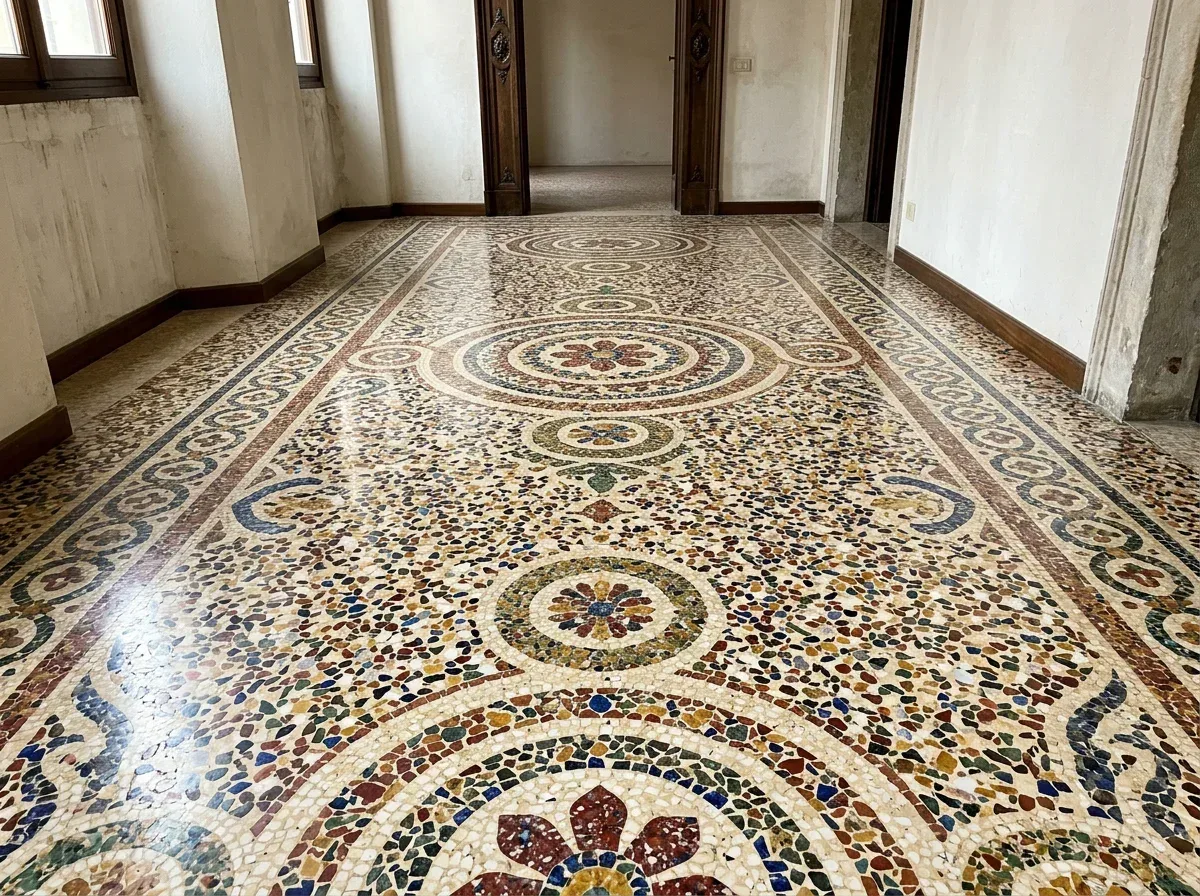
We grind and re-polish terrazzo and mosaic floors, commonly found in older apartment building entrances, corridors and school buildings, without tearing them out. We level out height differences between tiles and repair cracks and gaps with color-matched filler.
A terrazzo floor with a sound base can last longer than a new floor covering when it is restored by grinding. Explore our Terrazzo Grinding service.
Lippage and old coatings are removed, and all tiles are brought to a single flat plane. At this stage, care is taken to avoid chipping the tile edges. — Expert Note