Repairing Scratches and Cracks in Terrazzo and Mosaic Floors
In short: Terrazzo and mosaic tile floors are durable, but they are not immortal.
Building movement, heavy loads and years of use cause cracks, voids and dislodged chips. A good repair can make these defects almost invisible within the floor's speckled texture. In this article, we explain the repair methods.
Types of Problems
Scratches
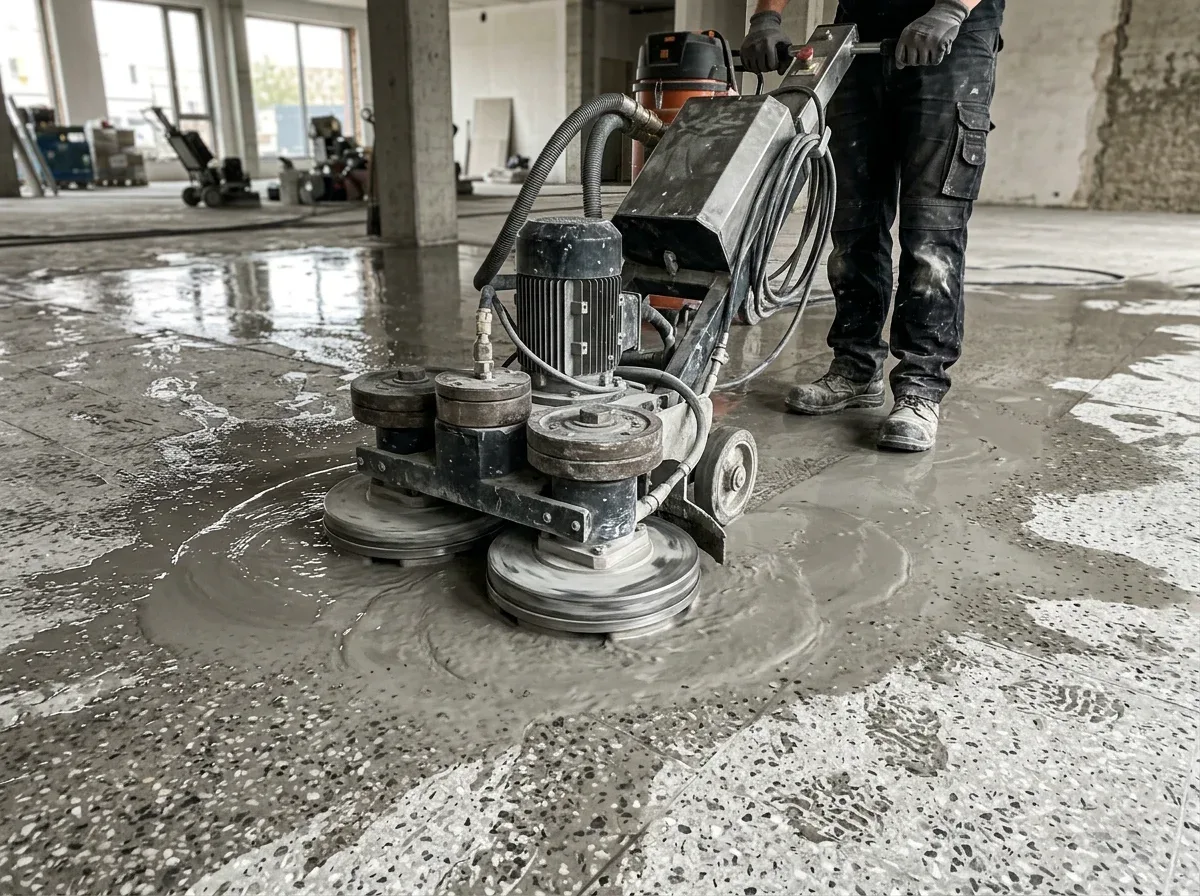
Thanks to terrazzo's thick structure, surface scratches are removed completely by grinding. They do not require a separate repair.
Hairline Cracks
Thin cracks caused by shrinkage of the cement binder or minor movement. They are usually superficial.
Distinct Cracks
Long, distinct cracks caused by building settlement, voids beneath the slab or loads. Sometimes there is a small height difference between the two sides of the crack.
Voids and Dislodged Chips
Small pits formed when stone chips near the surface break loose. They are common in high-traffic areas and in front of doors.
Divider Strip Problems
Metal or plastic strips found in poured-in-place terrazzo:
- Rising above the floor: As the surrounding binder wears away over time, the strips may end up above floor level; this causes tripping hazards and damage to the strip itself.
- Breaking off: Raised or loosened strips can be broken off by foot and wheel impacts; the gap left behind creates a noticeable break in the floor pattern.
- Edge voids: The binder may pull away on both sides of the strip, creating gaps; dirt fills these gaps and over time the strip shifts out of place.

Edge Chipping in Mosaic Tile
Chipped tile edges and breakage in areas where tiles meet the joints.
Repair Methods
1. Preparing the Crack
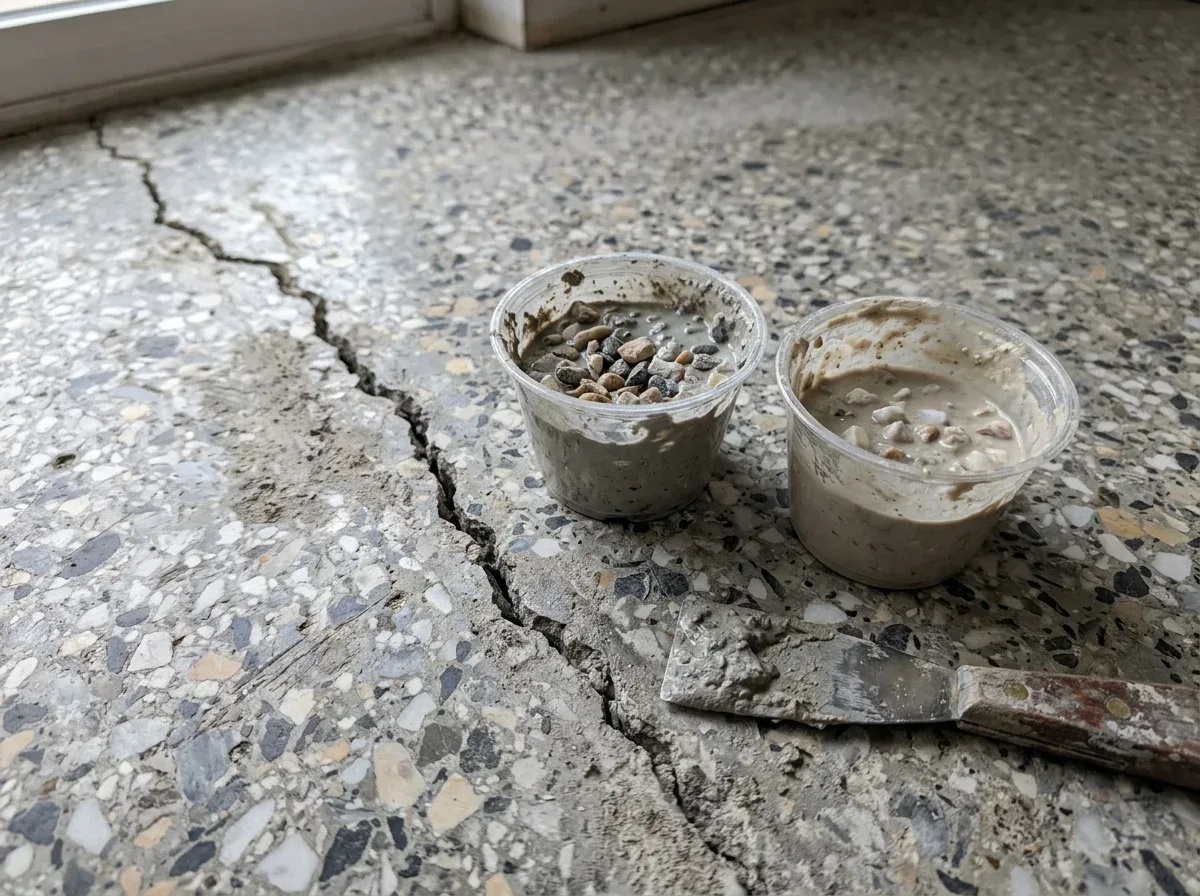
For the repair to be lasting, the inside of the crack must be clean and sound. The crack is slightly widened with a thin diamond blade or bit to remove loose pieces and dirty edges. The dust inside is completely removed with a vacuum; on floors that have been wet ground, you wait for the crack to dry. The same preparation is carried out in voids left by dislodged chips. Filler applied to a dirty or dusty crack will not bond and will come out in a short time.
2. Preparing the Filler Material
In terrazzo repair, the goal is not only to close the crack but to blend it into the floor's pattern. To do this:
- Adjusting the binder color: The binder color is matched to that of the floor; whether the filler avoids looking like a separate line on white, gray or colored floors depends on this.
- Adding stone chips: Small stone chips resembling the aggregate in the floor are added to the mix; after grinding, these chips are exposed and blend the filler into the speckled texture.
- The right type of filler: Cement-based or resin-based fillers are chosen according to the type of floor and the movement of the crack; a wrong choice causes the filler to crack or its color to separate.
This job calls for some skill with color; the most suitable mix is found by making small trials.
3. Filling and Curing
The filler is pressed into the crack, left slightly proud of the surface, and allowed to harden completely.
4. Grinding
The filler is ground flush with the surrounding floor. Grinding also exposes the chips within the filler and integrates the repair with the floor. For this reason, the repair is usually carried out as part of the overall grinding process.
5. Strip Repair
Raised strips are leveled with the surface by grinding. In place of broken or missing strips, a similar strip can be installed, or the strip location can be closed with filler.
Moving Cracks
In cracks that open and close or grow with the seasons, rigid filler cracks again. For these cracks:
- Investigate the cause: The cause of the crack, such as slab movement or settlement, should be investigated; filler applied without eliminating the cause will reopen in a short time.
- Flexible filler or movement joint: If necessary, flexible filler or a movement joint should be considered; these solutions absorb the floor's movement and prevent the rigid filler from cracking again.
Repair by Defect Type
| Defect | Repair | Visibility |
|---|---|---|
| Scratch | Grinding | Disappears completely |
| Hairline crack | Thin filler and grinding | Often goes unnoticed |
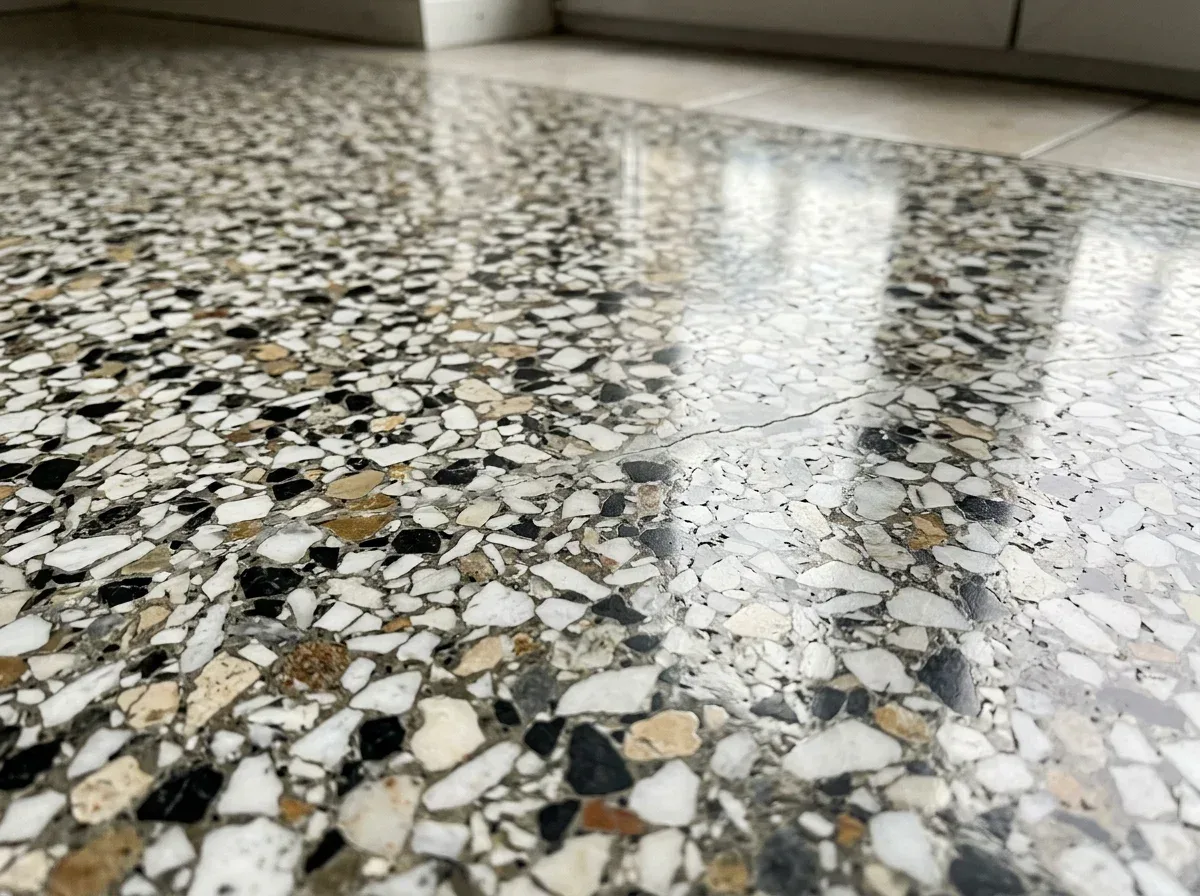
| Distinct crack | Widening, colored filler with chips, grinding | Barely noticeable within the speckled texture |
| Loose aggregate | Aggregate-filled patch | Noticeable on close inspection |
| Moving crack | Flexible filler, investigation of the cause | Remains as a fine line |
How Are Color and Aggregate Matched?
Success in terrazzo repair depends on how well the filler matches the floor. The dust and slurry produced during grinding are a very valuable resource for matching the color of the binder. White or gray cement, pigments, and chips resembling the stones in the floor are mixed in small batches; each mix is first applied to a test spot and ground to check the result. Because the color looks different when wet and when dry, the decision is made after the filler has dried and been ground.
Extending the Life of the Repair
Whether a repaired crack stays fixed depends as much on eliminating the cause and on subsequent use as on the filler itself.
- Eliminate the cause: If possible, the load or movement that caused the crack is eliminated; as long as the same heavy item or weak substrate remains in place, the crack may reopen.
- Protect with impregnation: The repaired area is protected with an impregnating sealer; the filler does not absorb dirt and does not separate over time from its surroundings as a dark line.
- Do not drag heavy items: Heavy items should not be dragged across the repaired crack; a sudden load on the edges of the filler can lift it out of place.
- Early intervention: If the crack reappears, intervene early; repairing it while it is still a fine line is much easier than repairing damage that has grown with loose pieces.
Terrazzo and Mosaic Repair in Alanya
In most of the terrazzo and mosaic floors in the entrances and stair landings of older apartment buildings in Alanya, we see long cracks caused by building settlement and aggregate coming loose in front of doors. During our grinding work, we mark these defects individually, prepare fillers matched in color and aggregate, also using the floor's own slurry, and complete the repair within the grinding process. For cracks we suspect are moving, we point this out beforehand so that expectations are set correctly.
Expectations

A well-executed terrazzo repair is not noticeable from a distance. However, because of terrazzo's granular structure, the filled area may look slightly different when viewed up close. This is the nature of repair work.
Our Terrazzo and Mosaic Grinding Service in Alanya

We grind and re-polish terrazzo and mosaic floors, commonly found in older apartment building entrances, corridors and school buildings, without removing them. We level out height differences between tiles and repair cracks and voids with color-matched filler.
A terrazzo floor with a sound base can last longer after grinding than a new floor covering. Explore our Terrazzo Grinding service.
The crack is cleaned out and, if necessary, widened slightly. Loose fragments are removed, and dust and dirt are cleaned away. — Expert Note