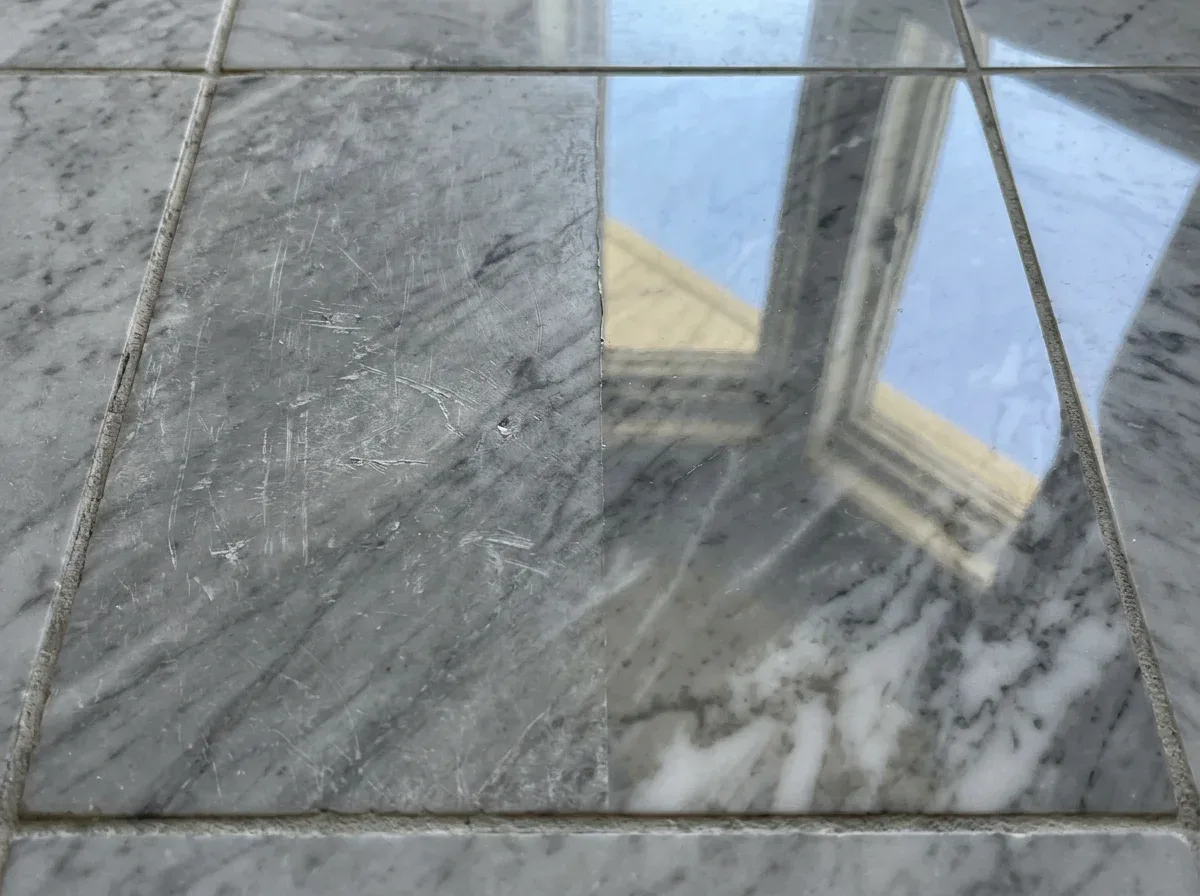
Rescuing the Old Floor Found Under Carpet or Flooring
In short: Many people who buy an old apartment and start renovating discover marble, mosaic tile or terrazzo underneath once they remove the carpet, laminate or PVC covering.
Most of the time this floor is covered in adhesive marks, nail holes and stains, and at first glance it looks hopeless. Yet in many cases this old floor can be saved and delivers a result far more valuable than a new covering. In this article we explain how it is done.
Why Was It Covered Up?
In the past, when carpet and laminate were fashionable, sound marble and mosaic floors were covered over. Sometimes the floor was covered because it felt cold, had become dull or had cracked. In other words, the floor underneath was usually covered up out of preference, not because it was damaged.
What Will You Encounter?
Adhesive Residue
Carpet and PVC coverings are usually glued down. When they are removed, dark, hard or sticky marks remain on the floor.
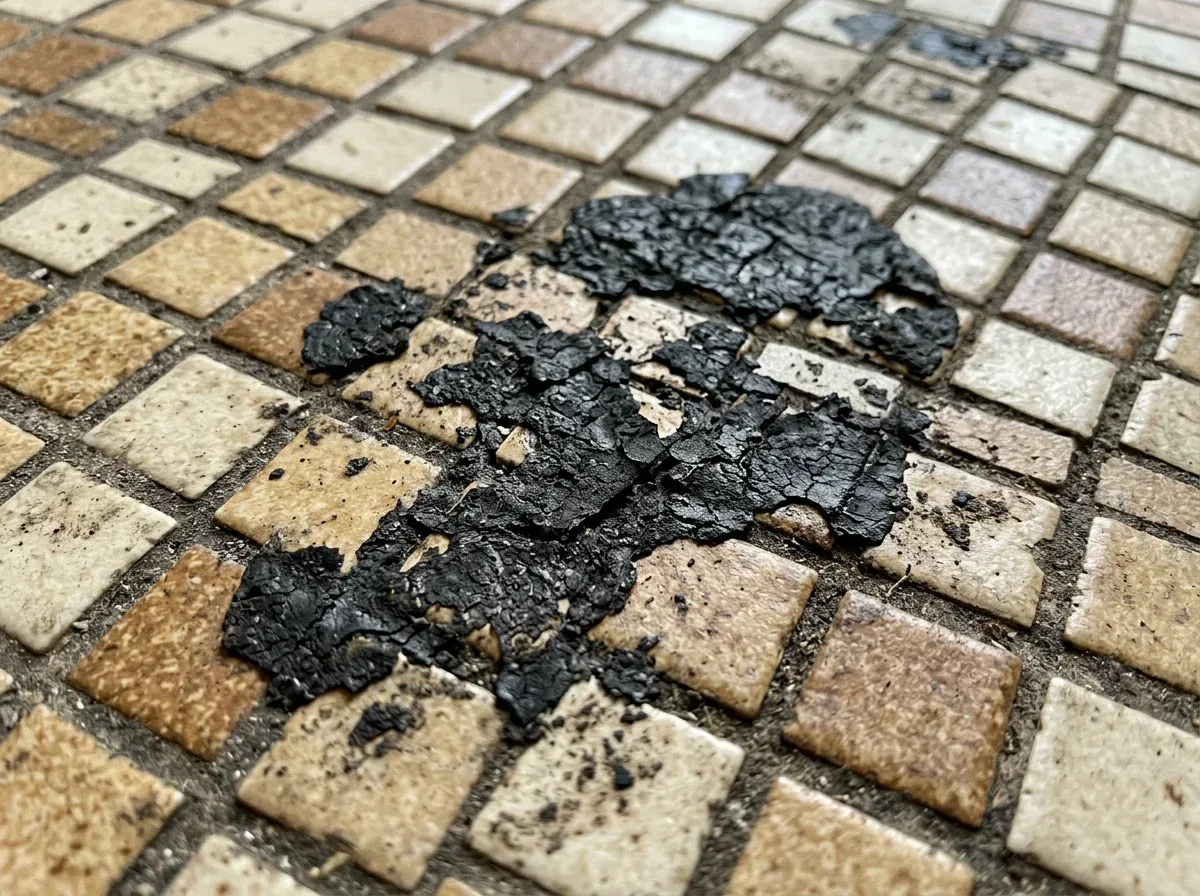
Screed and Leveling Residue
A thin layer of leveling mortar may have been poured onto the floor before laminate or another covering was installed.
Nail and Screw Holes
Holes drilled for carpet tack strips and skirting boards.
Stains
Traces of moisture trapped under the carpet, adhesive and spilled liquids.
Color Differences
Areas under furniture, exposed areas and the edges of the covering may have different tones.
Restoration Steps
1. Inspection
The decision on whether to restore is made after the covering is removed, by examining on site the type and condition of the floor and the residue on it.
- Type of floor: Whether it is marble, mosaic, terrazzo or cement tile determines which abrasives, removers and polishing method will be used.
- Soundness of the slabs: By tapping the slabs lightly, hollow-sounding areas are found; these are places that must be lifted and re-bonded before grinding.
- Type and thickness of the adhesive: Whether the residue is hard or sticky, thin or thick, indicates whether it will be removed by scraping, with a remover or by coarse grinding.
- Broken and missing pieces: Pieces broken or lost because of carpet strips, plumbing passages or earlier renovations reveal the need for repair and replacement material.
Each of these points is assessed individually on site.
2. Removing the Residue
Before grinding begins, the adhesive and mortar layers on the surface are removed without wearing down the stone, using different methods depending on their thickness.
- Mechanical removal: Thick adhesive and mortar residues are scraped off first, so that the abrasives of the grinding machine are not needlessly used up on this layer.
- Cleaning thin residue: The thin layer of adhesive left after scraping is cleaned off with suitable removers or coarse grinding, exposing the stone's own surface.
- Stone-appropriate remover: Because acidic or aggressive removers can leave burns, dullness and discoloration on marble and tile, the product is first tested on a small area.
3. Repair
Before grinding, holes, hollow slabs and missing pieces are fixed so that the polished surface is whole and sound.
- Filling holes and small chips: Nail holes and small chips are filled with filler matched to the color of the stone; once the filler hardens, it is ground down to surface level.
- Re-bonding hollow slabs: Slabs that have lost their backing are lifted and re-bonded; if left in place, they may break under the weight and vibration of the grinding machine.
- Completing broken or missing pieces: Stone or tile similar in color and pattern is found to replace broken or missing pieces; on old floors this search can take time.
4. Stain Removal
Poultice applications can be used for deep stains caused by adhesive and moisture.
5. Grinding
Coarse grinding removes remaining marks, level differences and surface damage; this is followed by the finer stages and polishing.
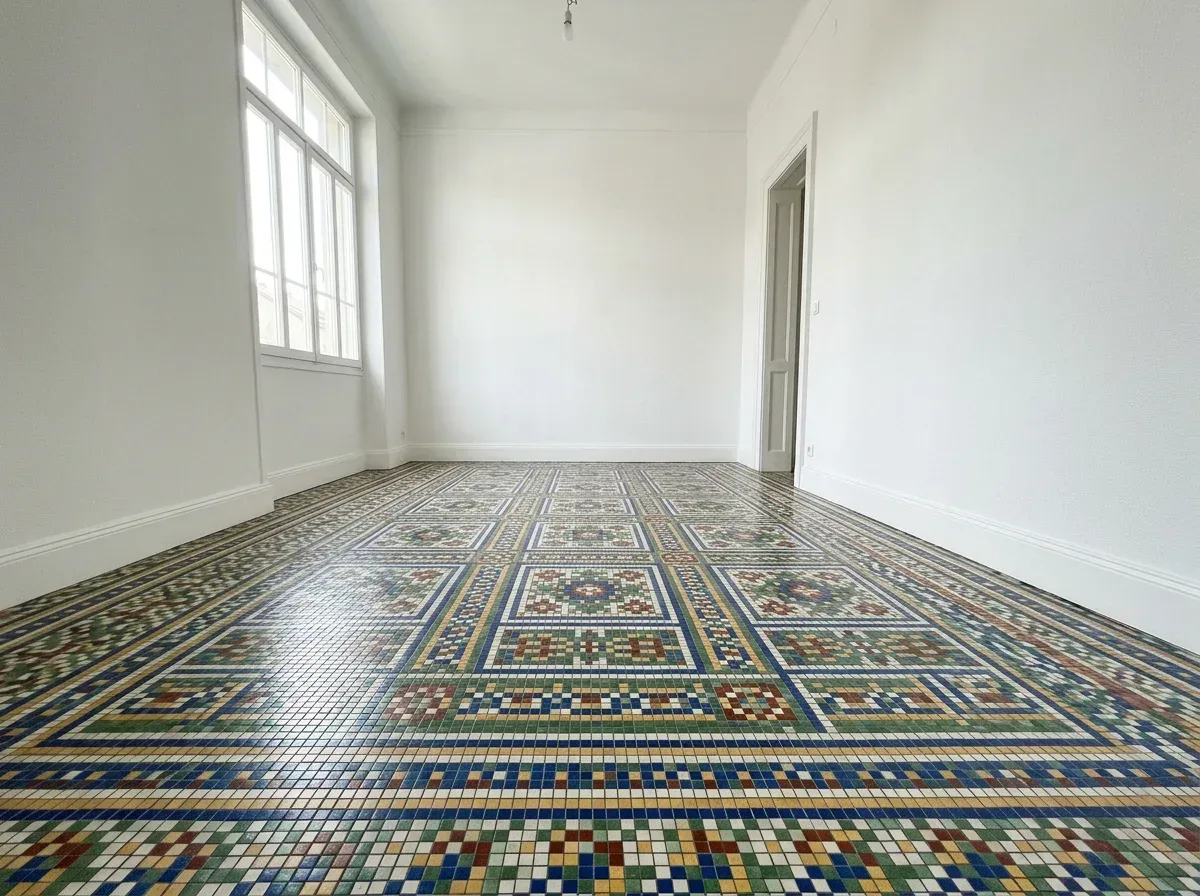
6. Protection
Impregnation reduces stains and water absorption.
When Can't It Be Saved?
Not every floor found under a covering can be saved; the structural condition of the stone and the scope of the planned renovation determine the decision.
- Most slabs are hollow or broken: If most of the slabs are hollow or broken, repairing them one by one is more laborious than laying a new floor and gives a weaker result.
- Serious moisture or plumbing problem: If there is a serious moisture or plumbing problem beneath the floor, grinding done without fixing it will soon be spoiled by re-staining and swelling.
- Very thin or damaged floor: On thin slabs that have been ground many times in the past or badly damaged, there may not be enough material left for another grinding.
- If underfloor heating will be installed: If a new system such as underfloor heating is going to be installed, the floor will have to be torn up anyway, so trying to save the old stone is often wasted effort.
In these cases, it may be necessary to replace the floor rather than salvage it.

What You Encounter by Covering Type
| Removed covering | Typical residue | Cleaning method |
|---|---|---|
| Carpet | Adhesive, tack strip nail holes | Scraping, remover, rough grinding, filling |
| PVC / vinyl | Thin, hard adhesive layer | Suitable remover, rough grinding |
| Laminate / parquet | Leveling screed, underlay marks | Mechanical removal, rough grinding |
| Ceramic (laid over the floor) | Adhesive mortar | Careful removal, extended rough grinding for thick mortar |
Salvage or New Flooring?
If the floor underneath is sound, salvaging it usually gives a more economical and more valuable result than a new covering. There is no demolition debris to remove, the floor level and door thresholds stay the same, and the doors do not need to be cut. Moreover, old marble, mosaic or terrazzo are materials that are expensive to re-lay at the same quality today. Before making a decision, having a small trial grinding done in a few spots shows clearly how much of the floor can be salvaged.
The Right Order in the Renovation Schedule
When floor restoration is placed at the right point in the renovation schedule, the polished surface is not damaged by later work and no work has to be repeated.
- Have the floor inspected first: An inspection carried out right after the covering is removed clarifies from the start whether the floor can be salvaged and how the following work should be planned.
- Finish the plumbing and wall work first: Debris from electrical, plumbing and wall work, dropped tools and mortar can damage a polished floor; for this reason, all of it is completed before grinding.
- Split the painting in two: Rough painting is done before grinding; the final coat of paint is left until after grinding so that grinding dust and water splashes do not reach the walls.
- Cover the floor with a protective sheet: If the floor is covered with hard cardboard or a protective sheet until grinding is finished, workers' foot traffic and falling materials will not leave new scratches and stains.
- Place furniture after curing: Furniture and rugs placed before the impregnator has fully cured can prevent the product from penetrating the stone and may leave marks and stains on the surface.
Floors Found Under Coverings in Alanya
Homeowners and foreign buyers renovating older apartment buildings in central Alanya frequently come across sound marble and mosaic floors under carpet or laminate. In these apartments, we first examine the type of adhesive and mortar residue, show the result on a small trial area, and then complete residue removal, repair and polishing in a single job. This way, the homeowner avoids the cost of new flooring while the floor's original character is preserved.
Precautions During Renovation

A salvaged original floor can easily be damaged while renovation is under way, so protecting it and timing the honing correctly are important.
- Covering with rigid panels: Rigid protective panels keep falling tools and materials from striking the floor and stop dragged items from scratching it.
- Protecting against paint, plaster and render: These residues stick to the stone and leave stains; on a protected floor, no extra cleaning or stain removal is needed afterwards.
- Scheduling honing for last: If honing is left until the end of the renovation, damage caused by other work will not mar the newly finished surface.
Our Marble Grinding Service in Alanya

We restore marble floors that have become dull, scratched, or have uneven levels between slabs using wet grinding that keeps dust under control. From coarse grinding to polishing, we choose each stage according to the type of stone, and if needed, we repair cracks and joints as part of the same job.
We inspect your floor on site and tell you clearly whether it needs grinding or just polishing. Explore our Marble Grinding service.
If the old floor is to be restored, it must be protected during the other renovation work: — Expert Note