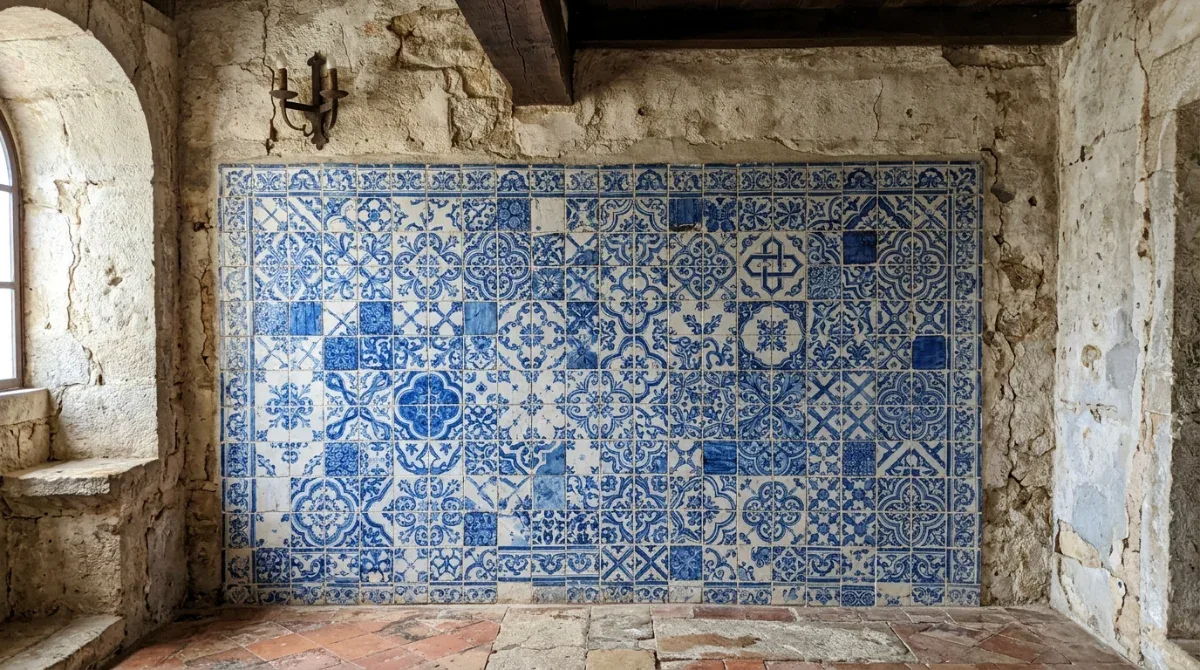
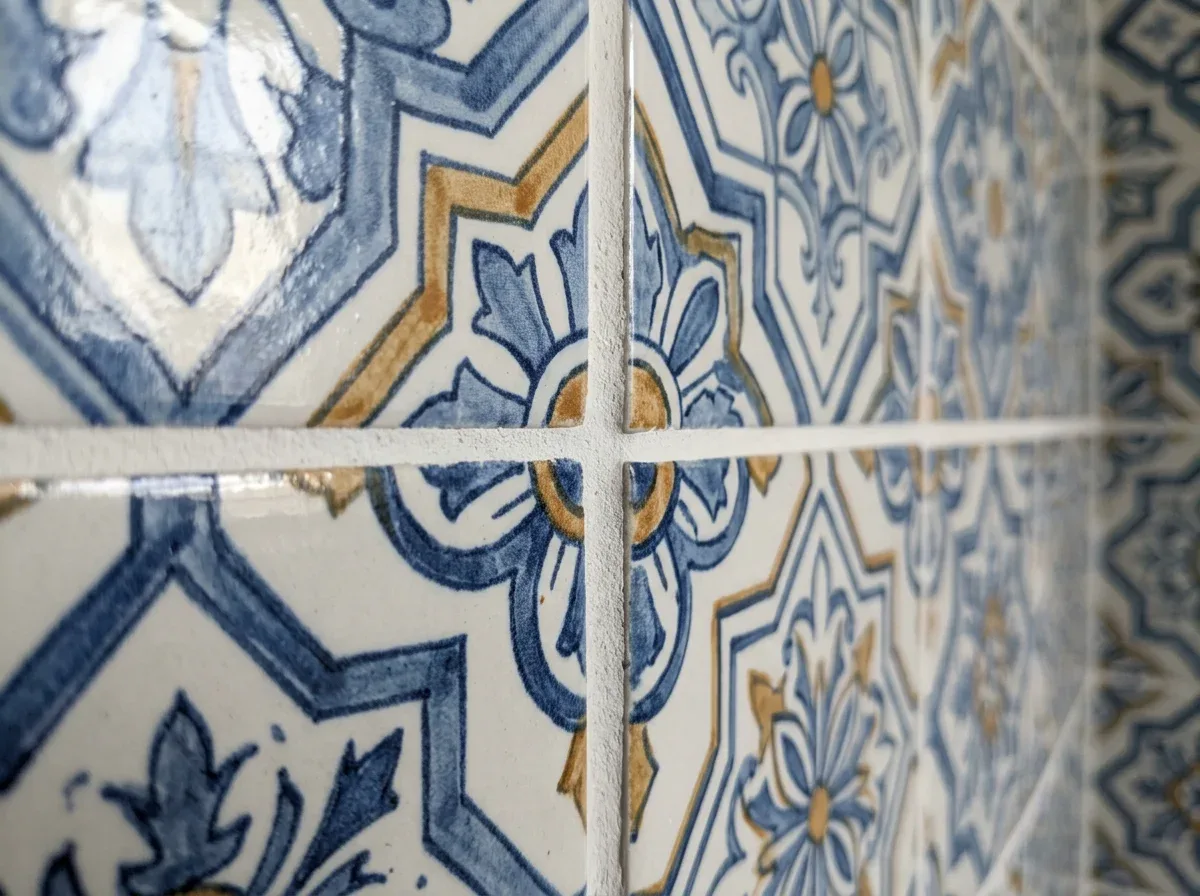
Wear and Polishing on Tile (Çini) Floors
In short: Tile and glazed ceramic tiles, with their colorful patterns, are especially popular in hotel lobbies, restaurants, hammams, and traditional-style homes.
However, unlike marble or terrazzo, ceramic tile is not a material that can be renewed by grinding. In this article, we honestly explain the wear seen on ceramic tile floors, what can be done, and what cannot.
The Basic Difference Between Ceramic Tile and Natural Stone
Natural stone and terrazzo are made of the same material from the surface to the core. That is why, when the surface is ground down, the same stone is still underneath.
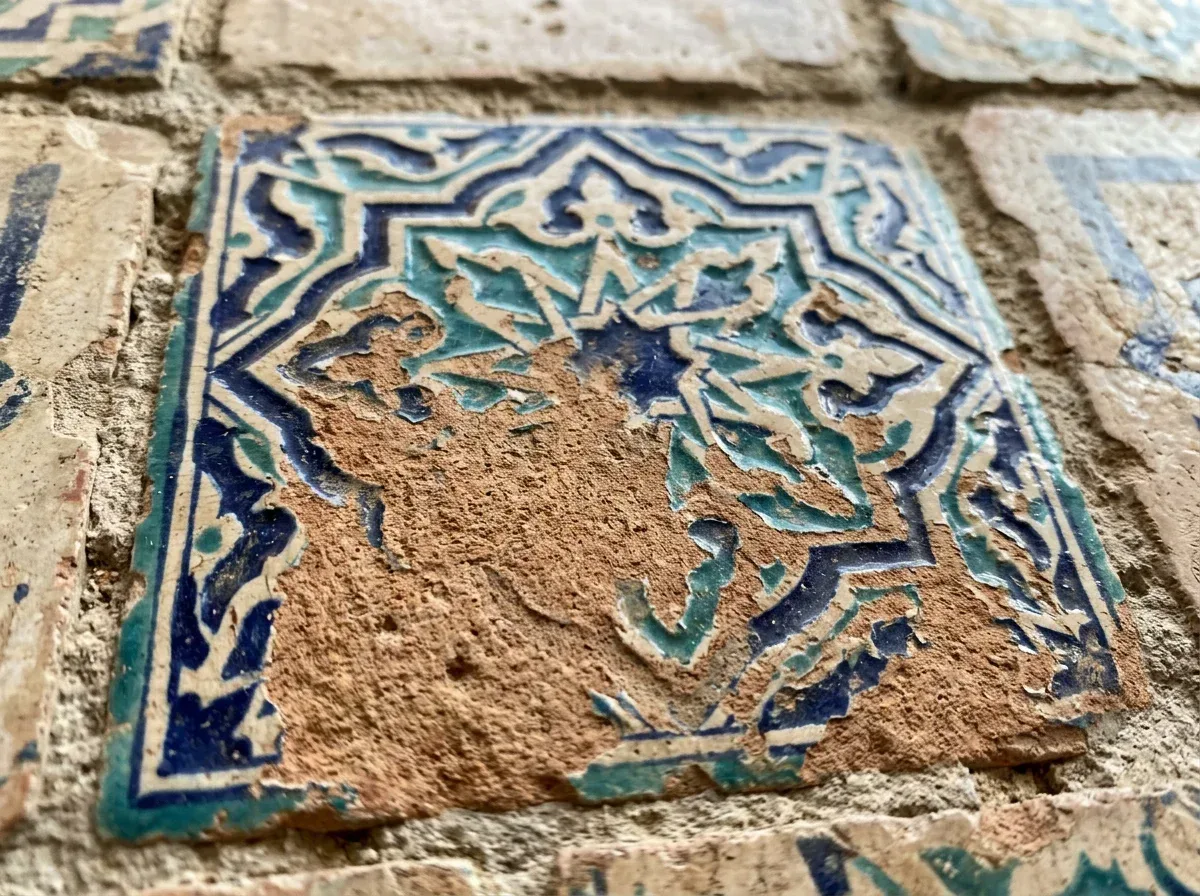
With ceramic tile, however, the pattern and shine lie in a thin glaze layer on top of the tile body. When the glaze wears away, a patternless, matte, and absorbent body is revealed underneath. For this reason:
- Ceramic tile cannot be ground: Grinding completely removes the glaze layer; the pattern and shine are lost, and the matte, absorbent tile body is exposed underneath.
- Worn glaze does not come back: There is no way to restore worn glaze; further wear can only be prevented, or the tile can be replaced.
Problems Seen on Ceramic Tile Floors
Glaze Wear
On heavily trafficked paths, especially in front of doors, the glaze thins, dulls, and eventually the pattern wears off.
Hairline Glaze Cracks
Some traditional ceramic tiles have a network of fine cracks on the glaze surface. These cracks can trap dirt and stains.
Stains
Dirt, oil, and colored liquids seep into glaze cracks and worn areas.
Grout Staining
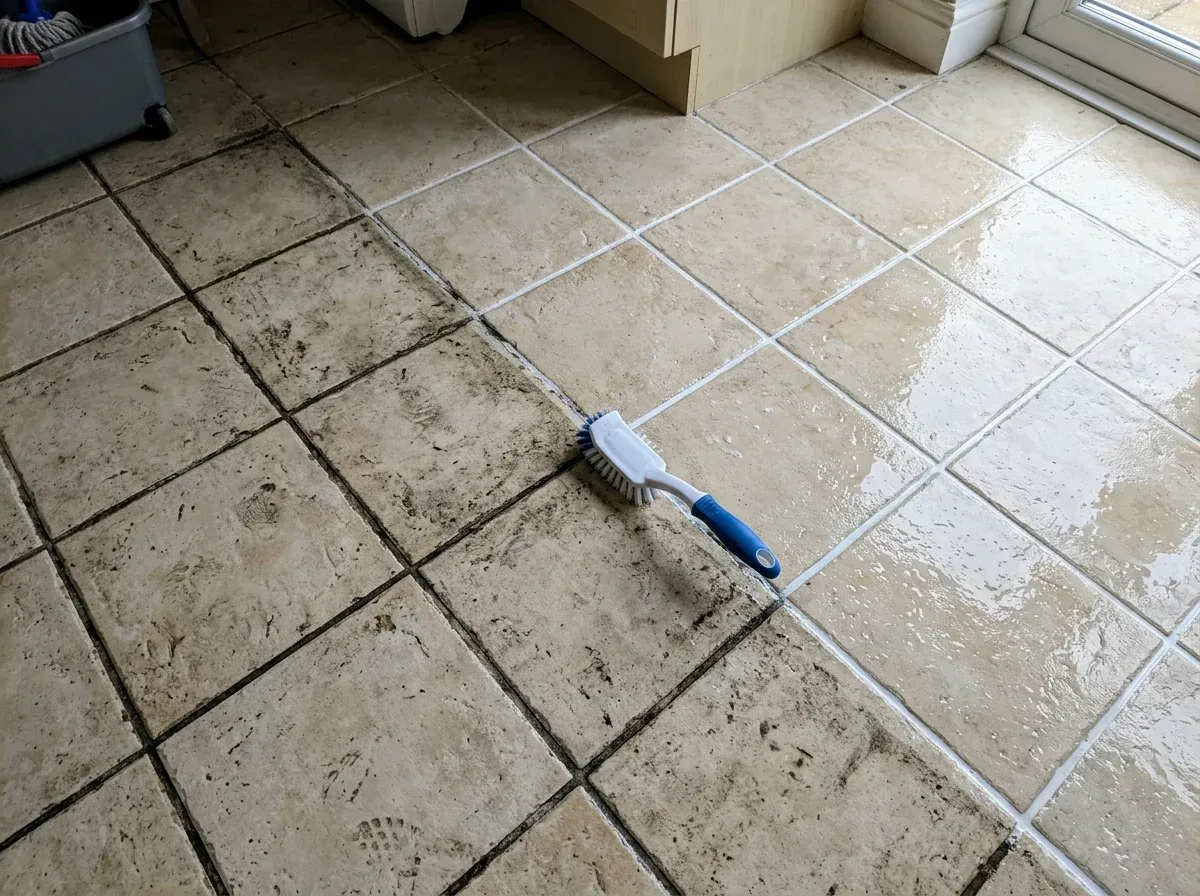
One of the things that most affects the overall appearance of a ceramic tile floor is darkened grout.
Broken Tiles
Caused by impact or movement of the substrate.
What Can Be Done?
Deep Cleaning
On ceramic tile floors, the first and often most effective step is deep cleaning. Using machines with soft pads and pH-neutral or mildly alkaline cleaning products that do not damage the glaze or grout, the dirt, old polish, and grease layer accumulated over the years is removed. For stains that have penetrated glaze cracks, suitable stain-removing products can be applied locally. After deep cleaning, the patterns and colors of many ceramic tile floors look far more vivid than expected.
Grout Cleaning or Renewal
Darkened grout is cleaned or renewed. Renewing the grout on a ceramic tile floor often makes the biggest visual difference.
Light Shine Refreshing
On tiles whose glaze is not worn but whose surface has become dirty and dull, the surface can be revived with very fine polishing products suited to the glaze and with soft pads. This process must be done without wearing down the glaze; it should first be tested in an inconspicuous spot.
Protection
On areas with cracked or worn glaze, suitable protective products can reduce the absorption of dirt and stains.
Tile Replacement
Tiles whose glaze is completely worn can be replaced with tiles of the same or a similar pattern. Finding similar tiles can be difficult for handmade and custom-patterned tiles; some workshops can do custom production.
What Should Not Be Done?
Some methods applied to natural stone are never used on ceramic tile floors, because they permanently damage the glaze.
- Grinding with diamond pads: Diamond pads wear away the thin glaze layer in a short time; the pattern is erased and the tile reverts to a matte, absorbent surface.
- Acidic cleaners: Harsh cleaning with acidic cleaners damages the grout and some glazes; the grout gets eroded and the glaze surface may become dull.
- Steel wool and abrasive sponges: Steel wool and abrasive sponges leave fine scratches on the glaze; dirt fills the scratches and the tile gradually dulls.
- Film-forming polishes: Polishes that leave a film on the surface make it slippery and cause yellowing; over time they trap dirt, and removing them requires separate work.

What to Expect on a Ceramic Tile Floor
| Condition | What Can Be Done | Result |
|---|---|---|
| Glaze intact, surface dirty | Deep cleaning, light shine refreshing | Noticeable revival |
| Grout darkened | Grout cleaning or renewal | The overall look of the floor improves considerably |
| Glaze cracked, stained | Stain removal, protective | Stains fade, absorption of new stains is reduced |
| Glaze partially worn | Cleaning and protection | Wear can be slowed, but worn areas do not come back |
| The glaze is completely gone | Tile replacement | Can only be solved with a new tile |
Slowing Down Wear
Since glaze that has worn off ceramic tile cannot be restored, the real task is to stop the sand and impacts that wear the glaze before they reach the floor.
- Put down doormats: Place suitable mats at entrances and high-traffic points; sand is the glaze's worst enemy.
- Fit felt pads on legs: Fit felt pads on chair and table legs; dragged furniture will then not leave scratches or wear marks on the glaze.
- Soft mop and pH-neutral product: Use a soft mop and pH-neutral products for cleaning; dirt is removed without wearing the glaze and grout lines.
- Lay a runner: In restaurants and lobbies, a runner can be laid along the heavy walking path; this protects the most worn strip from direct foot traffic.
- Replace broken tiles: Replace broken tiles without delay; the edges also put stress on the surrounding tiles and can cause new cracks in the glaze of sound tiles.
Floors Combining Ceramic Tile and Natural Stone
In some hotel lobbies and hammams, ceramic tiles are used within marble or travertine frames. On these floors, the marble sections can be honed and polished while the ceramic sections must be protected. During the work, the ceramic areas are masked off with tape, and the marble sections are processed right up to their edges with hand machines. This way the glaze layer of the ceramic is not damaged while the marble is renewed, and the two materials together gain a clean, harmonious look.
Ceramic Tile Floors in Alanya
In Alanya, we come across ceramic tile floors in traditionally decorated hotel lobbies, restaurants and hammam entrances. We state clearly from the start that we do not perform honing on these areas; instead, we restore the floor with deep cleaning, grout renewal and protection treatments. In areas where ceramic and marble are used together, we hone and polish the marble sections while keeping the ceramic tiles protected.
Tile or Marble?

On some floors, stones with patterns worked onto marble, or marble inlays, can be mistaken for ceramic tile. Marble inlay can be polished; glazed tile cannot. Identifying the surface correctly is important for choosing the right method.
Our Tile and Cement Tile Care Service in Alanya

On patterned tile and cement tile floors, we use cleaning and restoration methods chosen for each surface, with the priority of preserving the pattern. We clean the grout lines and protect the surface against stains with a suitable sealer.
On patterned floors, we first test which treatment is safe on a small area. Explore our Tile Polishing service.
Dirt, grease and residue on the glaze surface are cleaned with suitable products and soft pads. This often results in a noticeable improvement in the appearance of the floor. — Expert Note