Cleaning Jacuzzi and Pool Mosaics
In short: Mosaics used in hotel pools, villa jacuzzis and spa pools are in constant contact with water.
Over time, a limescale line forms at the water level, grout darkens, and algae grows in the corners. In this article, we explain how to clean each type of mosaic safely.
Types of Mosaic
The material of the mosaic directly determines which cleaner can be used safely and how much care the surface needs.
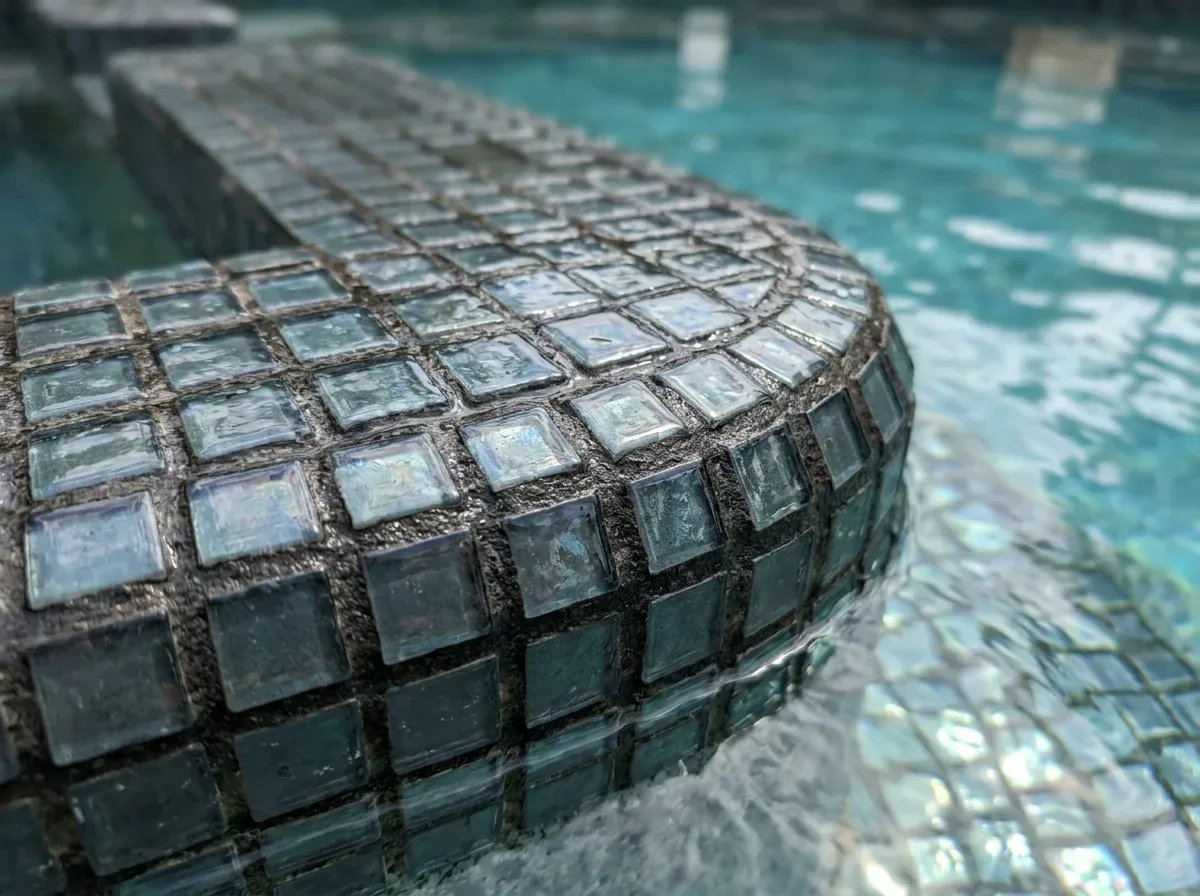
- Glass mosaic: It is resistant to acid, but its glossy surface can be scratched and become dull if cleaned with harsh pads and abrasive powders.
- Porcelain and ceramic mosaic: It is durable and can be cleaned with suitable descalers, but you should still check whether the product damages the grout.
- Natural stone mosaic (marble, travertine): It is sensitive to acid and requires care; since descalers leave dull stains on the surface, cleaning is done with mechanical methods.

The cleaning method should be chosen according to the type of mosaic.
Common Problems
Waterline
Limescale and oils (sunscreen, body oils) build up at the water level and form a line.
Grout Darkening
Grout absorbs water and dirt and can harbor mold and algae.
Limescale Crusts
In heated jacuzzis, high temperatures speed up limescale buildup.
Algae and Green Discoloration
In shaded corners with little water circulation.
Cleaning
Mosaic cleaning is done in a specific order; each step ensures that the next one is safe and effective.
- Lower or drain the water level: For a thorough cleaning, the water level is first lowered or the pool is drained, which exposes the waterline and the buildup on the lower rows.
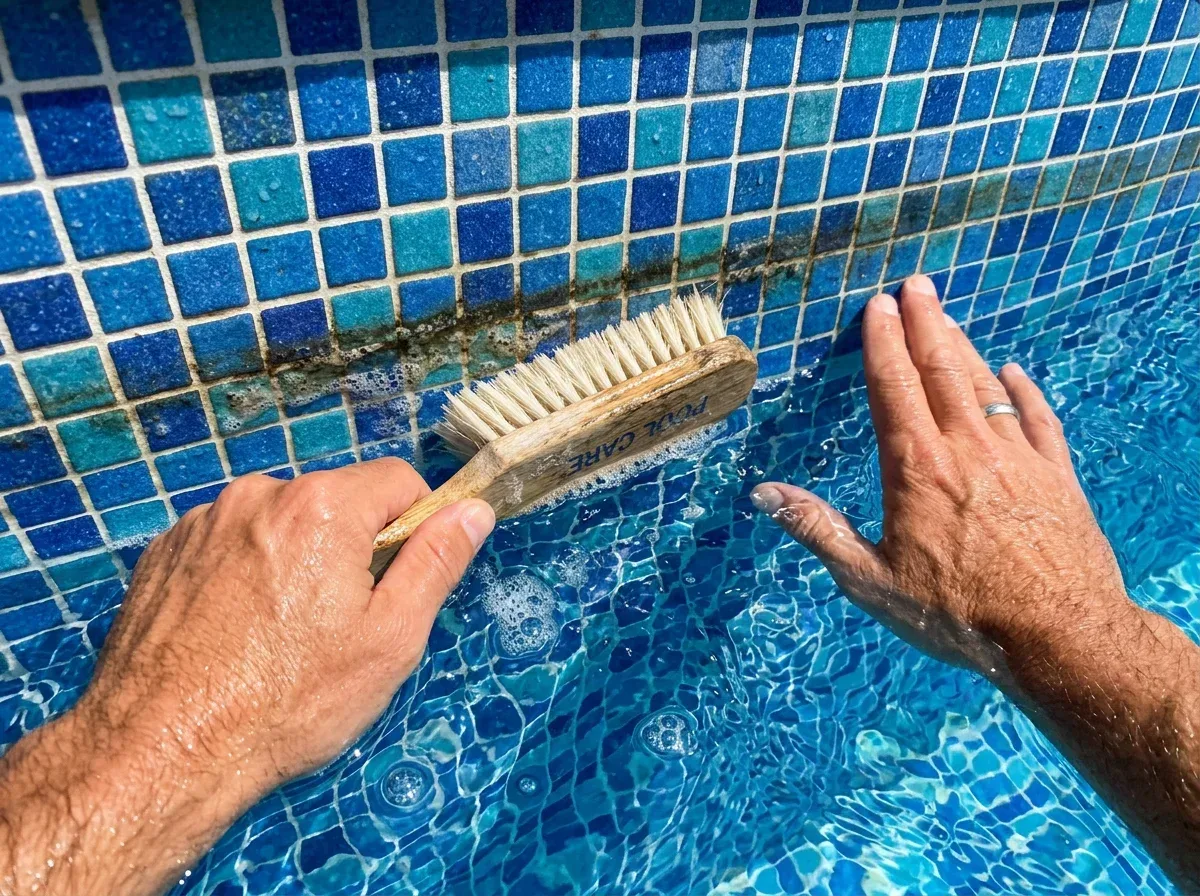
- Mechanical cleaning: Next, loose dirt, algae and light limescale are removed with a soft brush and suitable pads, using tools that do not scratch the surface.
- Suitable cleaners: Then, on glass and porcelain mosaics, suitable descalers can be used while paying attention to the grout; on natural stone mosaics, no acidic products are used.
- Thorough rinsing: Finally, the surface is rinsed with plenty of water; if cleaner residue remains in the grout, it will wear the grout down over time and upset the balance of the pool water.
Grout Maintenance
Darkened, crumbling or loose grout should be renewed. Water-resistant grout materials are used for pools and jacuzzis.
Water Chemistry
The chemistry of pool and jacuzzi water directly affects the lifespan of mosaics and grout. Water with high calcium hardness and unbalanced pH speeds up the limescale line at the water level and limescale crusts in heated jacuzzis. Very low pH, on the other hand, erodes grout and natural stone mosaics. Measuring the water regularly and keeping it within the recommended range means mosaics need cleaning less often. The frequency of water changes in jacuzzis also affects limescale buildup.
Cleaning by Mosaic Type
| Mosaic | Limescale removal | Caution |
|---|---|---|
| Glass | A suitable descaler can be used | Can be scratched by abrasive pads |
| Porcelain, ceramic | A suitable descaler can be used | Take care not to affect the grout |
| Marble, travertine | Acid-free product, mechanical cleaning | Acid dissolves the surface; honing may be required |
Jacuzzis with Marble Mosaic
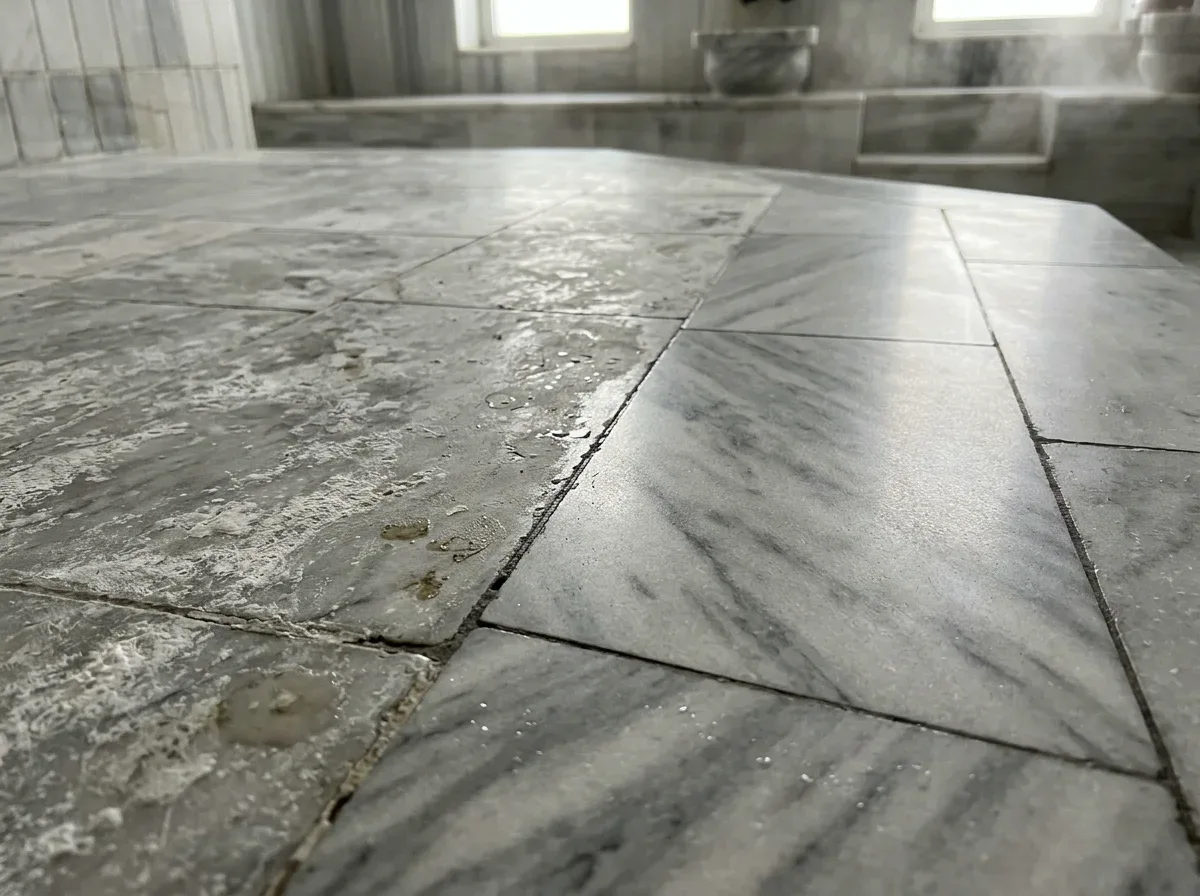
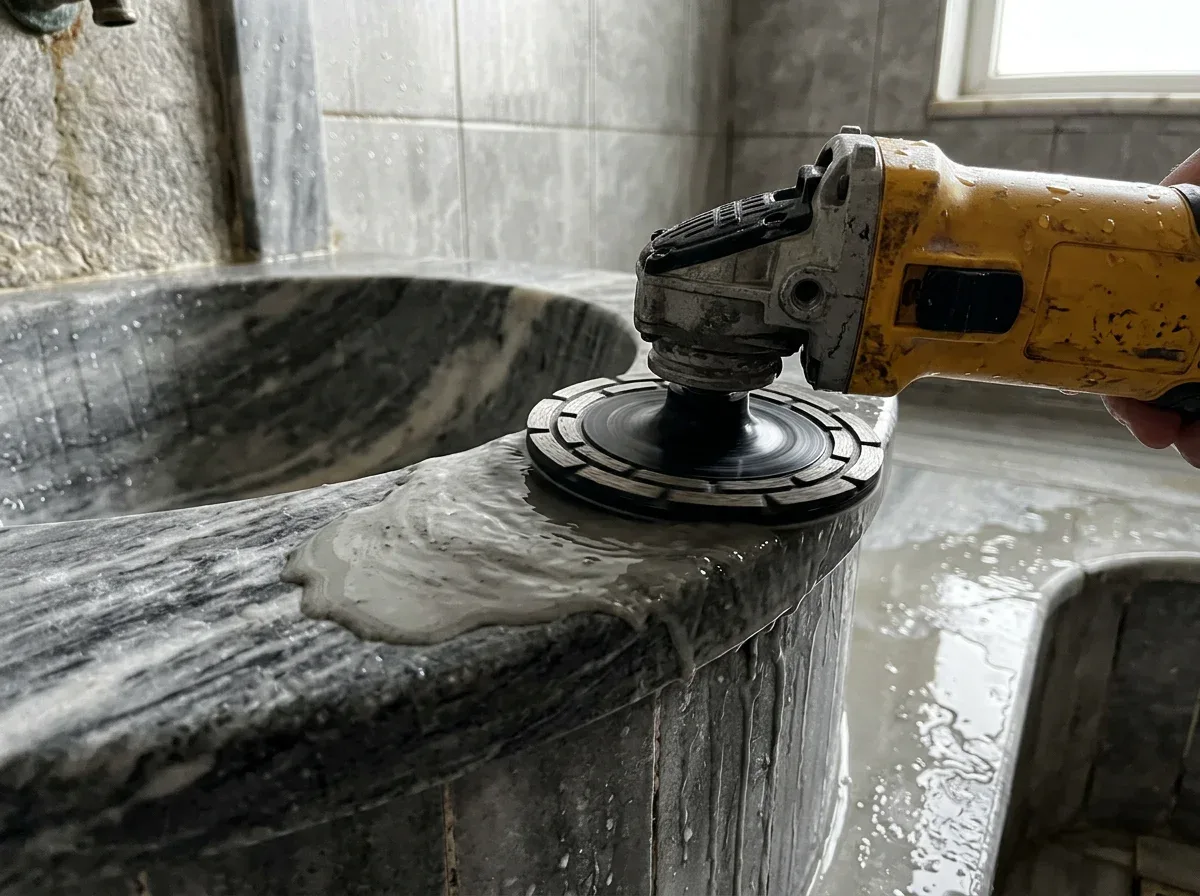
In some luxury villa and hotel spas, jacuzzis are covered with marble or travertine mosaic. Since limescale and the waterline cannot be cleaned with acid on these surfaces, mechanical cleaning comes to the fore. For thick buildup, the limescale is removed by lightly rubbing the mosaic surface by hand and with small pads, and the surface is then refinished. A sealer suitable for wet and hot environments is then applied. For this type of jacuzzi, regular maintenance is the easiest way to prevent thick buildup.
Regular Maintenance Tips
Small, regular tasks carried out before limescale and darkening build up on mosaics greatly reduce the need for extensive and laborious cleaning.
- Clean the waterline weekly: If the line at the water level is removed with a soft brush every week, limescale and oil come off the surface easily before they thicken and harden.
- Measure water chemistry regularly: Unbalanced pH and high hardness speed up limescale buildup; regular measurement helps mosaics and grout wear less.
- Change the jacuzzi water: Minerals and dirt concentrate quickly in hot, small-volume jacuzzi water; changing it at the recommended intervals limits buildup.
- Clean grout darkening early: Darkening in the grout joints initially stays on the surface and is easy to remove; as it progresses, it penetrates into the joint and the grout may need to be renewed.
Pool and Jacuzzi Cleaning in Alanya
Alanya's hard, limescale-rich water quickly causes waterline stains and limescale crusts in hotel and villa pools and jacuzzis. We identify the mosaic type and choose a cleaning method suited to it; on marble and travertine mosaics, we use mechanical cleaning without acidic products and, if necessary, light honing. We renew darkened and crumbled grout joints with water-resistant grout materials.
Prevention

Preventing limescale and dirt buildup on pool and jacuzzi mosaics depends on regular brushing and proper water balance.
- Brushing the waterline: Oil, limescale and dirt collect along the waterline; if it is brushed regularly, a thick, hard layer does not form.
- Monitoring water chemistry: Unbalanced water causes limescale buildup on the mosaic and grout, or wears away the grout joints.
- Cleaning at the start and end of the season: A thorough cleaning at the beginning and end of the season removes limescale and stains that have built up over the year before they set in.
- Checking the grout joints: Mosaic grout wears away over time underwater; if loosened joints are renewed early, the mosaic pieces will not come off.
Our Marble Honing Service for Hammams and Spas in Alanya

We remove the layer of soap, limescale and minerals that builds up on belly stones (göbek taşı), basins (kurna) and hammam floors, and we renew worn marble by honing it. In wet areas we care more about slip resistance than shine, so we finish the surface accordingly.
In hotel hammams and spa areas, we plan the work around the facility's schedule. Explore our Hammam Honing service.
Keeping water chemistry (pH, hardness, disinfectant) balanced greatly reduces limescale and stain formation. It is important to work together with the pool maintenance team on this. — Expert Note