Marble Stair Nosing Wear and Restoration
In short: The most heavily worn part of a staircase is the stair nosing, the front edge of the step that projects forward.
With every step, the toe and heel of a shoe put load on this spot. Over time the nosing rounds off, loses its shine, chips, or conversely becomes slippery. In this article we explain nosing problems and restoration options.
Why Is the Stair Nosing Important?
The nosing is the point that determines a staircase's safety, appearance, and the stone's lifespan all at once.
- Safety: A person going down places their foot on the nosing first. A worn, rounded nosing can cause the foot to slip.
- Appearance: The nosing line defines the overall look of the staircase; chipped and uneven nosings make even clean steps look old.
- Durability: A chipped nosing grows over time; water and dirt get in through the opening, the risk of the stone breaking away increases, and repair becomes harder.

Problems Seen on the Nosing
Wear and Rounding
On heavily trafficked apartment and hotel staircases, the sharp edge of the nosing gradually rounds off and the nosing line becomes wavy.
Dulling and Differences in Shine
While the middle of the step and the nosing become dull, the edges stay shiny. A visible "walking path" appears on the step.
Chips and Breakage
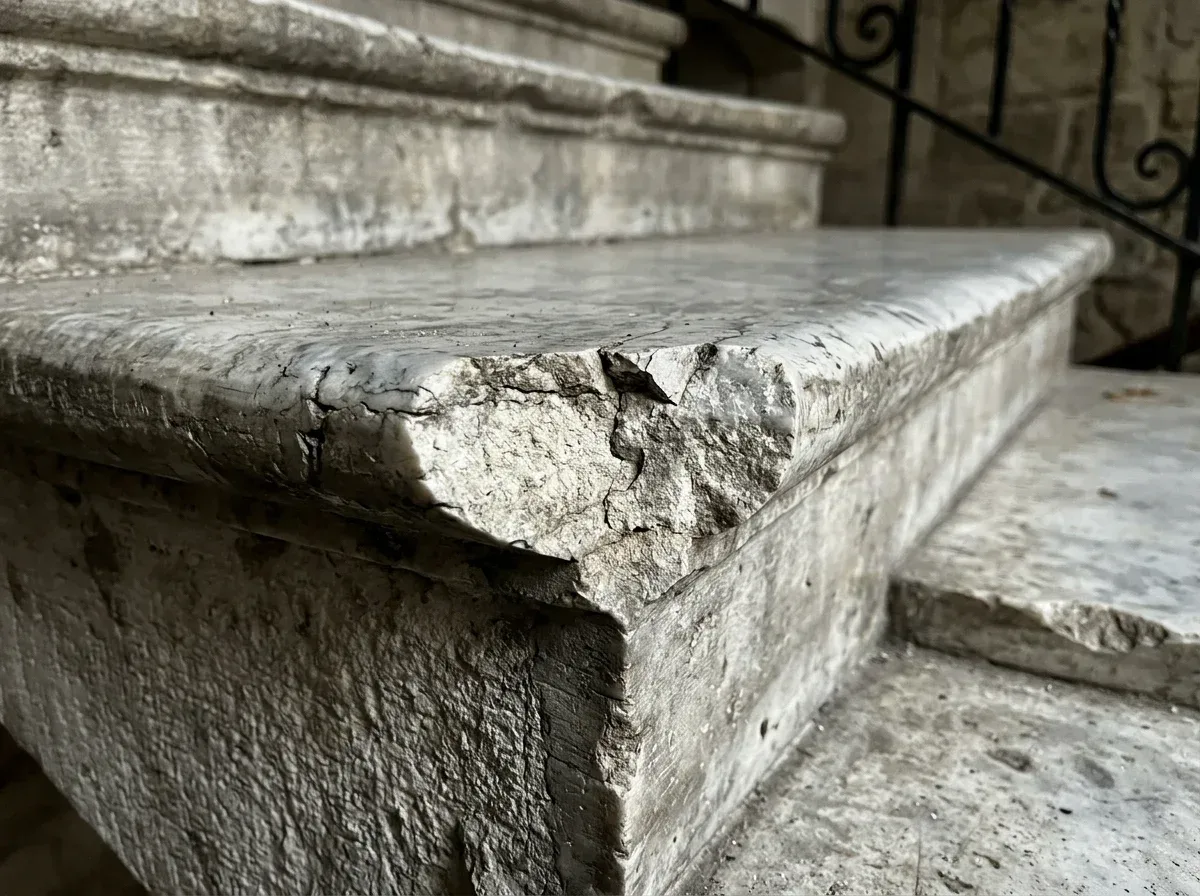
Carried items, impacts, and high-heeled shoes can break pieces off the edge of the nosing.
Slipperiness
On some polished steps, especially when wet, the nosing is the slipperiest point. It creates a serious risk of slipping when going down.
Restoration Options
1. Chip Repair
Small and medium-sized chips are repaired with color-matched resin filler; once the filler hardens, it is shaped like stone, sanded, and polished. For large breaks, the broken piece can be glued back if it is available.
2. Reprofiling
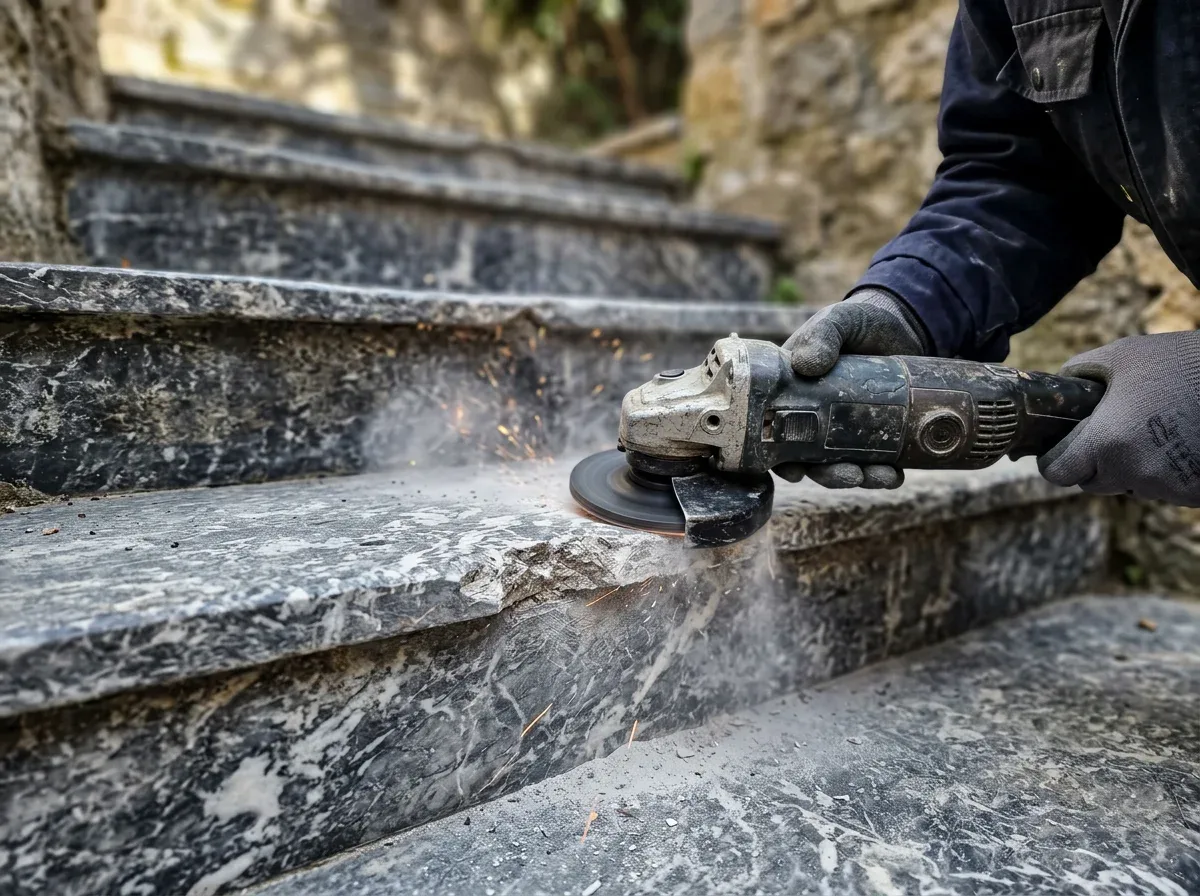
Nosings that have rounded off or become wavy through wear are given a smooth form again using hand machines and profile stones. The nosing line is brought to the same alignment on all steps; if desired, a slightly chamfered, half-round, or full-round profile can be chosen. Since this process removes some material from the stone, the thickness is checked first on very thin steps. The right profile restores the look of the staircase and also reduces the risk of the edge chipping again.
3. Step Grinding and Polishing
The step surface, nosing, and riser (vertical face) are ground and polished together. On staircases, grinding is mostly done with hand machines, and each step is worked individually.
4. Slip Resistance
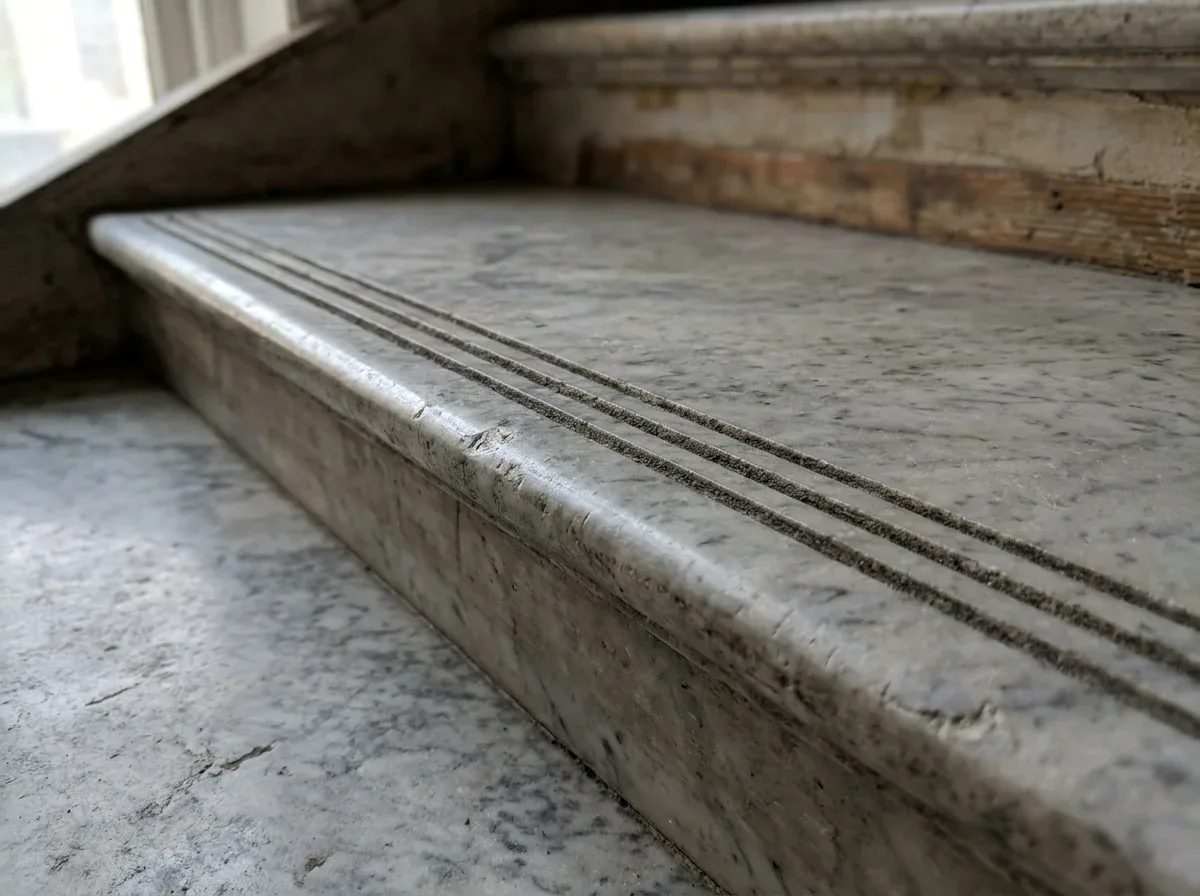
On slippery nosings, grip can be increased by treating the surface or by adding a strip to the nosing.
- Honing: Matting the step surface, especially the nosing, increases slip resistance; instead of a glossy polish, a satin surface that grips the foot better is created.
- Anti-slip strips: Grooves cut just behind the nosing or a lightly roughened band increase grip where the foot lands first.
- Anti-slip treatments: Chemical products suitable for the stone can increase surface grip; however, since they may affect the stone's color and texture, they should be tested first.
- Adding a profile: In some cases, adding a metal or non-slip profile to the nosing is preferred, but it changes the appearance of the natural stone.
5. Contrast
For people with impaired vision and for the elderly, creating a slight color or tone difference at the nosing edge (for example, a honed band) makes the step easier to notice.
Restoration Method by Problem
| Problem | Method | Result |
|---|---|---|
| Rounded, wavy nosing | Reprofiling, grinding and polishing | Smooth, aligned nosing line |
| Walking path, dullness | Grinding and polishing of step, nosing, and riser | Even surface and shine |
| Chipped edges | Color-matched resin filler, shaping | Barely visible repair |
| Slippery nosing | Honing, anti-slip strip or treatment | Safer descent |
| Hard-to-see step | Honed contrast band | Step easily visible |
Using the Staircase During the Work
In apartment buildings and hotels, it is often not possible to close the staircase completely. For this reason, the steps are worked on row by row or at half width; while one side is being worked on, the other side can still be used. While the resin fillings are curing, the repaired step is marked. In buildings with an elevator, working hours are planned around the times when residents use the stairs the least.
Keeping the Nosing Long-Lasting
The lifespan of a step nosing can be noticeably extended with small precautions taken in daily use.
- Cover the nosing when moving items: Covering the step nosings with cardboard or corner protectors during moving prevents chips caused by impacts.
- Put a doormat at the entrance: Placing mats at the top of the stairs and at the building entrance keeps sand outside and slows the wear of the nosing, which sand wears down like sandpaper.
- Use a pH-neutral cleaner: Wipe the steps with a pH-neutral stone cleaner; oily polishes leave a slippery film on the surface and increase the risk of slipping.
- Have small chips repaired: Have small chips repaired before they grow; a cracked nosing opens up a little more with every impact and quickly gets worse.
- Put up a warning sign: Placing a warning sign on the steps near the entrance in wet weather encourages people to be careful against the risk of slipping on wet stone.
Step Renovation in Alanya
Most apartment and housing complex staircases in Alanya have marble or granite steps, and sand carried in from the beach accelerates nosing wear. On hotel staircases, heavy luggage traffic causes edge chipping. In step renovation work, we first inspect all the nosings one by one and mark those that need repair, then complete the repair, profiling, and grinding in the same job. On exterior stairs, we treat slip resistance as the priority and recommend a honed finish instead of a glossy polish.
How Is Stair Polishing Planned?

- In apartment buildings, stairs cannot be taken out of use completely; the work is done floor by floor or step by step, leaving one side open for passage.
- Noise hours are observed.
- Steps being worked on wet are marked.
- In buildings without an elevator, the work sequence is planned together with the residents.
Our Step and Stair Polishing Service in Alanya

We repair and polish worn step nosings, chipped edges and slippery stair surfaces. For safety at building entrances and on exterior stairs, we recommend anti-slip grooves or a suitable surface finish.
In apartment and housing complex stairways, we plan the work section by section without interrupting foot traffic. Explore our Step Polishing service.
Rounded and wavy edges can be reshaped with abrasives of the appropriate profile. The flat, half-round (bullnose) or beveled edge profile is recreated. If the edge is heavily worn, the profile may become slightly smaller. — Expert Note