Granite or Marble? Differences in Honing and Maintenance
In short: Many homeowners don't know whether their floor is granite or marble, because when polished, both look shiny and elegant.
Yet these two stones behave very differently, from hardness and acid resistance to polishing time and daily care. In this article, we explain the differences in plain language and share some simple observations you can make at home.
The Origin of the Two Stones
Marbleis a metamorphic stone formed when limestone recrystallizes deep underground under heat and pressure. Its main mineral is calcite.
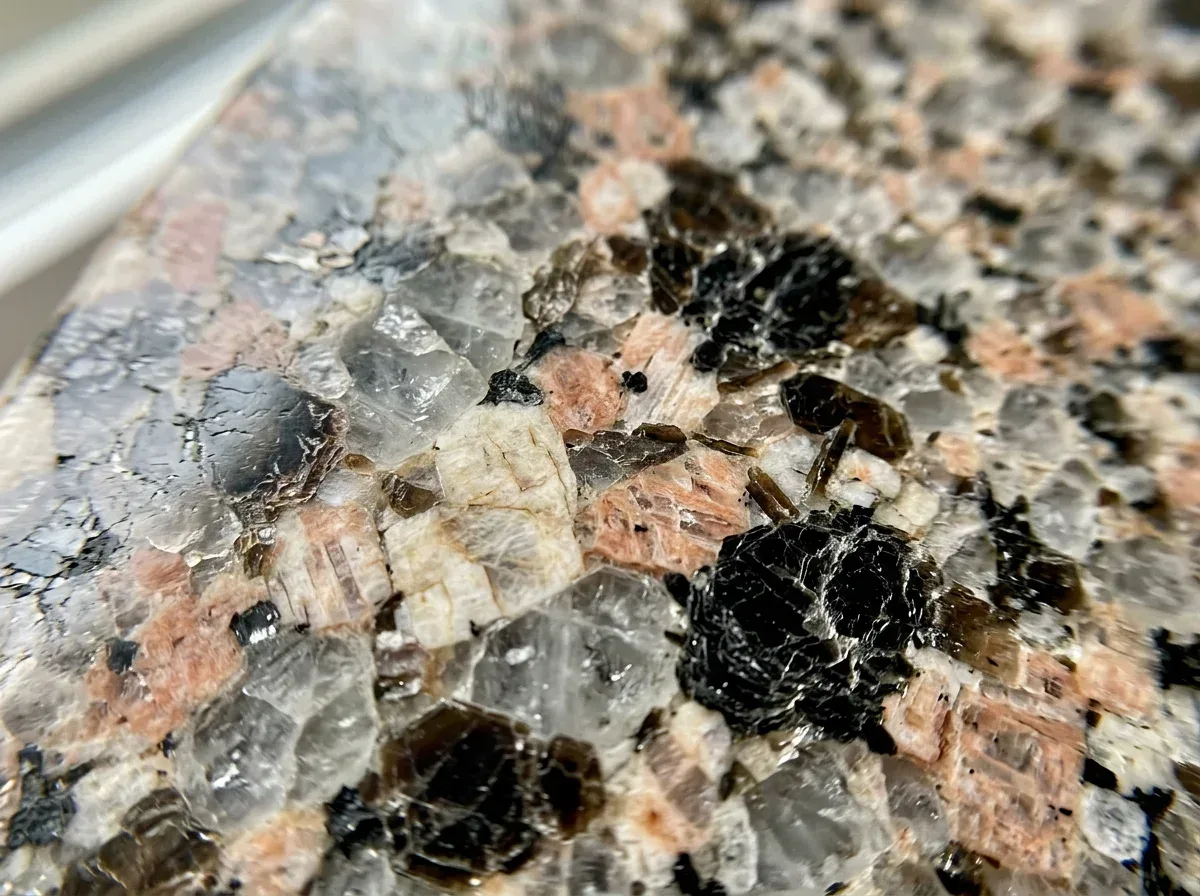
Granite is an igneous stone formed when magma cools slowly inside the earth's crust. It consists of minerals such as quartz, feldspar and mica.
This difference determines the entire behavior of the two stones.
Telling Them Apart by Appearance
Although the two stones look alike when polished, they can often be told apart by looking carefully at the pattern on the surface.
- Marble: It is usually veined; the veins run as flowing lines or cloud-like transitions, and the color is often spread throughout the whole stone.
- Granite: It is usually speckled or grainy; mineral grains of different colors appear interlocked, and black, gray, pink and brown tones are common.
However, some granites can look veined and some marbles can look speckled. Commercial names can also be confusing; some stones sold on the market as "granite" are actually other types.
Simple Observations at Home
It is possible to get a first idea of the type of stone at home with a few simple observations that cause no damage.
- Acid test (in an inconspicuous corner): Drop a single drop of vinegar, wait a minute, then wipe it off; if a dull mark remains, it is most likely marble, while granite is usually unaffected. Since the test leaves a mark on marble, it should only be done in an unnoticeable spot.
- Scratch observation: Granite is very resistant to ordinary steel; marble, being softer, is scratched more easily by hard objects such as keys or knives.
- Where it is used: Granite is very common on kitchen countertops and outdoor steps; marble is more often found on living room and bathroom floors.

For a definitive identification, an expert's eye is the most reliable.
Hardness and Scratching
Granite is much harder than marble. Therefore:
- Scratches later: In daily use it scratches and dulls later; sand and foot traffic leave marks on granite much more slowly than on marble.
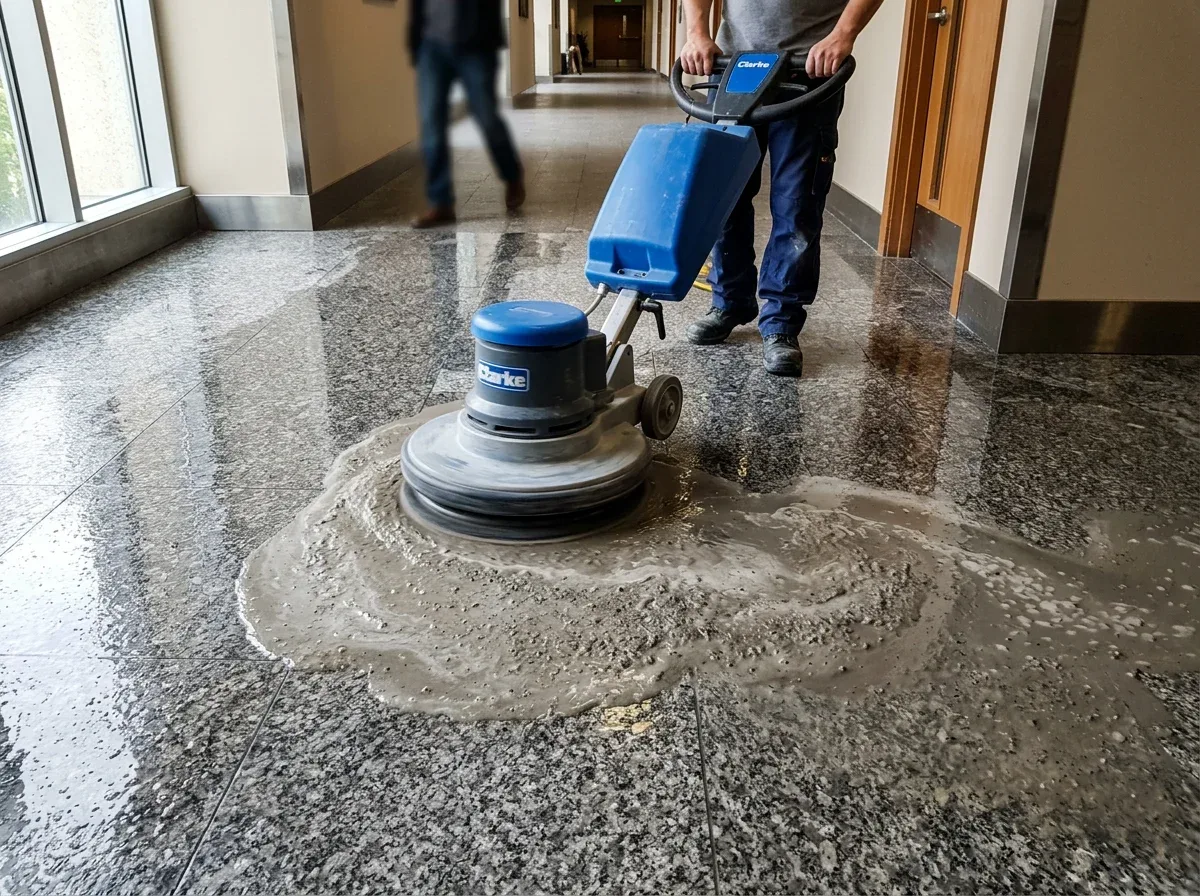
- Longer polishing: But when it is scratched or dulled, polishing takes much longer, because each step requires more passes on the hard surface.
- Abrasives wear out quickly: Abrasives wear out faster on granite; more pads and segments are used for the same area than for marble.
Marble, on the other hand, is softer; it scratches more easily but is also easier to polish and buff.
Acid Resistance
Marble is sensitive to acids; lemon, vinegar, cola and limescale removers leave dull marks on its surface. The vast majority of granites are not affected by such acids. This difference is especially decisive in kitchens and bathrooms.
Porosity and Stains
The porosity of granites varies by type. Some light-colored granites can absorb oil and water and darken; dark, tightly structured granites hardly absorb at all. Marble also shows different absorbency depending on its type. For both stones, the need for impregnation is determined with a drop test.
Differences in Polishing
| Marble | Granite | |
|---|---|---|
| Polishing time | Shorter | Longer |
| Abrasive consumption | Less | More |
| Removing lippage | Easier | More laborious |
| Shine | Can be enhanced with crystallization | Has a high natural shine; crystallization products specific to marble are generally not used |
For granite, polishing is usually considered only if the existing shine is completely lost or there are deep scratches. For slight dulling, cleaning the film, residue or old sealers on the surface is tried first; often the "dullness" of granite is a problem of the residue on it, not the stone.
Differences in Daily Care
Although the daily care of the two stones looks similar, their reactions to acid, heat and chemicals differ.
- pH-neutral cleaners: For both, pH-neutral cleaners are the safest choice; they remove dirt without abrading the stone or the sealer on it.
- Stay away from acidic products: Acidic products must never be used on marble, as they leave dull marks on the surface; they are also not recommended for granite because they can damage the sealer.
- Hot pots and heat: Granite withstands a hot pot in the kitchen better than marble; even so, sudden temperature changes and a constant heat source are not recommended.
- Removing sand and dust: On both stones, sand and dust should be removed regularly; sand dragged underfoot will dull both surfaces over time.
Two Stones in the Same Home
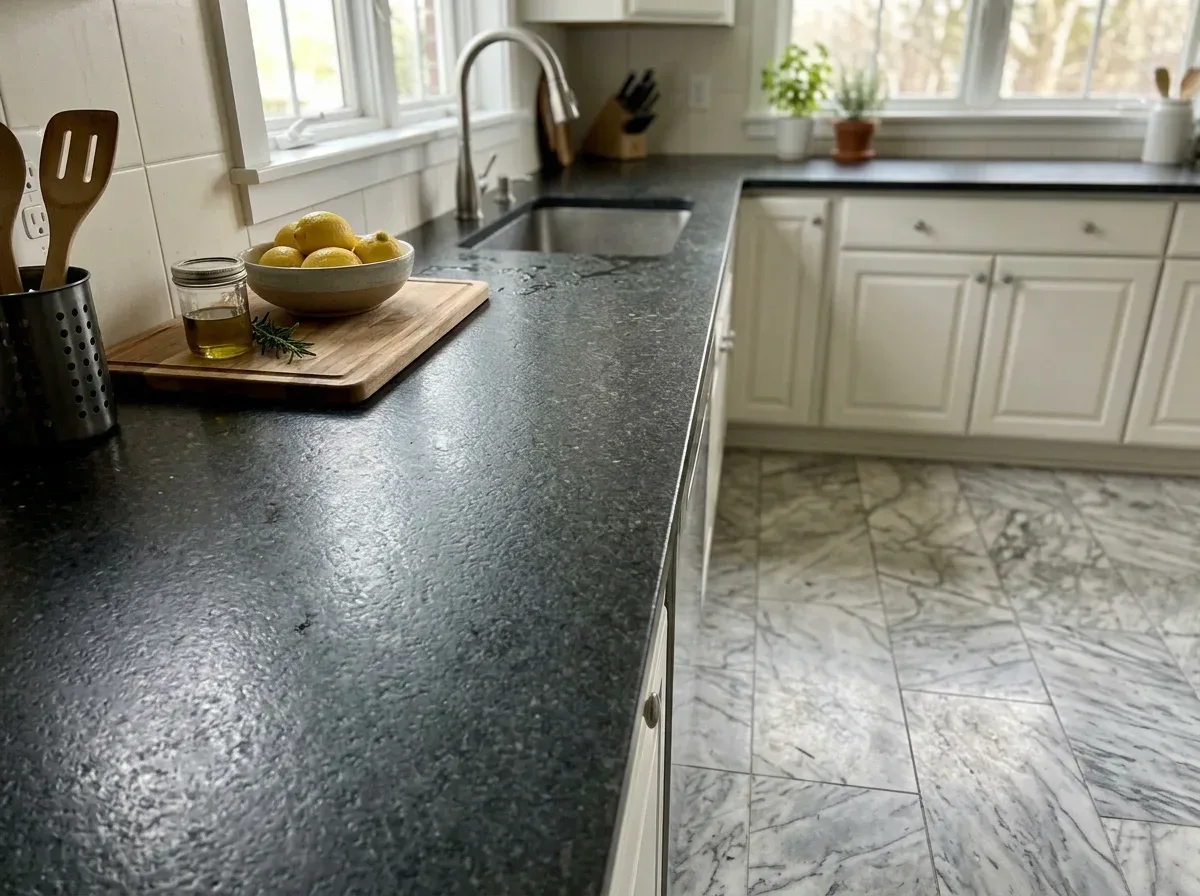
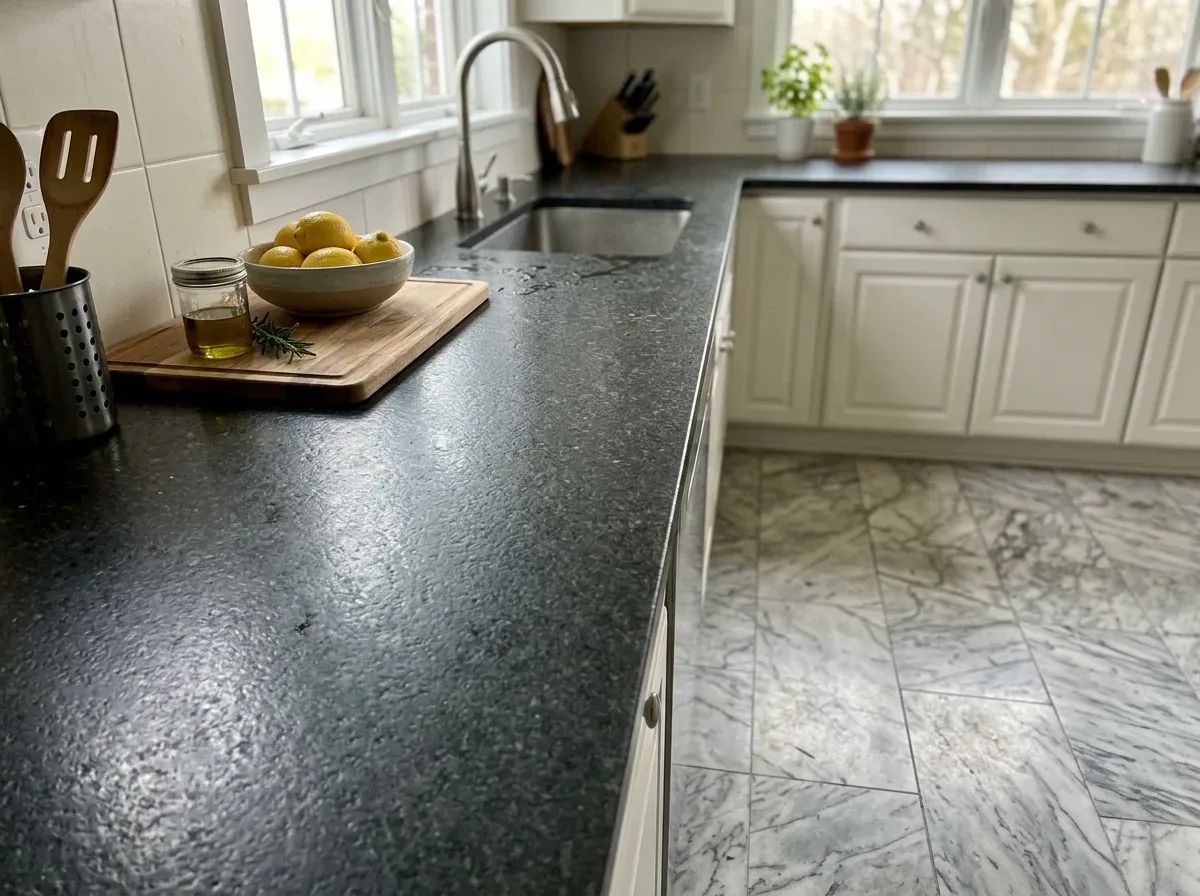
In many homes the two stones are found together: a granite kitchen countertop with a marble floor, or granite entrance steps with a marble living room. In this case, the most common mistake is treating both stones with the same product and in the same way. A limescale remover that causes no problem on a granite countertop leaves a dull mark when it drips onto the marble floor just below. A polish recommended for granite, on the other hand, can leave a film on the surface of marble. If you have two stones at home, the easiest solution is to choose a pH-neutral cleaner that can be used safely on both as a shared product.
Correctly Identifying the Stone Before Honing
How accurately the team that comes for the honing identifies the stone directly affects the result of the job. A step plan suited to marble falls short on granite; an aggressive start suited to granite removes more material than necessary from a soft marble. That is why, during the survey:
- Structure and broken edges: The structure of the stone (veined or grainy) and its broken edges are examined; the inner texture visible at an edge gives clearer information about the type of stone than the surface does.
- Test honing: A small test honing is done on a hidden corner; the stone's reaction to the abrasive shows where the step plan should begin.
- Old polish and coatings: We check whether any polish, resin or coating has previously been applied to the stone; these layers change the first step and the duration of the honing.
- Areas in contact with acid: The behavior of areas that come into contact with acid is observed; if there are dull marks, the stone most likely contains calcite and is treated like marble.
Some stones sold on the market under the name marble or granite may be of other types; for example, some hard limestones are called marble and some quartzites are called granite. It is necessary to work according to the stone's actual behavior rather than its commercial name.
A Short Comparison to Help You Decide
| Feature | Marble | Granite |
|---|---|---|
| Scratching | Scratches easily | Hard to scratch |
| Acid | Sensitive | Largely resistant |
| Appearance | Veined, flowing | Speckled, grainy |
| Renovation | Easily honed and polished | Honing is long and laborious |
| Outdoor | Used with a textured surface | Very suitable with a flamed or brushed surface |
In homes in Alanya, marble is preferred more in living rooms, bedrooms and bathrooms, while granite is preferred for kitchen countertops, stairs, housing complex entrances and hotel lobbies. Both stones can be used for decades with proper care; what matters is knowing which one you live with and treating it accordingly.
Which Is More Suitable Where?

- Kitchen countertop: Granite requires less maintenance thanks to its resistance to acids and scratches.
- Living room and bedroom flooring: Marble stands out for its warm, elegant look and the ease with which it can be restored.
- Outdoor steps: Granite is durable; a flamed or brushed finish is preferred for slip resistance.
- Bathroom: Both can be used; with marble, acidic products should be avoided.
Our Granite Honing and Polishing Service in Alanya

Granite is a hard stone, and its shine is restored not with polish but by grinding with the right diamond grit stages. We re-polish dulled indoor granite, and we clean outdoor surfaces and steps while preserving their slip-resistant finish.
We determine on site which treatment your granite floor needs, based on its condition. Explore our Granite Grinding and Polishing service.
Knowing what a stone is before you polish it is half the job. A polishing process started with marble in mind falls short on granite, while one started with granite in mind removes more material than necessary from marble. That is why we begin every job with a small test in an inconspicuous corner.
Frequently Asked Questions
01Does granite never get scratched?
02Can granite be crystallized?
03Does granite flooring need impregnation?
04How can I be sure what type of stone my floor is?
05Can a product sold for granite be used on marble flooring?
06Which lasts longer, granite or marble?
Related Articles
- The Formation and History of Granite: From Magma to Kitchen Countertop
- The Formation and History of Marble: A Journey from Limestone to Palaces
- Marble, Granite, and Travertine: A Comparison of Maintenance Difficulty
- What to Do When a Granite Floor Becomes Dull
- Removing Scratches from Granite Floors: Can Deep Scratches Be Removed by Honing?