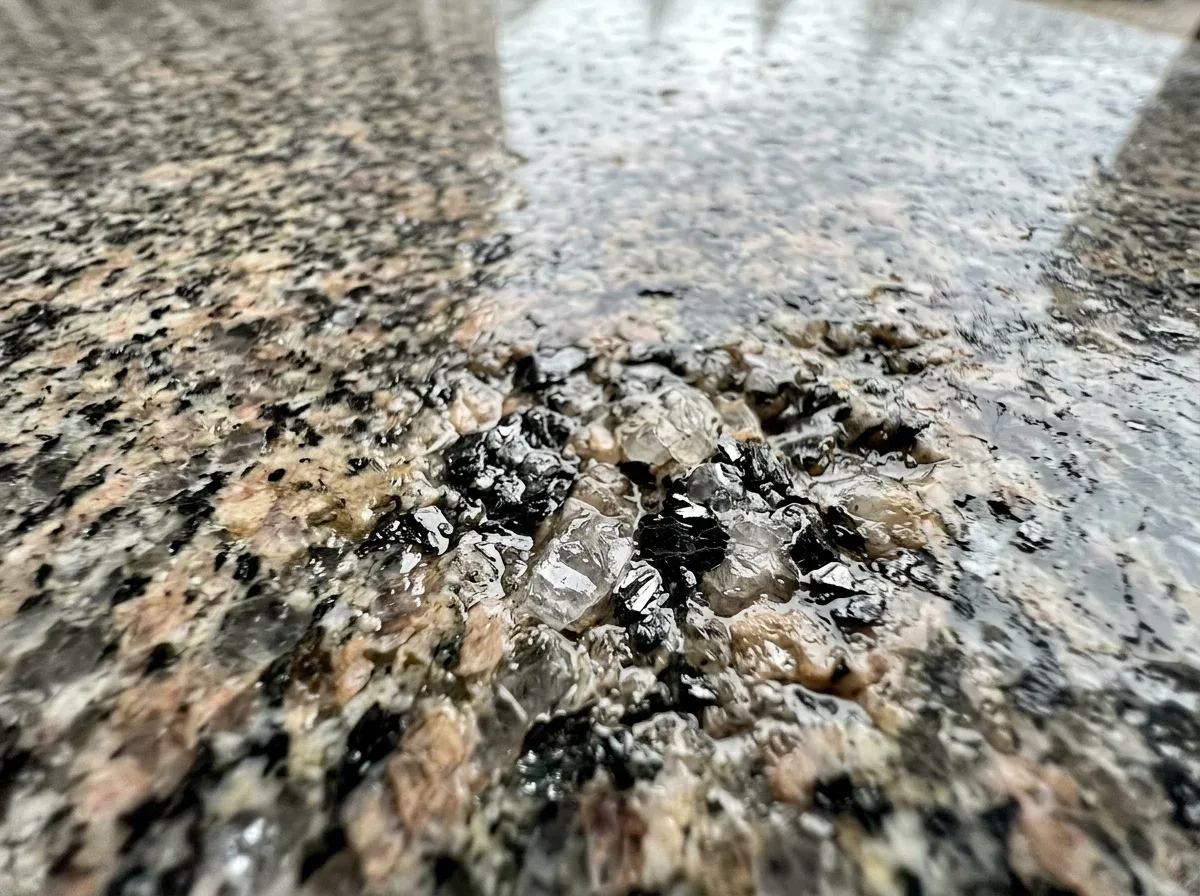
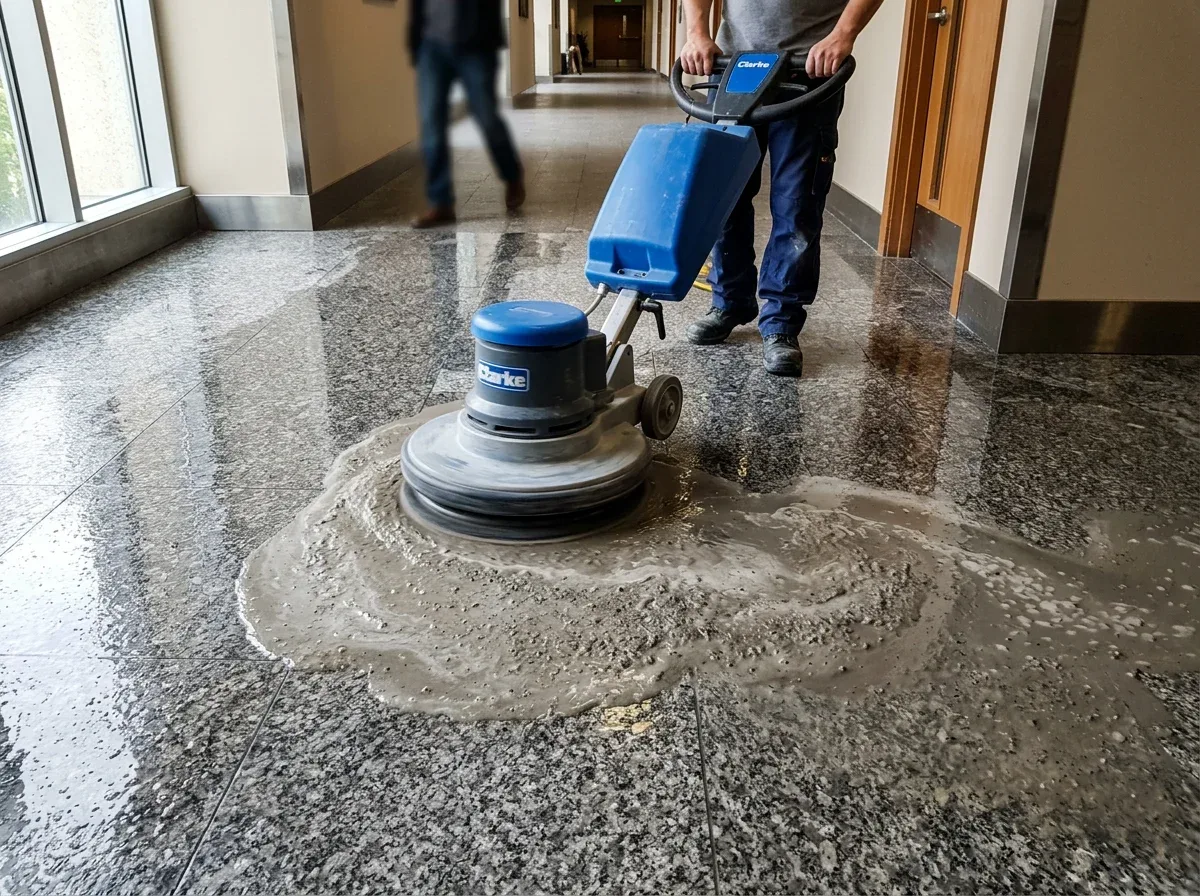
Restoring Outdoor Granite Floors and Garden Paths
In short: Granite is one of the most durable stones for outdoor use, but sun, rain, soil, algae and leaf stains change its appearance over the years.
In this article, we explain why granite floors on garden paths, residential complex entrances, terraces and pool surrounds wear down, and how they are restored.
What Happens to Granite Outdoors?
Darkening and Soiling
Soil, decayed leaves, tree resin, vehicle tires and dirt carried by rainwater build up on the surface. On rough surfaces, dirt settles into the pores, and over time the floor takes on a dark, stained look.
Algae and Mold
Green and black stains form in shaded areas, areas near irrigation, or places with poor drainage. They spoil the appearance and also make the floor slippery.
Joint Deterioration
Outdoor joints crack and empty out over time due to sun, freeze-thaw cycles and water. Soil and seeds settle in the emptied joints, and weeds grow between the slabs. Water can seep through the joints under the slab and disturb its bedding.
Slipperiness
Polished granite is not suitable for outdoor use. Granite that has become shiny over time in some spots, or that was installed polished from the start, can be dangerous when wet.
Cracks and Fractures
Heavy vehicle traffic, ground settlement and root pressure can crack the slabs.
Restoration Steps
1. Inspection
The surface type (polished, honed, flamed, brushed), type of soiling, slipperiness, joint condition, drainage and settlement are assessed.
2. Deep Cleaning
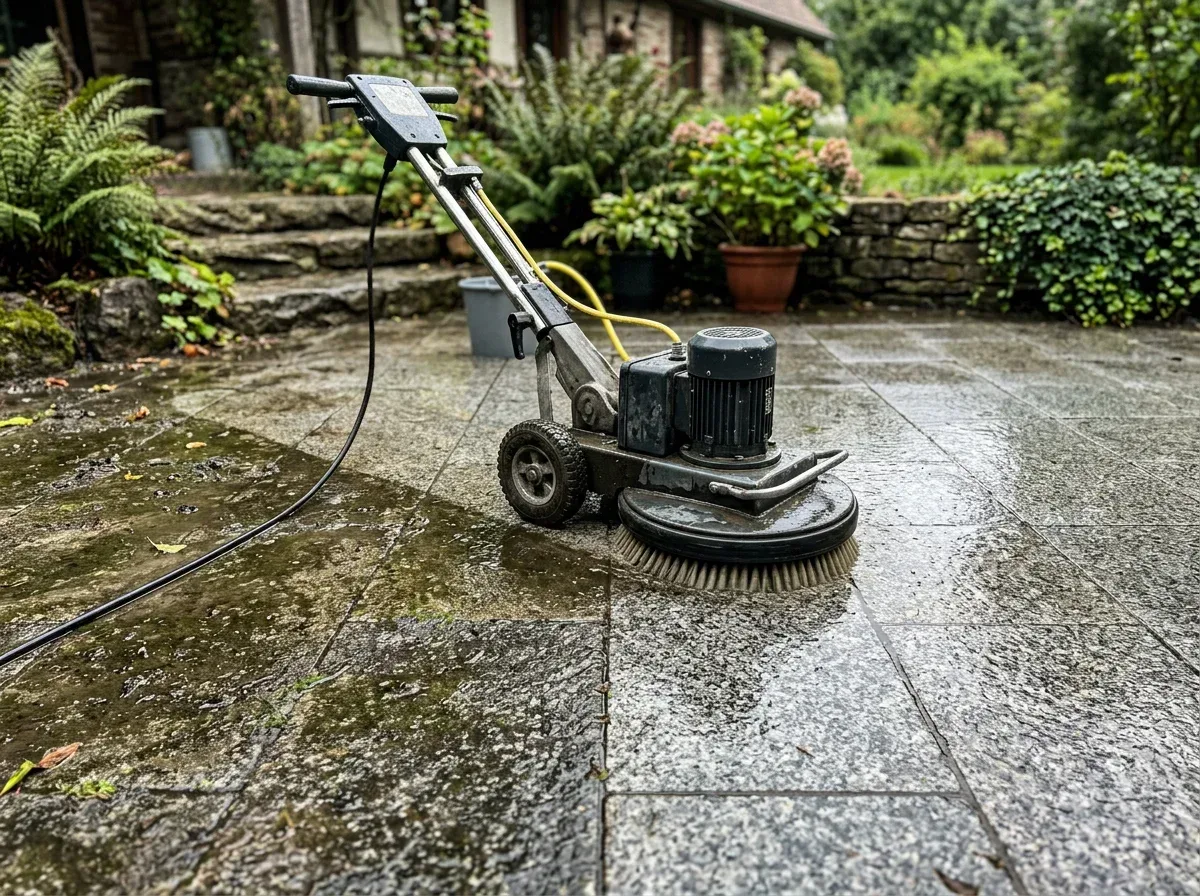
- Brushing and pressure washing: The surface is scrubbed with suitable detergents and rinsed with pressurized water, so that the soil and dirt on the surface loosen and wash away.
- Rotary brush machines: Rotary brush machines are used on rough surfaces; dirt in recesses that a hand brush cannot reach is also lifted out of the stone's texture.
- Algae and mold products: Stone-safe products are applied for algae and mold; green and black stains are removed, and slipperiness in shaded areas is reduced as well.
- Spot stain treatments: Spot treatments are carried out for resin, chewing gum and oil stains; since these stains do not come out with general washing, they are handled individually.

Very high-pressure water should be used with care, as it can empty out the joints.
3. Joint Repair
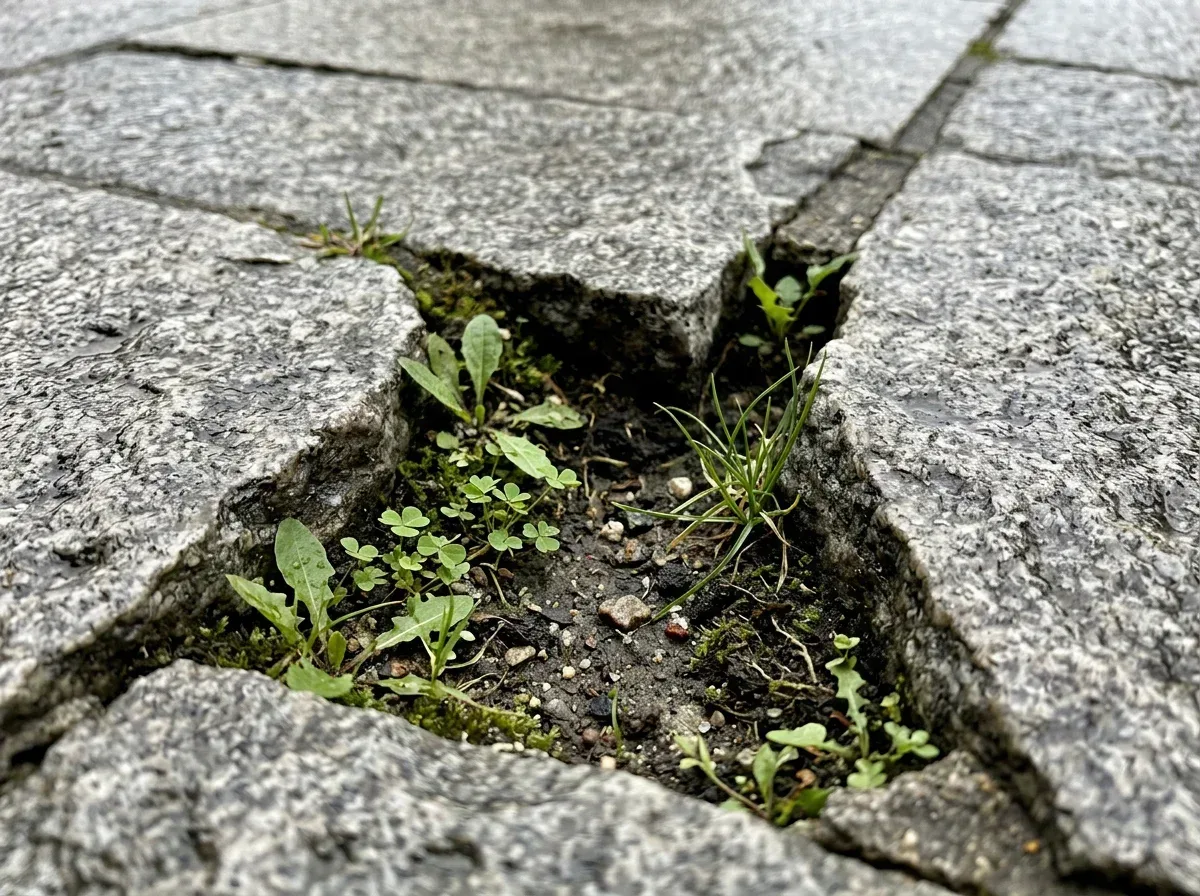
Joints that have emptied or cracked are cleaned and refilled with a material suitable for outdoor use. This step reduces water seeping under the slabs and weed growth.
4. Slip Resistance
For polished or glossy outdoor granite:
- Honing: The surface is matted to increase slip resistance; the glossy layer of polished granite, which is slippery when wet, is removed.
- Brushing: A light texture is given to the surface; the brushed finish improves foot grip while keeping the stone's color and pattern visible.
- Anti-slip treatments: Chemical treatments suitable for the stone can increase surface grip; the compatibility of the product and the stone should be tested beforehand.
Flamed granite already has a rough surface; reprocessing is generally not necessary for it, and cleaning is sufficient.
5. Broken Slabs
Cracked slabs can be repaired with resin; in cases of serious breakage and sinking, the slab may need to be replaced. It should be checked whether the same stone and finish are available for the replacement slab.
6. Impregnation
Depending on the type of granite and a drop test, impregnation can be applied. Products used outdoors should be UV-resistant, breathable and must not reduce slip resistance.
Drainage: The Key to a Lasting Solution
The biggest enemy of stone outdoors is water that collects on it. If rainwater or irrigation water pools on the floor, algae take hold, dirt accumulates, joints deteriorate quickly, and water getting under the slabs eventually causes settlement. That is why, during restoration, where the water flows is always checked:
- Identify the pooling points: Water pooling points on the floor are identified by looking at the areas that stay wet a day after rain.
- Check the slope: It is checked whether the existing slope directs water to the drain or the garden; areas with a reverse slope are where algae and dirt collect.
- Clean the drains and channels: Clogged drains and channels are cleaned and leaf guards are added, so that water reaches the drain again without pooling on the floor.
- Adjust the sprinkler directions: Sprinkler directions are adjusted so that irrigation systems do not wet the stone directly; algae and limescale marks form quickly on constantly wet stone.
In cases of serious slope problems, the slabs may need to be lifted and relaid; but in most cases, even changing the drain and irrigation setup greatly reduces the algae and darkening problem.
Problem and Solution Table
| Problem | Cause | Solution |
|---|---|---|
| Darkening, stained appearance | Soil, leaves, vehicle marks | Deep cleaning with a brush machine |
| Green-black stains | Algae, mold, shade | Stone-appropriate cleaning, drainage correction |
| Weeds growing from the joints | Worn-out joints | Joint renewal |
| Slipperiness when wet | Polished or glossy surface | Honing, brushing |
| Cracked and sunken slabs | Load, settlement, root pressure | Resin repair or slab replacement |
Outdoor Granite in Alanya
In Alanya, granite is widely used in villas, residential complexes and hotels; on garden paths, parking entrances, pool surrounds and terraces. In areas close to the coast, salty air, intense sun and winter rains act together; on paths under pine and citrus trees, resin, leaf and fruit stains are added. Even if the granite itself remains sound under these conditions, its appearance changes noticeably within a few years. A deep cleaning and joint inspection carried out once a year keeps outdoor granite close to its original appearance.
When Should Renovation Be Done?
The most suitable time for outdoor work is during periods with little rainfall and when temperatures are not too high. Joint fillers and impregnation can only be applied to dry stone; on very hot days, products may dry before they penetrate the stone. In Alanya, this is usually late spring and early autumn. In residential complexes and hotels, work can be planned section by section according to the intensity of use.
Maintenance Tips for Outdoor Granite

- Sweep leaves and soil regularly.
- Prevent the irrigation system from spraying water directly onto the surface.
- Check the joints during seasonal changes.
- Remove vehicle oil and brake fluid stains immediately.
- Schedule a deep cleaning once a year.
Our Granite Grinding and Polishing Service in Alanya

Granite is a hard stone, and its shine is restored not with polish but by honing and polishing with the right diamond grits. We re-polish dulled interior granite, and clean exterior surfaces and steps while preserving their non-slip finish.
We determine on site which treatment your granite floor needs, based on its condition. Explore our Granite Grinding and Polishing service.
On a surface where water pools, algae, dirt and joint deterioration will keep recurring. During renewal, you should also investigate where the water comes from and where it goes; slope problems, clogged drains, or an irrigation system spraying onto the surface should be corrected. — Expert Note