What to Do When Granite Flooring Turns Dull
In short: Granite is a hard stone, so when it turns dull, most people assume the stone has "worn out."
In fact, much of the dullness on granite floors comes from films that build up on the surface, and a simple deep clean brings the shine back. In this article, we explain how to tell the causes of dullness in granite apart and the right solution for each case.
Diagnosis First: Where Is the Dullness Coming From?
Film Buildup
This is the most common cause. Excess detergent, polish-based cleaning products, limescale from hard water, and oily dirt carried in on shoes form a thin layer on the granite surface. This layer scatters light, and the floor looks dull. The stone itself is actually still shiny.
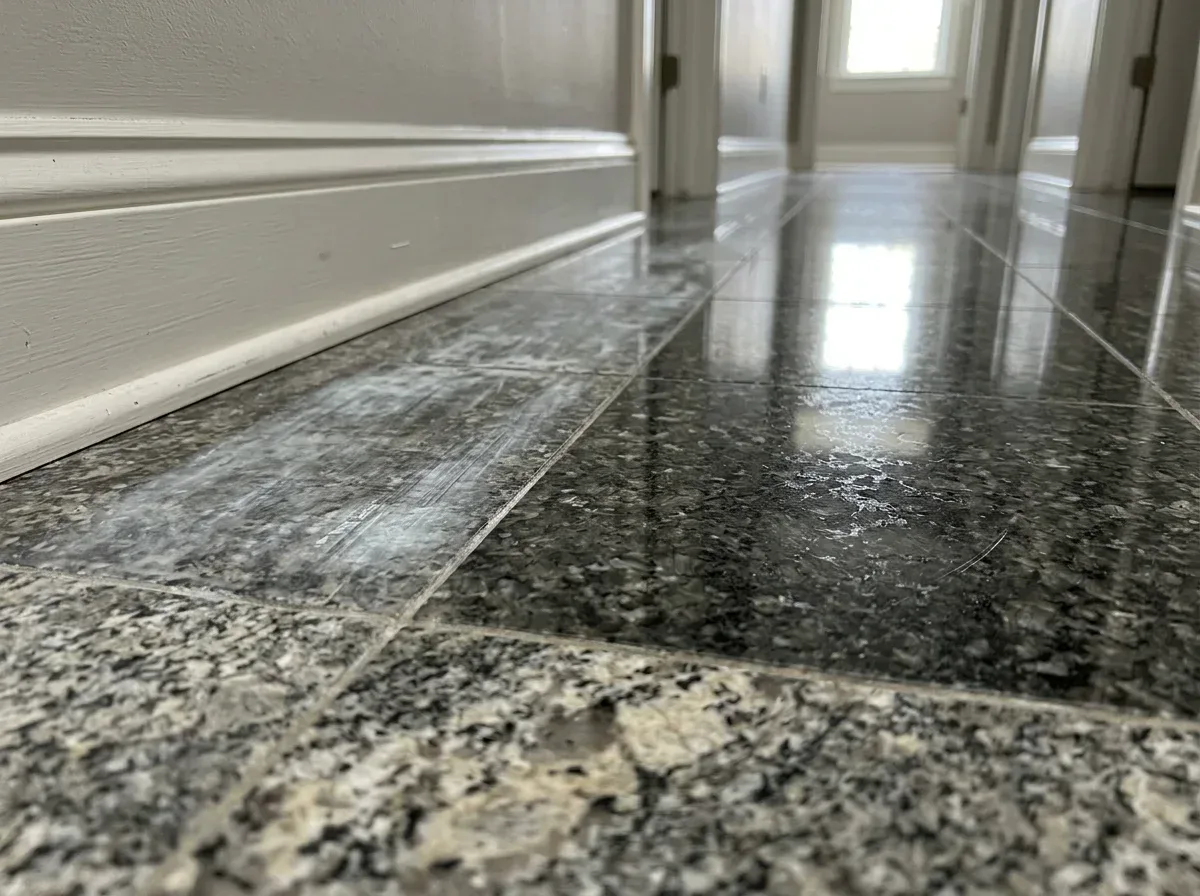
How can you tell? If the dullness is spread across the whole floor, is more noticeable at the edges and corners, and feels slightly sticky or slippery when you run your finger over it, it is most likely film buildup.
Wear
Sand and fine grit create micro-scratches over the years, even on hard granite surfaces. This wear is concentrated at doorways, in front of elevators, and along walkways.
How can you tell? If the dullness is concentrated along specific routes, and you can see a network of fine scratches when looking against the light, it is wear.
Chemical Damage
Granite is resistant to most acids, but not all granite is the same. Some commercial granites contain calcite veins, and some have a resin applied at the factory to boost shine. Strong acids, rust removers containing hydrofluoric acid, and some aggressive cleaners can leave dull stains on these stones.
How can you tell? If the dullness is in specific spots, where something was spilled or a particular product was used, it may be chemical damage.

Improper Machine Maintenance
Choosing the wrong abrasive pads for floor cleaning machines can dull large areas of polished granite in a short time. This is especially common in workplaces and residential complexes.
Solutions
1. Deep Cleaning
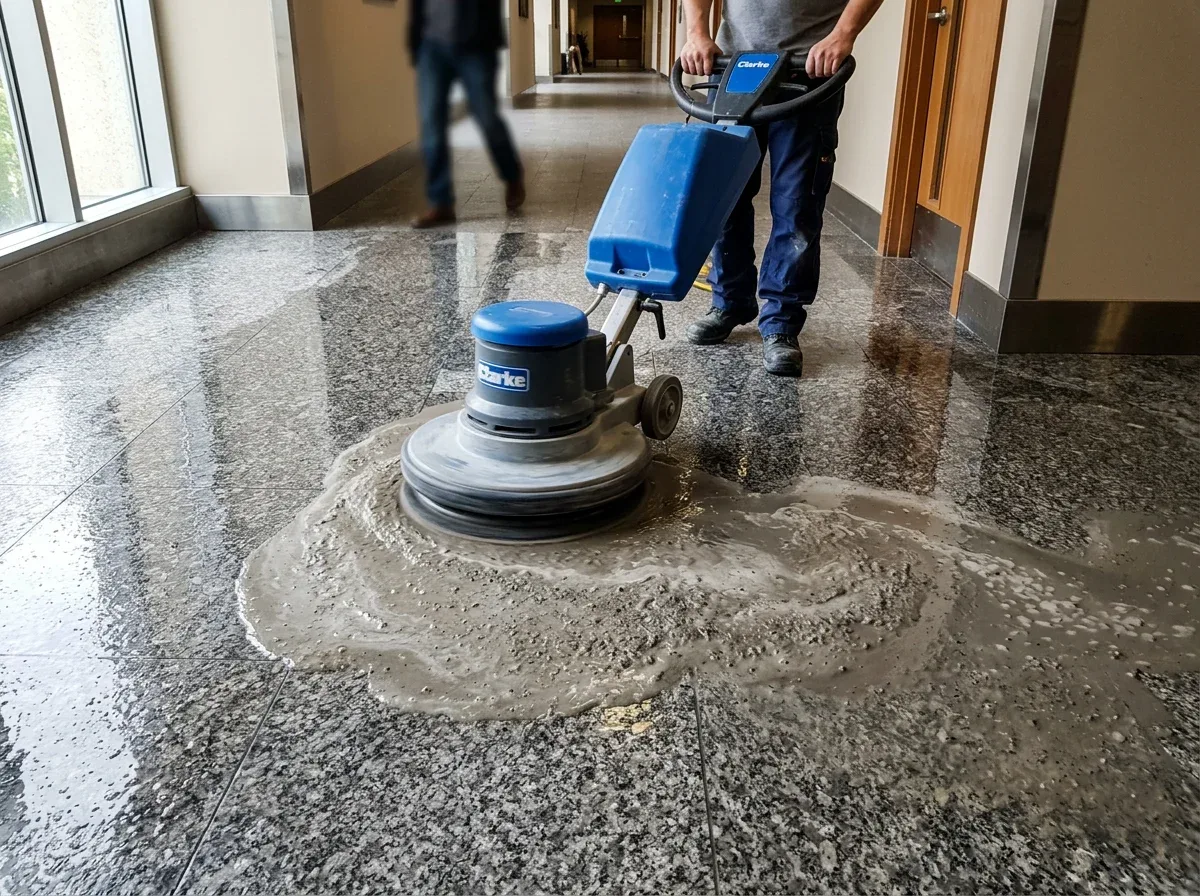
If the dullness is caused by film buildup, deep cleaning is the fastest and cheapest solution. The floor is cleaned with a cleaner suitable for granite that leaves no residue on the surface, using a single-disc machine fitted with a soft pad; it is then rinsed with plenty of clean water and dried. If there is old polish or polymer residue, it is first removed with a suitable stripper.
- The shine returns: If the shine comes back once the floor dries after cleaning, the problem was only film buildup; the floor returns to its former state without any need for grinding.
- Dark lines along the walls: The dark lines left along the walls and in the corners are old film built up in places the machine cannot reach; these areas are cleaned by hand.
- Less detergent, good rinsing: Since the film is usually caused by excess detergent, the amount of detergent should be reduced from now on, and rinsing with clean water should not be neglected after each mopping.
If the result is not as good as expected, move on to the second step.
2. Shine Restoration
On lightly worn granite surfaces, the surface can be re-polished with fine diamond pads or granite polishing powders. This process does not go as deep as full grinding; it only removes the micro-scratches on the top surface.
3. Diamond Grinding
If there are visible scratches, heavy wear, or lippage (height differences between slabs), gradual diamond grinding is required. Grinding granite takes longer than marble, because abrasives suited to the hardness of the stone and patience are needed so that each step fully removes the scratches of the previous one. If a step is skipped, the final shine remains cloudy.
4. Stain Protection
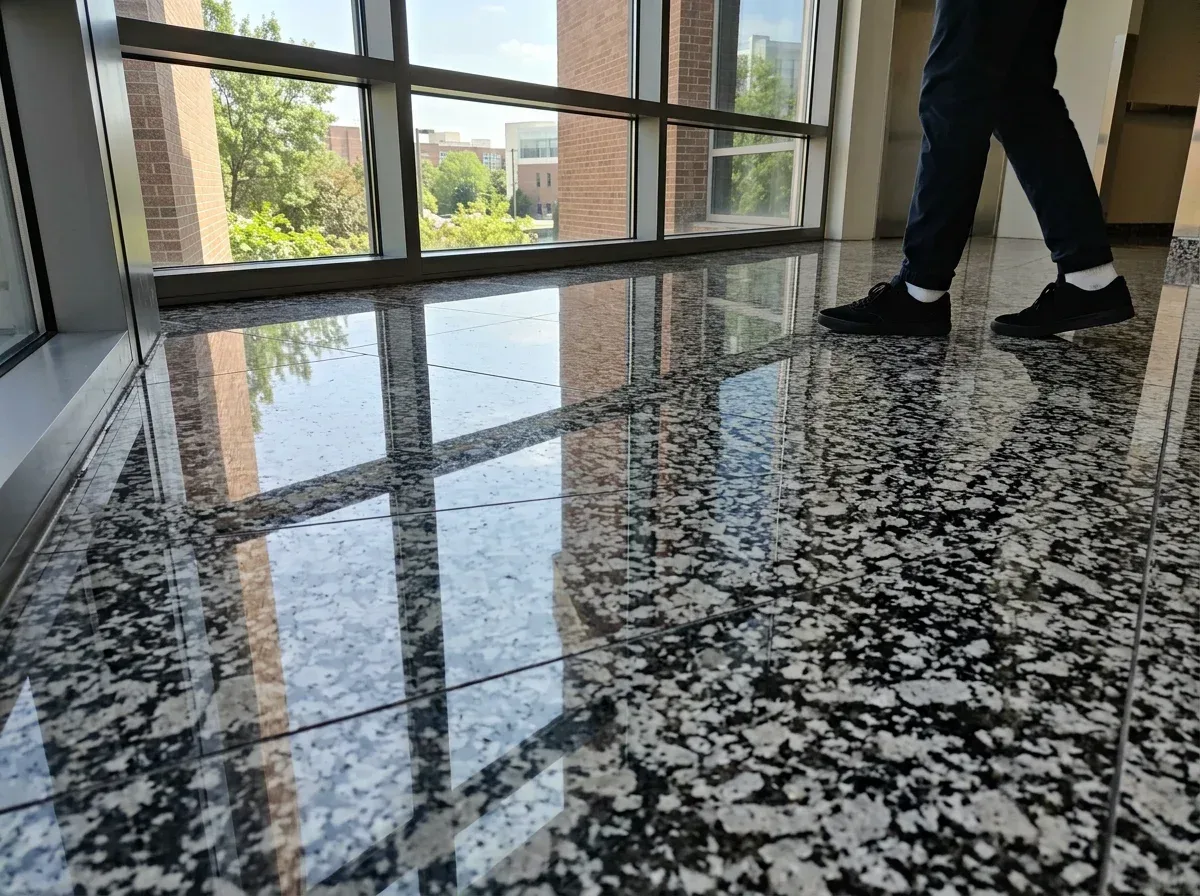
Polished granite is protected with an impregnating sealer, depending on its porosity. This step is especially important for preventing oil and water stains on light-colored granites.
Quick Table for Identifying the Type of Dullness
| Symptom | Likely cause | Solution |
|---|---|---|
| Entire floor dull, dark lines in the corners | Detergent and dirt film | Deep cleaning |
| Dullness along walkways, fine scratches against the light | Wear from sand and dirt | Shine restoration or diamond grinding |
| Dull stains in specific spots | Aggressive chemical | Spot grinding and polishing |
| Irregular dull areas over a large surface | Wrong machine pad | Gradual grinding |
| Stepped feeling between slabs | Lippage | Grinding starting from the coarse step |
What Not to Do on Granite
Granite being hard does not mean every product and every machine is harmless to it. To protect a polished granite floor, avoid the following:
- Polish-based and waxy cleaners: These products, which claim to boost shine, quickly leave a dirt-trapping film and make the floor look duller than it was at the start.
- Strong acids: Strong acids used for rust and limescale damage the calcite veins and factory resin in some granites, leaving dull stains.
- Abrasive machine pads: Black and brown pads are intended only for removal work; used on polished granite, they scratch and dull large areas in a short time.
- Heavy traffic with sandy shoes: When no doormat is placed at the entrance, the sand carried in on shoes creates micro-scratches, and the shine is lost first right at the doorway.
Granite Floors in Alanya
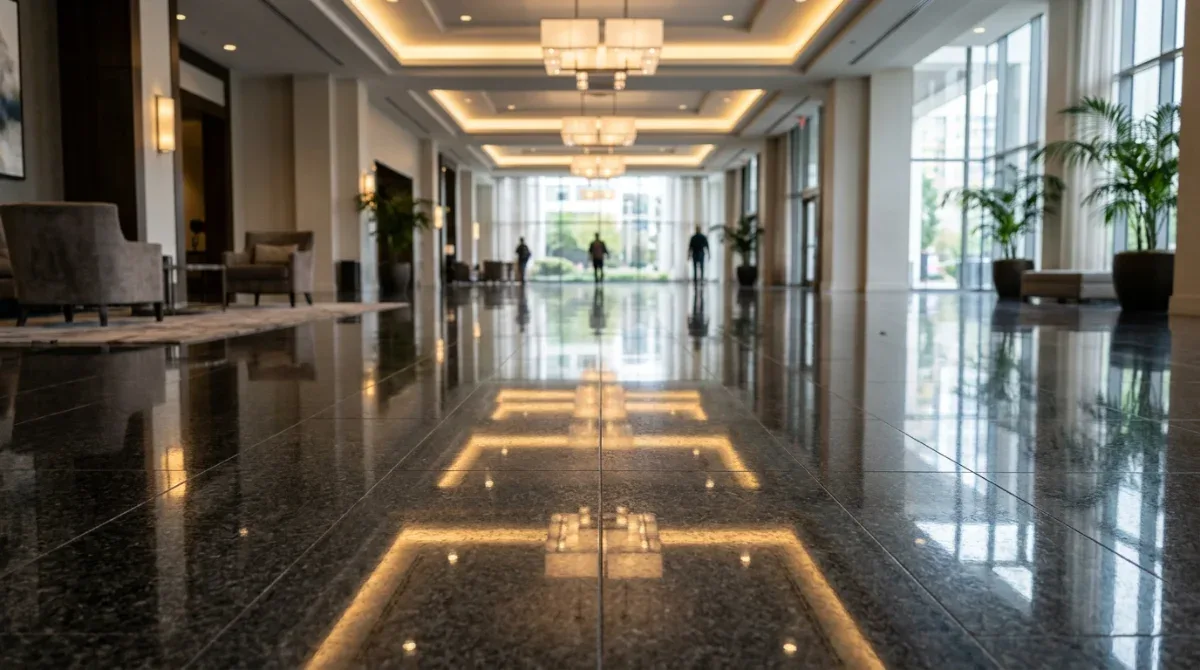
In Alanya, granite is most commonly used in hotel lobbies, residential complex entrances, in front of elevators, on stairs, and on kitchen countertops. What these areas have in common is heavy traffic and beach sand. Dullness in granite is often noticed only after years, but by the time it is noticed, the stone itself is most likely still sound. With a proper diagnosis, the lightest solution is tried first; where deep cleaning is not enough, gloss restoration is carried out, and where that is not enough either, gradual grinding is performed. This way, no more material than necessary is removed from the stone.
To Prevent Dulling

- Use detergent in moderation; "more product" does not mean "cleaner."
- Dry-clean before wet mopping.
- Use mats of sufficient length at entrances.
- Base pad selection for machine cleaning on a written instruction.
- Don't frequently use acidic and aggressive products on granite just because it is "durable."
Our Granite Grinding and Polishing Service in Alanya

Granite is a hard stone, and its shine is restored not with polish, but through honing with the right diamond grit stages. We re-polish dulled interior granite, and clean exterior surfaces and steps while preserving their non-slip finish.
We determine on-site which treatment your granite floor needs, based on its condition. Explore our Granite Grinding and Polishing service.
This is the first and often sufficient step for film buildup. The granite is deep-cleaned with a suitable, residue-free cleaner and a soft machine pad, then rinsed thoroughly with plenty of water. Rinsing is the most important part of the job; any product left behind will form a new film. — Expert Note