Polished Concrete, Sealed (Coated) Concrete and Power-Troweled Concrete: What's the Difference?
In short: When it comes to concrete floors, the terms "power-trowelled concrete", "glossy concrete" and "polished concrete" are often used interchangeably.
Yet the three are achieved at different stages, with different methods, and give different results. In this article, we explain in plain language what each one is and which one makes sense for your floor.
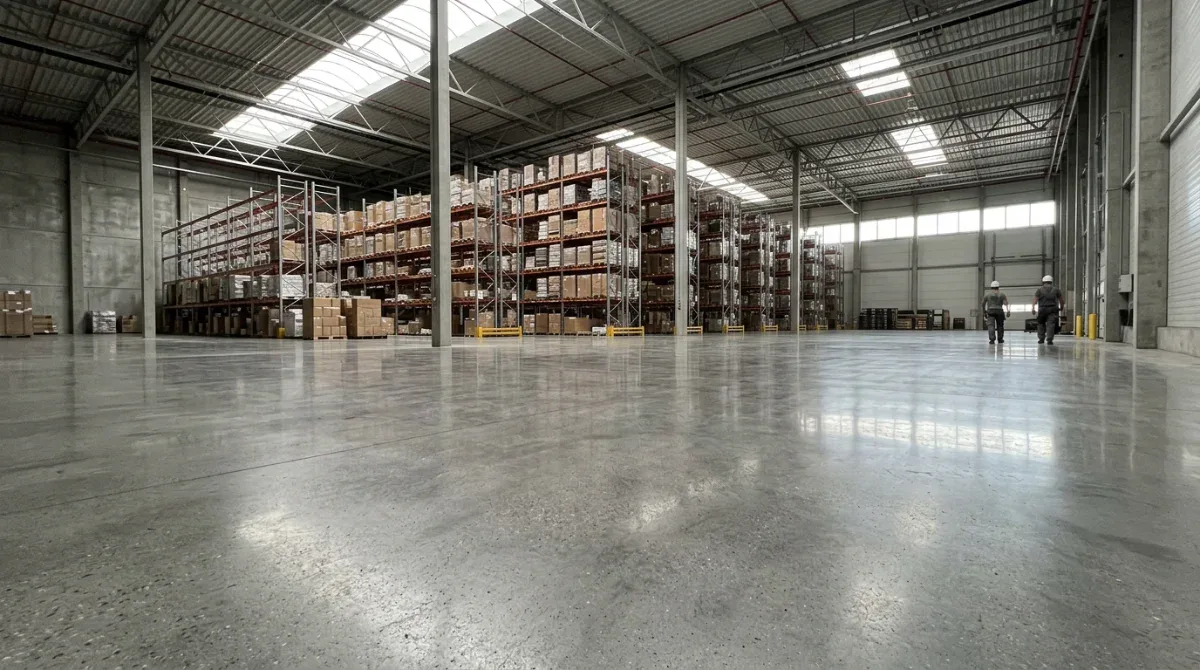
Power-Trowelled Concrete (Helicopter Finish)
Power-trowelled concrete is a surface treatment applied while the concrete is being poured. Once the fresh concrete starts to harden sufficiently, the surface is troweled with bladed machines that resemble propellers (popularly called "helicopters"). Very often, a surface hardener powder is sprinkled on the surface during this process and worked into the concrete with the trowel.
Result: A flat, dense and slightly glossy surface.
Characteristics:
- Done at the same time as the pour: Because troweling is done as the fresh concrete begins to harden, it cannot be applied afterward; on a hardened floor, the same result can only be achieved by grinding.
- Depends on the craftsman and the weather: The quality of the surface depends heavily on the craftsman's timing and the weather conditions; troweling that starts too early or too late can leave a wavy, stained surface.
- May wear over time: It looks even in the first years, but under heavy traffic the surface layer can wear down and dust, and color variations and trowel marks can become noticeable.

Power-trowelled concrete is the starting surface of most warehouses and parking lots. Once worn over the years, this surface can later be renewed by grinding.
Polished Concrete (Ground Concrete)
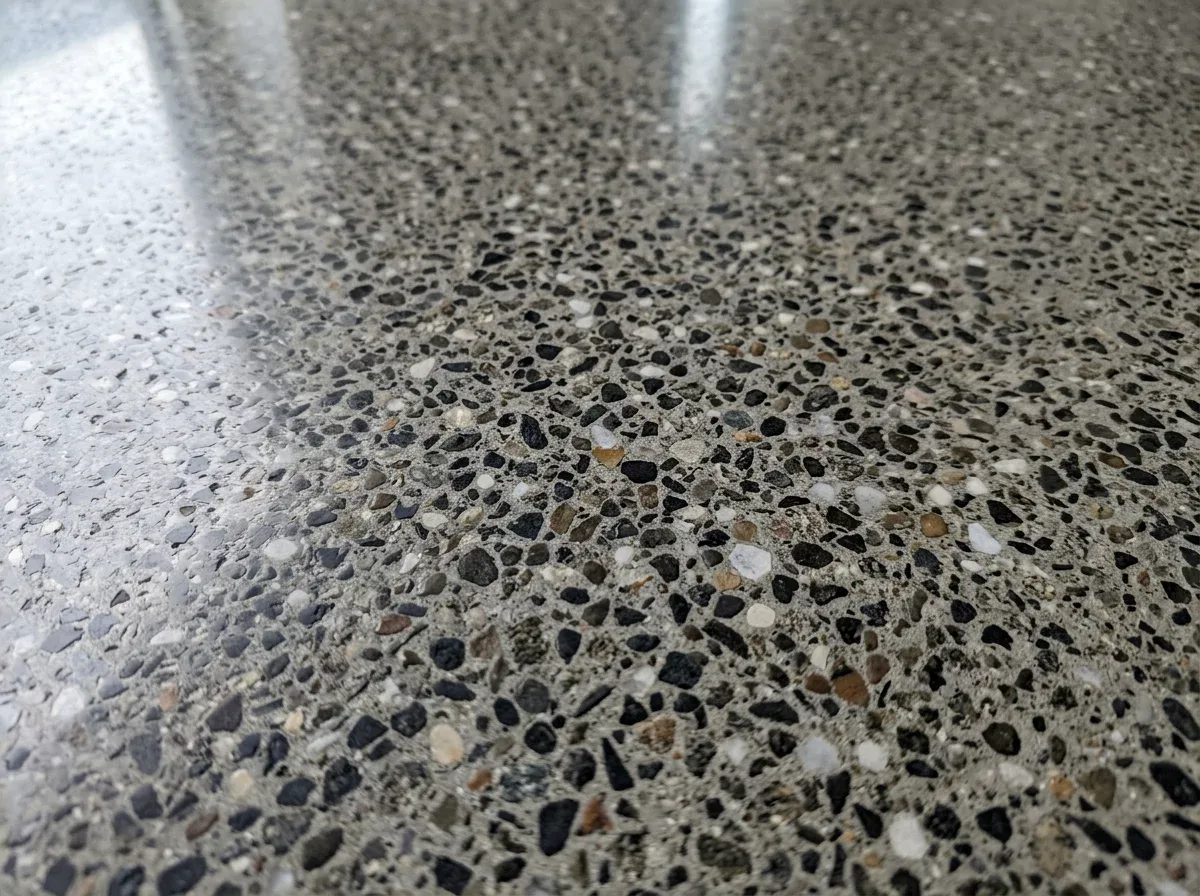
Polished concrete is achieved by grinding the surface of hardened concrete with diamond abrasives, strengthening it with a hardener and polishing it gradually. In other words, it can be applied after the concrete has been poured and hardened, even years later.
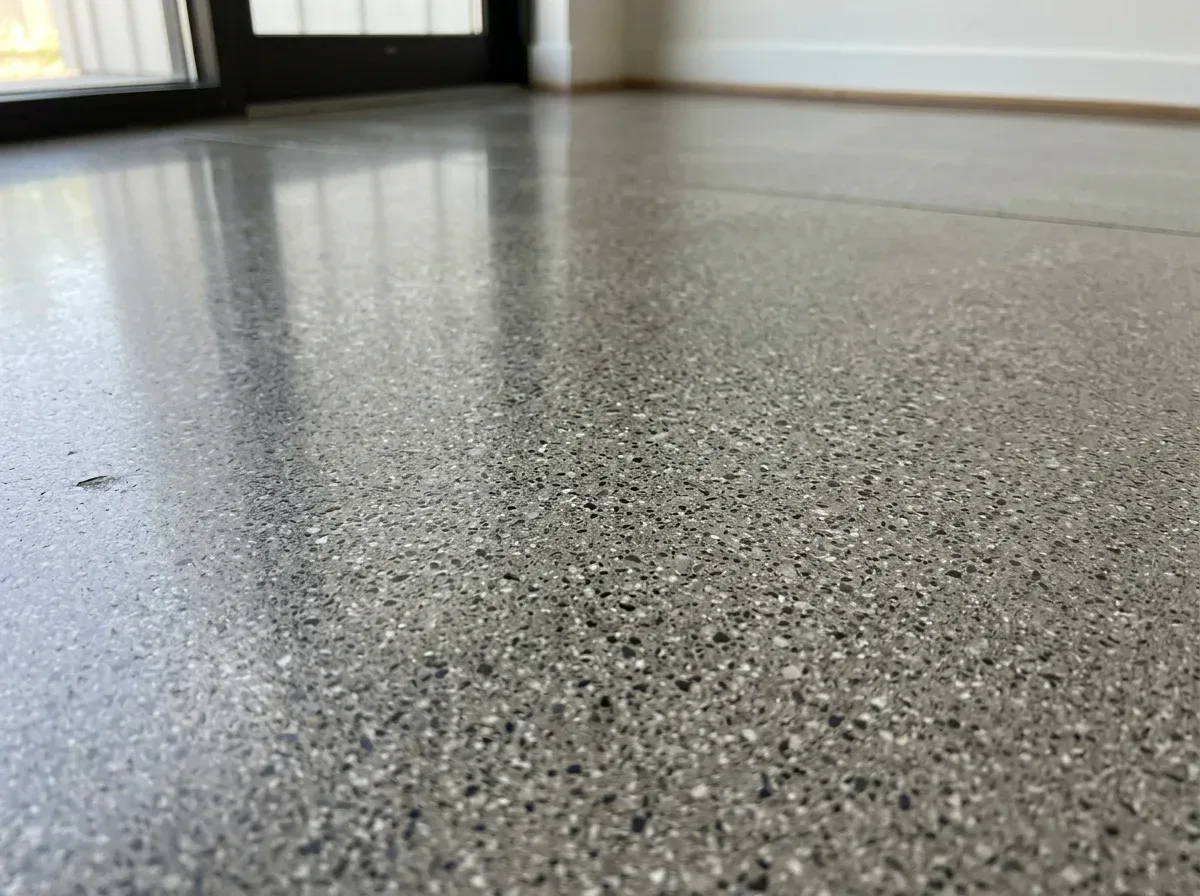
Result: A hard, dust-free floor whose shine comes from the concrete's own surface.
Characteristics:
- Applied to existing floors: It does not require a new pour; even concrete poured years ago and worn down can be ground, hardened and turned into polished concrete.
- Gloss and aggregate can be chosen: The gloss level (matte, satin, high gloss) and the aggregate appearance (cream finish, fine aggregate, coarse aggregate) can be selected.
- Does not peel: Because the shine comes from the concrete itself rather than a separate coating, there is no film on the surface that could lift, bubble or peel.
- Refreshed in place: When the shine fades, it is refreshed on site with light polishing; worn walkways are revived without tearing out the floor or renewing a coating.
Sealed Concrete (Coating-Based Gloss)
The term "sealed concrete" is sometimes used to mean the same thing as polished concrete; at other times it describes the gloss given by a protective layer, such as acrylic, polyurethane or similar, applied to the concrete surface.
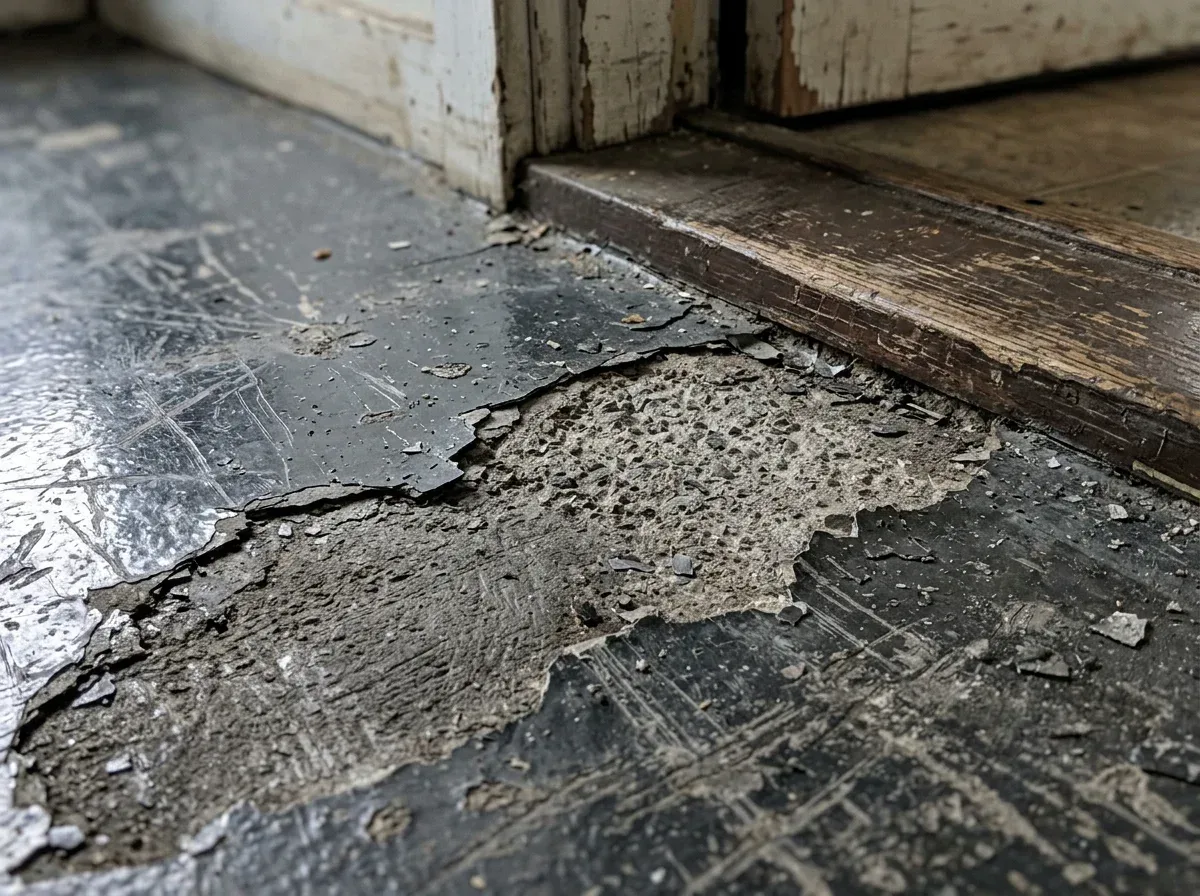
Result: Most of the gloss comes from the film on the surface.
Characteristics:
- Quick glossy look: It provides a glossy look in a short time, because the shine comes not from working the concrete but from the protective film applied to the surface.
- Needs periodic renewal: The film gets scratched and dulls under heavy traffic; it needs periodic renewal, and unless a new coat is applied, walkways look different from the edges.
- Whitening in moisture: On floors that take in moisture from below, whitening and blistering may occur; because the film blocks moisture from escaping, hazy stains form underneath.
- Buildup may need stripping: In the long term, the film buildup may have to be stripped; when layers applied one on top of another become dirty and yellowed, the floor requires preparation again.
In practice, the most durable result is to polish the concrete itself and, if necessary, use a penetrating stain protector that soaks in rather than forming a film on top.
The Three Side by Side
| Power-trowelled concrete | Polished concrete | Coated (sealed) concrete | |
|---|---|---|---|
| When it is applied | During the pour | On hardened concrete, at any time | On hardened concrete |
| Source of gloss | Troweled surface | Ground and polished concrete | The film on top |
| Dusting | May appear over time | Eliminated with hardener | None while the film is intact |
| Renewal | By grinding | Light polishing on site | Film stripped and recoated |
| Risk of peeling | None | None | Yes |
How Is Polished Concrete Achieved?
Polished concrete is not a single operation but a process made up of successive stages. Each stage removes the scratches left by the previous one:
- Preparation: Old paint, adhesive, epoxy or coating residues are removed from the floor; cracks and pits are repaired so that grinding starts on a clean surface.
- Coarse grinding: The surface is opened up with metal-bond diamonds and leveled; the desired aggregate appearance is determined at this stage and cannot be changed afterward.
- Hardener: Next, a densifier is applied that penetrates the pores of the concrete; the surface becomes denser and dusting stops, and the following stages give better gloss.
- Fine stages: Then the surface is polished progressively with resin-bond diamonds; you can stop at a matte, silky or high-gloss level.
- Protection: In the final step, if desired, a penetrating stain protector that leaves no film is applied to the surface; this slows the absorption of oil and liquids into the concrete.
Can Old Power-Troweled Concrete Be Polished?
Yes, and it is one of the jobs we do most often. Power-troweled concrete that has worn, started dusting or become stained over the years can be turned into polished concrete by opening up the top layer with coarse grinding. The point to watch here is this: the hardened top layer of power-troweled concrete may be thin. Once grinding goes through this layer, the aggregate underneath begins to show. For this reason, a test is first carried out on a small area to show which appearance will be achieved.
Maintenance Differences
Maintenance of the three surfaces varies depending on where the gloss comes from, and this difference also determines the long-term cost.
- Polished concrete: A pH-neutral cleaner and a damp mop are sufficient for daily care. Areas where the gloss has faded are refreshed on site with fine pads.
- Coated concrete: As the film gets scratched, it gets dirty; a new coat is applied periodically, and when buildup increases, the coating is stripped and the surface is prepared again.
- Power-troweled concrete: As long as the surface remains sound, it is easy to clean; once dusting starts, a hardener or grinding is needed, otherwise wear speeds up and spreads.
In Alanya, concrete floors are preferred in car parks, warehouses and stores, and in recent years in villas and apartments. Which method to choose should be determined by an on-site inspection based on the age of the floor, its traffic and the expected appearance.
Which Finish for Which Floor?

- A newly built warehouse or parking garage: Power-troweled (helicopter) finishing is done at the pour; polished finishing with grinding can be planned after the first few years, or from the start if the look is desired.
- A dusty, worn power-troweled concrete floor: It is turned into polished concrete through grinding and polishing.
- Store, showroom, office: Since appearance matters, polished concrete is preferred; designs can be created with the aggregate exposed.
- A short-term event space: A coated gloss finish can be a quick solution, but it is not recommended for permanent use.
Our Concrete Grinding Service in Alanya

We grind concrete floors in warehouses, factories, car parks, shops and homes and strengthen them with a hardener, creating a dust-free surface that is easy to clean. Depending on the look you want, we apply a matte, satin or glossy finish.
We inspect the age and condition of your floor on site and decide on the right method together with you. Learn more about our Concrete Grinding service.
On a concrete floor, getting the shine from the concrete itself rather than from a coat applied to the surface is always more economical in the long run. A coating peels and has to be renewed; properly hardened and polished concrete, on the other hand, can be used for years with only cleaning and occasional intermediate polishing.
Frequently Asked Questions
01Can helicopter-troweled concrete be polished afterwards?
02Is polished concrete slippery?
03Does concrete sealer cause damage?
04Can polished concrete be used at home?
05How soon can polished concrete be used?
06Can every concrete be polished?
Related Articles
- What Is Concrete Grinding and How Is It Done? Turning Dusty Concrete into a Glossy Floor
- Aggregate Exposure in Concrete Grinding: Cream, Salt-and-Pepper, Full Aggregate
- When Should Newly Poured Concrete Be Ground?
- Is Polished Concrete Suitable for Homes and Offices?
- Concrete Grinding or Epoxy Coating? Which Is Right for Which Floor