What Is Natural Stone Sealing, and Which Stones Need It?
In short: Impregnating sealer penetrates the pores of natural stone and slows the absorption of water, oil and other liquids into it.
It works without changing the appearance of the stone and without forming a film on the surface. In this article, we explain what impregnation is, which stones need it and for which it is optional, and how to set the right expectations.
How Does Impregnation Work?
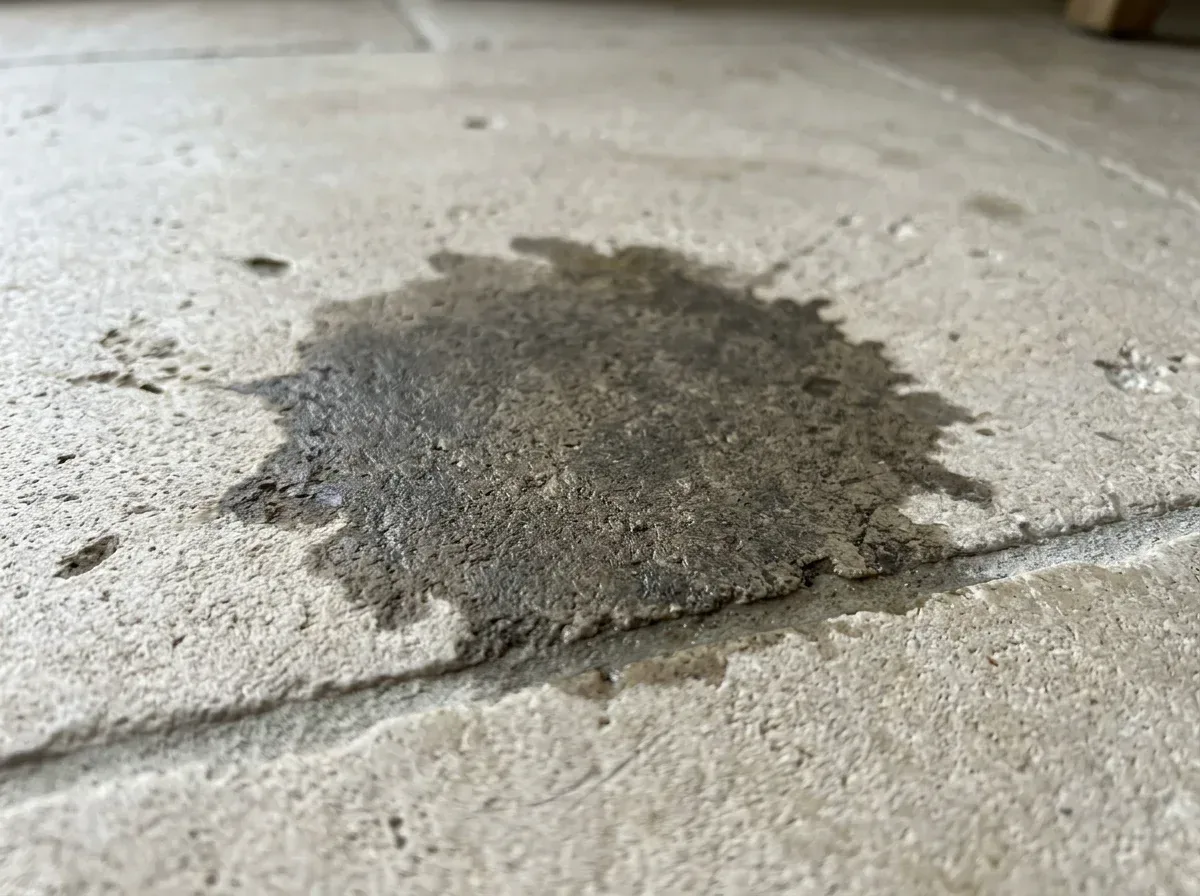
Natural stones contain millions of tiny pores, even if they are not visible to the eye. These pores draw liquids into the stone through capillary action. Once coffee, oil or dirty water gets inside, it cannot be removed by wiping the surface; the stain is inside the stone.
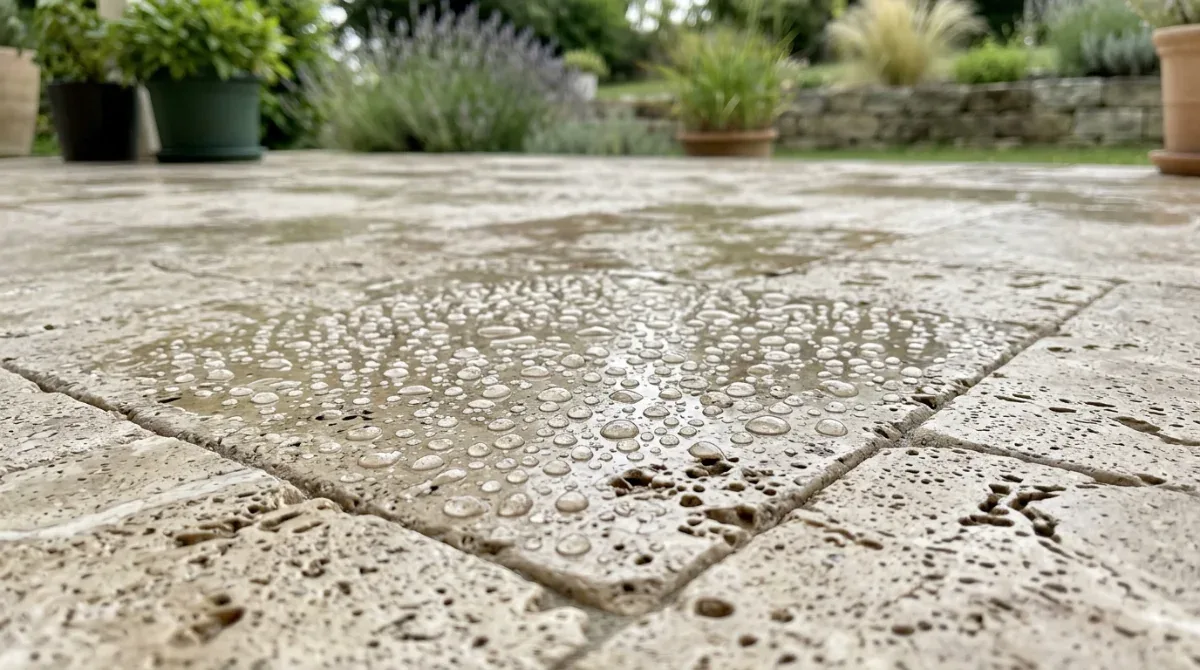
When the impregnating liquid is applied to the surface of the stone, it penetrates these pores. The protective agents it contains cling to the pore walls and make them repel water and oil. It does not block the pores completely; the stone continues to "breathe" and vapor can escape. However, liquids have difficulty getting in and bead up on the surface.
What Impregnation Does Not Do
It is important to set the right expectations:
- It does not make the stone shiny: Impregnation is not a polish. It either leaves the appearance unchanged or darkens it slightly (except for products that give a wet look).
- It does not protect against scratches: Because it does not form a film on the surface, it does not prevent scratches and wear; for that, you need measures such as dry cleaning, doormats and furniture felt pads.
- It does not stop acid: On marble and travertine, it does not prevent the dull marks left by acidic liquids; acid chemically dissolves the surface, and impregnation only slows the liquid from penetrating.
- It is not permanent: It weakens over time with traffic, cleaning and sunlight; its condition is monitored with the drop test, and it needs to be renewed when the protection declines.
- It does not make staining impossible: It extends the time before staining, giving you time to wipe up spills right away, but a liquid left for a long time can still penetrate the stone.

Which Stones Need It?
Travertine — Almost Always
Travertine is a porous stone, and its fillings can be porous as well. Travertine used on floors, around pools, in bathrooms and outdoors without impregnation quickly darkens and collects algae and limescale. After travertine honing, impregnation is an indispensable part of the job.
Light-Colored Marble — Necessary in Wet Areas and Kitchens
Marble is not as porous as travertine, but light-colored marbles in particular absorb oil, coffee, wine and dirty water. In dry areas such as living rooms, impregnation may be optional; on kitchen countertops, in bathrooms, shower floors, dining areas and entrances, it is recommended to prevent staining. For dark-colored and very dense marbles, the decision is made with the drop test.
Granite — Depends on the Stone
Some dark-colored granites absorb almost no liquid; on these, impregnation can leave marks on the surface and is unnecessary. Light-colored, coarse-grained granites, on the other hand, can absorb oil; impregnation is beneficial in kitchens and outdoors. A drop test should be done to decide.
Limestone, Sandstone and Slate — Usually Necessary
These stones are porous; they should be protected with impregnation, especially outdoors and in wet areas.
Terrazzo, Mosaic and Cement Tiles — Necessary
These cement-bound surfaces are porous and hold stains; protection is recommended after honing.
Drop Test: Does Your Stone Need Impregnation?
Place a few drops of water on a clean, dry spot on the stone:
- If it is absorbed in a few minutes: If the water is absorbed in a few minutes and the stone darkens, the stone is porous and unprotected; in this case, impregnation is needed.
- If it is absorbed in tens of minutes: If the water is absorbed slowly, over tens of minutes, the protection may have weakened; renewal can be considered, especially in wet and heavily used areas.
- If it beads up on the surface: If the water beads up and stays on the surface, either the stone is very dense or the existing protection is still working; there is no need for a new application for now.
You can do the same test with a drop of cooking oil; it is more meaningful for kitchen areas.
How Is Impregnation Applied Correctly?
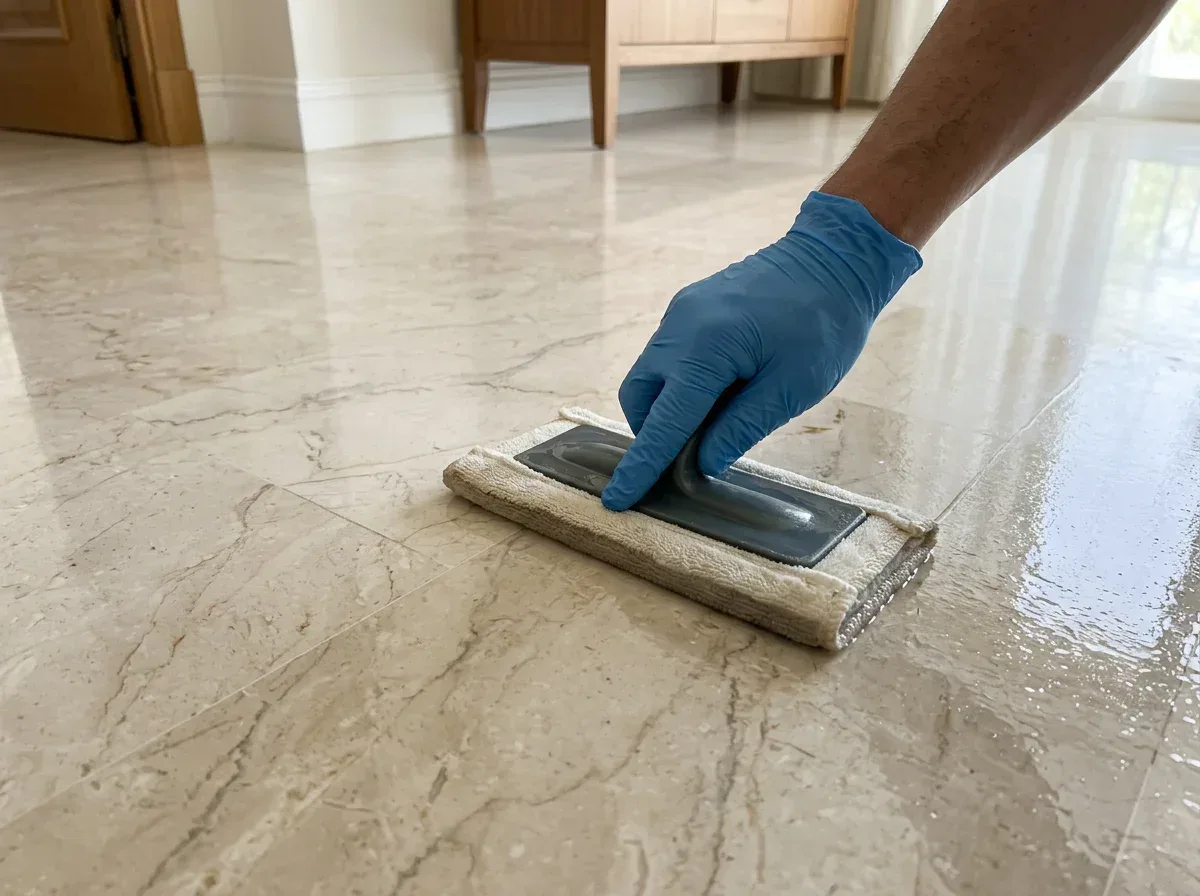
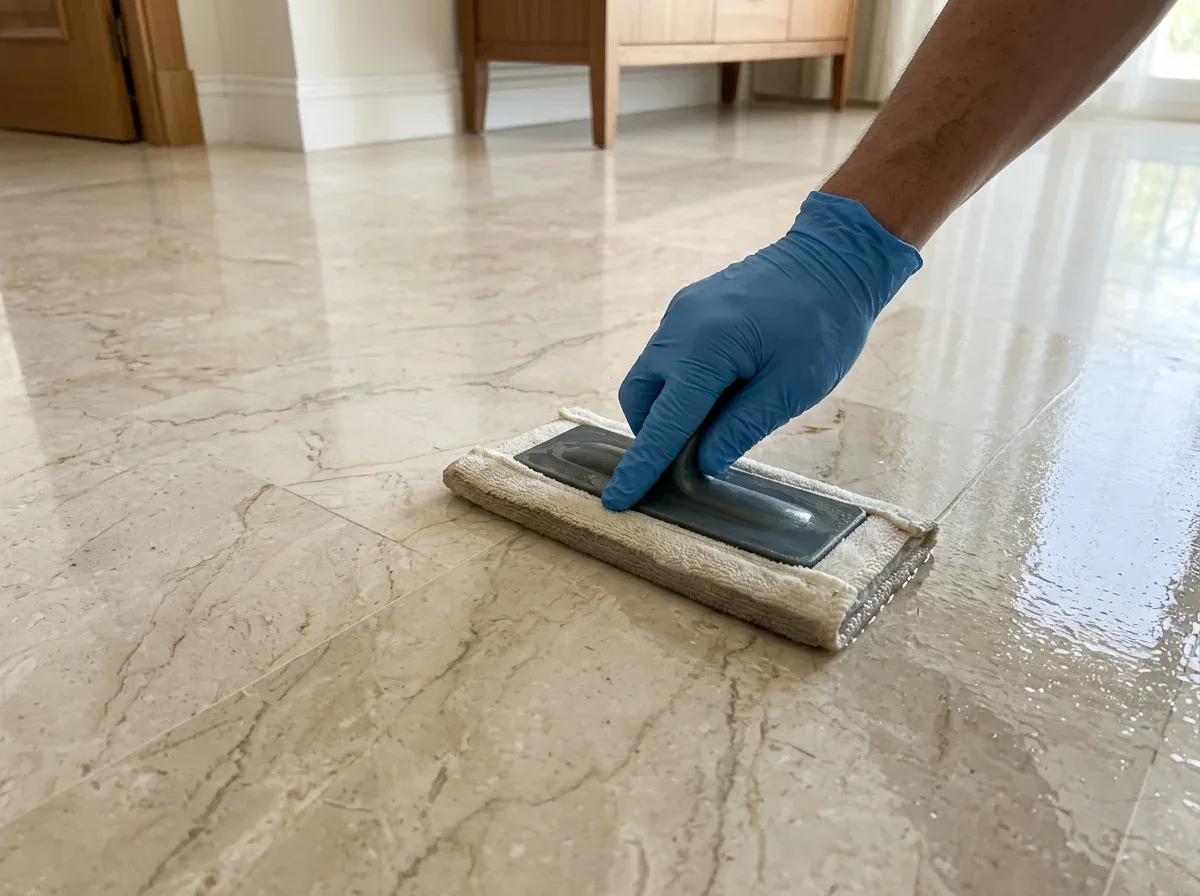
The success of impregnation depends on the application as much as on the product itself. An application that is not done in the right order can make even the best product ineffective:
- Clean surface: First, the stone is cleaned of dirt, polish and residues of old coatings. If impregnation is applied over dirt, it traps the dirt inside the stone.
- Complete dryness: After honing or washing, wait for the water inside the stone to evaporate. Wet stone does not take in the impregnation.
- Thin and even application: Once the stone is dry, the product is applied evenly with a brush, roller or pad; only as much as the stone can absorb is applied.
- Removing the excess: After a certain time, any excess product left on the surface must be wiped off. Excess that is not wiped off leaves sticky, cloudy marks on the surface.
- Curing time: Once the application is finished, avoid wet cleaning and heavy use for a few days so the product can reach its full effect.
Types of Impregnation in Brief
| Type | What does it do? | Where is it used? |
|---|---|---|
| Water-repellent | Slows the penetration of water and dirty water | Facades, gardens, terraces, poolsides |
| Water- and oil-repellent | Blocks oil stains as well as water | Kitchen countertop, dining area, restaurant |
| Invisible (natural look) | Does not change the color of the stone | Most interior floors |
| Color enhancer | Gives the stone a wet look and deepens its color | Decorative exterior stones, slate |
For the differences between water-based and solvent-based products and the criteria for choosing between them, see our separate article on types of sealers.
Why Is Sealing More Important in Alanya?
On the Mediterranean coast, stone has to withstand not only spilled coffee, but also salty air, pool water, sunscreen, summer rain and irrigation water. An unprotected travertine pool deck can darken within a single season, and efflorescence can appear on balcony stones. Sealing slows the penetration of these effects into the stone, makes cleaning easier and extends the life of the honing and polishing finish. Because stone wears faster outdoors under sun and water, protection outdoors should be checked more often than indoors.
How to Apply Impregnating Sealer

- The stone must be clean and dry. After honing, wait until all the water inside the stone has completely evaporated; sealer does not work on wet stone.
- The product is chosen to suit the stone. There are water-based and solvent-based products, as well as products that give a wet look and products that do not change the appearance.
- Apply a thin, even coat. Apply only as much product as the stone can absorb.
- Wipe off the excess. Excess product left on the surface leaves a stained, sticky residue once it dries; it must be wiped off with a dry cloth within the specified time.
- Wait for the drying and curing time. The surface must not be wetted during this time.
Our Natural Stone Impregnation Service in Alanya

Whether after polishing or on its own, we apply impregnating sealer that protects porous stones against water, oil, and stains. We choose a water-based or solvent-based product depending on the type of stone, whether it is indoors or outdoors, and the level of use.
After application, we check together with you that the protection holds, using a drop test. Explore our Natural Stone Impregnation service.
White and light-colored marbles easily show stains from oil, coffee, wine, and rust. Sealing is recommended for kitchen countertops, bathrooms, and dining areas. For living room floors, it is assessed based on the level of use. — Expert Note