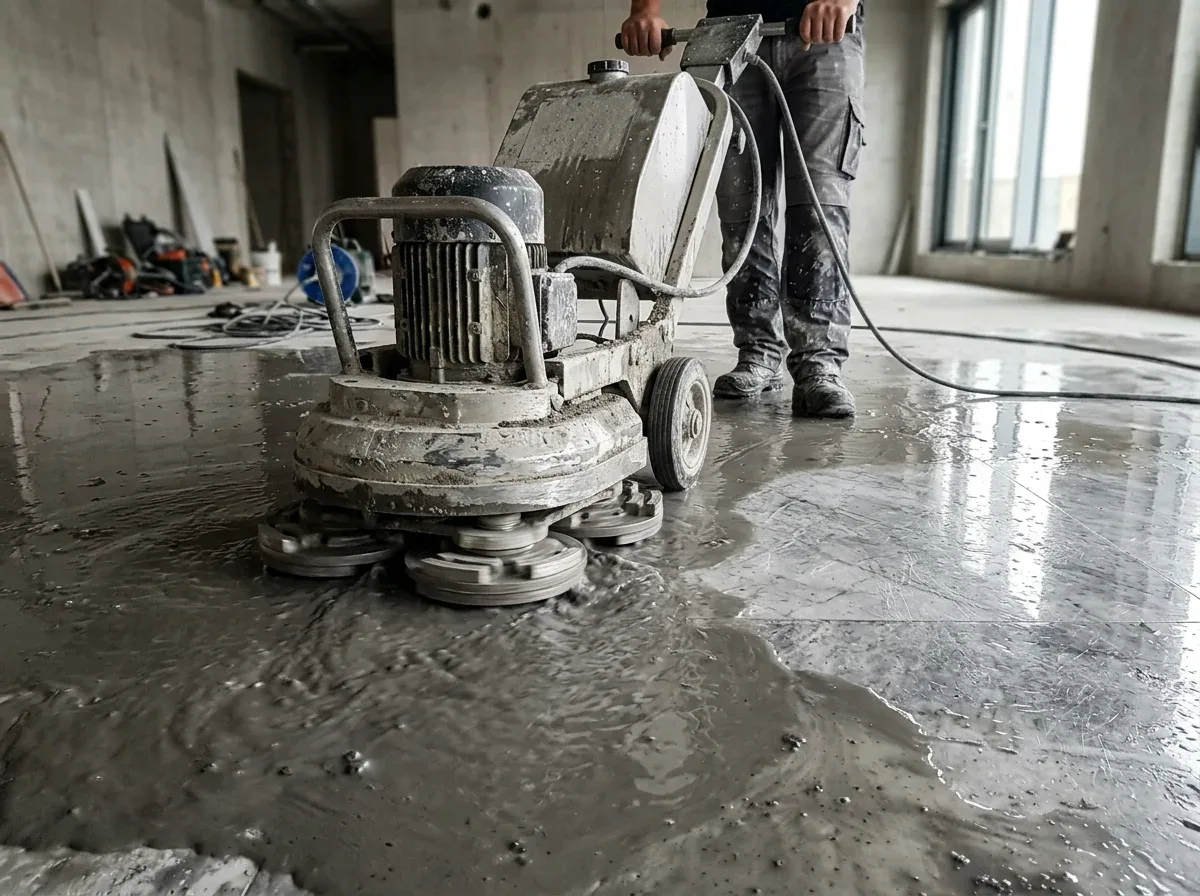
How Often Should Marble Be Honed and Polished?
In short: "How often should marble be honed?" has no single answer, but the factors that determine it are well known.
In this article, we explain the factors that affect the honing interval, general trends by type of use, and what you can do to avoid having to hone earlier than necessary.
The Condition of the Floor Determines Honing, Not the Calendar
Honing is not maintenance that must be done in a particular year; it is a restoration carried out once a certain amount of wear has developed on the floor. Even if two homes are laid with the same marble, one can look like new for years while the other dulls within a few years. What makes the difference is how much and in what way the floor is used.
Factors That Determine the Honing Interval
Foot Traffic
The most decisive factor is how many people walk on a floor each day and in what kind of footwear. In an apartment with few occupants where slippers are worn indoors, marble wears very slowly. Apartment entrances, hotel lobbies, and stores wear out much faster.
Sand and Dust
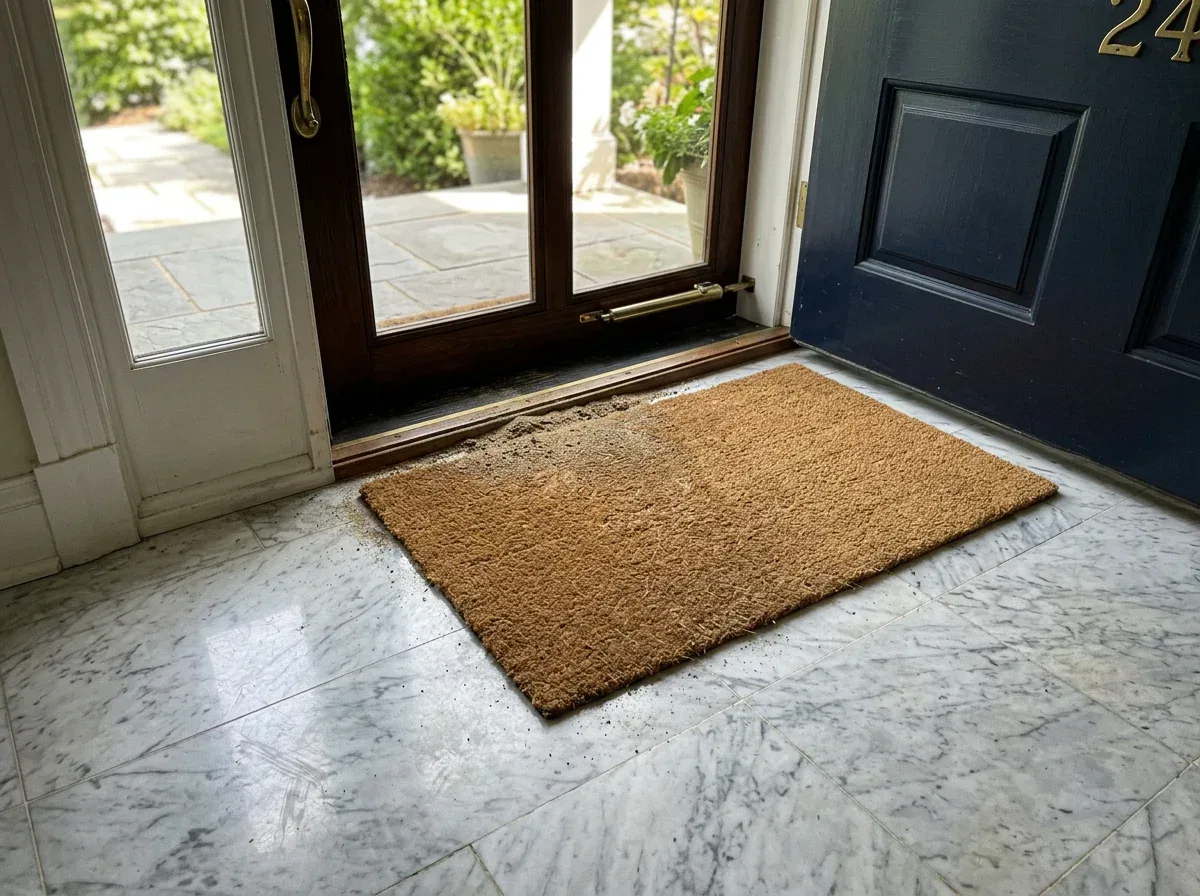
Sand is marble's worst enemy. Wear speeds up noticeably in seaside homes, at entrances opening onto a garden or bare ground, and in buildings near construction sites.
Type of Stone
Even when they share the same name, every marble has a different hardness and crystal structure. Some white marbles are softer and dull more quickly; some dark-colored, tightly textured marbles stay shiny for longer.
Daily Maintenance
What extends the honing interval the most is proper daily maintenance. Removing sand and dust every day with a dry mop or broom, always dry-cleaning before wet mopping, and using only pH-neutral cleaners suitable for natural stone will keep marble shiny for years. Conversely, acidic descalers, "polishing" products, and mopping with dirty water bring the need for honing forward by several years.
Expectations
Some homeowners accept slight dulling as natural; others always want a mirror-like floor. The honing interval also varies depending on this expectation.
General Trends by Type of Use
The periods below are not strict rules but general trends based on observation:
- Lightly used residence: In homes with one or two people where slippers are worn, the need for honing may arise only after many years. In between, simply refreshing the shine may be enough.
- Busy family home: Walkways and the entrance may dull within a few years; on frequently crossed routes, such as between the kitchen and living room, wear appears there first.
- Seaside summer house and villa: It varies with how busy the summer seasons are and how well sand is controlled; entrances and terrace exits may need renewal more often.
- Apartment common areas: Heavy foot traffic and outdoor shoes call for maintenance at shorter intervals.
- Hotel lobby, shopping mall, store: For walkways, periodic shine refreshing and full honing at set intervals are planned.

Full Honing, Partial Honing, and Shine Refreshing
Not every maintenance job requires full honing.
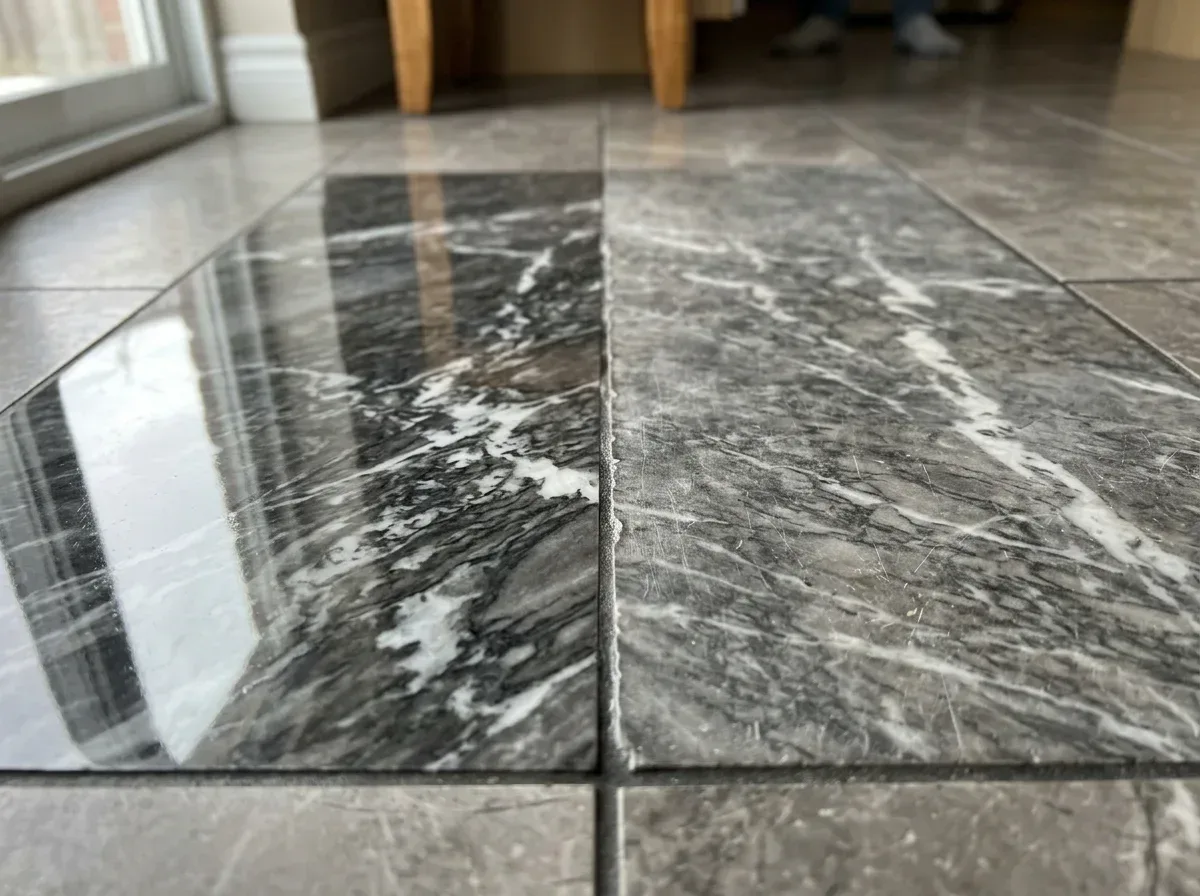
- Shine refreshing: The floor is sound and level, only slightly dulled. The shine is restored with fine pads or crystallization. It takes little time and removes almost no material from the stone.
- Partial honing: If only high-traffic areas such as doorways and corridors are worn, these areas are honed and blended in with the rest of the floor.
- Full honing: Scratches are deep, there is a level difference, and the whole floor has dulled. The entire area is restored, starting from the coarse grits.
A smart maintenance plan means doing full honing rarely and shine refreshing more often. This keeps the material removed from the stone to a minimum.
Signs That It Is Time to Hone
It is not the calendar but the signs of wear you can see and feel on the floor that show when honing is due.
- Dull-looking walkways: If the walkways look clearly dull when viewed against the light from a window, the surface has been worn down by foot traffic.
- Increasing scratches: If scratches you can feel with a fingernail have multiplied, the problem is too deep to be fixed by shine refreshing and requires honing.
- Catching tile joints: If your foot catches on the joints between slabs, there is a level difference between them; this can only be corrected with coarse honing.
- Dirty look after cleaning: If the floor still looks dirty even after cleaning, the problem is often not dirt but a scratched, worn surface that scatters light.
- Acid marks and glass rings: If acid marks and glass rings have built up, dull spots that cleaning cannot remove have formed on the surface, and polishing or honing is needed.
Recommended Maintenance Plan by Type of Use
The table below summarizes the maintenance routine we recommend based on how the floor is used. The periods are general trends; the real decision depends on the condition of the floor:
| Use | Daily | Interim maintenance | Full honing |
|---|---|---|---|
| Lightly used residence | Dry mop, neutral cleaning | Shine refreshing when needed | After many years |
| Busy family home | Dry mop, entrance mat | Refresh along walkways | When dullness and scratches become noticeable |
| Seaside vacation home | Sand control, frequent dry cleaning | Check at the end of the season | More frequent at entrances and terrace exits |
| Apartment building common area | Daily cleaning, mopping | Periodic refresh | For level differences and deep scratches |
| Hotel lobby, store | Daily machine maintenance | Refresh at frequent intervals | At planned intervals, section by section |
Does Frequent Honing Damage the Stone?
A honing done with the right grit stages removes only a very thin layer from the stone; a floor tile 2-3 cm thick can be honed many times over its lifetime. The problem is honing that starts with unnecessarily coarse grits and removes too much material each time. That is why, if the floor is only slightly dull, a gloss refresh is enough instead of a full honing. A correct diagnosis protects both the lifespan of the stone and your budget.
Honing Timing in Alanya
For vacation homes and villas in Alanya, the best time for honing is late spring before the owners arrive, or autumn after the season ends. In hotels and housing complexes, the work is planned outside the season, section by section. Because of the effect of sand and salty air, entrances and terrace exits in homes close to the coast may need renewal earlier than the rest of the house; partial honing is often enough for these areas.
Ways to Delay Wear and Dulling

- Placing doormats at entrance doors, both inside and outside.
- Wearing slippers at home instead of shoes.
- Sticking felt pads on furniture legs and not dragging heavy items.
- Dry sweeping before wet mopping.
- Using a pH-neutral detergent suitable for stone.
- Keeping acidic cleaners out of the house.
Our Marble Grinding Service in Alanya

We restore marble floors that have become dull, scratched, or uneven between slabs using wet grinding that keeps dust under control. From coarse grinding to polishing, we choose each stage according to the type of stone and, if needed, repair cracks and joints as part of the same job.
We inspect your floor on site and tell you clearly whether it needs grinding or just polishing. Explore our Marble Grinding service.
Marble Polishing Services
You can watch one of our team's on-site projects in the video below.
Using the wrong cleaning products, acidic limescale removers, too much detergent and hard brushes are the most common habits that shorten the interval between polishing sessions. Proper cleaning, on the other hand, can add several years. — Expert Note
Frequently Asked Questions
01Can marble be damaged if it is honed too often?
02Should newly installed marble also be honed?
03How long does the shine last after honing?
04Is it possible to have only the hallway honed?
05What is the difference between honing and gloss restoration?
06Is honing needed every time after a tenant moves out?
Related Articles
- How Long Does the Shine Last After Marble Polishing?
- Post-Polishing Maintenance Schedule: Daily, Weekly, Yearly
- Does Polishing Damage the Floor? The Truth About Thickness Loss
- Entrance Areas and Doormats: Stopping Wear at the Door
- What Is Marble Polishing and How Is It Done? A Guide for Your Home Floors