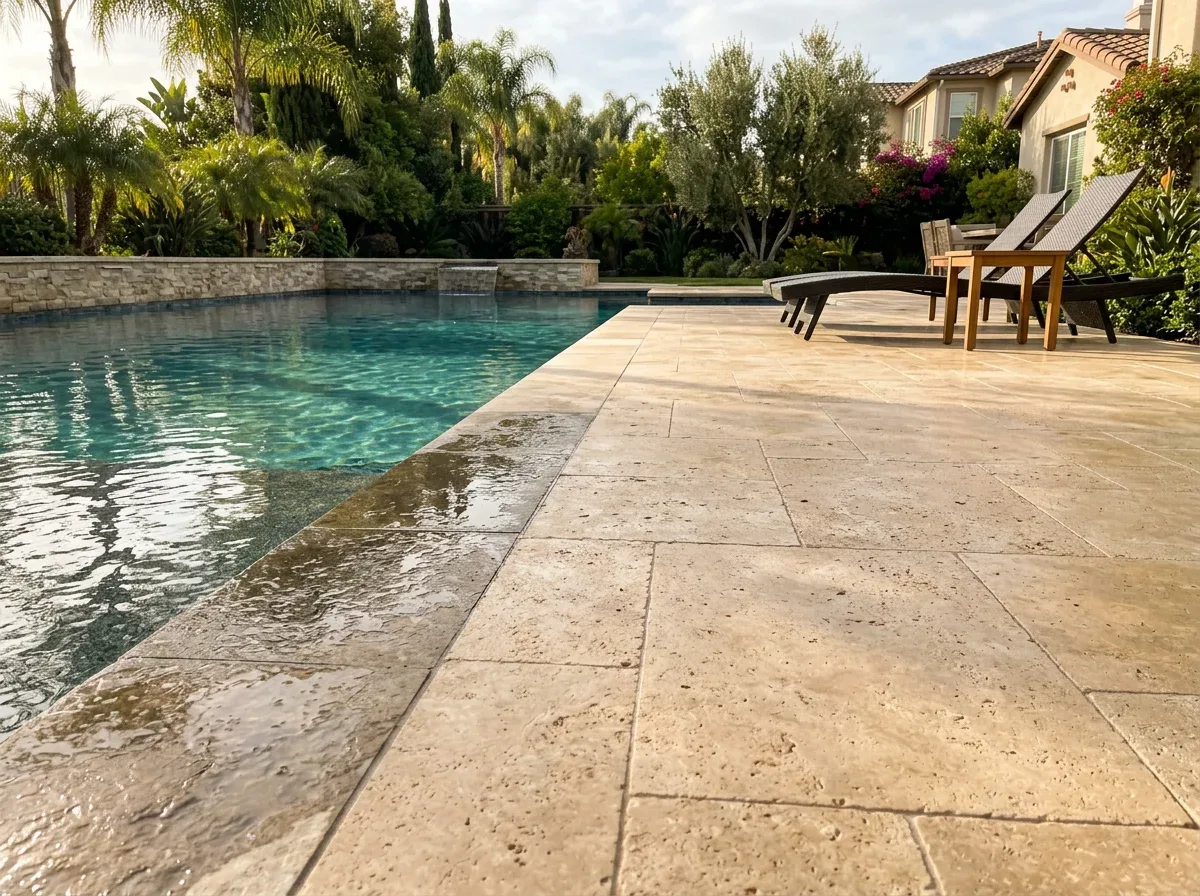
Travertine Pool Deck Restoration and Slip Resistance
In short: Travertine is the most popular poolside stone thanks to its warm tone and the fact that it does not overheat in the sun.
But pool water, chlorine, sun, algae and heavy wet traffic can cause problems such as darkening, limescale, holes and slipperiness on travertine within a few seasons. In this article, we explain step by step how poolside travertine can be restored without removing it.
What Happens to Travertine Around the Pool?
Darkening and Staining
Sunscreen, body oils, leaf and pollen stains work their way into the pores of the travertine. The areas under sun loungers, around the pool ladder and in shower zones are especially prone to darkening.
Limescale and Salt Buildup
As pool water splashes and evaporates, the limescale and salts it contains are left on the stone. The top surface of the pool coping and the area around the waterline take on a whitish, crusty appearance.
Open Holes and Broken Edges
The factory fillers weaken and crumble under sun and water. Water and sand fill the exposed holes, and their edges break. These holes are uncomfortable to walk on barefoot and can also cause injuries.
Algae and Slipperiness
Green-black algae grows in shaded areas that stay constantly damp. Algae is one of the biggest causes of slipping around the pool. In addition, a surface polished by foot traffic over the years can also become slippery.
Restoration Steps
1. Deep Cleaning
The first step is to clear the stone of surface films and organic stains.
- Algae and organic dirt: For algae and organic dirt, acid-free cleaners suitable for stone and non-abrasive brushes are used, so the dirt dissolves without wearing down the travertine.
- Oil and sunscreen stains: Oil-dissolving cleaners are applied to oil and sunscreen stains; the darkened areas under sun loungers and around the ladder are lightened this way.
- Caution with high pressure: Pressure washing must be used carefully; when held close to joints and fillers, it strips out the fillers and opens up new holes.

2. Removing Limescale and Salt Deposits
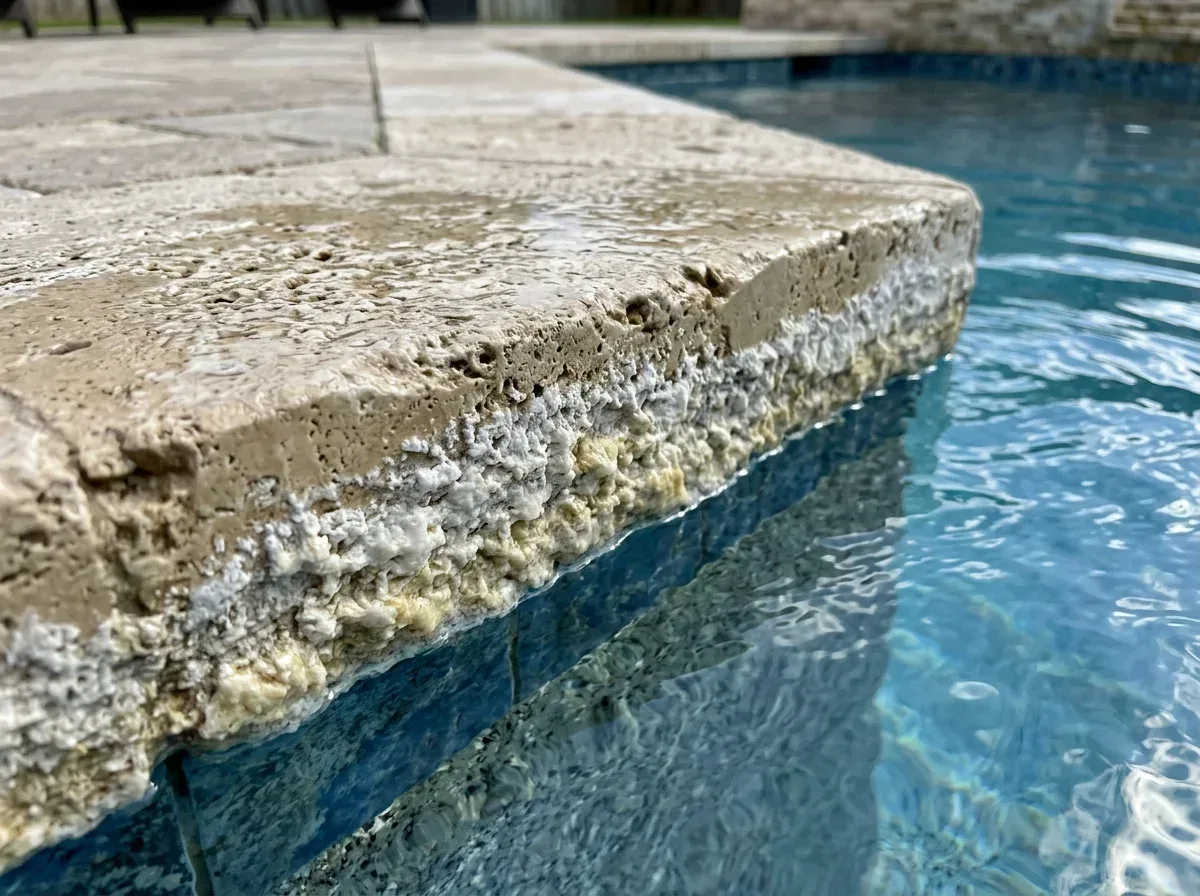
Limescale that builds up around the waterline and on the top surface of the coping is one of travertine's most stubborn problems. Because travertine, like marble, is made of calcium carbonate, acidic descalers dissolve the stone along with the limescale; the surface becomes rough, holes widen and fillers loosen. For this reason, limescale is removed mechanically:
- Thin limescale layer: A thin limescale layer is removed from the surface with suitable pads and a wet method; since no acid is used, the stone itself is not dissolved.
- Thickened crusts: Thickened crusts require coarse, progressive honing; the limescale layer is removed together with the top layer of the stone.
- Filling the exposed holes: Once the limescale is removed, the holes that are revealed are filled in the next step, leaving the surface both even and water-resistant.
Coping surfaces facing the waterline often collect more limescale than horizontal flooring; work here is done with the pool water level lowered slightly.
3. Hole and Joint Filling
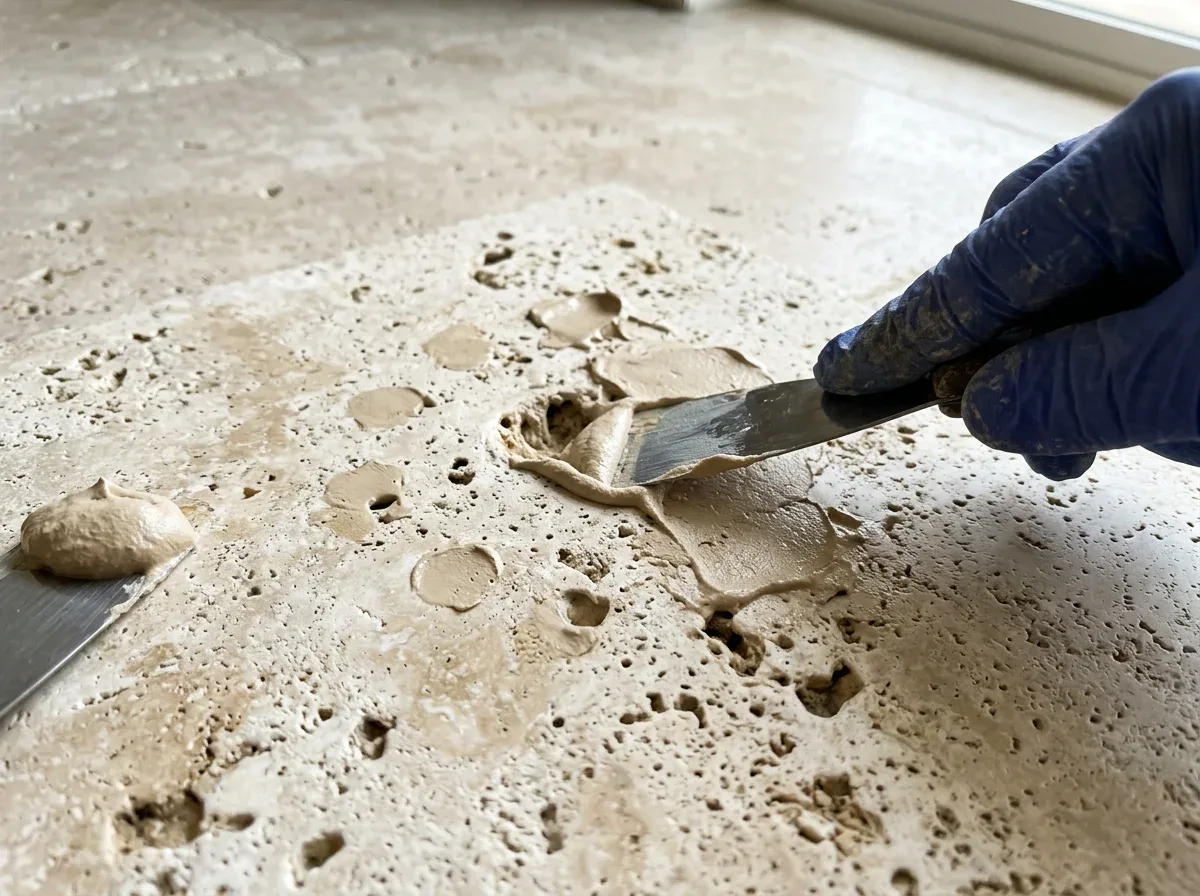
Exposed holes and broken joints are cleaned and dried, then filled with a filler material suitable for outdoor use. Because of the effects of sun and water at the poolside, UV-resistant products suitable for outdoors should be chosen. The filler color is matched to the tone of the travertine.
4. Surface Finish and Slip Resistance
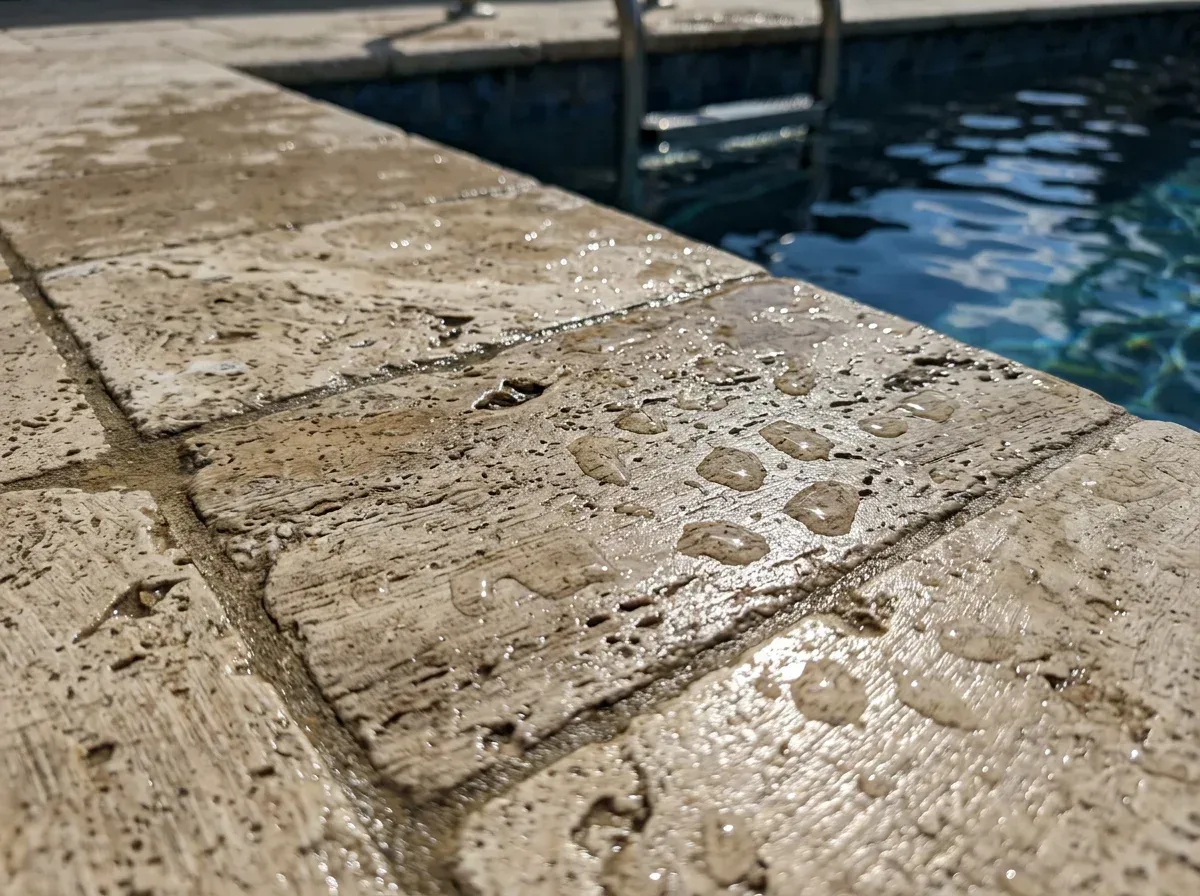
After the fillers, the surface is honed and given a texture suited to the poolside:
- Honed surface: Matte, silky and soft on bare feet; it grips better when wet than a polished surface.
- Brushed surface: A textured, slightly wavy surface that offers more grip; very suitable for pool deck walkways.
- Antique (aged) surface: Gives a natural look with softened edges; its textured surface helps wet feet grip and hides signs of use.
A polished surface is strictly not recommended at the poolside. A coping stone that has become polished over the years can be given grip again by brushing.
5. Sealing
Finally, the stone and fillers are protected with a sealer suitable for outdoor and wet areas. Sealing slows the penetration of water and stains into the stone, makes it harder for algae to take hold and makes daily cleaning easier. At the poolside, sealing should be renewed more often than indoors.
In-Season Maintenance
A restored pool surround is protected from limescale, stains and algae buildup through simple maintenance throughout the season.
- Rinse with fresh water once a week: Rinsing the poolside with fresh water once a week prevents the chlorine and salt in splashed water from building up on the stone and forming a crust.
- Protective feet for furniture: Place protective feet under sun loungers and tables; metal feet scratch the stone and, when they rust from moisture, leave marks that are hard to remove.
- Sweep areas where leaves fall: Sweep areas where leaves and fruit fall frequently; organic stains become permanent in the sun and may require a poultice to remove later.
- Watch the shaded areas: Monitor damp shaded areas for algae; algae noticed early can be removed with light cleaning, eliminating the slip risk before it grows.
Common Problems and Solutions
| Problem | Cause | Solution |
|---|---|---|
| Darkening under sun loungers and around the ladder | Sunscreen, oil, organic dirt | Degreasing cleaning, light honing if necessary |
| White, crusty layer on the coping | Limescale and salt | Mechanical descaling, honing |
| Open pores, chipped edges | Crumbled factory filler | UV-resistant outdoor filler |
| Green-black stains, slipperiness | Algae, shade and moisture | Appropriate cleaning, brushing, impregnation |
| Slippery surface polished by foot traffic | Polishing over the years | Brushing or honing |
When Should It Be Done?
The best time for renovating the pool surround is when the pool is not in use or is used less. In Alanya, this is usually in autumn after the season closes or in late spring before the season opens. Since the stone must be dry during the work, rainy days and periods when the pool water constantly overflows are avoided. A few days of dry weather are also needed for the filler to cure and the impregnation to penetrate the stone.
In hotel and housing complex pools, the work can be planned section by section; while one side of the pool is being renovated, the other sides can remain in use. In villa pools, the entire job is usually completed in a few days.
Remove or Renovate?
The travertine around the pool can often be saved without removal. Removal should be considered when most of the stone is broken or loose, or when the substrate must be accessed because of a water leak in the pool lining. For a pool surround that is merely darkened, calcified or slippery, removal is usually an unnecessary expense.
When Should It Be Renewed?

- If the pool edge has darkened noticeably and does not come clean with normal cleaning,
- If limescale crusts have formed,
- If holes have opened up and edge chipping has increased,
- If there are complaints about slipping when wet,
- If water is absorbed quickly in the drop test.
The best time is early spring or late autumn, when the pool is not used or is used less.
Our Travertine Grinding and Polishing Service in Alanya

We grind and polish travertine floors whose pores have opened up or that have darkened or worn, and we fill the voids with color-matched filler. For outdoor areas such as pool surrounds, terraces and gardens, we apply honed or brushed finishes that prioritize slip resistance over shine.
After grinding, we also recommend a suitable impregnating sealer to protect the travertine against stains. Explore our Travertine Grinding and Polishing service.
Watch the Application in the Video
Footage from the travertine honing work we carried out at Atamel Villas in Alanya.
Using an acidic descaler on travertine dissolves the stone itself along with the limescale. Thickened deposits are therefore removed by mechanical methods, using suitable pads and controlled honing. — Expert Note