Acidic Cleaner Damage on Marble Floors: Lemon, Vinegar, Limescale Remover
In short: One of the most common types of marble damage we see in homes is the result of cleaning done with good intentions.
Limescale removers, vinegar mixtures and lemon-based products chemically dissolve the surface of marble and leave dull marks. In this article, we explain what acid does to marble, how to recognize the damage and how to fix it.
Why Don't Marble and Acid Get Along?
The main mineral in marble is calcite, that is, calcium carbonate. When calcium carbonate comes into contact with acid, it reacts and dissolves. This is the same as the experiment we saw at school, where acid dropped on limestone fizzes. Through this reaction, the polished surface of marble is gradually eaten away and loses its shine.
That is why the mark that appears on marble is not a "stain" but an etching of the surface. It will not go away by wiping or cleaning.
Common Products That Damage Marble
Most of the products that damage marble are cleaning supplies used every day at home and drinks spilled in the kitchen.
- Limescale removers: Most limescale removers sold for bathrooms and kitchens contain acid and begin to dissolve the calcite structure of marble on first contact.
- Vinegar and vinegar mixtures: Although it often appears in natural cleaning tips, vinegar is an acid; when used on marble it dulls the polished surface and should not be used.
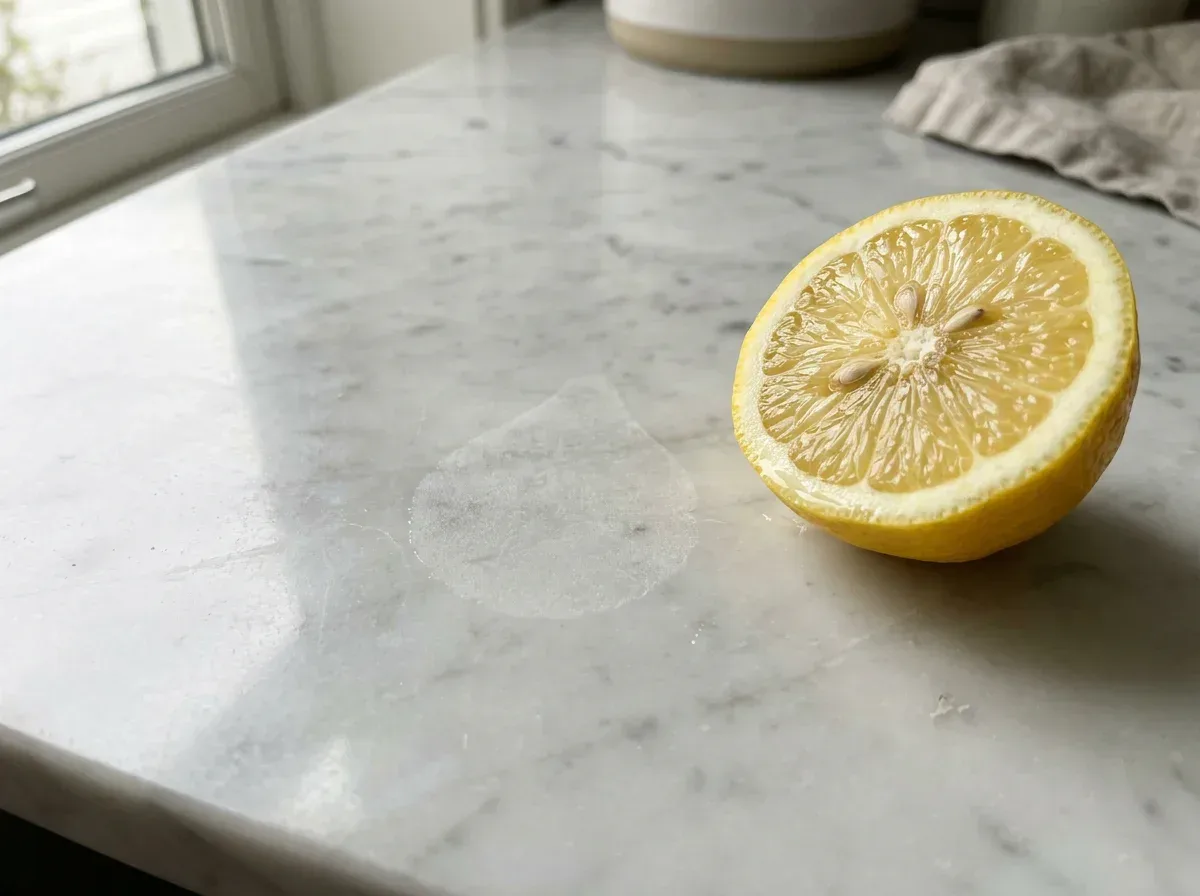
- Lemon and citric acid: Even a few drops of lemon juice spilled in the kitchen leave a mark on marble; citric acid is more concentrated, so it speeds up the damage.
- Bathroom cleaners and tile sprays: Some bathroom cleaners and sprays that are harmless for tile and ceramic can leave wide, permanent dull marks on marble.
- Drinks: Cola, fruit juices, wine and tomato sauce are acidic, so they etch the surface if left where they were spilled.
- Some general-purpose products: General-purpose cleaning products whose label mentions acid or limescale prevention cause the same etching on marble.

Always check whether the product label carries a "do not use on marble" warning.
How Is Acid Damage Recognized?
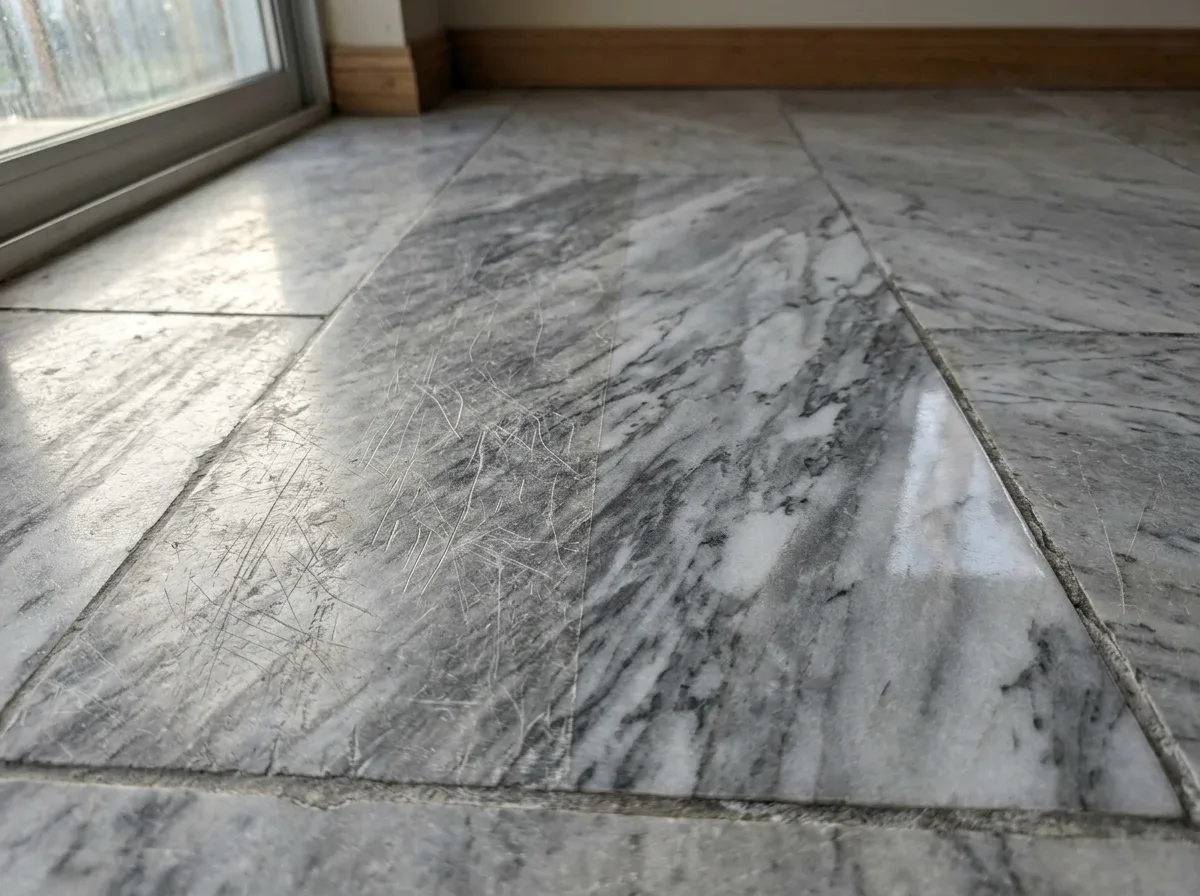
Acid damage shows itself through loss of shine rather than a change of color, and it is easily recognized when viewed from the right angle.
- Dull areas that take the shape of the liquid: Where an acidic liquid was spilled, dull areas form that exactly match the shape of the drop or puddle.
- The difference is in shine, not color: The color of the mark is not very different from the floor; what gives the damage away is that the area does not reflect light while its surroundings shine.
- Clearly visible at an angle: When viewed at an angle against the light, the dull area stands out clearly, whereas from directly above it often goes unnoticed.
- Slightly rough to the touch: Because the acid dissolves the surface, you may feel a slightly rough texture compared with the surroundings when you run your hand over the mark.
- Wide, uniform dullness in the bathroom: On a bathroom floor regularly wiped with a limescale remover, the damage appears not as individual marks but as a uniform dullness spread over the entire wiped area.
Stain removers and poultices do not remove this mark, because there is no substance to lift out.
What to Do the Moment Acid Is Spilled
When an acidic liquid is spilled, what you do in the first few minutes directly determines how deep the mark will become.
- Blot it up: First, blot the liquid with an absorbent paper or cloth without wiping it around, so that the acid does not spread over a larger area.
- Rinse with plenty of water: Then gently rinse the area with plenty of clean water; the water dilutes the acid left on the surface and slows the reaction.
- Dry with a dry cloth: After rinsing, dry the area with a dry cloth so that the diluted acid and water do not sit on the surface and leave a new mark.
- Do not apply other chemicals: Finally, do not wait for the mark to disappear on its own, but do not apply any other chemical on it either; any remaining mark is removed by polishing or honing.
Quick action prevents the mark from deepening. The mark left by a few seconds of contact is not the same as one left by a liquid that has sat for minutes.
How Is Acid Damage Repaired?
Light and Small Marks
Small, superficial marks, such as a drop of lemon spilled in the kitchen or a ring left by the bottom of a glass, can often be removed by local polishing. A polishing powder suitable for marble or a fine diamond pad restores the shine of the surface in the small area where the mark is. This can be tried with some products sold for home use; however, pressing hard and applying it for a long time can create a separate difference in shine around it. If the mark is deep enough to be felt with a fingernail, or is still noticeable after polishing, a fine, gradual honing is needed.
Widespread and Deep Damage
If the whole bathroom has been cleaned with a limescale remover for a long time, or the marks are deep, the area needs to be honed. The work starts with fine or medium grits and the shine is restored. In small areas such as a bathroom, treating the entire floor together prevents differences in tone.
How Much Do Crystallization and Impregnation Protect?
Crystallization increases surface hardness and shine, while impregnation provides protection against staining. However, neither fully protects marble against acids. The most effective protection is never letting acid touch the stone.
Acid Damage at a Glance
| Situation | Appearance | Solution |
|---|---|---|
| Fresh drop, wiped up immediately | Often no mark or a very slight one | Rinsing, drying |
| Glass ring, lemon mark | Small, distinct dull ring | Spot polishing |
| One-time cleaning with a limescale remover | Uniform dullness in the honed area | Fine-grit stepwise honing |
| Prolonged use of acidic products | Rough, dull, dirt-trapping surface | Honing starting from a medium grit |
| Years of damage on a shower floor | Pitted, limescale-trapping surface | Honing, grinding, impregnation |
Dealing with Limescale Without Using Acid
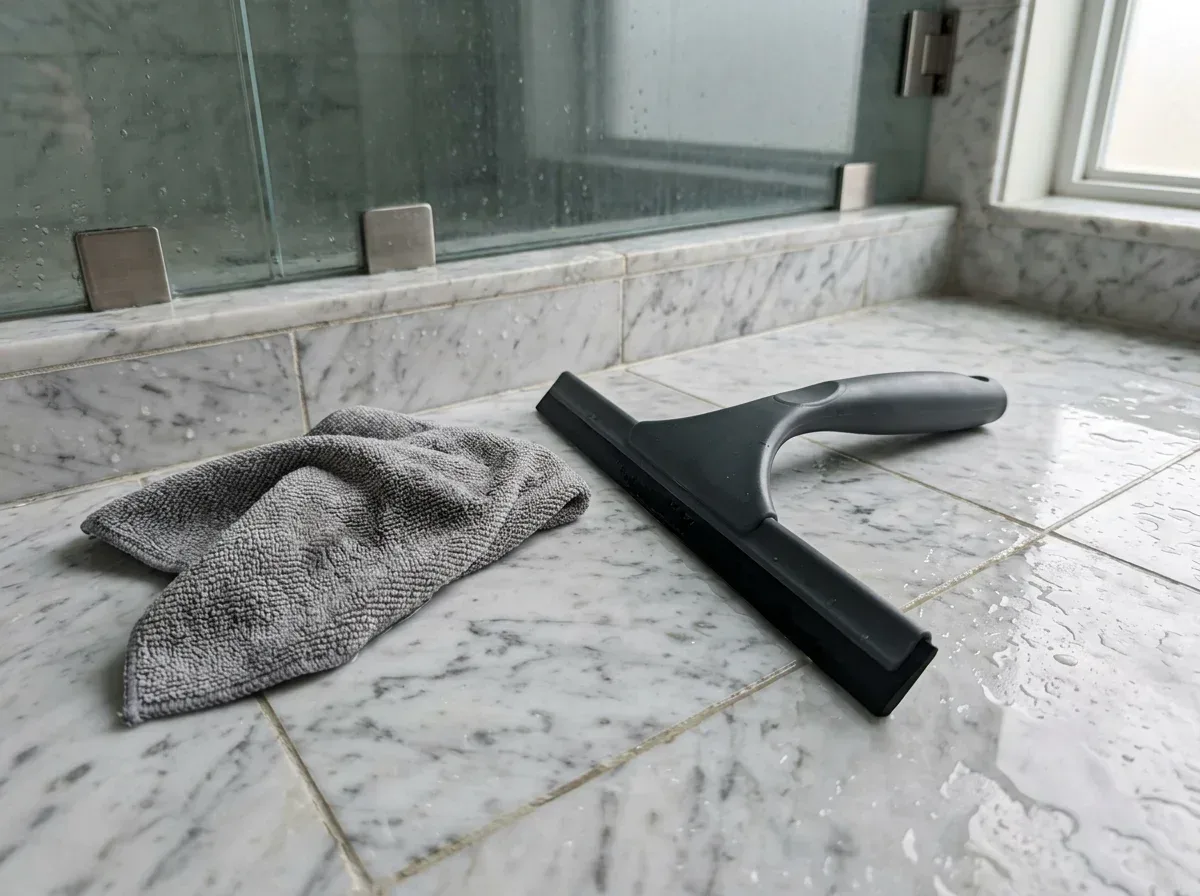
The most common reason acidic products are used on marble is limescale. If you fight limescale in the bathroom and kitchen before it forms rather than after, there is no need for acid at all:
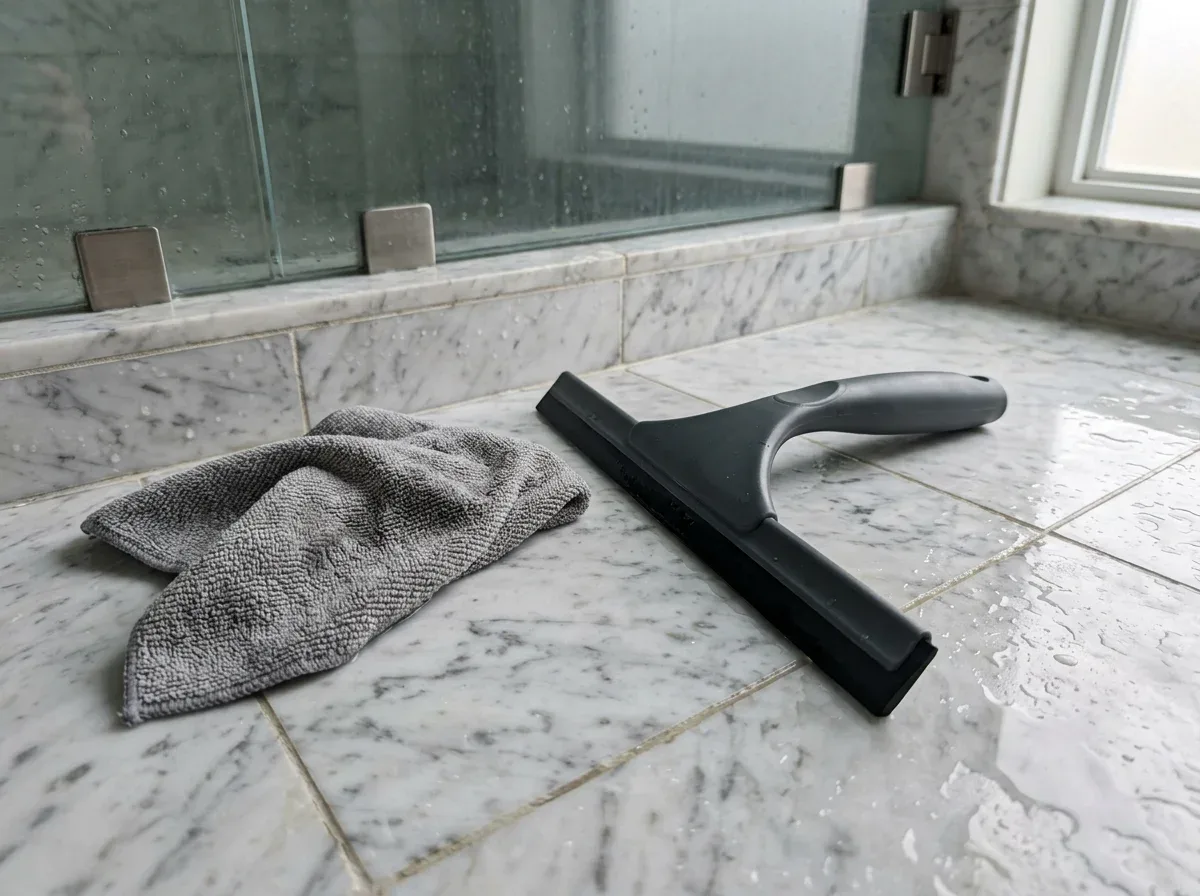
- Dry the surface after every use: Limescale forms when water evaporates; drying the surface with a squeegee and a dry cloth after showering prevents most of it.
- pH-neutral or mildly alkaline cleaner: pH-neutral or mildly alkaline products that are labeled as suitable for natural stone remove the early stage of limescale without harming the stone.
- Microfiber cloth: Abrasive scouring sponges scratch glossy surfaces; a microfiber cloth, on the other hand, picks up both limescale and soap residue better.
- Impregnation: Applying an impregnator reduces the adhesion of limescale and soap to the stone, so daily cleaning becomes easier without the need for acidic products.
- Thick limescale: Thick limescale should be removed not with acid but mechanically with suitable pads; otherwise the surface of the stone dissolves along with the limescale.
When Choosing a Cleaning Product
Most products on supermarket shelves are designed for tiles, ceramic and enamel; acid that is harmless on these surfaces leaves permanent marks on marble. When choosing a product, look for "suitable for natural stone," "for marble" or "pH neutral" on the label. Keep products labeled "limescale remover," "anti-limescale," "rust remover," "lemon" or "vinegar" away from marble. Be sure to explain this to whoever cleans your home as well; most acid damage appears after a well-intentioned cleaning.
Limescale and Marble in Alanya
In coastal areas, the hardness of mains and well water speeds up limescale buildup on bathroom and kitchen marble. This leads to more frequent use of limescale removers and, as a result, more frequent acid damage. In rental apartments and hotel rooms, different people using different products can make the damage worse. Determining which cleaning products to use in such places and informing the cleaning team can postpone the need for honing for years.
How to Solve Limescale Problems in the Bathroom

In areas with hard water, limescale builds up around showers and sinks. On marble, this problem should not be tackled with acid, but rather:
- By drying the surface after every shower with a squeegee and a microfiber cloth,
- With pH-neutral stone cleaners,
- With acid-free products suitable for stone for built-up limescale
Heavy buildup requires professional cleaning and polishing.
Our Scratch and Stain Removal Service in Alanya

We remove scratches, acid marks and stains that have penetrated the stone on marble, granite and travertine surfaces using honing, poultice or spot repair, depending on the type. We never start work without first identifying the source of the stain.
We tell you honestly on site which stains can be removed and which are permanent. Explore our Scratch Removal service.
Watch Marble Cleaning in Action
Footage of cleaning and polishing carried out without damaging the marble.
Superficial and minor marks can be removed on site using polishing powders suitable for marble and fine pads. This work requires experience; incorrect application can leave a shine that does not match the surrounding surface. — Expert Note
Frequently Asked Questions
01I wiped it once with vinegar. Will the surface be damaged?
02Can I remove an acid mark myself at home?
03Is granite also affected by acid?
04Which cleaner should I use?
05Will the dullness on bathroom marble go away with cleaning?
06Does bleach damage marble?
Related Articles
- Choosing a Detergent for Natural Stone: What Does pH-Neutral Mean?
- Limescale and Hard Water Marks on Shower Marble
- Types of Scratches and Stains on Marble: Which Ones Can Be Removed by Honing?
- Coffee, Wine and Fruit Juice Stains on Marble Floors
- How to Remove Yellow Stains, Rust Stains and Water Marks from Marble