Factors That Affect the Price of Marble Grinding
In short: When you ask about the price of marble polishing, most companies say "we need to see it on site." This is not an evasion; it is the nature of the job.
Two floors with the same square footage can require very different amounts of work. In this article we explain the main factors that determine the price and how to compare quotes correctly.
Why Is There No Single Price per Square Meter?
Most of the cost in polishing is time, abrasive consumption and labor. One floor may shine after three grits while another needs seven; one may be an empty lobby while the other consists of small rooms full of furniture. That is why a price per square meter only becomes meaningful once the floor has been seen.
Factors That Determine the Price
1. Size of the Area
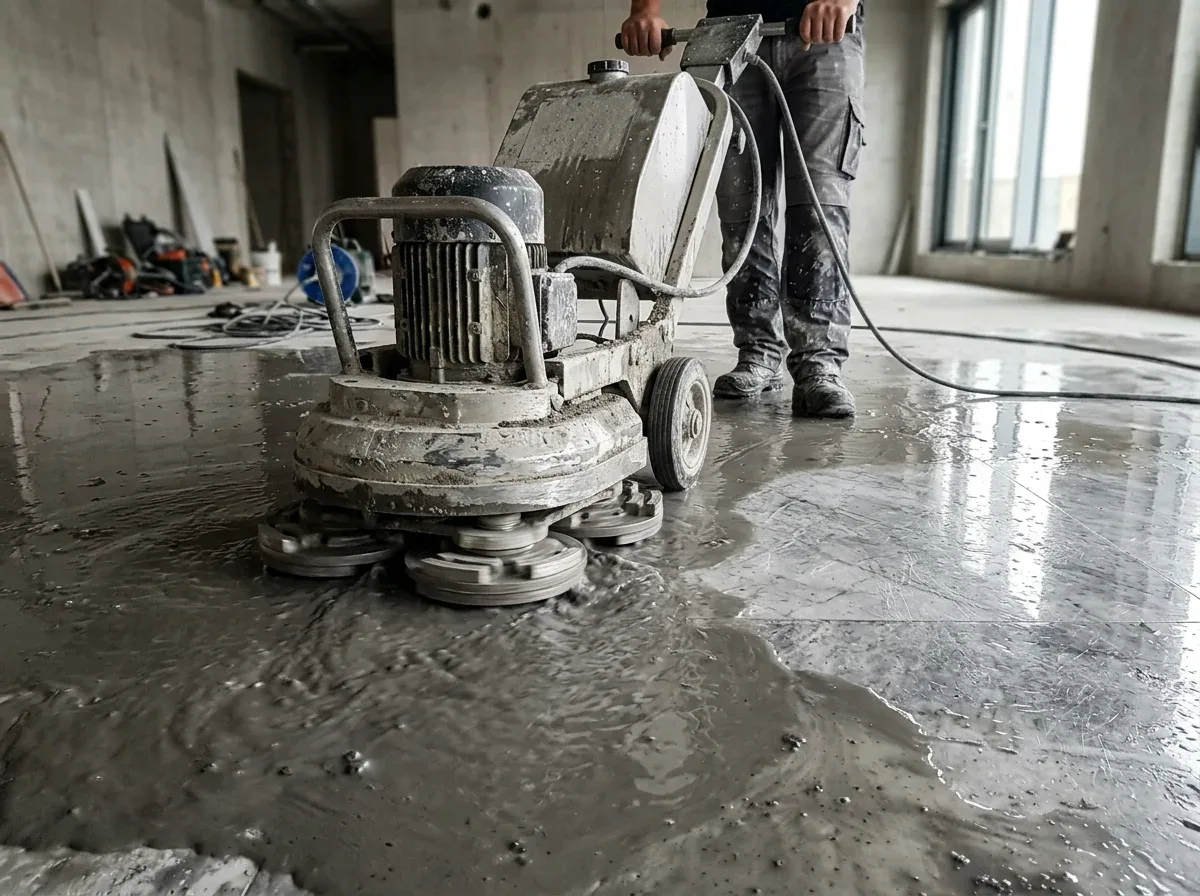
In large, open areas the machine works efficiently; setup, transport and preparation time become small when divided by the square meters. In small areas, the same preparation is divided by fewer square meters. That is why the cost per square meter is usually higher on small jobs.
2. Current Condition of the Floor
The current condition of the floor determines which grit the polishing starts from and therefore how long it will take.
- Slightly dulled, level floor: A slightly dulled, level floor starts with fine grits; since coarse grinding is not needed, the job takes less time and uses fewer abrasives.
- Deeply scratched floor with uneven levels: A deeply scratched floor with uneven levels starts with coarse grinding; bringing the slabs to the same level requires extra time and abrasives.
- Old polish or coating: If there is an old polish, varnish or coating on the surface, it must be removed first; the stone itself cannot be reached without removing this layer.
The coarser the starting grit, the more the time and abrasive consumption increase.
3. Type and Hardness of the Stone
Marble, granite and travertine are polished at different speeds. Granite is much harder; polishing the same area requires more time and more durable abrasives. Travertine, on the other hand, may require pore filling.
4. Repair Needs
Broken corners, cracks, hollow (loose) slabs, open joints and pores each call for separate labor. On some floors, repairs can take as much time as the polishing itself.
5. Edge and Detail Work
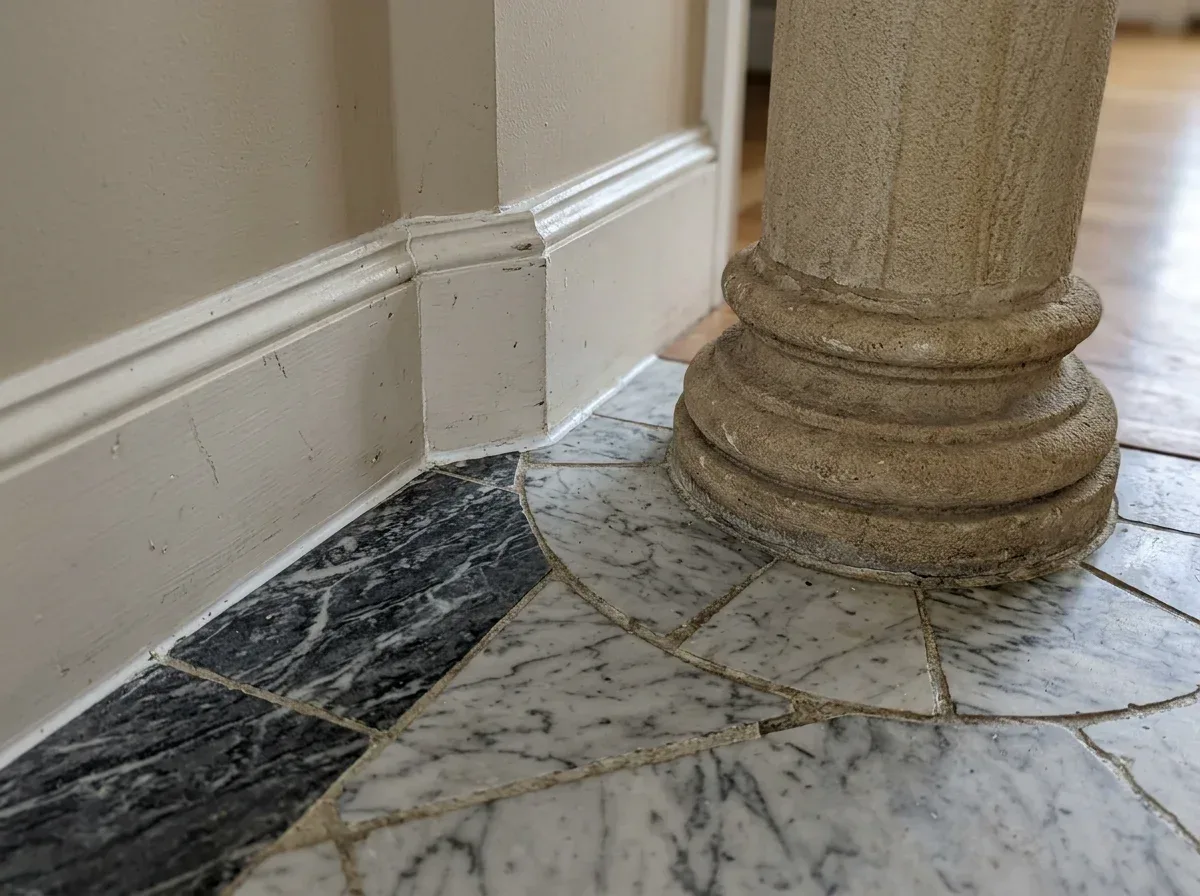
Wall bases, baseboard edges, areas around columns, door thresholds and narrow corridors are worked with hand machines. In an apartment with many rooms and plenty of corners, the edge length is greater relative to the square meters and extends the time.
6. Steps and Special Pieces
Stair treads, risers, stair nosings, window sills and countertops are priced per piece or per meter rather than per square meter; each one is worked by hand individually.
7. Desired Finish
For a honed (matte) finish, polishing ends at the mid grits. If a mirror shine is wanted, fine grits and buffing are added. If crystallization or impregnation is wanted, it is added as a separate item.
8. Access and Logistics
Getting the machines to the site and the connections needed for work directly affect the duration and cost of the job.
- Floor and elevator: If the floor where the heavy polishing machines will be carried is high and there is no elevator, carrying the equipment up requires extra labor and time.
- Water and electricity connection: The machines need a strong electrical connection, and wet polishing needs a nearby water point; if these are missing, additional arrangements are required.
- Parking and vehicle access: Being able to bring the vehicle close to the building allows the equipment to be unloaded and loaded quickly; a distant parking spot lengthens carrying time.
- Distance from the city center: The distance of the site from the city center increases the crew's travel time and transport costs, so it may be reflected in the quote.
9. Working Hours
Hotels, shops and workplaces often require work at night or on days when they are closed. In apartment buildings, quiet hours may cause the work to be split over several days. These conditions affect planning and duration.
10. Furniture and Preparation
An empty space is not the same as a furnished home. If moving, protecting and replacing the furniture is part of the job, it adds to the time.
Comparing Quotes Correctly
When comparing quotes from different companies, look not only at the total figure but at the scope:
- Starting and finishing grit: Which grit the work starts from and which it ends at shows the depth of the work to be done; a quote with fewer grit stages may mean a more superficial job.
- Are repairs included: If it is not made clear whether filling, joint and break repairs are included in the quote, extra charges may appear during the job.
- Edges and steps: Checking whether edge work and steps are listed separately shows whether the total figure really covers the same work.
- Crystallization or impregnation: You should ask whether crystallization or impregnation is included; these processes are often priced as a separate item.
- Cleaning and slurry removal: If it is not written down from the start who is responsible for the cleaning and slurry removal afterwards, tidying up the home at the end of the job may be left to you.
- Duration: Knowing how many days the job will take both lets you plan and helps you understand the labor difference between quotes.

A low quote whose scope is not in writing can grow during the job with "this wasn't included."
Factors at a Glance
| Factor | Increases time and cost | Reduces time and cost |
|---|---|---|
| Area | Small, partitioned rooms | Large, open spaces |
| Condition of the floor | Level differences, deep scratches, old coating | Flat surface that is only dulled |
| Stone | Granite, travertine that needs filling | Solid, soft marble |
| Repair | Broken, cracked, hollow slabs | Floor with no need for repair |
| Details | Many corners, columns, steps | Flat area with few edges |
| Finish | Mirror shine + crystallization + impregnation | Honed (matte) finish |
| Conditions | Night work, furnished home, floor without an elevator | Empty space, easy access |
What Can You Do to Reduce the Cost?
The condition of the floor determines the cost of polishing, but some preparations shorten the duration of the job and therefore reduce its cost:
- Clear the area: Removing furniture beforehand noticeably shortens the working time; the team can start polishing right away instead of moving and protecting items.
- Choose the right finish: Not every area needs a mirror shine. In areas such as terraces, bathrooms and entrances, a honed finish is both safer and more economical.
- Consider partial polishing: If only the entrance and corridors are dulled, these areas can be restored instead of polishing the entire home.
- Combine the jobs: When items such as stairs, window sills and countertops are done at the same time as the floor polishing, it is more affordable than calling for each one separately.
- Act early: A slightly dulled floor can be saved with a shine refresh; the longer you wait, the more coarse polishing is needed.
Polishing or Replacement? In Terms of Cost
For a floor where the polishing price seems high, the first option that comes to mind may be replacement. However, replacement is not just the price of the new stone: breaking out and removing the old stone, hauling away the debris, repairing the screed, laying the new stone, grout joints, and the polishing that still has to be done in the end are all added to the cost. During this process, the home or business cannot be used for weeks. As long as the stone is sound, polishing and repair are both more economical and much faster than replacement.
Site Survey for an Accurate Price
The most accurate price is given after seeing the floor in person. During the survey, the type of stone, its current condition, slab joints, repair needs, and the amount of edges and steps are evaluated together; if necessary, a trial polish is done on a small area. A few photos help with preliminary information, but light and angle often fail to show scratches and level differences. In Alanya and the surrounding area, our team comes to you for the survey; the quote is provided in writing, with the scope included.
Why Is an On-Site Inspection Important?

During an on-site inspection, the type of stone, scratch depth, level differences, moisture stains, hollow tiles, and access conditions can all be assessed. Where possible, a trial is carried out on a small area to show the expected result. Photos give a preliminary idea, but because of lighting and angle, they often do not show the true condition of the floor.
Our Marble Grinding Service in Alanya

We restore marble floors that have become dull, scratched, or uneven between slabs using wet grinding, which keeps dust under control. From coarse grinding through to polishing, we choose each stage according to the type of stone, and if needed we repair cracks and joints as part of the same job.
We inspect your floor on site and tell you plainly whether it needs grinding or just polishing. Explore our Marble Grinding service.
When comparing sanding quotes, look for the clearest scope rather than the lowest price. If the starting and finishing grits, repairs, edge work, and cleanup afterward are all specified in writing, you won't be faced with any surprises at the end of the job.
Frequently Asked Questions
01Can a price be quoted from a photo?
02Why does the price seem high for a small bathroom?
03Is crystallization included in the price?
04Is it cheaper to tear out and relay the floor instead of honing it?
05Does the honing price change depending on the number of grit stages?
06Is it possible to have just one room honed?
Related Articles
- How to Get a Quote for Marble Polishing: Square Meter Calculation
- Questions to Ask When Choosing a Polishing Company
- Polishing, Replacement, or Removal? A Decision Guide for Natural Stone Floors
- Preparing for Marble Polishing: Furniture, Dust, and Duration
- What Is Marble Polishing and How Is It Done? A Guide for Your Home Floors