The First 48 Hours After Honing: What to Watch Out for on Marble Floors
In short: When the polishing is finished, the floor looks shiny and ready to use; however, the moisture inside the stone may not have fully evaporated yet, and the fillers and protective products may not have finished curing.
Small mistakes made in the first two days can leave marks that stay visible for a long time. In this article, we explain in practical points what you should pay attention to in the first 48 hours after polishing.
Why Are the First Days Important?
During wet polishing, the stone absorbs some water. Even if the surface looks dry within a few hours, it takes longer for the moisture inside the stone to evaporate. In addition:
- Hardening of the fillers: The fillers used in repairs need time to reach full hardness; a filler exposed to early load or impact may sink or take marks.
- Curing of the impregnator: If an impregnating sealer has been applied, it needs a certain amount of time to cure in the pores; during this time, water and spills can weaken the protection and leave stains.
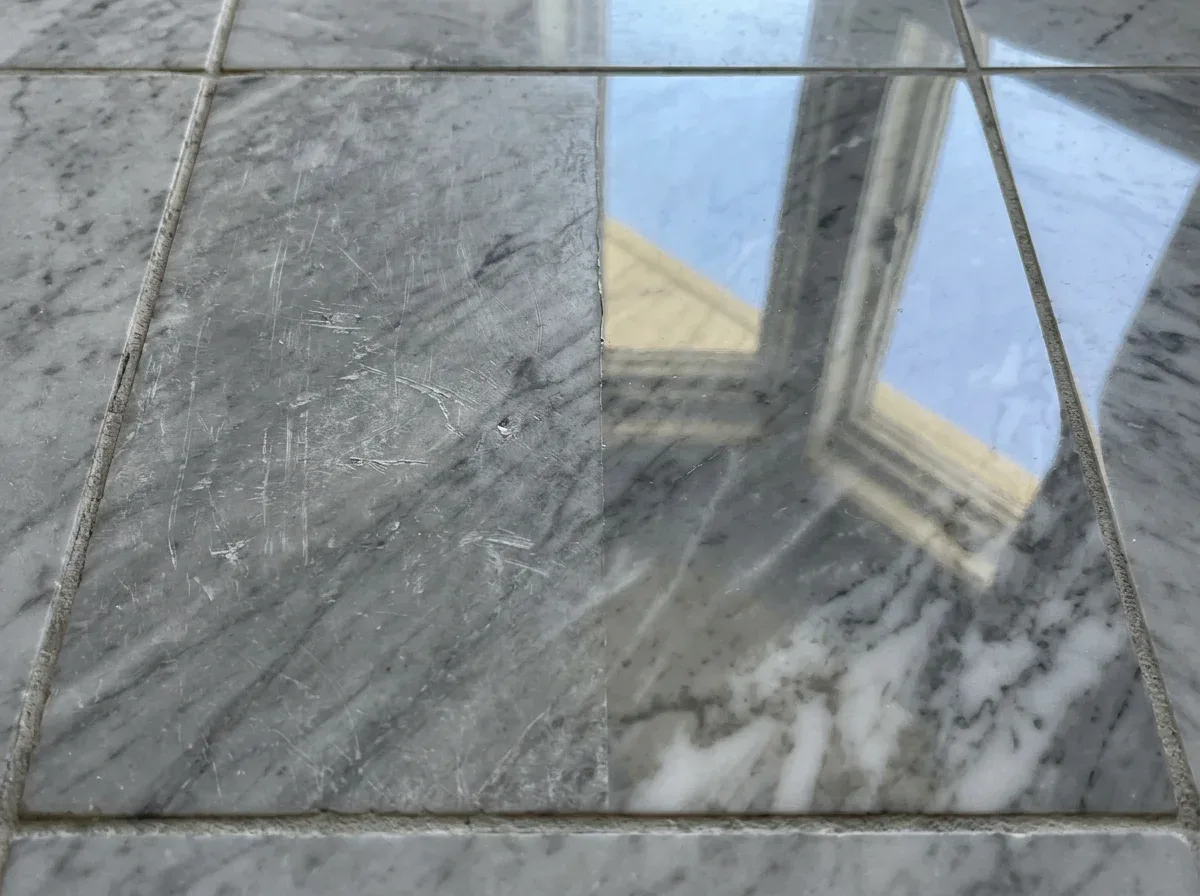
- Sensitive surface: After crystallization or polishing, the surface may remain sensitive for a short while longer; sand, friction, and acidic liquids leave marks more easily during this period.

Protecting the surface during this period extends the life of the work.
First 24 Hours
Walking Is Allowed, But Be Careful
You can walk on the floor after polishing. However:
- Do not enter with outdoor shoes: Do not enter with outdoor shoes; sand and gravel can scratch the freshly polished surface, and the shine is damaged from the very first day.
- Walk in slippers or socks: Walk in clean slippers or socks; a soft, clean sole does not carry sand onto the surface and does not leave marks on the stone.
- Watch out for pets: Pay attention to your pets' claws; if possible, keep them out of the polished room on the first day, as hard claws can leave scratches on the sensitive surface.
No Water or Wet Cleaning
Do not wet-mop the floor on the first day. If an impregnating sealer has been applied, contact with water before it has cured can cause staining. A soft, dry mop is enough for dust.
Watch Out for Spills
Coffee, tea, fruit juice, and especially liquids containing lemon or vinegar can leave marks more easily in the first days. Be extra careful in the kitchen and dining area; blot up anything spilled immediately with absorbent paper.
First 48 Hours
Do Not Lay Rugs Right Away
Rugs and carpets prevent the moisture remaining in the stone from evaporating. Moisture trapped underneath can leave a dark or yellowish shadow in the shape of the rug, especially on light-colored marble. The rubber or plastic material of non-slip rug pads can also leave marks on a freshly polished surface. Therefore, do not lay rugs for at least 48 hours, or, if an impregnating sealer has been applied, until the curing time specified by the manufacturer has passed. When laying them, make sure the pad is suitable for natural stone.
Lift Heavy Furniture When Moving It
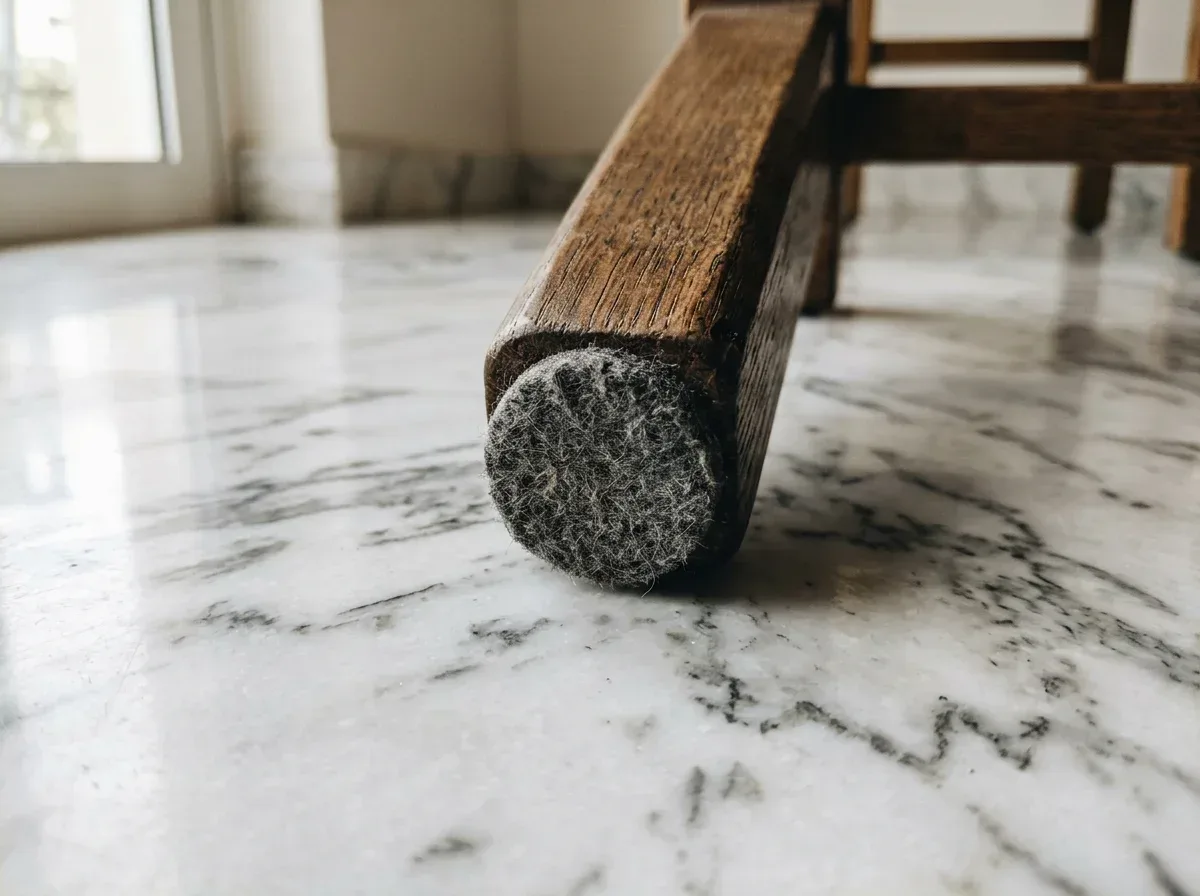
Never drag furniture when putting it in place. A freshly polished surface can be scratched within seconds by the sand under a dragged cabinet. Stick felt pads on the furniture legs; make sure the pads are clean.
Do Not Use Tape
Do not stick adhesive tape, protective plastic sheeting, or labels on the floor after polishing. Tape adhesive and moisture trapped underneath can leave marks.
Plants and Pots
Do not place pots directly on the stone. Use a saucer and feet; water in the saucer can stain the stone.
If an Impregnating Sealer Was Applied
The drying and full curing times of impregnating products differ. The general rule:
- Do not walk on it during the drying time: Do not walk on the floor during the surface drying time; if stepped on while the product is still on the surface, footprints may remain and the protection will not be evenly distributed.
- Do not wet-clean: Do not wet-clean during the full curing period; water and detergent can partially draw the uncured product out of the pores and cause staining.
- Do not do the drop test too early: Do not do a drop test before curing is complete; the result can be misleading and make the protection seem inadequate, causing unnecessary concern.
The team that carried out the application should tell you the times according to the product used.
First Cleaning
After two days, you can do the first wet cleaning:
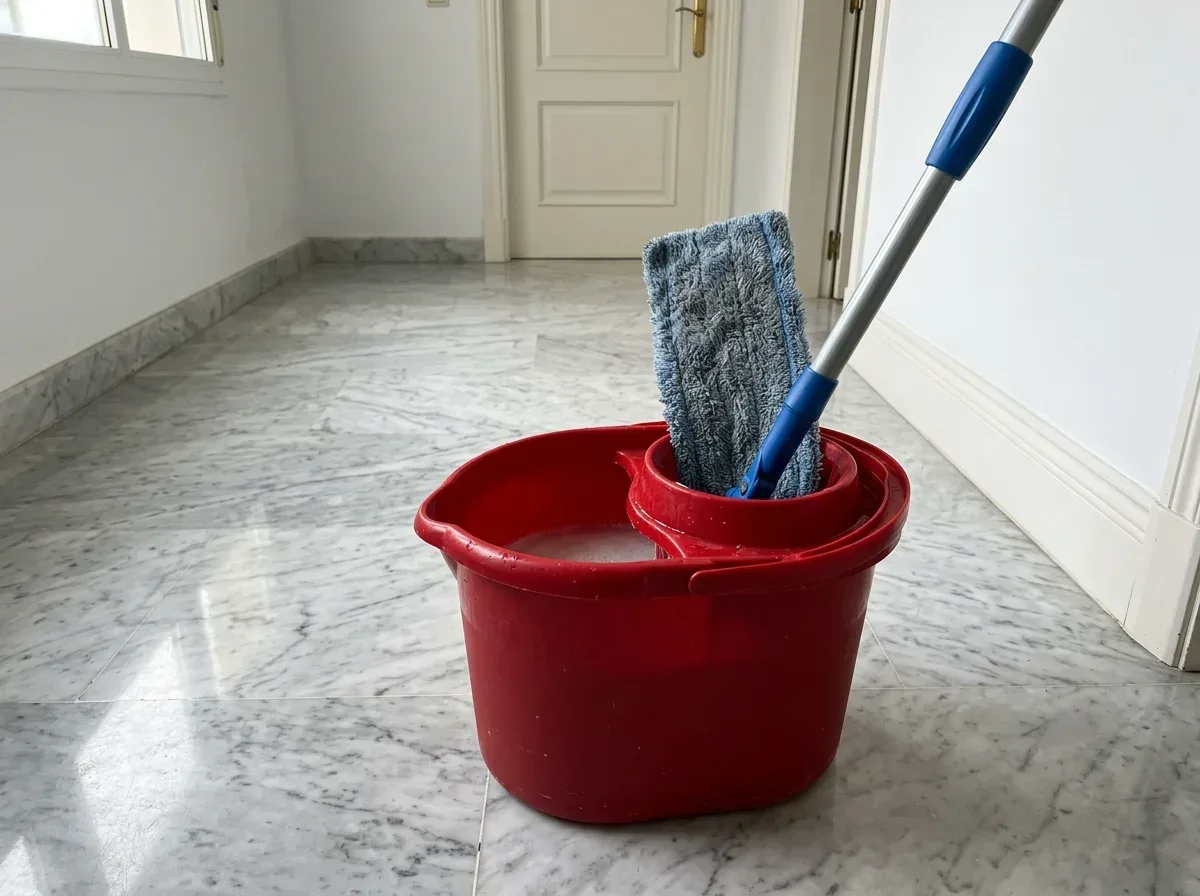
- Dust with a dry mop: First remove dust and sand with a dry mop; otherwise, a wet mop will spread the sand over the floor and scratch the freshly polished surface.
- Mix the detergent in the right ratio: Then mix a pH-neutral detergent suitable for stone with water in the ratio stated on its label; too much detergent leaves a dirt-trapping film on the surface.
- Wring the mop out well: Wring the mop out well; do not soak the floor, wipe it damp, so that water does not enter the stone again and no marks remain.
- Rinse and dry: If necessary, finally rinse with clean water and dry with a dry cloth; this way no detergent residue or water stains are left.
Timeline: What Can You Do and When?
| Time | You Can | Avoid |
|---|---|---|
| First hours | Walking in clean slippers or socks | Outdoor shoes, wet cloths, tape |
| First 24 hours | Dusting with a dry mop | Wet cleaning, laying rugs, placing plant pots |
| 24-48 hours | Placing furniture by lifting it into position | Dragging furniture, chemical cleaning |
| After 48 hours | First damp cleaning, rugs (if the curing period has ended) | Acidic and polishing products |
| First week | Normal use | Doing the drop test too early |
What You May Notice in the First Few Days
In the first days after honing, some sights may worry homeowners. Most of them are temporary:
- Slight cloudiness or a hazy look: As the moisture inside the stone escapes, a brief haze may form on the surface. It disappears as the stone dries; wiping with a dry mop is enough.
- Whitish marks in the grout lines: This may be a thin residue of honing slurry left in the grout lines; it is removed during the first damp cleaning and the grout returns to its own color.
- Some tiles looking darker: These tiles have absorbed more water; they take a little longer to dry, and as they dry their color evens out with the other tiles.
- Stickiness after impregnation: Excess product may have been left on the surface; it must be removed by the team that applied it, otherwise the sticky layer will hold dirt and footprints.
If any of these conditions persists after 48 hours, or if you notice a clear difference in the gloss, let the team that did the honing know before trying any product on your own.
After the First Week: Maintaining the Shine
How long the honing lasts is largely determined by habits in the first months. Placing doormats at the entrance and terrace exits, removing sand and dust with a dry mop every day, using only pH-neutral detergent for weekly damp cleaning, and wiping up spills without delay will keep the shine for years. Check the felt pads on furniture legs from time to time; sand stuck to the felt scratches more than a leg without felt.
A Note for Holiday Homes
In Alanya, many honing jobs are done in holiday homes before or after the season. If you will close the house right after honing, do not lay out rugs, do not cover the floor with plastic sheeting, and leave the windows slightly open for a few days for ventilation, or have someone air the house from time to time. In a closed, unventilated house, the moisture inside the stone escapes more slowly; marks may remain on covered surfaces.
Common Mistakes

- Laying rugs the same day
- Doing a "final clean" in the kitchen with an acidic cleaner after the honing is finished
- Applying polish or gloss to the floor to make it shinier
- Dragging furniture back into place with gritty feet
- Leaving the floor unprotected while construction or renovation work is still ongoing
Our Marble Grinding Service in Alanya

We restore marble floors that have become dull, scratched, or developed height differences between slabs using wet grinding, which keeps dust under control. We choose every stage, from coarse grinding to polishing, according to the type of stone, and if needed we carry out crack and joint repairs as part of the same job.
We inspect your floor on site and tell you clearly whether it needs grinding or just polishing. Explore our Marble Grinding service.
Natural Stone Care and Cleaning
Images from natural stone care and cleaning aimed at preserving the shine after polishing.
Rugs cover the surface of the stone and prevent the moisture inside it from evaporating. Trapped moisture can cause stains, permanent marks and unpleasant odors under the rug. Do not lay rugs down for at least 48 hours, or longer if possible. Some types of rug underlay (non-slip pads) can also leave marks on marble; choose ones that are suitable for stone. — Expert Note