Marble and Travertine Floors in Old Buildings in Alanya
In short: Alanya has grown rapidly alongside tourism since the 1980s.
A significant share of the apartment buildings, villas, and hotels built during this period used marble, travertine, and mosaic floors. Today most of these floors are still in place, waiting to be restored. In this article, we describe the typical floor types found in older buildings, their problems, and renovation approaches.
What Floors Will You Encounter?
Mosaic Tile and Terrazzo
Commonly found on the stairs, entrance halls, and balconies of older apartment buildings. They are durable and can often be restored by grinding.
Local Marbles
White, beige, gray, and veined local marbles, found in living rooms, corridors, and stairs. Over the years they have become dull and scratched, and are sometimes covered with crystallization or polish layers.
Travertine
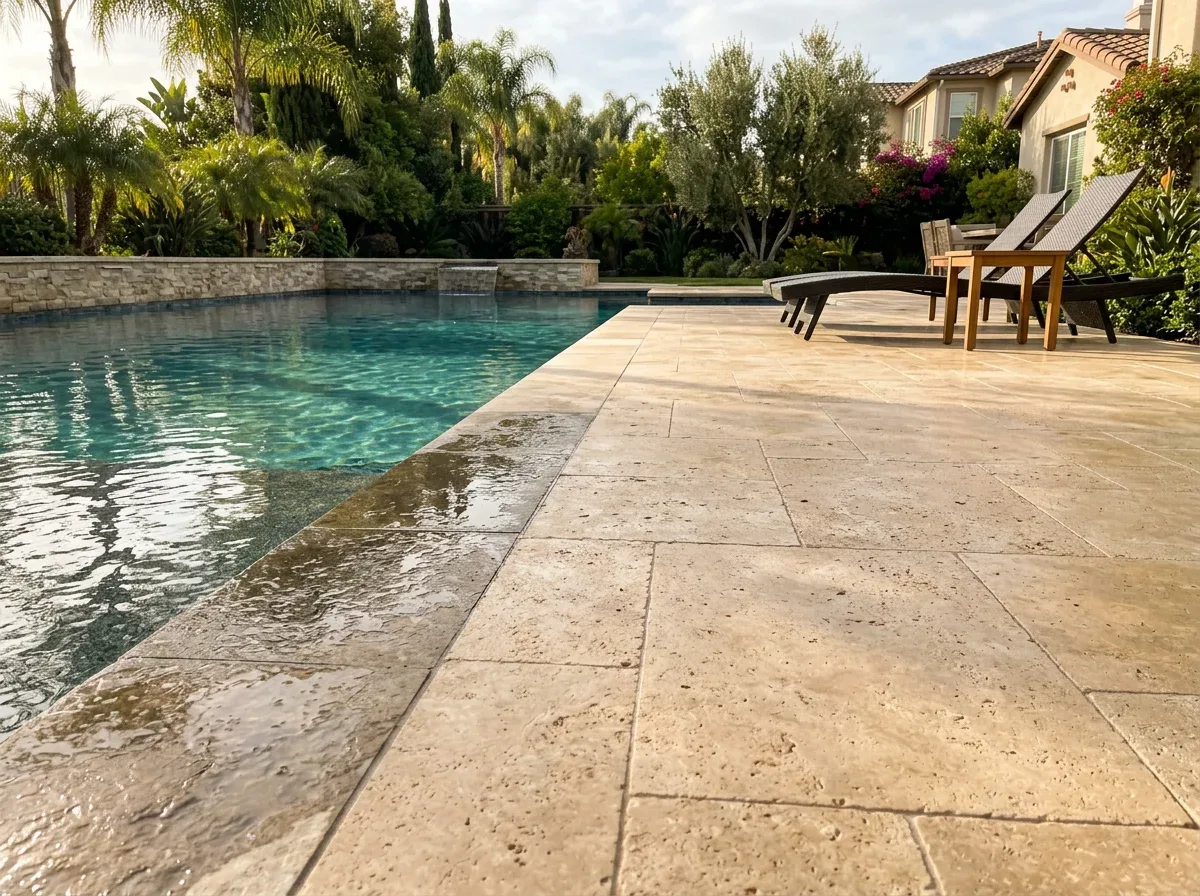
It became very widespread in villas and summer houses, especially in the 1990s and 2000s. Travertines quarried in Antalya and its surroundings were used in the region. It is found in filled and unfilled, polished, honed, and antiqued finishes.
Granite
On stairs, entrances, and kitchen countertops.
Typical Problems
Dullness and Level Differences
On floors that have not been ground for many years, level differences between slabs and distinct walking paths appear.
Old Polish and Coating Layers
Polishes and varnishes applied in the past for shine turn yellow, stain, and become slippery.
Opened Travertine Pores
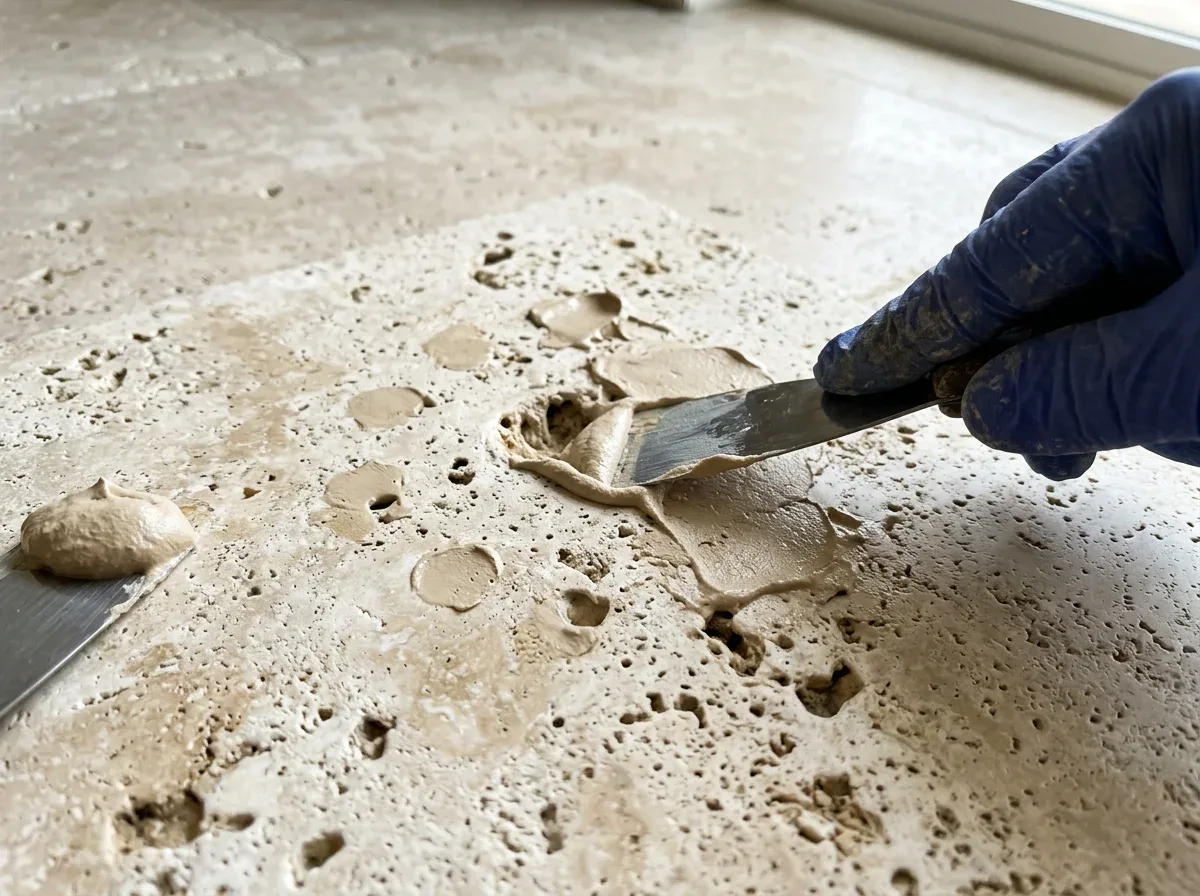
The fillings of filled travertines fall out over time; the floor looks spotted and dirty.
Hollow Slabs
Due to old bonding techniques, the area beneath some slabs has become hollow.
Moisture Stains
Moisture stains on floors with poor insulation and along exterior wall edges.
Renovation Damage
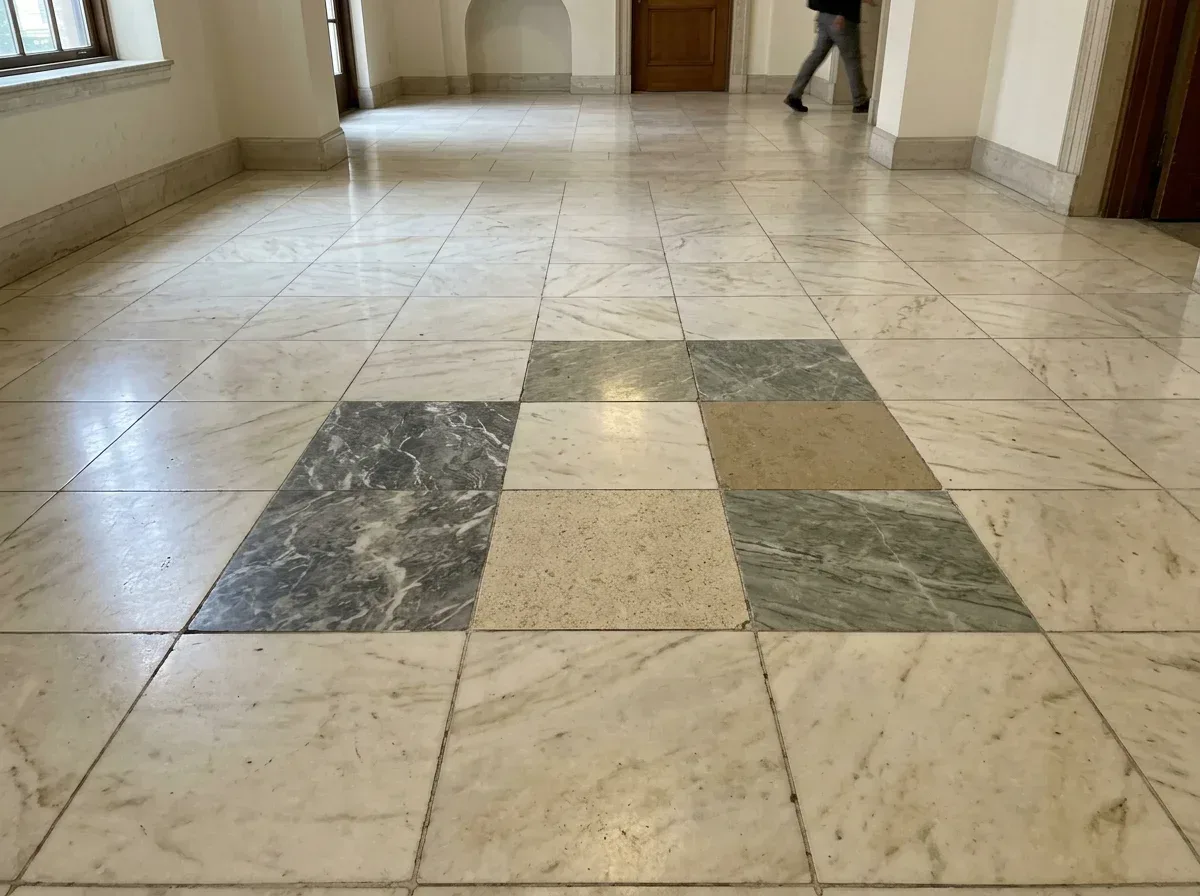
Areas that were broken during wall demolition or kitchen and bathroom replacements and patched with different stones.
Patches and Mismatched Slabs
Slabs replaced over the years may differ in tone and surface.
Renovation Approach
On an old floor, grinding is not started right away; first the stone and its problems are assessed, coatings are removed, and repairs are made, after which the surface is leveled and protected.
- Inspection: Before starting work, the stone type, hollow slabs, moisture, coating layers, and cracks are identified; all subsequent steps are planned based on this assessment.
- Coating removal: Old polishes and varnishes are removed; if these layers remain, they clog the diamond abrasives and leave a stained appearance after grinding.
- Repair: Hollow slabs are re-bonded, cracks and pores are filled, and patches are corrected; this way, grinding is carried out on a sound and complete floor.
- Grinding: After repairs, starting with coarse grinding, the floor is brought to a single plane; level differences, deep scratches, and walking paths are removed at this stage.
- Surface selection: In the final stage of grinding, a polished, honed, or brushed finish is chosen according to use and style; in wet areas, more matte finishes reduce slipping.
- Protection: Finally, an impregnating sealer is applied; the protective agent that penetrates the stone's pores reduces water and stain absorption, keeping the renewed surface clean for longer.

On old floors, grinding often gives a result with more character and quality than a new covering, because some of the stones used in those periods are not easy to find today.
When Is Replacement Necessary?
Most old floors can be saved by grinding; however, in some cases the problem lies beneath the surface, and replacing the floor is the better decision.
- Widespread hollow slabs: If the area beneath most of the slabs has become hollow, re-bonding them one by one is laborious and its durability is uncertain; relaying the floor should be considered.
- Serious moisture or plumbing problem: If moisture constantly comes up from under the floor or the plumbing is faulty, grinding will not solve the problem; stains and swelling return quickly.
- Lack of insulation causing problems: If there is no insulation under the floor and this causes problems such as moisture, staining, or a cold floor, the layer underneath must be fixed first.
- Underfloor heating installation: If a new system such as underfloor heating is to be installed, removing the existing covering becomes unavoidable because the pipes will be laid under the floor.
Old Floors by Period
| Period | Common floor | Typical problem | Approach |
|---|---|---|---|
| 1970s-1980s | Mosaic tile, terrazzo | Height differences between slabs, dullness, old polish | Honing, grout, impregnation |
| 1980s-1990s | Local marble | Walkways, polish layer, hollow slabs | Removal, repair, honing |
| 1990s-2000s | Travertine | Opened pores, yellowing | Pore filling, honing |
| Any period | Granite steps, countertops | Dullness, chipped edges | Polishing, repair |
The Value of an Old Floor
Some of the marble and travertine in older buildings comes from quarries that are no longer operating, or is hard to find in the same quality today. These floors are usually thicker than today's standard slabs, which means they can be honed many times. Tearing them out and laying new ones is a heavy job in terms of rubble, dust and time; renewal by honing, on the other hand, preserves the character of the old floor and is completed in a much shorter time.
Look at the Floor When Buying an Old Home
The floor of an old home can be largely assessed before purchase with a few simple checks.
- Listen for hollow slabs: Tap the floor lightly with a knuckle or an object; a hollow, dull sound that is not solid indicates a void beneath the slab.
- Look for moisture stains: Dark rings or swelling along the base of walls and at exterior wall edges are a sign of moisture coming from the floor or the wall.
- Ask what is under the covering: There is often an old marble or mosaic floor under carpet or laminate; this floor can become usable again through honing.
- Note height differences and patches: Height differences between slabs and patches of a different tone give an idea of how much honing and repair the renovation will require.
- Ask for an expert assessment: Before buying, ask a honing company for a brief assessment; you will find out in advance whether the floor can be fixed by honing or needs replacement.
Old Floor Renovation in Alanya
In the center of Alanya, and in districts such as Oba, Tosmur, Mahmutlar and Kestel, we work with old marble and travertine floors in many buildings constructed in the 1980s and 90s. In apartments purchased by foreign buyers and new homeowners, we often show with a test area that renewing the floor by honing is more advantageous than removing it, both in terms of budget and results. We also identify hollow slab and moisture problems in advance and report them clearly.
Pre-Purchase Assessment

When buying a second-hand apartment or villa in Alanya, the floor is often overlooked. A quick inspection:
- Hollow tiles: A hollow sound when the slabs are tapped lightly indicates that the base underneath has come loose; these slabs need repair or replacement.
- Signs of moisture: Darkening or white salt deposits along the edges and joints indicate that moisture coming from below must be resolved before polishing.
- Saving it with polishing: The thickness of the stone, the depth of the scratches and the number of cracks determine whether the floor can be fixed by polishing or needs to be replaced.
Answering these questions helps you plan your renovation budget accurately.
Our Travertine Grinding and Honing Service in Alanya

We grind and hone travertine floors with open pores, darkening, or wear, and fill the voids with color-matched filler. For outdoor areas such as pool surrounds, terraces, and gardens, we apply honed or brushed finishes that prioritize slip resistance over shine.
After grinding, we also recommend a suitable impregnating sealer to protect the travertine against stains. Explore our Travertine Grinding service.
A thirty-year-old marble floor is often tired, not finished. With the right honing, the old stone's character offers a warmth that a newly laid floor simply cannot match.